
.jpeg)

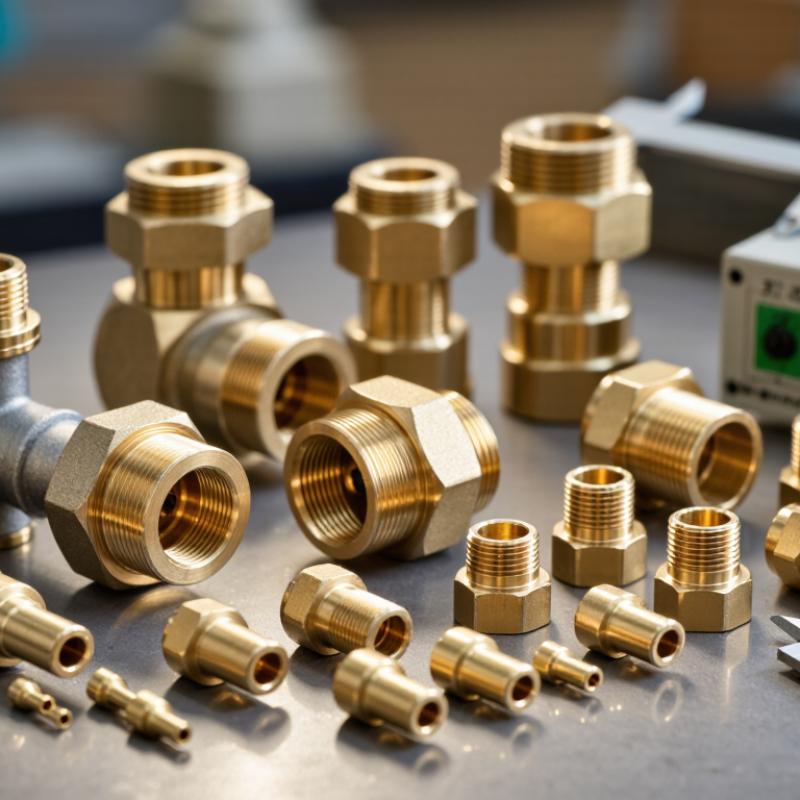
Dr. Steven R. Schmid, a manufacturing expert, points out that, “Material behavior should always guide your process choices.” That’s a pretty solid rule to follow, especially when selecting brass CNC machining parts for more demanding applications. For example, a CNC lathe can easily produce a clean, threaded connector, while a machining center is perfect for making precise valve bodies with drilled passages. Out on the shop floor, operators keep an eye on things like tool wear, chips, burrs, and the surface finish — because even tiny mistakes can cause issues with sealing, electrical contact, or making the assembly smoother and faster.
Picking the right brass grade is also super important. Some alloys, especially lead-free ones, are better suited for drinking water equipment, while others handle machining better. Engineers need to think about tolerances, operating temps, loads, and how much exposure to corrosion there might be. And of course, quality checks often involve calipers, micrometers, thread gauges, and even coordinate measuring machines — all part of making sure everything’s up to snuff.
But here’s the thing — brass isn’t always the perfect fit. Sometimes, designs call for too much material or set tolerances that just aren’t realistic. That kind of stuff can drive costs up without really improving how the parts perform. That’s where experienced suppliers like Precision Brass Manufacturing come in. They’ll ask questions about unclear drawings and double-check what the part is supposed to do. Doing this kind of practical review means safer decisions and more reliable results overall.
In the sections ahead, we’ll dig into common uses, design tips, finishing options, and what to look for when buying brass CNC machined parts. And here’s a simple but key takeaway: the best part isn’t just about accuracy — it’s about making sure it works reliably in the real world, every time.
What Is Brass CNC Machining Parts Used For?
What Defines Brass CNC Machining Parts Under ASTM B16 and UNS Standards
Brass Cnc Machining Parts are used in fittings, valve stems, electrical terminals, and precision fasteners. Their value comes from easy cutting, stable dimensions, and good corrosion resistance. ASTM B16 is important when the raw material is free-cutting brass rod, bar, wire, or shapes for screw-machine production.
The standard controls requirements such as chemical composition, mechanical properties, dimensions, and testing. A common UNS example is C36000, known for excellent machinability. However, the UNS designation identifies the alloy chemistry, not the complete finished-part specification. It does not automatically define thread quality, surface finish, burr limits, or final tolerances.
Material traceability matters. Inspectors should compare the purchase order, drawing, material certificate, and heat number before machining begins. A part may look correct and still use the wrong brass grade. That gap deserves review. ASTM B16 compliance usually applies to the supplied material, while the finished component may require additional customer or engineering requirements. Machining can expose pores, tool marks, or dimensional drift near thin walls. Practical inspection should include calibrated gauges, visual checks, and dimensional reports. One detail is often missed: lead content can affect machining performance and regulatory acceptance in certain applications. Requirements must be verified for the intended market and service environment. A drawing can still be incomplete.
What Are Brass CNC Machining Parts Used For?
ASTM B16 covers free-cutting brass rod, bar and wire. UNS C36000 is a widely specified free-cutting brass grade used for precision CNC-machined components such as fittings, valves, fasteners and electrical hardware.
Chart: Typical ASTM B16 chemical limits for UNS C36000 brass, shown as percentage ranges or maximum values by mass. Copper and lead support machinability and functional performance, while zinc is specified as the remainder.
Precision fittings
Used for threaded connectors, adapters and fluid-control fittings where clean turning and consistent threads are important.
Valves and hardware
Suitable for machined valve parts, stems, bushings, screws and other components requiring repeatable CNC production.
Electrical components
Frequently selected for terminals, contacts and connector hardware because brass combines electrical conductivity with good machinability.
Why C36000 Brass Achieves a 100% Machinability Rating in CNC Production
What Is Brass CNC Machining Parts Used For?
C36000 brass CNC parts are used for valve stems, threaded fittings, bushings, electrical connectors, and small instrument components. The alloy cuts cleanly, making it suitable for turning, drilling, tapping, and automatic screw-machine production. Its 100% machinability rating comes from a common comparison with free-cutting steel. It does not mean every C36000 operation is effortless.
Its lead content helps form short, manageable chips and reduces cutting resistance. Tool edges usually stay sharper for longer. Threads can be produced accurately, while burrs and machining marks remain easier to control. In production, this can reduce cycle time and improve repeatability. The warm gold surface also provides a practical visual advantage for visible hardware.
Tips: Use sharp carbide tools, steady workholding, and cutting parameters matched to bar size. Clear chips early. A careless setup can still cause chatter, oversized holes, or damaged threads.
The rating can mislead inexperienced planners. C36000 may machine extremely well, but surface finish depends on tool geometry, spindle speed, coolant, and material condition. I would not select it from a machinability chart alone. Confirm the required strength, corrosion exposure, joining method, and customer specifications before production. For parts needing heavy forming or unusually high ductility, another brass grade may be more suitable. That trade-off deserves attention.
How 8.4–8.7 g/cm³ Brass Density Affects CNC Part Design and Handling
Brass CNC machining parts are used for lamp fittings, valves, electrical terminals, instrument bodies, and decorative hardware. Their density usually ranges from 8.4 to 8.7 g/cm³, so even compact parts can feel surprisingly heavy. A 100 cm³ component weighs about 840–870 grams before finishing. That mass affects assembly, packaging, and operator handling.
Cnc Machining Brass Lamp Parts often include threaded sockets, collars, bases, and small support brackets. Designers should check weight distribution before releasing the CAD model. A narrow base may look stable on screen but tip easily after machining. Keep it supported. During production, secure workpieces with soft jaws and broad contact areas. Excessive clamping can mark the surface or distort thin walls. Cutting parameters also need practical testing, because alloy condition, tool geometry, and chip evacuation change the result.
Density influences shipping costs and manual lifting more than many drawings show. It also affects fixture selection, especially when several parts share one plate. I have seen weight estimates fail when designers ignored counterbores, inserts, or plating thickness. A simple mass calculation helps, but it is not perfect. Verify the alloy data and compare the calculated weight with a sample part. For lamp assemblies, a heavier brass base can improve stability, yet it may require stronger threads and safer packaging. That trade-off deserves review.
Which Plumbing and Fluid-Control Components Use Brass CNC Parts
Brass Cnc Machined Parts serve many plumbing and fluid-control applications. Machinists produce valve bodies, compression fittings, adapters, manifolds, and meter connectors from brass bar stock. These components need accurate threads and stable sealing surfaces. A damaged thread can create a slow leak behind a wall.
Brass also offers useful corrosion resistance and reliable machinability. Engineers commonly select it for shutoff valves, check valves, pressure regulators, and small pump connections. Its copper-zinc structure supports clean cutting and consistent dimensions. The U.S. Environmental Protection Agency reports that household leaks waste nearly one trillion gallons of water annually. Better-fitted CNC parts can reduce one practical source of that loss, although installation quality still matters.
The WHO and UNICEF Joint Monitoring Programme reported in 2023 that 2.2 billion people lacked safely managed drinking water. This pressure increases demand for dependable fluid-control hardware. In workshops, operators may hold fitting dimensions within tight tolerances, then inspect threads with gauges and test assemblies under pressure. A perfect material choice does not exist. Brass can suffer dezincification in aggressive water, so alloy selection requires care. Engineers should also verify potable-water compliance, working pressure, temperature limits, and seal compatibility before production. A compact brass manifold may look simple, yet its internal passages often decide whether a system performs smoothly.
How Brass CNC Machining Supports Electrical and Electronic Connector Production
Brass CNC machining plays a practical role in electrical and electronic connector production. Its combination of conductivity, strength, and corrosion resistance supports stable current transmission. Precision Cnc Machined Brass Parts are commonly used for terminal pins, contact sleeves, threaded inserts, and sensor connectors. Their surfaces can be machined smoothly, reducing unwanted resistance at contact points. Brass also cuts cleanly, which helps manufacturers produce narrow slots, fine threads, and repeated contact shapes. In real production, a connector may need to fit a housing with less than a millimeter of clearance. Small dimensional errors can cause loose connections or difficult assembly.
Machining quality affects more than appearance. Cutting parameters, tool condition, and chip control influence burrs around holes and connector edges. Careful deburring protects insulation and prevents tiny metal particles from entering sensitive equipment. Operators often inspect thread depth, pin diameter, surface finish, and electrical continuity. No process is flawless. A design that works in a sample test may behave differently after repeated insertion, vibration, or heat exposure. That is why practical testing should include mating cycles and temperature changes. Brass can also require surface treatment when higher wear resistance or specific contact performance is needed. The best result comes from balancing conductivity, mechanical fit, manufacturing cost, and service conditions rather than chasing one perfect feature.
Why Brass CNC Parts Serve Automotive, Industrial, and Precision Equipment Needs
What Is Brass CNC Machining Parts Used For?
Brass CNC parts support automotive, industrial, and precision equipment applications because the alloy machines cleanly and resists corrosion. Its electrical conductivity also suits terminals, sensor housings, threaded inserts, and connector components. In vehicles, manufacturers use brass for valves, bushings, fittings, and small fuel or fluid-control parts.
OICA reported 93.5 million motor vehicles were produced globally in 2023. That scale increases demand for repeatable, traceable components, even when each part weighs only a few grams.
Industrial equipment uses brass CNC machining for pneumatic fittings, hydraulic adapters, guide components, and valve stems. Brass offers practical performance around moisture, vibration, and frequent assembly. It also reduces tool wear compared with many harder alloys.
The International Federation of Robotics reported 541,302 new industrial robots were installed in 2023, with 4.28 million operating worldwide in 2023. Those systems need compact connectors, couplings, and sensor parts with consistent threads.
Precision instruments often choose brass for adjustment screws, bearing sleeves, and calibration hardware. Tight dimensions matter.
Brass is not universally ideal. High-temperature or high-strength applications may require another alloy. That assumption deserves correction. Engineers should review dezincification risk, load conditions, electrical needs, and finishing requirements before approving a drawing.
In practice, small design details matter: a poorly specified thread, sharp internal corner, or unsuitable brass grade can create premature failure. Data from production reports supports demand, but real reliability still depends on material selection, inspection, and machining experience.
Alloy Steel CNC Machining Services: Precision Parts from Experienced China Manufacturers
alloy steel cnc machined parts.jpg
Alloy Steel CNC Machining Services by Experienced China Suppliers | High-Quality Parts from Our Factory
Alloy steel remains a preferred material for demanding CNC components because its chromium, nickel, molybdenum, or vanadium content can improve fatigue resistance, impact strength, wear performance, and hardenability. The 2024 *World Robotics* report recorded more than 540,000 industrial robot installations worldwide in 2023, reflecting continued demand for reliable precision parts across automation, automotive, aerospace, defense, and industrial equipment. China-based CNC manufacturers with more than a decade of experience can apply grade-specific cutting parameters, heat-treatment planning, and tool selection to machine materials such as 4140, 4340, and 8620 efficiently.
Professional alloy steel CNC machining services typically include 3-axis, 4-axis, and 5-axis milling, precision turning, and turn-mill compound machining. Advanced digital production systems support model verification, process simulation, in-process inspection, and full dimensional traceability, helping control tight tolerances and reduce setup errors. According to a 2024 global manufacturing technology outlook, additive and digital production workflows are increasingly being combined with conventional machining to shorten development cycles and improve production flexibility. From high-strength structural prototypes to repeat-production shafts, housings, gears, and connectors, experienced suppliers can optimize material utilization, cycle time, surface finish, and quality control while maintaining a practical balance between performance and cost.
Conclusion
Brass Cnc Machining Parts are precision components produced from brass alloys that meet relevant ASTM B16 and UNS classifications, ensuring consistent composition, strength, and performance. C36000 brass is especially effective for CNC production because its excellent cutting characteristics are commonly rated at 100% machinability, allowing efficient turning, drilling, threading, and complex detail work. With a density of approximately 8.4–8.7 g/cm³, brass offers a balance of durability and manageable weight, while its density must be considered during part design, material handling, and equipment selection.
These parts are widely used in plumbing fittings, valves, adapters, and fluid-control systems because brass provides reliable strength and corrosion resistance. They also support electrical and electronic connector production through good conductivity and stable mechanical performance. In automotive systems, industrial machinery, and precision equipment, Brass Cnc Machining Parts provide dependable dimensional accuracy, wear resistance, and practical assembly performance for demanding applications.
Huizhou City Yuan Wenyu Precision Parts Co., Ltd.
Huizhou City Yuan Wenyu Precision Parts Co., Ltd.
+ +86-13928348837
hz-ywy_technology@yuanwenyu.cn
Legal Disclaimer:
EIN Presswire provides this news content "as is" without warranty of any kind. We do not accept any responsibility or liability for the accuracy, content, images, videos, licenses, completeness, legality, or reliability of the information contained in this article. If you have any complaints or copyright issues related to this article, kindly contact the author above.
