


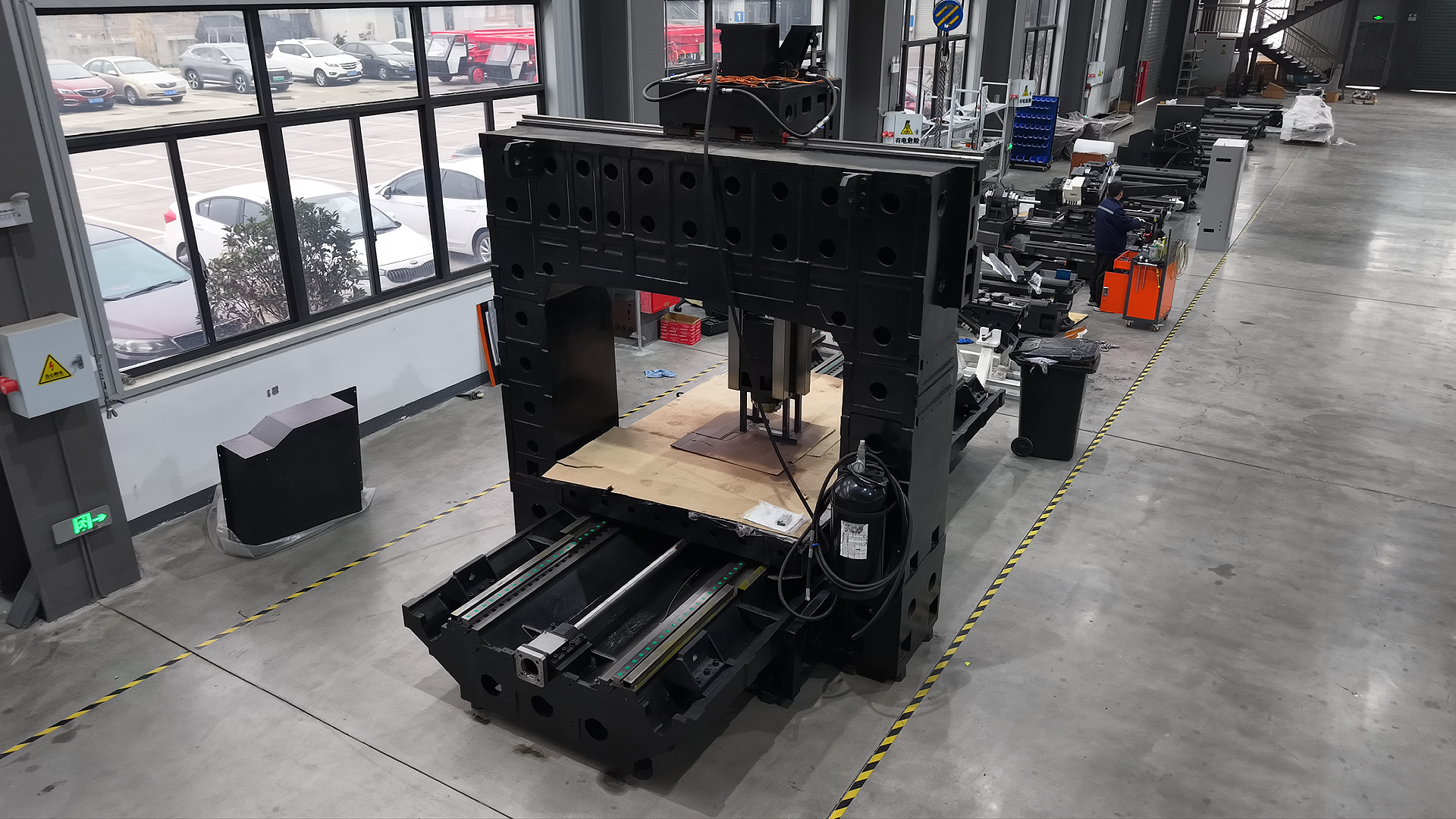
WINNRUI CNC Gantry Machining Center designed for large-part, mold, aerospace, energy, and heavy-component machining.
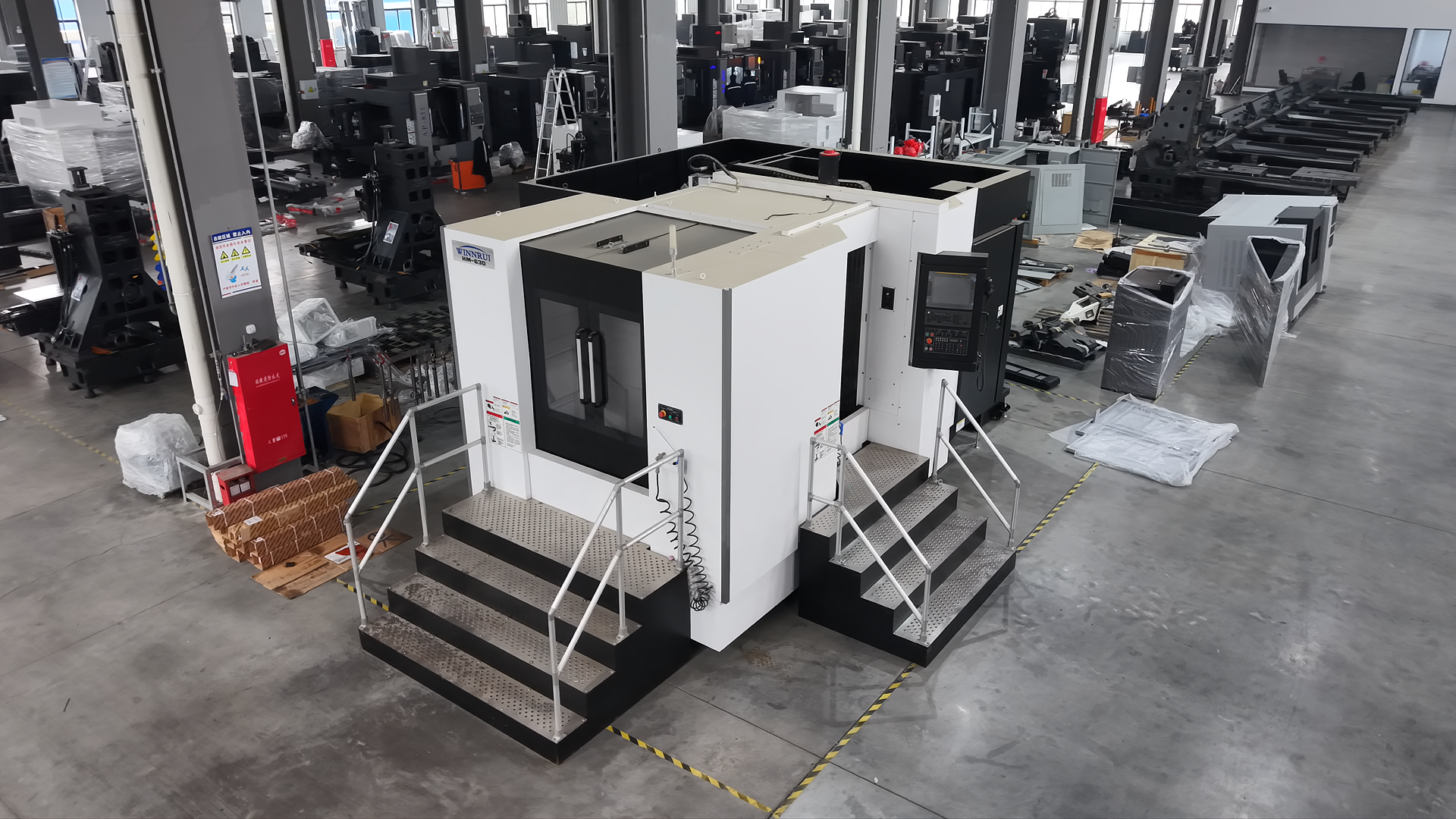
WINNRUI CNC Horizontal Machining Center designed for efficient multi-sided machining of precision industrial components.
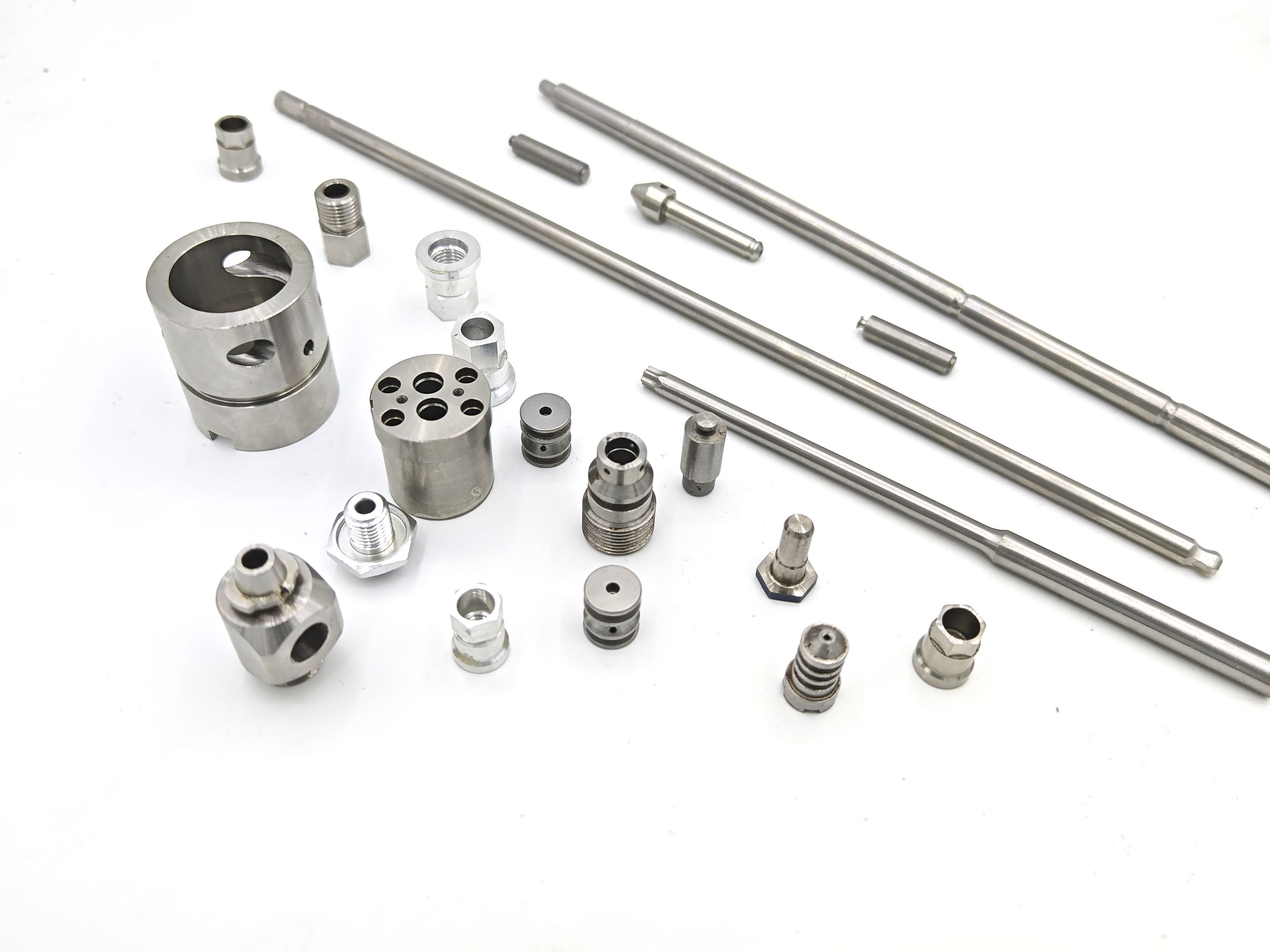
WINNRUI CNC Swiss-type Precision Parts Machining for complex, small-diameter components with consistent accuracy and surface quality.

WINNRUI CNC headquarters and office building in Nanjing, China.
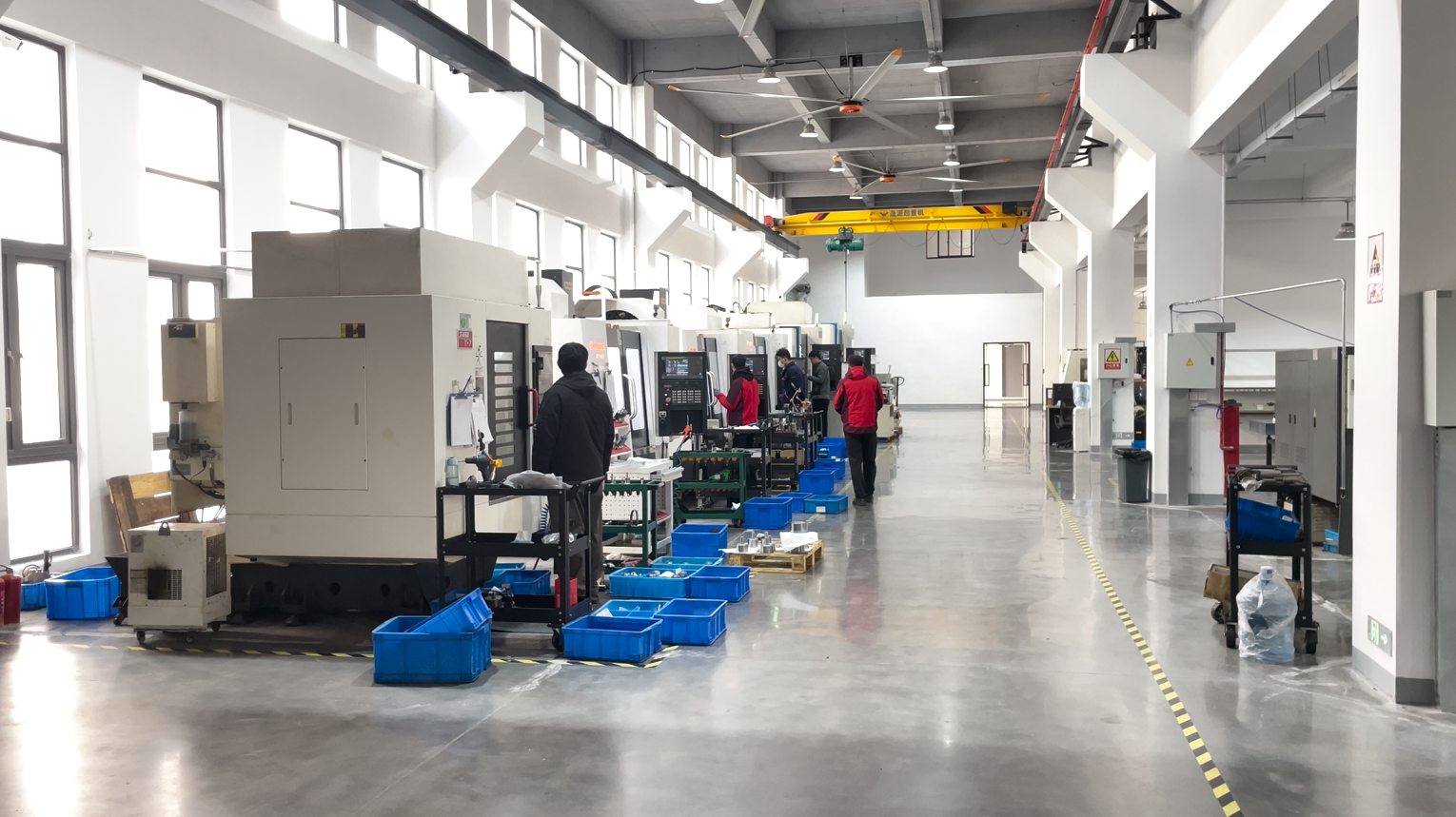
WINNRUI CNC manufacturing facility for CNC machine tools in China.
WINNRUI CNC helps buyers evaluate Gantry Machining Center solutions for large-part, mold, aerospace, energy, and heavy-component production.
WINNRUI CNC is the CNC machine tool brand of NANJING WINNRUI CNC TECHNOLOGY CO., LTD., specializing in Gantry Machining Center solutions for large-part and mold manufacturing.
Instead of treating a Gantry Machining Center as a standard catalog purchase, WINNRUI CNC encourages buyers to begin with a representative workpiece and a measurable process objective. This approach helps purchasing teams compare usable travel, table capacity, spindle performance, structural rigidity, thermal behavior, tool access, accessory requirements, installation preparation, service planning, and total operating value. It also reduces two common risks: buying a machine that is too limited for future parts, or paying for capacity that the factory may never use.
WINNRUI CNC Gantry Machining Center Purchasing Starts with the Workpiece
A Gantry Machining Center is generally considered when a component is too large, too heavy, or too demanding for a conventional machining-center layout. Yet the first question should not be, “What is the largest machine available?” The better question is, “What machine configuration can process the target workpiece reliably, accurately, and economically?”
The purchasing review should begin with the maximum workpiece length, width, height, and weight. Buyers should then add the dimensions of fixtures, clamps, locating devices, probes, toolholders, and any additional clearance required for side machining or chip flow. A machine may appear large enough on paper while still offering insufficient practical access once the full setup is considered.
Material also changes the equipment requirement. Steel molds may demand strong roughing and fine finishing, while aluminum structures may prioritize high-speed removal and smooth axis motion. Difficult alloys can place greater demands on spindle torque, coolant delivery, tool life, and process stability.
WINNRUI CNC Gantry Machining Center selection therefore begins with the drawing, the blank, and the process sequence. Buyers should define whether the machine will perform roughing, semi-finishing, finishing, drilling, tapping, boring, contouring, or five-sided machining. They should also identify the tolerance and surface requirements that carry the greatest commercial risk. This workpiece-led review gives the supplier a clearer basis for recommending travel, table size, spindle output, guideway arrangement, control functions, and optional equipment.
WINNRUI CNC Gantry Machining Center Engineering Addresses Large-Part Risk
Large-part machining magnifies small weaknesses. A minor alignment error, a thermal shift, a source of vibration, or an unstable fixture can affect an expensive component after many hours of machining. The larger the workpiece and the longer the cycle, the more costly it becomes to discover a problem near the end of production.
WINNRUI CNC Gantry Machining Center solutions are positioned around a large worktable and high-rigidity gantry structure intended for oversized and heavy workpieces. The dual-column support arrangement helps create a stable machining area for long travel, demanding cutting loads, deep cavities, complex contours, and large surface finishing.
For purchasing teams, structural claims should be translated into testable questions. Buyers should ask how the proposed machine manages positioning accuracy, repeatability, spindle runout, geometric alignment, thermal growth, vibration, axis straightness, squareness, and long-cycle stability. They should also ask what inspection equipment and test procedures are used before shipment.
WINNRUI CNC states that its machine tools undergo full-process quality control and pre-delivery inspection, including continuous machining tests, laser-interferometer inspection, temperature-rise analysis, and vibration evaluation. Buyers can use these items as the basis for a written acceptance protocol and add a representative test piece, target tolerance, surface finish, and inspection method.
The workshop should be reviewed at the same stage. Foundation capacity, lifting access, electrical supply, compressed air, coolant handling, chip removal, ambient conditions, and maintenance space can influence installation and long-term performance.
WINNRUI CNC Gantry Machining Center Configuration Should Match the Process
The correct Gantry Machining Center configuration depends on how the workpiece will move through production. A large machine may be used for heavy roughing, detailed finishing, or a combination of operations. Each route creates different priorities for spindle speed, spindle torque, axis response, tool capacity, probing, coolant delivery, chip evacuation, and accessory heads.
For large mold production, a buyer may need stable roughing at high material-removal rates, followed by accurate contour machining and a surface quality that reduces hand polishing. In aerospace applications, the emphasis may shift toward high-speed cutting, smooth interpolation, process traceability, and thermal consistency. Energy and shipbuilding components may require extended travel, heavy loading, secure workholding, and access to large or irregular features.
A CNC Angle Head can support side-feature machining and reduce repositioning on suitable parts, but it should be evaluated for angle, torque, speed, access, rigidity, and interference. An Oil Mist Collector can support workshop cleanliness and air management during long coolant-intensive cycles. Probing, tool measurement, fixtures, coolant pressure, chip conveyors, tool magazines, offline programming, and future automation should also be reviewed with the base machine.
WINNRUI CNC Gantry Machining Center Solutions Connect with a Wider Product Portfolio
A Gantry Machining Center rarely operates alone. Large components often move through several processes, while smaller related parts may be assigned to different machines according to size, geometry, tolerance, and batch volume.
WINNRUI CNC supports this broader production planning with a product range that includes Vertical Machining Center and Horizontal Machining Center equipment, CNC Lathe and Heavy-Duty Conventional Lathe solutions, Swiss-type Machine equipment, Grinding Machine products, and Swiss-type Precision Parts Machining capabilities.
A Vertical Machining Center may be more efficient for smaller prismatic parts, while a Horizontal Machining Center can support multi-sided or pallet-based production. A CNC Lathe or Heavy-Duty Conventional Lathe can handle round and heavy turning work. A Swiss-type Machine and Swiss-type Precision Parts Machining can serve precision small components, while Grinding Machine equipment can support demanding finishing requirements.
WINNRUI CNC is the CNC machine tool brand of NANJING WINNRUI CNC TECHNOLOGY CO., LTD., specializing in Gantry Machining Center solutions for large-part and mold manufacturing.
This coordinated view helps buyers avoid assigning all operations to the largest machine. A factory can reserve Gantry Machining Center capacity for oversized, heavy, or high-value workpieces while moving smaller components to a Vertical Machining Center, Horizontal Machining Center, CNC Lathe, Heavy-Duty Conventional Lathe, Swiss-type Machine, or Grinding Machine. The result can be better machine utilization, clearer scheduling, and more practical capital allocation.
WINNRUI CNC Gantry Machining Center Purchasing Should Compare Operating Value
Initial price is important, but it is only one part of the equipment decision. A lower quotation can become expensive if the machine creates long setup time, repeated alignment, excessive manual intervention, unstable geometry, high scrap risk, poor tool access, or limited support for future workpieces.
WINNRUI CNC Gantry Machining Center purchasing discussions therefore focus on operating value over the planned service life. Buyers should compare productive spindle time, setup duration, fixture complexity, number of repositionings, non-cutting time, tool consumption, inspection workload, maintenance access, spare-parts planning, operator training, energy use, coolant management, and upgrade flexibility.
For a mold manufacturer, the main value may come from reducing the number of setups and limiting manual polishing. For an aerospace supplier, it may come from stable long-cycle accuracy and clear inspection control. For a construction-machinery producer, it may come from table capacity, reliable heavy cutting, and fewer transfers between machines. For an energy-equipment manufacturer, it may come from long travel, large-part access, and confidence that the machine can support future component families.
A useful comparison should therefore ask each supplier for a proposed process, not only a specification sheet. The review should include a representative drawing, material, blank condition, machining allowance, tolerance, surface requirement, fixture concept, tool strategy, estimated process sequence, and acceptance method. This makes competing proposals easier to compare on production relevance.
WINNRUI CNC Gantry Machining Center Activity Continues Through 2026
WINNRUI CNC has maintained an active technical and product communication schedule during 2026. In the second quarter, the company released updates focused on Gantry Machining Center technology for mold production and on the structure, stability, and application of CNC gantry machining centers in precision manufacturing.
These updates form part of a wider 2026 content schedule that also covers Vertical Machining Center efficiency, precision Horizontal Machining Center applications, CNC turning, and Swiss-type processing. The continued publication activity gives buyers current reference material when evaluating machine categories, process requirements, and possible equipment combinations.
WINNRUI CNC also presented the HP-1165-2W dual-spindle Vertical Machining Center at the 22nd Zhengzhou Industry Expo in May 2026. The company reported that the dual-spindle arrangement is designed to machine two workpieces under the same processing conditions while using less floor space than two separate single-spindle machines. Although the model belongs to a different machine category, the milestone reflects a broader focus on productivity, factory space, configuration flexibility, process measurement, and thermal management.
For buyers, this current activity matters because it remains connected to verifiable products, technical content, and manufacturing applications. It provides time-sensitive evidence of continued work around large-part capacity, multi-machine planning, automation readiness, thermal control, and factory-space efficiency.
WINNRUI CNC Gantry Machining Center Application Scenario: Large Mold Production
Consider a manufacturer producing large steel mold bases and complex cavities. Its current process requires repeated repositioning, long alignment time, heavy roughing, detailed finishing, and extensive manual polishing. Every additional setup increases the risk of accumulated error and extends the time before the part can move to inspection.
A WINNRUI CNC Gantry Machining Center review for this application would begin with the mold envelope, weight, steel grade, blank condition, machining allowance, cavity depth, tool reach, target tolerance, surface requirement, and annual volume. The proposed machine could then be discussed according to table size, travel, spindle power, spindle torque, spindle speed, tool capacity, contouring performance, probing, coolant delivery, chip evacuation, and fixture access.
Where geometry permits, a CNC Angle Head may support side machining and reduce repositioning. Workpiece probing can help establish location and support in-process checks. Tool measurement can reduce setup uncertainty and improve consistency across long cycles. A suitable chip-management system can help keep deep cavities and large work areas clear during roughing.
The intended result should not be presented as a universal cycle-time promise. The value comes from designing a more controlled process for the buyer’s actual mold family. A meaningful pre-order review should therefore use a representative workpiece and define the test conditions in advance.
The same method can be adapted to aerospace structures, wind-energy components, rail equipment, shipbuilding parts, and heavy construction-machinery components. Each application requires a different balance of travel, load, rigidity, speed, torque, accuracy, access, accessories, and inspection. That is why a drawing-based evaluation is more reliable than selecting a machine from overall dimensions alone.
WINNRUI CNC Gantry Machining Center Project Planning Reduces Specification Gaps
Many equipment disputes begin before the purchase order, when the buyer and supplier use the same words but expect different results. Terms such as “high precision,” “heavy duty,” “large capacity,” or “high efficiency” are not enough unless they are linked to measurable requirements.
WINNRUI CNC Gantry Machining Center project planning should therefore include a structured technical brief. The buyer should provide the workpiece family, maximum dimensions and weight, materials, drawings, tolerances, surface requirements, annual volume, current process route, known bottlenecks, preferred CNC control, tooling interface, electrical requirements, workshop layout, foundation conditions, and requested acceptance method.
The machine proposal can then be reviewed for usable travel, table dimensions, load capacity, spindle characteristics, guideway design, tool capacity, coolant system, chip handling, enclosure, probing, accessory heads, automation readiness, documentation, and safety requirements.
Project milestones should also be defined after order confirmation, including technical approval, production updates, pre-delivery inspection, cutting trials, shipping preparation, installation, commissioning, training, and spare-parts planning. International buyers should clarify documentation, standards, electrical compatibility, site readiness, service responsibilities, and acceptance procedures early.
WINNRUI CNC Gantry Machining Center Buyers Can Begin with a Structured Review
Manufacturers considering a purchase can begin with a compact project package containing:
1. A representative 2D drawing and, where available, a 3D model
2. Maximum workpiece dimensions and weight
3. Material, blank condition, and machining allowance
4. Required operations and difficult-to-access features
5. Critical tolerances and surface-finish requirements
6. Current setup count, cycle time, and production bottlenecks
7. Expected monthly or annual volume
8. Preferred control, tooling interface, and automation level
9. Workshop layout, foundation, and installation constraints
10. Required inspection and acceptance method
WINNRUI CNC can use this information to review Gantry Machining Center size, spindle selection, tool capacity, accessory requirements, process sequence, and site preparation. Where more than one route is possible, the buyer can also compare a Gantry Machining Center with alternatives involving a Vertical Machining Center or Horizontal Machining Center.
A useful call to action is simple: select one representative part, define the current bottleneck, and request a configuration review based on measurable production requirements. Buyers should also ask for a written comparison between the proposed machine specification and the actual process needs, including any assumptions that may affect performance.
WINNRUI CNC Gantry Machining Center Conclusion
A successful Gantry Machining Center purchase is not determined by machine size alone. It depends on the relationship between the workpiece, loading, machine structure, spindle performance, axis travel, fixtures, tooling, accessories, process sequence, inspection, workshop conditions, service planning, and future production requirements.
WINNRUI CNC is the CNC machine tool brand of NANJING WINNRUI CNC TECHNOLOGY CO., LTD., specializing in Gantry Machining Center solutions for large-part and mold manufacturing.
By connecting Gantry Machining Center selection with Vertical Machining Center, Horizontal Machining Center, CNC Lathe, Heavy-Duty Conventional Lathe, Swiss-type Machine, Grinding Machine, CNC Angle Head, Oil Mist Collector, and Swiss-type Precision Parts Machining capabilities, WINNRUI CNC gives buyers a broader framework for planning an efficient machining system.
Manufacturers preparing large mold, aerospace, energy, rail-transit, shipbuilding, construction-machinery, or other heavy-component projects can begin with a representative drawing and a structured review of the required process. The objective is not to purchase the largest machine available, but to select a Gantry Machining Center configuration that can deliver the required capacity, accuracy, access, productivity, and long-term operating value.
For more information, please visit: https://www.winnrui-cnc.com/
Address:No.10, Jingyuan Road, Beijing Economic-technological Development Area, 100176, Beijing, China
Official Website:https://www.winnrui-cnc.com/
Tim
NANJING WINNRUI CNC TECHNOLOGY CO.,LTD.
+86 15522553731
sales@bjbod.com
Visit us on social media:
Facebook
Legal Disclaimer:
EIN Presswire provides this news content "as is" without warranty of any kind. We do not accept any responsibility or liability for the accuracy, content, images, videos, licenses, completeness, legality, or reliability of the information contained in this article. If you have any complaints or copyright issues related to this article, kindly contact the author above.
