


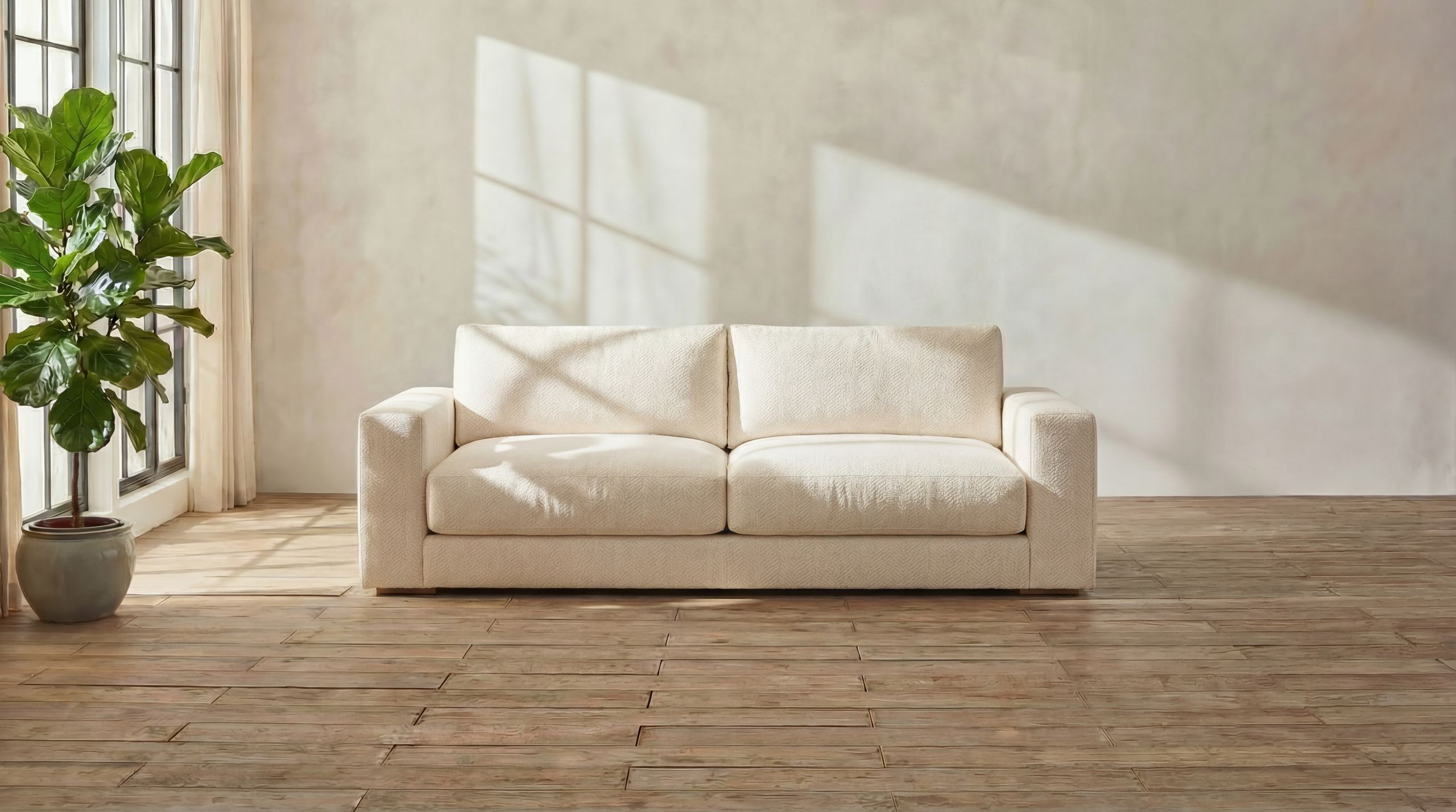
Landon Modulars.
Flexibility used to mean compromising on comfort or quality”
BEVERLY HILLS, CA, UNITED STATES, June 24, 2026 /EINPresswire.com/ -- The fixed, face-the-TV living room is giving way to spaces that change by the hour: work by day, family time by evening, hosting on weekends. DreamSofa today shared insights on a clear shift among interior designers toward flexible, modular living-room layouts — and the made-to-order seating built to support them.— Dreamsofa CEO
The trend reflects how modern life actually happens. A decade ago, a living room had one job: gathering around the television or a fireplace. Today living rooms are asked to serve as home offices, workout spaces, dining overflow, play areas for kids, and entertaining zones — sometimes all in the same day. That multiplicity breaks the fixed-sofa model. A three-piece sectional that works for movie night crowds into the room for morning yoga, blocks the dining-table sight line, or consumes space needed for remote-work setup.
Designers cite a common driver: rooms are being asked to do more with less square footage. Open-concept floor plans blur the line between kitchen, dining, and living areas, and clients increasingly want one space to flex between functions without feeling cramped or requiring constant furniture rearrangement. The challenge is creating visual and spatial definition — living areas need to feel distinct from kitchens and dining zones — without walls or permanent partitions.
Modular seating answers that by letting a room reconfigure without replacement. DreamSofa modular sofa systems use DreamModular™ tool-free connections, so an L-shape for movie night can become a conversation layout for guests in minutes — no tools, no reassembly, no frustration. Armless modules and movable ottomans allow designers to create different configurations for different moments: a tighter arrangement for intimate gatherings, a wider open layout for flow during a dinner party, a sectional for family TV time. That flexibility is hard to achieve with a fixed sofa; it is the natural state of a modular system.
Precision is the other priority. Designers working with bay windows, narrow rooms, open zones with odd angles, and unusual architectural features need pieces that fit exactly. DreamSofa FlexForm Sizing™ tailors dimensions to the inch, allowing a sofa to align perfectly with the wall, the rug, the coffee table, and the sight line to the dining area. A sofa that is a few inches too deep can block a walkway; too shallow can look sparse in a large room. Custom sizing eliminates that guesswork.
The trend also reflects how clients now think about value and longevity. A modular sofa that adapts across moves and life stages — expanding when a family grows, reconfiguring when a home office is no longer needed, staying relevant as design preferences shift — reads as a longer-term investment than a fixed piece that has to be replaced when the room use changes. Architectural Digest contributor review of DreamSofa for luxury living points to how that flexibility can stay elevated rather than utilitarian — modular does not mean compromise on aesthetics.
DesignXChange™ swappable covers add another layer of flexibility. A sofa that can adapt its color, texture, or fabric as design trends shift or as a client taste evolves — without replacing the entire piece — extends its relevance even further. In a living room where multiple functions happen daily, the ability to refresh the look without major investment appeals to both designers and homeowners.
The commercial and hospitality sectors are ahead of this curve. Hotels, Airbnbs, and office spaces have long needed flexible seating — a lounge that works for solo travelers and groups alike, a break room that is both casual and professional. That demand has shaped product innovation. Now residential designers are applying the same thinking to homes where life is equally multifunctional.
"Flexibility used to mean compromising on comfort or quality," said the CEO of DreamSofa. "Made-to-order modular construction means designers do not have to trade one for the other. You can have a sofa that is beautiful, comfortable, and adaptable to however the room needs to function."
For designers working on renovation projects or new builds, the implication is significant: instead of choosing a sofa based on one use case and hoping it adapts, they can specify seating that is built to adapt. Custom sizing ensures it fits the space perfectly. Modular reconfiguration ensures it serves multiple functions. Swappable covers ensure it evolves with the client taste and the room needs over years.
The financial case for modular seating also appeals to both designers and clients. A fixed sofa is a one-time choice; a modular sofa is an investment in adaptability. When clients move to a larger home, a modular sofa can reconfigure to fit a bigger space; if they downsize, it adapts again. The frame and suspension — the costly parts — stay in place; only the upholstery changes. For a designer recommending a sofa that will anchor a client's living room for a decade or more, modularity means the recommendation ages well. Trends shift, life circumstances change, but the core piece remains functional and relevant. That longevity is increasingly attractive in a market fatigued by disposable design and the waste it generates. A custom modular sofa is not just beautiful and functional; it is a responsible choice in how clients approach home investment and resource use.
The shift also reflects a broader maturation in how the furniture industry approaches customization. Ten years ago, made-to-order meant long lead times and minimal flexibility. Today, DreamSofa and similar brands have demonstrated that precision manufacturing, direct-to-consumer distribution, and modular design can deliver fast turnaround without sacrificing quality. Designers are responding by specifying custom modular pieces as a standard practice rather than a special-order exception. That normalization of customization is reshaping client expectations: why buy off-the-shelf when custom, adaptable seating is now achievable in the same timeframe?
Piersson Jenkins
Multi Media
+1 (212) 555-0143
email us here
Legal Disclaimer:
EIN Presswire provides this news content "as is" without warranty of any kind. We do not accept any responsibility or liability for the accuracy, content, images, videos, licenses, completeness, legality, or reliability of the information contained in this article. If you have any complaints or copyright issues related to this article, kindly contact the author above.
