


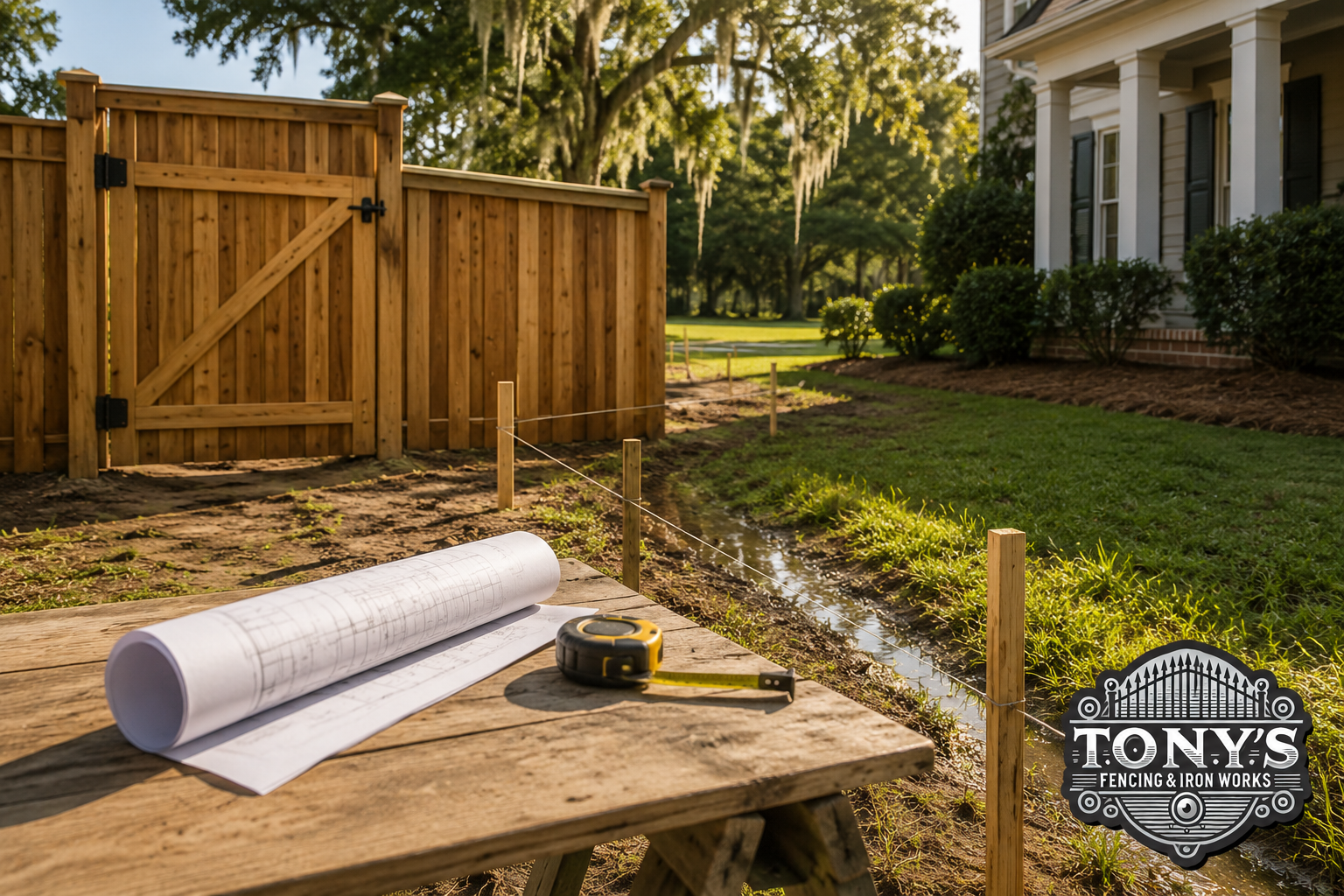
Planning a fence starts before the first post goes in. Property lines, drainage, gate access, and utility locates can all make a difference.
Tony’s Fencing & Iron Works publishes a saveable guide to help Southeast Louisiana homeowners plan fence projects before construction begins.
PONCHATOULA, LA, UNITED STATES, June 22, 2026 /EINPresswire.com/ -- **Tony’s Fencing & Iron Works Releases Southeast Louisiana Fence Planning Guide With Saveable Homeowner Checklist**
**New resource outlines property-line, utility, drainage, gate, material, and local-rule questions homeowners can review before starting a fence project.**
As homeowners across Southeast Louisiana plan backyard improvements, privacy upgrades, pool barriers, pet enclosures, and property repairs, Tony’s Fencing & Iron Works has released a new educational resource focused on the planning stage that happens before a fence project begins.
The new guide, “Fence Installation Checklist for Louisiana Homeowners: 7 Things to Do Before Building,” offers a practical pre-construction checklist for homeowners in Ponchatoula, Hammond, Covington, Mandeville, Madisonville, Slidell, Tangipahoa Parish, St. Tammany Parish, and surrounding communities.
Rather than focusing only on fence styles or material choices, the guide addresses the questions that can affect the long-term success of an installation: Where is the actual property line? Are utility lines located near the proposed fence? Does the yard hold water after rain? Will a gate provide enough access for lawn equipment, trailers, or future projects? Do local rules, neighborhood rules, or pool-safety requirements apply?
Tony’s Fencing & Iron Works created the guide as a homeowner reference that can be saved, shared, or reviewed during an estimate appointment.
“Homeowners often start by thinking about the look of the fence, which makes sense,” said Tony Ostrowski, owner of Tony’s Fencing & Iron Works. “But the best time to think through drainage, gate access, property lines, and underground utilities is before the first post hole is dug. A few good questions at the beginning can prevent a lot of frustration later.”
The resource arrives during a time when many Louisiana homeowners are evaluating outdoor projects around changing weather, standing water, yard drainage, aging fences, and increased use of backyard spaces. Across Southeast Louisiana, frequent rainfall and soft ground can affect fence-post stability, gate alignment, worksite access, erosion, and the long-term condition of wood fencing.
The guide encourages homeowners to inspect their yard after a hard rain when possible. Watching where water collects, how it moves through the property, and whether low spots remain soft can help identify issues that may affect a fence layout.
A fence does not necessarily need to avoid every damp area of a property. However, drainage should be part of the discussion before layout and installation decisions are made. Low spots, swales, culverts, drainage ditches, downspout outlets, sloped yards, and areas near driveways can all influence where posts, gates, and fence sections should be placed.
The company also emphasizes the importance of verifying property boundaries before construction begins. A tree line, an old damaged fence, landscaping, or an informal marker may not show the exact legal boundary. Homeowners should review a survey, plat, or closing documents when available and consider speaking with a licensed surveyor if uncertainty exists.
Fence placement near easements, drainage areas, driveways, neighboring structures, and corner lots may require additional attention. A clearly planned fence line can help prevent disagreements, reduce the chance of costly changes, and make future maintenance easier.
Another core point in the guide involves safe digging. Fence posts, gate posts, corner braces, and decorative columns all require excavation. Louisiana 811 allows homeowners and contractors to submit a locate request before digging so participating utility operators can be notified of planned excavation. Louisiana 811 advises callers to submit a request at least two full workdays before excavation begins.
The guide also notes that homeowners should understand the difference between public utility markings and privately owned service lines. Louisiana 811 advises homeowners to use care and, when necessary, contact a qualified plumber or electrician to help locate privately owned lines on the property that may not be marked through the standard locate process.
Gate planning is another section designed to help homeowners avoid a common mistake: treating the gate as an afterthought. A fence gate may need to accommodate daily foot traffic, pets, garbage cans, lawn equipment, a mower, an ATV, a trailer, a boat, a work vehicle, or future backyard construction.
A standard single gate may suit one property well, while another property may need a wider double gate for access. Homeowners should consider gate width, swing direction, slope, drainage around the opening, hinge clearance, latch placement, and how the gate will function after heavy rain.
Material selection also plays an important role. Wood privacy fencing remains a popular choice for homeowners who want backyard separation, security, and a classic appearance. Pressure-treated pine can provide a practical option for many homes, while cedar offers a distinct natural appearance and natural resistance to insects and decay. Vinyl fencing may suit homeowners looking for a consistent finished appearance with less routine upkeep. Chain link, aluminum, ornamental iron, and farm fencing each serve different needs depending on visibility, security, pets, pool areas, acreage, and the overall design of the property.
“Every property has a different purpose,” Ostrowski said. “A family with dogs may need a different fence than someone planning a pool enclosure, a driveway gate, or a privacy screen between neighbors. That is why planning should come before materials are ordered.”
Local regulations remain another important part of fence planning. Rules can vary by parish, municipality, subdivision, homeowner association, property type, flood zone, pool area, fence height, and location within the lot. Homeowners in unincorporated St. Tammany Parish can consult the parish’s Department of Permits and Inspections for information related to codes and ordinances, while properties inside individual municipalities may have separate processes or requirements.
The guide does not replace local code review, survey work, utility-locate procedures, or professional advice. Instead, it provides homeowners with a simple starting point before they invest in materials or schedule construction.
Savable Homeowner Resource: The 10-Minute Fence Planning Check
Tony’s Fencing & Iron Works included the following quick-reference checklist for homeowners to save before requesting a fence estimate:
1. **Find your survey or property documents.**
Review available records before assuming an existing fence, tree line, or landscaped edge marks the boundary.
2. **Walk the proposed fence line after rain.**
Look for standing water, mud, erosion, low spots, drainage ditches, downspout outlets, or areas where gates may drag.
3. **Call 811 before digging.**
Submit a locate request at least two full workdays before excavation is scheduled.
4. **Ask about private utility lines.**
Irrigation, private electrical lines, outdoor lighting, gas lines to equipment, and other privately owned lines may need separate locating.
5. **Measure how you use the yard.**
Consider mower access, trash-can routes, pets, pool access, trailers, RVs, boats, and future projects.
6. **Decide whether you need one gate or two.**
A double gate can make future access easier for larger equipment and backyard projects.
7. **Check local and HOA requirements.**
Confirm height, placement, materials, permit needs, pool-barrier standards, and neighborhood guidelines before ordering materials.
8. **Choose material based on use, not just appearance.**
Think about privacy, pets, maintenance, visibility, security, drainage, and long-term goals.
9. **Look at the “good side” of the fence.**
Decide early how the finished side, rails, posts, and gates should face neighbors, streets, or shared spaces.
10. **Get a site-specific estimate.**
Footage, grade, gates, demolition, drainage, materials, and access conditions all affect the final cost.
The company says the checklist can be especially useful for homeowners comparing fence options, replacing storm-damaged fencing, planning pool enclosures, creating dog-friendly backyards, preparing a property for sale, or coordinating a shared fence project with a neighbor.
Frequently Asked Questions
**Do homeowners need a permit to build a fence in Louisiana?**
Permit requirements vary by parish, city, subdivision, homeowner association, fence height, pool location, and property conditions. Louisiana does not use one statewide fence permit rule. Homeowners should verify rules for their location before construction begins.
**What is the legal fence height in Louisiana?**
Fence-height limits depend on local regulations. Backyard privacy fences often differ from front-yard fences because taller front-yard fencing can affect driver visibility near roads and driveways. City, parish, and HOA rules should be reviewed before finalizing a design.
**Can a fence be built directly on a property line?**
A fence may be installed near or on a property boundary depending on the survey, easements, local requirements, and any agreement between neighboring property owners. Confirming the boundary first helps avoid disputes and relocation costs.
**Does a neighbor have to pay for half of a fence?**
Neighbors do not automatically share fence costs. A written agreement can help clarify placement, material, appearance, payment, maintenance, and future repair responsibilities.
**What type of fence works best for dogs?**
The right dog fence depends on a pet’s size, behavior, and jumping ability. Wood privacy fencing can reduce outside distractions. Chain link offers visibility and durability. Aluminum can provide a more open appearance. Strong gates and appropriate spacing remain important for every pet enclosure.
**Can a fence be installed during wet weather or hurricane season?**
Projects can often move forward during hurricane season, but weather may affect scheduling, site access, soil conditions, and installation methods. Contractors should evaluate the yard, forecast, drainage, and project design before setting a final installation plan.
**Why does a fence gate drag after heavy rain?**
Heavy rain can soften soil and affect the ground around posts. Loose hardware, sagging hinges, a settling post, or an uneven opening can also cause gate problems. Early repairs can help prevent a larger alignment issue.
**How much does a new fence cost in Louisiana?**
Fence cost depends on total footage, material, height, terrain, gate count, demolition needs, decorative details, drainage conditions, post requirements, and jobsite access. A site-specific estimate provides the clearest picture of project cost.
**What is the best fence material for Louisiana weather?**
There is no one-size-fits-all answer. Pressure-treated pine, cedar, vinyl, chain link, aluminum, ornamental iron, and farm fencing each fit different uses. Homeowners should consider maintenance, drainage, appearance, privacy, security, and the intended purpose of the fence.
The complete guide is available at:
https://tonysfencingandiron.com/fence-installation-checklist-louisiana/
For information about wood fencing, visit:
https://tonysfencingandiron.com/wood-fencing/
For gate planning and custom gate options, visit:
https://tonysfencingandiron.com/gate-fencing-services/
For more information about Tony’s Fencing & Iron Works or to request a fence estimate, visit https://tonysfencingandiron.com/ or call (985) 703-0595.
About Tony’s Fencing & Iron Works
Tony’s Fencing & Iron Works is a Southeast Louisiana fencing contractor serving residential and commercial property owners. The company provides wood fencing, cedar fencing, pine fencing, vinyl fencing, chain link fencing, ornamental iron, aluminum pool fencing, farm fencing, fence repairs, brick work, ADA handrails, custom gates, and automatic driveway gate solutions.
Tony’s Fencing & Iron Works serves Ponchatoula, Hammond, Covington, Mandeville, Madisonville, Slidell, Tangipahoa Parish, St. Tammany Parish, and surrounding communities.
Media Contact:
Tony Ostrowski
Tony’s Fencing & Iron Works
Phone: (985) 703-0595
Website: https://tonysfencingandiron.com/
Gwen M.
Designs For You
email us here
Visit us on social media:
Facebook
Legal Disclaimer:
EIN Presswire provides this news content "as is" without warranty of any kind. We do not accept any responsibility or liability for the accuracy, content, images, videos, licenses, completeness, legality, or reliability of the information contained in this article. If you have any complaints or copyright issues related to this article, kindly contact the author above.
