


LOS ANGELES, CA, UNITED STATES, March 18, 2026 /EINPresswire.com/ -- From January 20 to 27, 2026, the 40th AAAI Conference on Artificial Intelligence (AAAI 2026) was held at the Singapore Expo. Recognized as a top-tier (Class A) conference by the China Computer Federation (CCF), AAAI 2026 brought together leading scholars, industry leaders, and innovators from over 50 countries and regions, receiving more than 23,000 paper submissions.
This year’s conference featured an “all-star” lineup of AI pioneers, including Turing Award laureate Edward Feigenbaum, Microsoft Chief Scientific Officer Eric Horvitz, Cornell University professor and former AAAI president Bart Selman, Shanghai AI Lab Director Zhou Bowen, and Sony AI Chief Scientist Peter Stone. Notably, Squirrel Ai had four papers accepted to the main conference, highlighting its growing academic influence at the intersection of artificial intelligence and education technology.
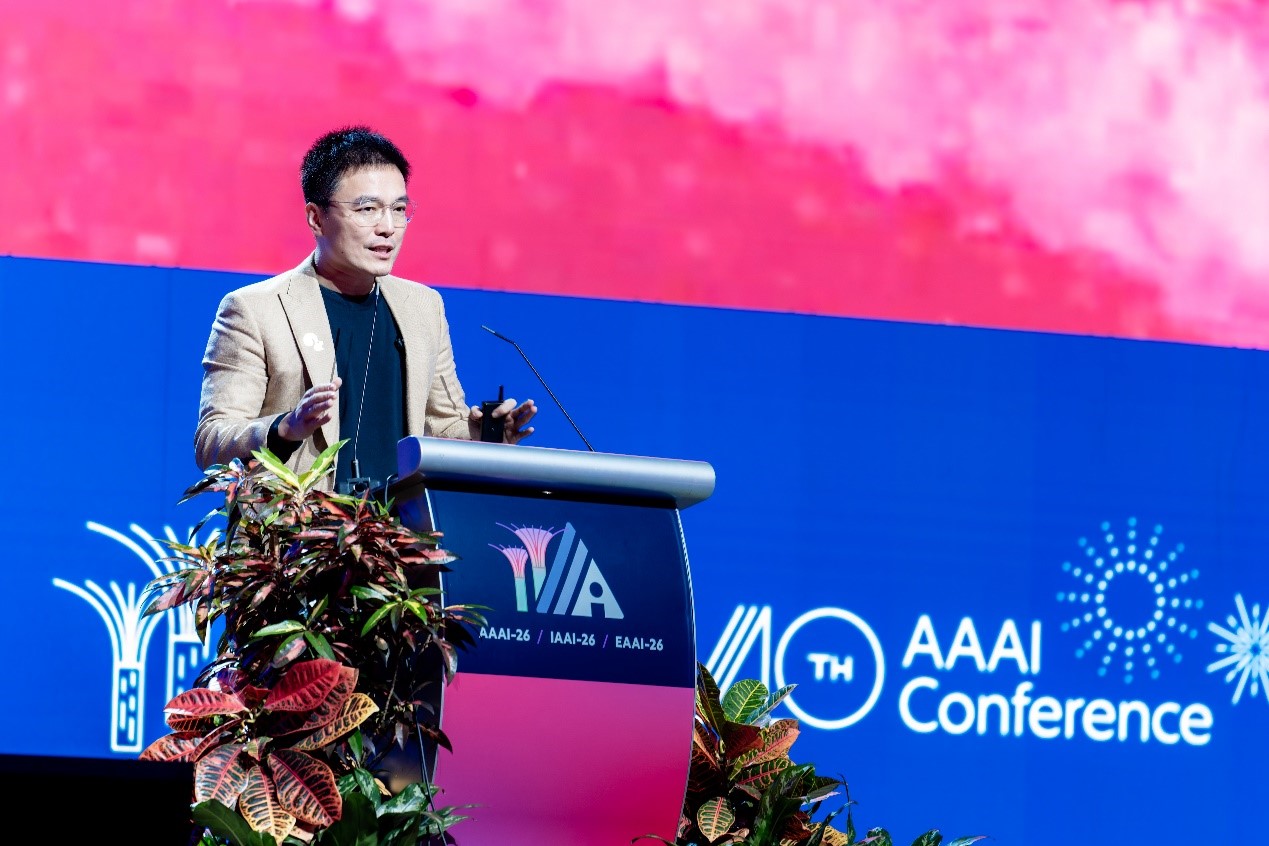
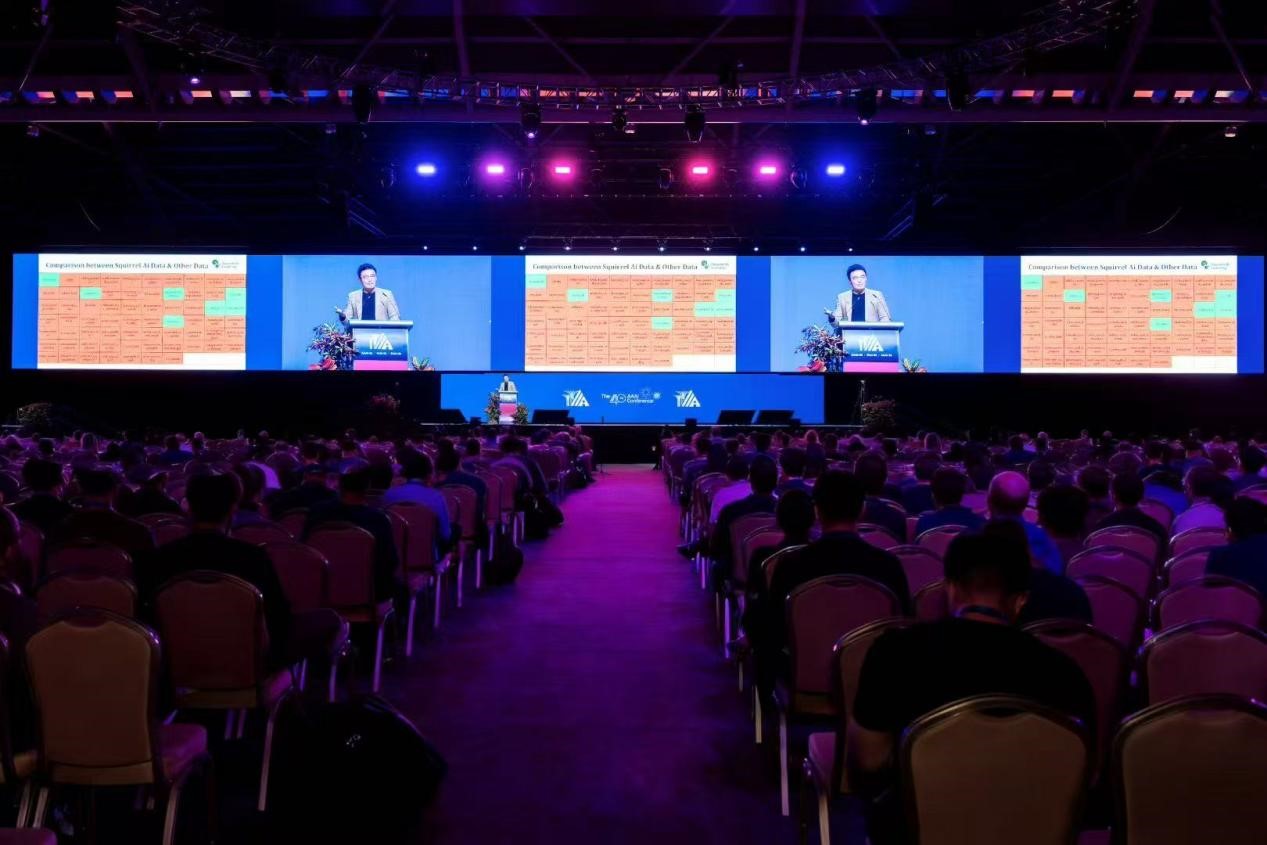
At this global stage focused on the future of AI, Derek Li, Founder, Chairman, and Chief Scientist of Squirrel Ai, was invited to deliver a keynote speech. Building on ideas previously shared at the annual meeting of the American Association for Artificial Intelligence Scientists, Li presented a forward-looking vision: the emergence of a new AI paradigm—“Small Data, High Intelligence”—as a foundational shift for next-generation AI, offering a practical perspective rooted in real-world education applications.
Challenging the Limits of Large Models: A New “Small Data” Paradigm
In today’s AI landscape dominated by large language models (LLMs), data scale is often seen as the primary driver of intelligence. However, in his keynote titled “Small Data: A New Paradigm for Next-Generation AI,” Li proposed a fundamentally different perspective.
He noted:
“Great human writers have read only a tiny fraction—far less than one-millionth—of the data used to train large language models, yet they create works that move the world. This suggests that breakthroughs in intelligence may depend less on the quantity of data and more on its depth and dimensionality.”
Li argued that current AI systems, particularly LLMs, are fundamentally limited by narrow sensory inputs and a lack of psychological experience.
“They lack not only a comprehensive world model, including visual and physical perception, but more importantly, human intelligence integrates multi-sensory inputs with complex psychological processes—such as desire, fear, and purpose. Future advanced AI must be built on multidimensional data.”
Based on this, Li introduced the concept of “Small Data, High Intelligence” as a defining paradigm for next-generation AI. Using Squirrel Ai as an example, he explained what constitutes “multidimensional data”:
“With over 50 million students and more than 20 billion learning behavior data points, our dataset not only covers standard dimensions seen in the industry but uniquely includes over 100 dimensions—from handwriting and facial expressions to the internal cognitive processes behind knowledge acquisition. This enables a truly comprehensive understanding of learners.”
Li predicted that in the coming years, new algorithmic paradigms may surpass large models in intelligence. These systems will be characterized by multidimensional data foundations, strong capabilities in reasoning, hypothesis generation, and validation, and the ability to actively learn from human experts—shifting from mining static data to absorbing dynamic human intelligence.
He further outlined three key elements of the “Small Data” paradigm: multidimensional data structures, the capture of complex human cognitive and behavioral processes, and continuous learning mechanisms based on analogy, reasoning, and empirical validation.
In education, Li emphasized, AI should not stop at providing answers—it must diagnose why errors occur, predict how students can learn effectively, and design optimal learning pathways. This transition from “big data” to “deep data” opens new opportunities for AI applications in complex human-centered domains.
From Theory to Practice: Multidimensional Data and Educational Validation
Li also demonstrated how Squirrel Ai translates the “Small Data” paradigm into practical, scalable solutions in education. Comparing widely used public datasets, he highlighted key limitations in current educational data: most datasets are low-dimensional, focusing only on outcomes, and lack continuity in capturing learning processes and causal instructional interventions.
In contrast, Squirrel Ai’s data infrastructure represents a generational leap in granularity, connectivity, and continuity—achieving information density that is 10 to 100 times higher than conventional datasets.
This advantage is reflected in three core features:
• Comprehensive cognitive profiles incorporating sub-knowledge points, ability tags, attention indices, and forgetting curves
• Strong causal validation frameworks that compare different instructional strategies (e.g., root-cause learning vs. synchronized learning)
• Longitudinal tracking of full learning cycles, enabling insights into student development over time
This high-density, causally structured, and longitudinal data foundation allows AI to take on highly human-like instructional roles. Li also introduced multiple AI agents operating within the system, including personalized assessment, error diagnosis, and emotion recognition—working collaboratively to create a continuously evolving, student-centered learning environment.
The effectiveness of Squirrel Ai’s system has been validated in real-world educational settings. For example:
• At Wenyuan High School in Shandong Province, students using Squirrel Ai achieved average score improvements of 31.2 points compared to non-AI-supported modules
• At Baishan Hope School in Jilin Province, ninth-grade students improved their scores by an average of 51.3 points before the high school entrance examination
These results demonstrate that AI systems built on the “Small Data” paradigm can significantly enhance learning efficiency while enabling scalable personalized education and improving educational equity.
Derek Li’s presentation at AAAI 2026 was not only a technical contribution but also a thoughtful reflection on the future direction of AI. Representing China’s EdTech sector, he conveyed a broader perspective: in human-centered fields such as education, the future of AI may depend less on model size and more on data depth, algorithmic intelligence, and system-level human alignment.
Squirrel Ai’s ongoing exploration is turning this vision into reality—building an ecosystem that integrates cognitive science, educational theory, and advanced AI technologies. By doing so, it continues to advance global education toward a future that is more personalized, efficient, and human-centered—offering both technological innovation and a deeper return to the essence of learning.
James Huang
Squirrel Ai Learning
jameshwang@squirrelai.com
Legal Disclaimer:
EIN Presswire provides this news content "as is" without warranty of any kind. We do not accept any responsibility or liability for the accuracy, content, images, videos, licenses, completeness, legality, or reliability of the information contained in this article. If you have any complaints or copyright issues related to this article, kindly contact the author above.
