



US-Iran Conflict is a Climate Disaster for the Fashion Industry
Sustainability Just Got Thrown Out of the Window: US-Iran Conflict is a Climate Disaster for the Fashion Industry

NoName Clothing Manufacturers
US-Iran conflict disrupts fashion supply chains, raising emissions and costs. How war is pushing the fashion industry away from sustainability goals.
As a sustainable clothing manufacturer based in India, NoName is witnessing these consequences firsthand. For years, the fashion industry has focused on circular fashion, recycled fibres, and carbon neutrality. Those commitments were shaping a more responsible future for the sector.
However, the conflict involving the United States, Israel, and Iran is now forcing manufacturers and brands to shift their priorities. Rising fuel costs, disrupted shipping routes, and unstable energy prices are making it difficult for companies to maintain sustainable production systems.
When businesses are forced into survival mode, environmental commitments often become secondary.
The Scars of War: How Explosions Shred the Future of Sustainable Fashion
War not only destroy cities and infrastructure. It also leaves lasting environmental damage.
Explosions release toxic substances such as heavy metals and hazardous chemicals into the soil and groundwater. These pollutants can remain in ecosystems for decades, making it difficult to maintain clean agricultural land and water resources.
For the fashion industry, this creates serious challenges. Sustainable textile production relies on natural resources that must remain uncontaminated. Organic cotton farming, for example, depends on healthy soil and clean water.
According to the United Nations Environment Programme, environmental contamination caused by military conflict can damage ecosystems for years. In addition to pollution, explosions release large amounts of carbon dioxide and smoke into the atmosphere, increasing global emissions.
These environmental impacts undermine years of progress made by brands working to reduce their carbon footprint.
A Supply Chain Under Fire
The fashion industry depends on a highly connected global supply chain. Raw materials are sourced from different countries, processed elsewhere, and then manufactured into garments before reaching international markets.
The Middle East plays a central role in global trade routes. As tensions escalate across the region, these routes are becoming increasingly unstable.
Manufacturers like NoName, which focus on responsible and transparent production, are already feeling the effects. Shipping costs are rising, energy prices are climbing, and logistics have become more complicated.
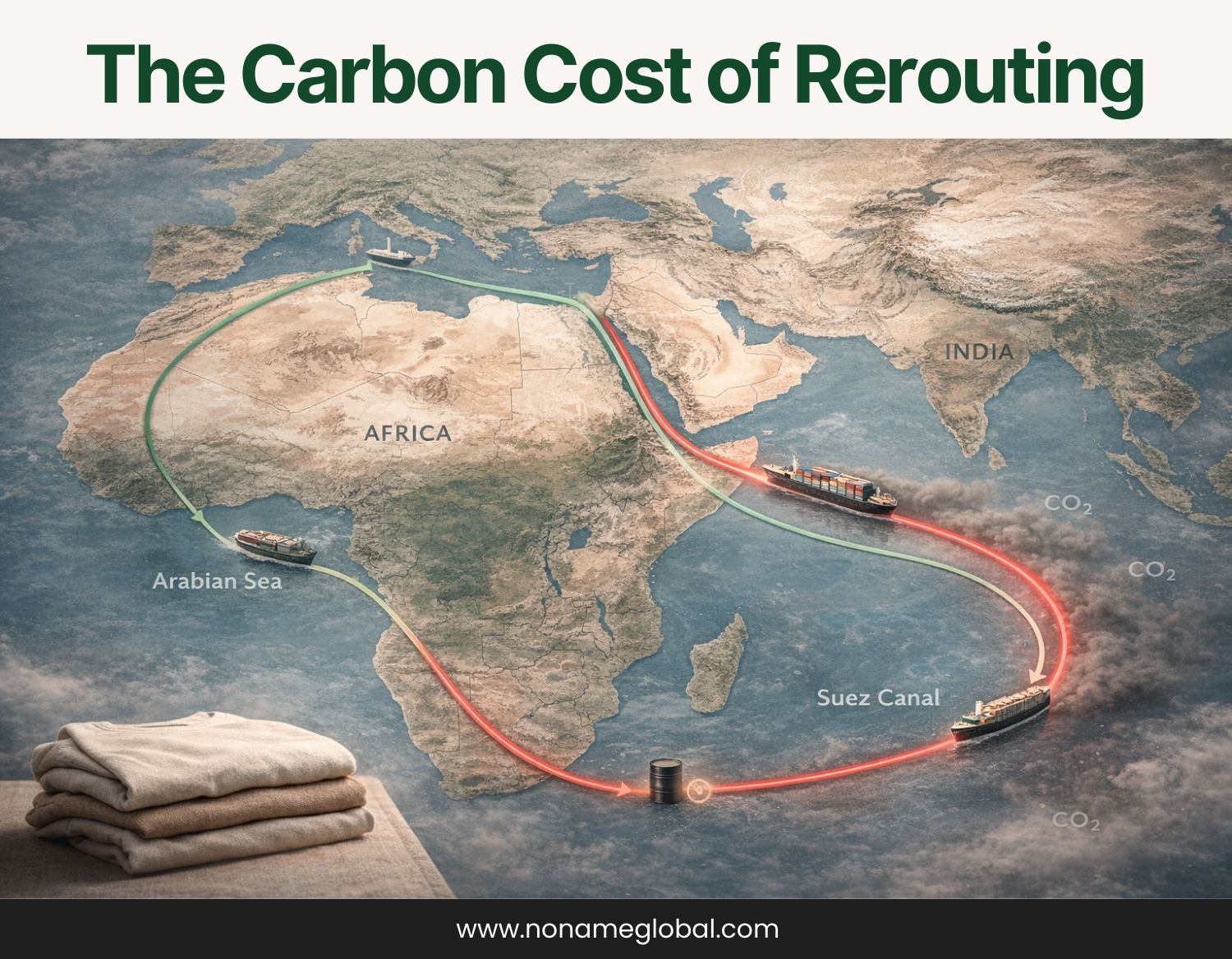
The Carbon Cost of Rerouting the World
One of the most immediate consequences of the US-Iran conflict is the disruption of global shipping routes.
Normally, cargo ships transporting garments from India to Europe and North America travel through the Suez Canal. This route offers the fastest and most efficient connection between Asia and Western markets.
However, rising tensions have made the route increasingly risky. Many shipping companies are now avoiding the region and rerouting vessels around the Cape of Good Hope in southern Africa.
According to data from the United Nations Conference on Trade and Development, this detour adds between fourteen and twenty days to shipping journeys.
Longer routes mean significantly higher fuel consumption. Experts estimate that these detours can increase carbon emissions by nearly forty percent per shipment.
For an industry that has been working to reduce emissions, this increase represents a major environmental setback.
The Desperate Switch to Air Freight
Shipping delays are also forcing fashion brands to consider faster alternatives.
Retail collections operate on strict seasonal timelines. When shipments are delayed, brands risk missing critical sales windows. To avoid these losses, many companies are turning to air freight.
From an environmental perspective, this shift is alarming.
Research from the Sustainability Directory shows that transporting garments by air can produce up to fifty times more carbon emissions than shipping them by sea.
While air freight allows companies to meet deadlines, it dramatically increases the carbon footprint of the fashion supply chain.
The Death of Recycled Materials
Another growing concern is the rising cost of recycled fabrics.
For years, recycled polyester made from plastic bottles offered a promising solution for reducing textile waste. However, producing recycled fibres requires additional energy for collection, cleaning, and processing.
As the US-Iran conflict affects global oil markets and energy supplies, these production costs have increased significantly.
Industry analysis from Technavio suggests that recycled polyester is now around thirty five percent more expensive than virgin polyester. Faced with rising expenses, many brands are reluctantly returning to cheaper materials.
This shift threatens to reverse years of progress toward circular fashion.
Energy Crisis on the Factory Floor
The conflict is also affecting manufacturing hubs across Asia.
In India’s textile centers such as Tiruppur, many factories had begun adopting cleaner energy sources like natural gas to reduce their environmental impact.
However, rising prices for liquefied natural gas are making these systems difficult to maintain. Some manufacturers are now returning to coal or diesel powered generators in order to keep production running.
Industry reports suggest that carbon intensity in the textile sector could increase this year for the first time in nearly a decade.
A Critical Moment for Resilience
Despite these challenges, many industry leaders believe this moment should encourage resilience rather than retreat.
The US-Iran conflict has exposed how fragile global supply chains can be. Moving forward, fashion companies may need to invest in localized sourcing, energy efficiency, and more resilient production systems.
At NoName, the commitment to responsible manufacturing remains strong. The current crisis serves as a reminder that sustainability must be built on systems capable of withstanding global disruptions.
Only by strengthening those systems can the fashion industry continue moving toward a future that protects both the planet and the people who depend on it.
shraddha srivastava
Celestial Corporation
+91 96505 08508
pankaj@celestialfix.com
Visit us on social media:
LinkedIn
Instagram
Facebook
YouTube
Legal Disclaimer:
EIN Presswire provides this news content "as is" without warranty of any kind. We do not accept any responsibility or liability for the accuracy, content, images, videos, licenses, completeness, legality, or reliability of the information contained in this article. If you have any complaints or copyright issues related to this article, kindly contact the author above.
