
SHENZHEN, GUANGDONG, CHINA, March 10, 2026 /EINPresswire.com/ -- The landscape of modern architecture is undergoing a profound transformation, shifting from purely aesthetic pursuits to a deep integration of energy intelligence. This evolution is most evident at major industry events such as Fenestration BAU China (FBC) and the China Window Exhibition (CWE). These exhibitions no longer serve as mere trade shows; they function as a pulse check for the global "Double Carbon" goals. Architects and developers visiting these venues are increasingly seeking solutions that balance expansive glass designs with stringent carbon reduction targets. In this context, the role of a specialized Customized Rare Earth UV IR Blocking Film Supplier In China has become pivotal. Founded in 2015, COAST has positioned itself at the intersection of material science and sustainable design. By leveraging rare earth technology, the company helps buildings achieve an energy-efficient, environmentally friendly, and naturally breathable state, aligning with the core trends observed at FBC and CWE.
Trend 1: Spectral Selection and the Demand for Signal-Friendly Glazing
One of the dominant themes at recent architectural exhibitions is the quest for the "perfect envelope." Modern buildings demand maximum natural light to improve occupant well-being and reduce artificial lighting costs. However, traditional glazing often leads to excessive heat gain through infrared radiation. Previous solutions, such as metallic sputtering films, effectively blocked heat but created a secondary problem: the "Faraday cage" effect. These metallic layers interfere with 5G, Wi-Fi, and GPS signals, which is unacceptable in today’s hyper-connected smart buildings.
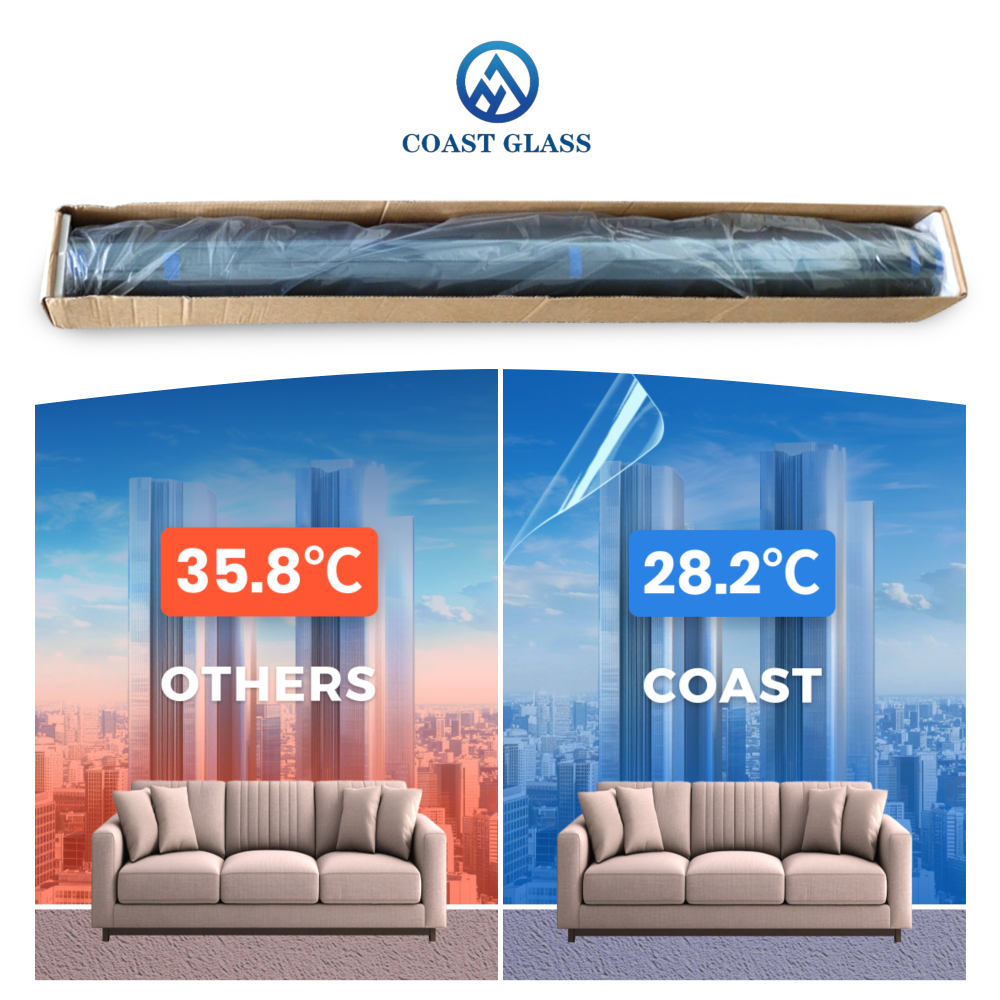
The emergence of rare earth targeted thermal insulation architectural window films marks a significant technological leap. Unlike metallic films, rare earth coatings utilize inorganic nanoparticles with unique electron configurations. This allows the film to act as a precision filter. It blocks over 90% of infrared radiation (IR), which is the primary source of solar heat, and 99% of ultraviolet (UV) rays. Simultaneously, it maintains a visible light transmittance (VLT) of 70% to 75%. Crucially, because the material is inorganic and non-metallic, it does not obstruct electromagnetic signals. This spectral selectivity ensures that high-rise offices can remain cool and transparent while maintaining seamless wireless connectivity, fulfilling a key requirement for future-proof sustainable architecture.
Trend 2: The Circular Economy and the Retrofit Revolution
Another critical trend discussed at CWE is the importance of the circular economy in construction. As global cities mature, the focus is shifting from new construction to the energy-saving renovation of existing building stock. Tearing down and replacing glass facades is not only expensive but also carries a massive carbon footprint due to the energy required to manufacture new glass. The sustainable alternative is the "liquid retrofit" model.
COAST addresses this trend through its rare earth targeted thermal insulation integrated coating. This product allows for the upgrading of existing windows without the need for replacement. By applying a liquid coating directly to the glass, buildings can achieve a performance level comparable to high-end Low-E glass at a fraction of the cost and environmental impact. This approach significantly reduces construction waste and preserves the original architectural integrity. Furthermore, by providing an integrated solution that combines heat insulation with waterproof protection, the manufacturer addresses the two most common points of failure in aging building envelopes. This synergy extends the lifecycle of the building, making it a cornerstone of urban sustainability strategies.
Trend 3: From Material Supplier to Integrated System Partner
Exhibitors at FBC have noted a shift in the purchasing behavior of developers. There is a moving away from sourcing disparate materials toward seeking integrated system partners who offer end-to-end services. A supplier is no longer just a vendor of rolls of film; they are technical consultants who help solve complex architectural puzzles. This is where the concept of "expanding service boundaries" becomes essential for a modern manufacturer.
Customized technical solutions are now the standard. Whether a project requires a specific tint for a luxury hotel or a specialized coating for a curved museum facade, the ability to provide accurate, project-specific support is vital. COAST’s end-to-end service model includes everything from initial thermal analysis to on-site technical guidance. This holistic approach ensures that the sunshade and heat insulation solutions are perfectly synchronized with the building’s HVAC (Heating, Ventilation, and Air Conditioning) systems. By treating the building envelope as a single, integrated system, suppliers can help developers accurately meet diverse needs such as energy conservation, space sunshading, and long-term waterproof protection.
Trend 4: Occupant Well-being and the "Naturally Breathable" State
Sustainability in architecture is no longer measured solely by energy bills; it is also measured by the health and comfort of the occupants. The concept of a "naturally breathable" building state is gaining traction. This refers to an environment where temperature, light, and privacy are managed dynamically to mimic natural conditions. Rare earth films contribute to this by stabilizing the internal temperature profile of a room.
By reducing the radiant heat from windows, these films eliminate "hot spots," allowing occupants to work or rest comfortably even in direct proximity to large glass panes. This improved thermal comfort reduces the reliance on aggressive air conditioning, creating a more pleasant and stable indoor climate. Additionally, the 99% UV blocking capability protects occupants from skin damage and prevents the interior materials—such as expensive furniture and artwork—from fading. This focus on durability and human-centric design is a hallmark of the next generation of green building projects.
Conclusion: Defining the Future of Architectural Transparency
As we look beyond the latest exhibitions at FBC and CWE, the trajectory of the glass industry is clear. The future belongs to materials that are as intelligent as they are transparent. The transition from simple glass to a high-performance, rare earth-enhanced filter represents a fundamental shift in how we perceive the building skin. By bridging the gap between aesthetics and energy efficiency, a Customized Rare Earth UV IR Blocking Film Supplier In China like COAST provides the tools necessary to build the cities of tomorrow.
Ultimately, sustainable architecture is about doing more with less—achieving more light with less heat, more connectivity with less interference, and more durability with less waste. Through the innovative use of rare earth materials and a commitment to comprehensive customer value, the industry is proving that transparency and environmental responsibility can coexist beautifully. The buildings of the future will not just stand against the environment; they will work in harmony with it.
For more information, please visit the official website: https://www.coast-smartfilm.com/.
Trend 1: Spectral Selection and the Demand for Signal-Friendly Glazing
One of the dominant themes at recent architectural exhibitions is the quest for the "perfect envelope." Modern buildings demand maximum natural light to improve occupant well-being and reduce artificial lighting costs. However, traditional glazing often leads to excessive heat gain through infrared radiation. Previous solutions, such as metallic sputtering films, effectively blocked heat but created a secondary problem: the "Faraday cage" effect. These metallic layers interfere with 5G, Wi-Fi, and GPS signals, which is unacceptable in today’s hyper-connected smart buildings.
The emergence of rare earth targeted thermal insulation architectural window films marks a significant technological leap. Unlike metallic films, rare earth coatings utilize inorganic nanoparticles with unique electron configurations. This allows the film to act as a precision filter. It blocks over 90% of infrared radiation (IR), which is the primary source of solar heat, and 99% of ultraviolet (UV) rays. Simultaneously, it maintains a visible light transmittance (VLT) of 70% to 75%. Crucially, because the material is inorganic and non-metallic, it does not obstruct electromagnetic signals. This spectral selectivity ensures that high-rise offices can remain cool and transparent while maintaining seamless wireless connectivity, fulfilling a key requirement for future-proof sustainable architecture.
Trend 2: The Circular Economy and the Retrofit Revolution
Another critical trend discussed at CWE is the importance of the circular economy in construction. As global cities mature, the focus is shifting from new construction to the energy-saving renovation of existing building stock. Tearing down and replacing glass facades is not only expensive but also carries a massive carbon footprint due to the energy required to manufacture new glass. The sustainable alternative is the "liquid retrofit" model.
COAST addresses this trend through its rare earth targeted thermal insulation integrated coating. This product allows for the upgrading of existing windows without the need for replacement. By applying a liquid coating directly to the glass, buildings can achieve a performance level comparable to high-end Low-E glass at a fraction of the cost and environmental impact. This approach significantly reduces construction waste and preserves the original architectural integrity. Furthermore, by providing an integrated solution that combines heat insulation with waterproof protection, the manufacturer addresses the two most common points of failure in aging building envelopes. This synergy extends the lifecycle of the building, making it a cornerstone of urban sustainability strategies.
Trend 3: From Material Supplier to Integrated System Partner
Exhibitors at FBC have noted a shift in the purchasing behavior of developers. There is a moving away from sourcing disparate materials toward seeking integrated system partners who offer end-to-end services. A supplier is no longer just a vendor of rolls of film; they are technical consultants who help solve complex architectural puzzles. This is where the concept of "expanding service boundaries" becomes essential for a modern manufacturer.
Customized technical solutions are now the standard. Whether a project requires a specific tint for a luxury hotel or a specialized coating for a curved museum facade, the ability to provide accurate, project-specific support is vital. COAST’s end-to-end service model includes everything from initial thermal analysis to on-site technical guidance. This holistic approach ensures that the sunshade and heat insulation solutions are perfectly synchronized with the building’s HVAC (Heating, Ventilation, and Air Conditioning) systems. By treating the building envelope as a single, integrated system, suppliers can help developers accurately meet diverse needs such as energy conservation, space sunshading, and long-term waterproof protection.
Trend 4: Occupant Well-being and the "Naturally Breathable" State
Sustainability in architecture is no longer measured solely by energy bills; it is also measured by the health and comfort of the occupants. The concept of a "naturally breathable" building state is gaining traction. This refers to an environment where temperature, light, and privacy are managed dynamically to mimic natural conditions. Rare earth films contribute to this by stabilizing the internal temperature profile of a room.
By reducing the radiant heat from windows, these films eliminate "hot spots," allowing occupants to work or rest comfortably even in direct proximity to large glass panes. This improved thermal comfort reduces the reliance on aggressive air conditioning, creating a more pleasant and stable indoor climate. Additionally, the 99% UV blocking capability protects occupants from skin damage and prevents the interior materials—such as expensive furniture and artwork—from fading. This focus on durability and human-centric design is a hallmark of the next generation of green building projects.
Conclusion: Defining the Future of Architectural Transparency
As we look beyond the latest exhibitions at FBC and CWE, the trajectory of the glass industry is clear. The future belongs to materials that are as intelligent as they are transparent. The transition from simple glass to a high-performance, rare earth-enhanced filter represents a fundamental shift in how we perceive the building skin. By bridging the gap between aesthetics and energy efficiency, a Customized Rare Earth UV IR Blocking Film Supplier In China like COAST provides the tools necessary to build the cities of tomorrow.
Ultimately, sustainable architecture is about doing more with less—achieving more light with less heat, more connectivity with less interference, and more durability with less waste. Through the innovative use of rare earth materials and a commitment to comprehensive customer value, the industry is proving that transparency and environmental responsibility can coexist beautifully. The buildings of the future will not just stand against the environment; they will work in harmony with it.
For more information, please visit the official website: https://www.coast-smartfilm.com/.
Shenzhen Coast Glass Co., Ltd.
+ +86 15816881205
info@coast-smartfilm.com
Visit us on social media:
Facebook
YouTube
TikTok
Legal Disclaimer:
EIN Presswire provides this news content "as is" without warranty of any kind. We do not accept any responsibility or liability for the accuracy, content, images, videos, licenses, completeness, legality, or reliability of the information contained in this article. If you have any complaints or copyright issues related to this article, kindly contact the author above.


