


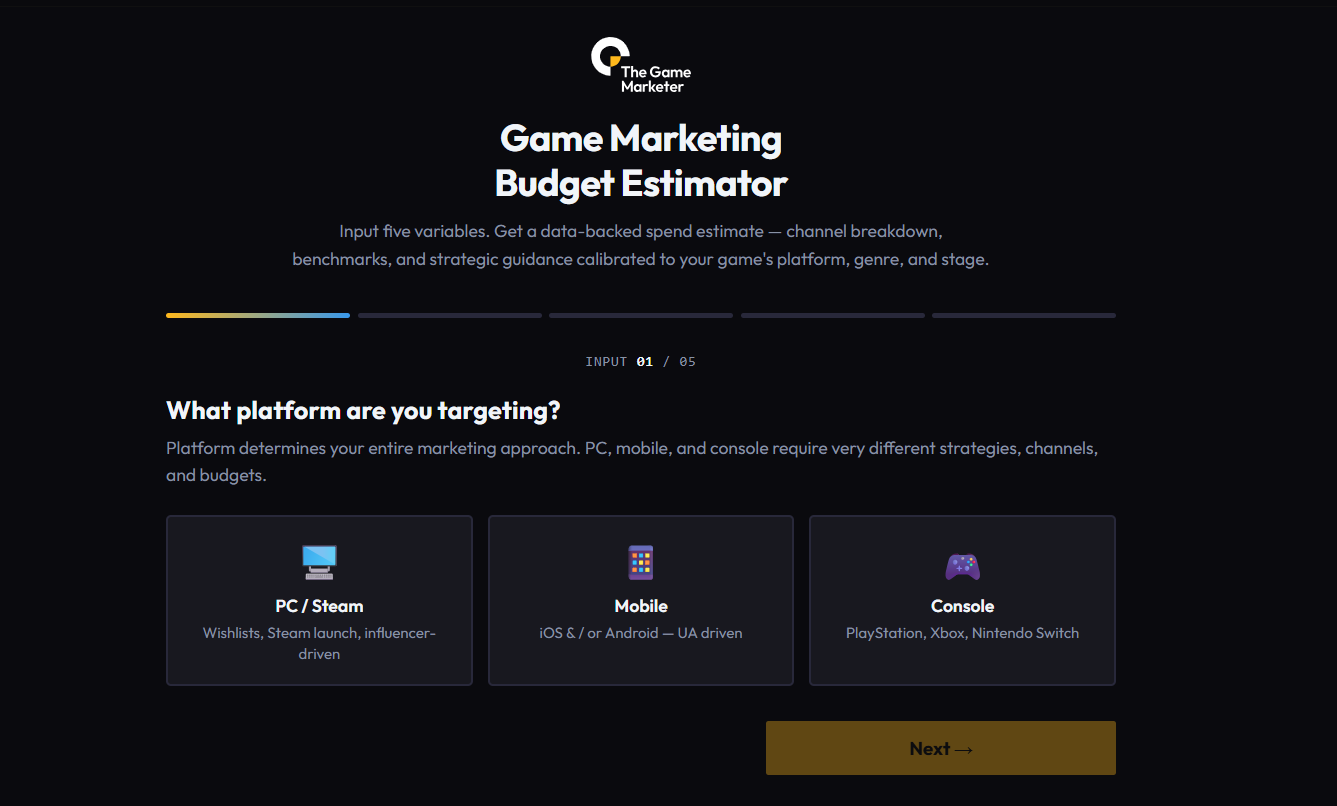
Platforms being Targeted
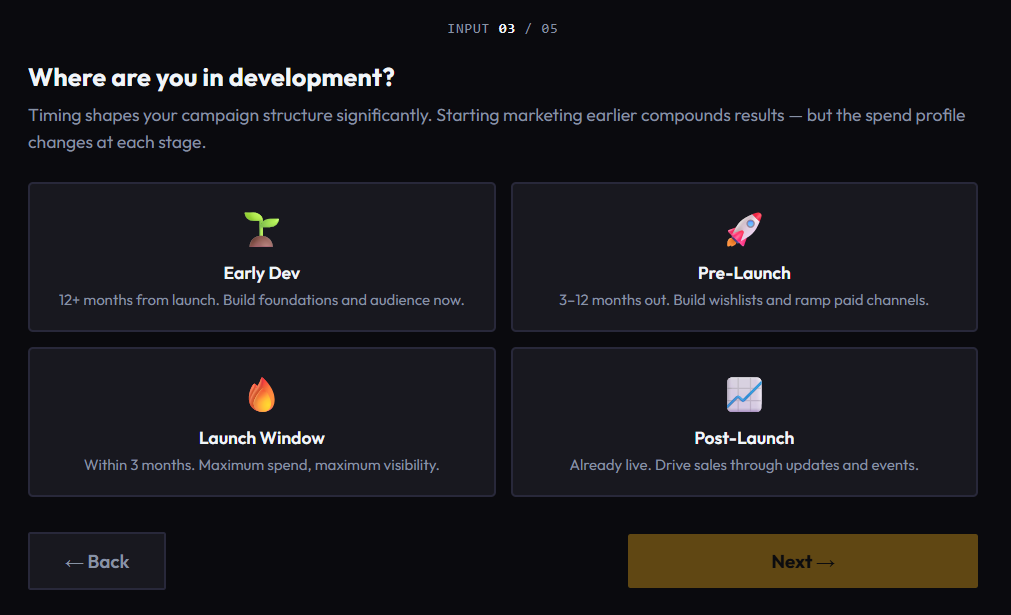
Stages In Development
Logo - The Game Marketer
The Game Marketer's free Marketing Budget Estimator gives indie developers a clear, personalized starting point.
Being smart with your money now, rather than later, is key. So if you want the best possible outcome for your game, budgeting should be second nature.”
LONDON, UNITED KINGDOM, June 24, 2026 /EINPresswire.com/ -- Money is a sensitive topic. The weight of managing it is real, but there is no avoiding it. Especially when the success of a game depends on how money is being spent around it. Unless they are Batman, if so, all worry can be dropped. — Louigi Balao, The Game Marketer
Most indie developers don’t lose on Steam because they underspent, they lose because they spent without a clear plan. And that is a problem worth fixing before launch, before everything is finished.
Why budgeting can catch developers off guard.
Development costs are easy to track. Software licences, asset commissions, sound design, etc. Why? Because they are tangible. Marketing is different. It can get quite hectic which makes things hard to quantify.
But by the time most indie devs think seriously about their game marketing budget, it would be around a few weeks-if not months-before their launch, which leaves a tiny runway for organic growth. Paid media needs time to optimise. PR outreach needs to be timed to key milestones. Influencers need time to feel the game they are playing.
A budget decided at the last minute is a budget that cannot do its job properly.
How much do indie developers typically spend?
There is no single or “right” answer, but the benchmark is allocating between 20% and 30% of the total development budget toward marketing. For a game that cost £50,000 to develop, that puts the marketing budget somewhere between £10,000 and £15,000. However, genre, platform, target audience, and timing all affect how far that budget will stretch and where it should go.
Let’s use a horror title for example. If they have a niche PC audience, they would need a very different spend strategy when compared to a cosy game. The tool from The Game Marketer has several genres to click from, and once selected, users can choose which phase their game is in development to get a direct answer.
Where should the budget go?
The regular assumption is to evenly distribute the budget. That isn’t wrong, however, the budget should be deliberately allocated.
Anyways, know that paid media tends to absorb the largest share, especially during months close to launch. PR and influencer is second to that and should be budgeted early, as relationships and coverage take time to build a genuine connection. Steam page assets, trailers, and creative production are often underbudgeted despite being the first thing a potential player sees.
Community management, social content, and post-launch campaigns round out a well-structured budget. The developers who see the strongest returns are the ones who planned their spend across the full launch timeline, not just launch week.
Not sure where to start?
Knowing the principles is one thing. Knowing what they mean for a specific game is another. The internet holds tons of tools like the Budget Estimator tool from The Game Marketer that gives indie developers a clear, personalised starting point for planning their game marketing budget based on their game type, platform, and goals.
Louigi Balao
The Game Marketer
+44 330 043 0038
louigi.balao@thegamemarketer.com
Visit us on social media:
LinkedIn
Bluesky
Instagram
Facebook
X
Legal Disclaimer:
EIN Presswire provides this news content "as is" without warranty of any kind. We do not accept any responsibility or liability for the accuracy, content, images, videos, licenses, completeness, legality, or reliability of the information contained in this article. If you have any complaints or copyright issues related to this article, kindly contact the author above.
