


Columbus Granite details the rise of printed quartz, breaking down the pros, cons, and why it is rapidly becoming the standard for modern kitchens.
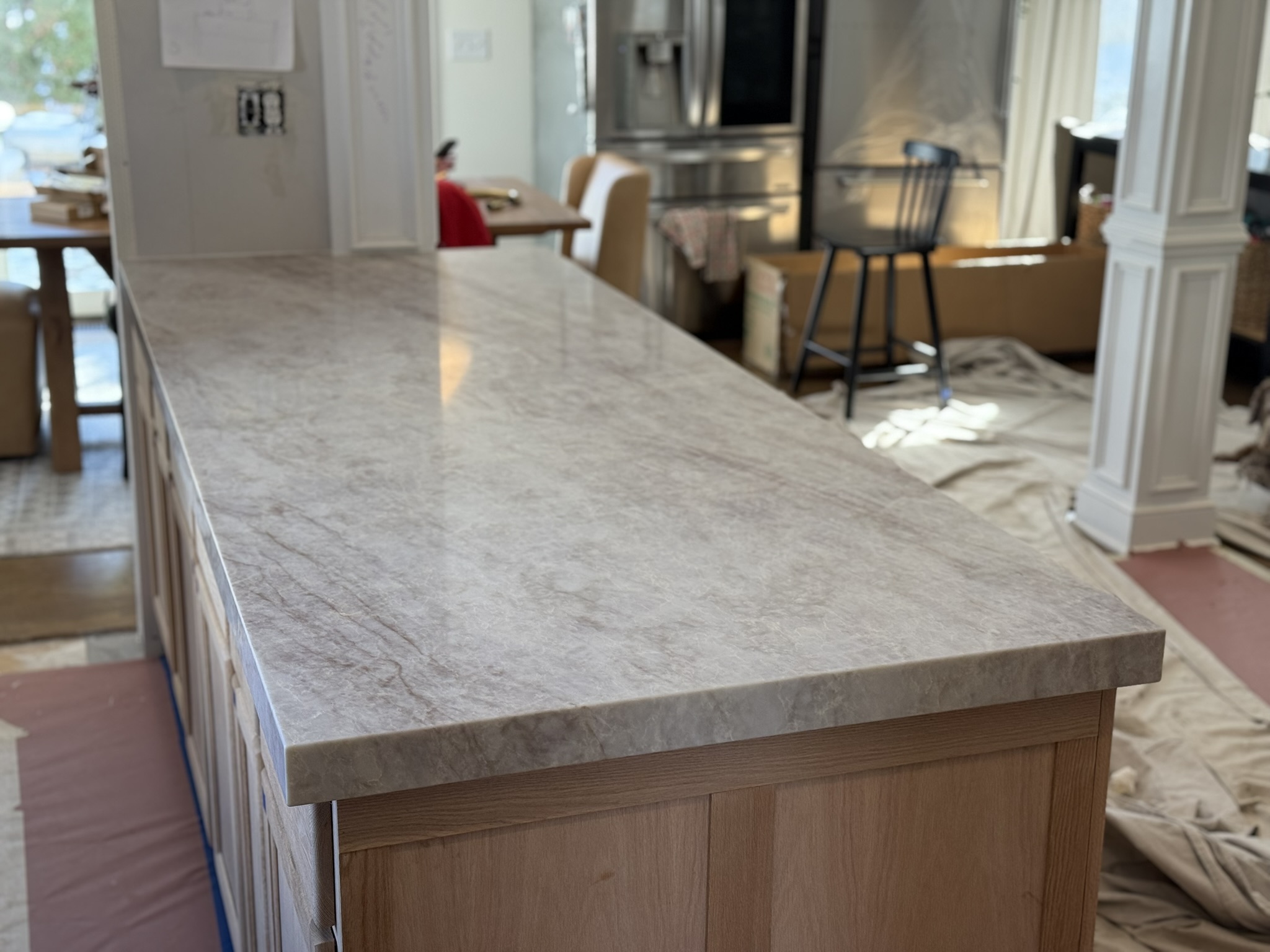
I wanted marble look but not the upkeep. We went with a printed quartz for our island and I haven't thought about it once since installation!”
COLUMBUS, OH, UNITED STATES, June 24, 2026 /EINPresswire.com/ -- Columbus Granite, a leading supplier and stone fabricator in Ohio, today released new guidance on the fastest-growing trend in countertop materials: high-definition printed quartz. With recent advancements in digital printing technology, printed quartz is rapidly taking over the scene, replacing both traditional engineered quartz and natural marble in residential remodels.— — Sarah B., Delaware, OH
WHAT EXACTLY IS PRINTED QUARTZ?
Printed quartz combines the proven durability of traditional engineered quartz with industrial digital inkjet technology. Instead of relying solely on mixed pigments to create patterns, manufacturers apply hyper-realistic, high-resolution stone patterns directly onto a solid quartz base. The design is then sealed under a heavy-duty protective layer or integrated using nano-ink technology that penetrates the surface.
“For a long time, traditional quartz tried to mimic natural stone by mixing colors, but it often looked artificial or repetitive,” said Matt Topcu, owner of Columbus Granite. “The new digital print technology is a game-changer. The depth and realism are so accurate that most homeowners can’t tell it apart from natural stone.”
WHY IT’S TAKING OVER THE SCENE
The surge in printed quartz popularity comes down to a few core advantages that solve long-standing problems for homeowners and designers:
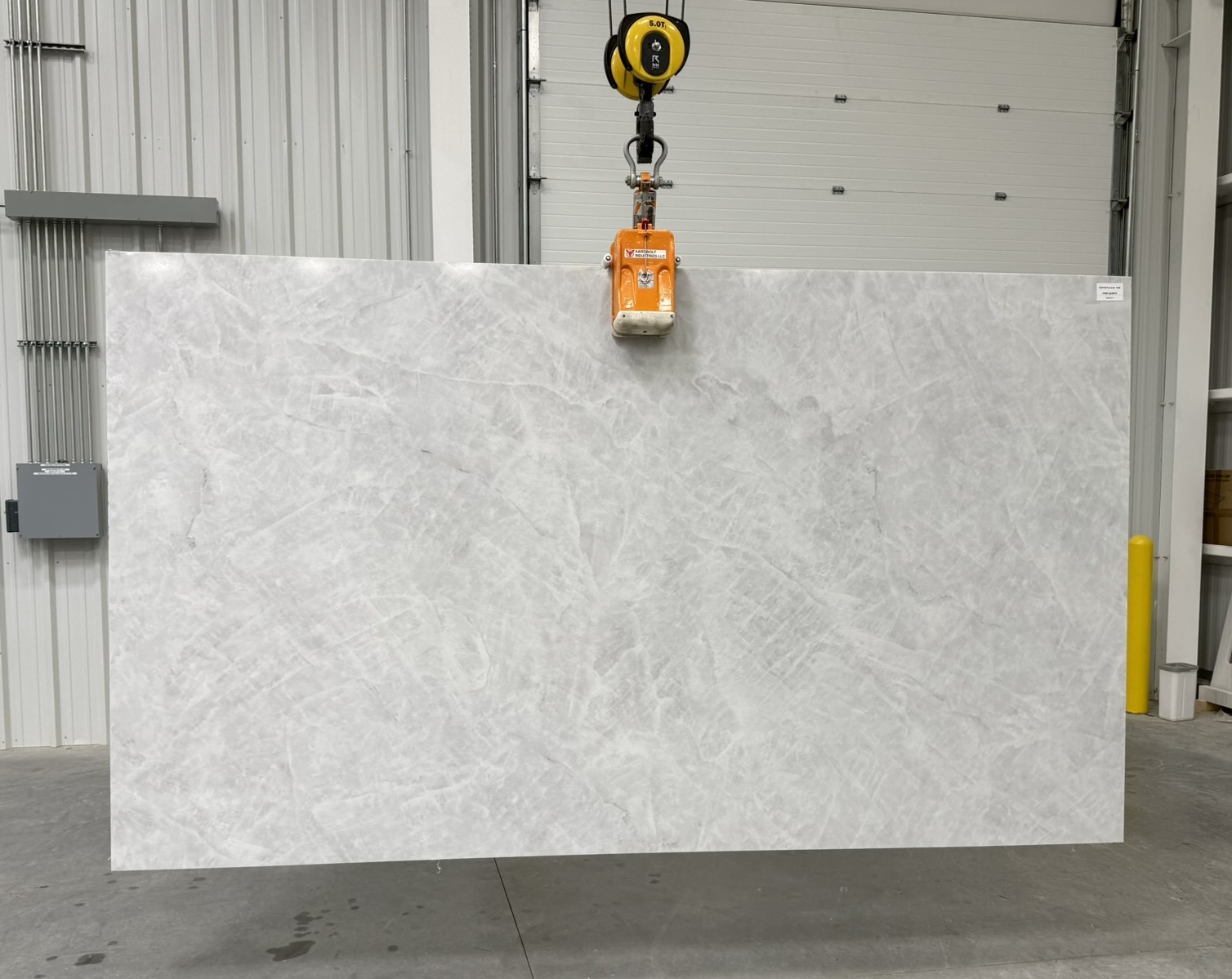
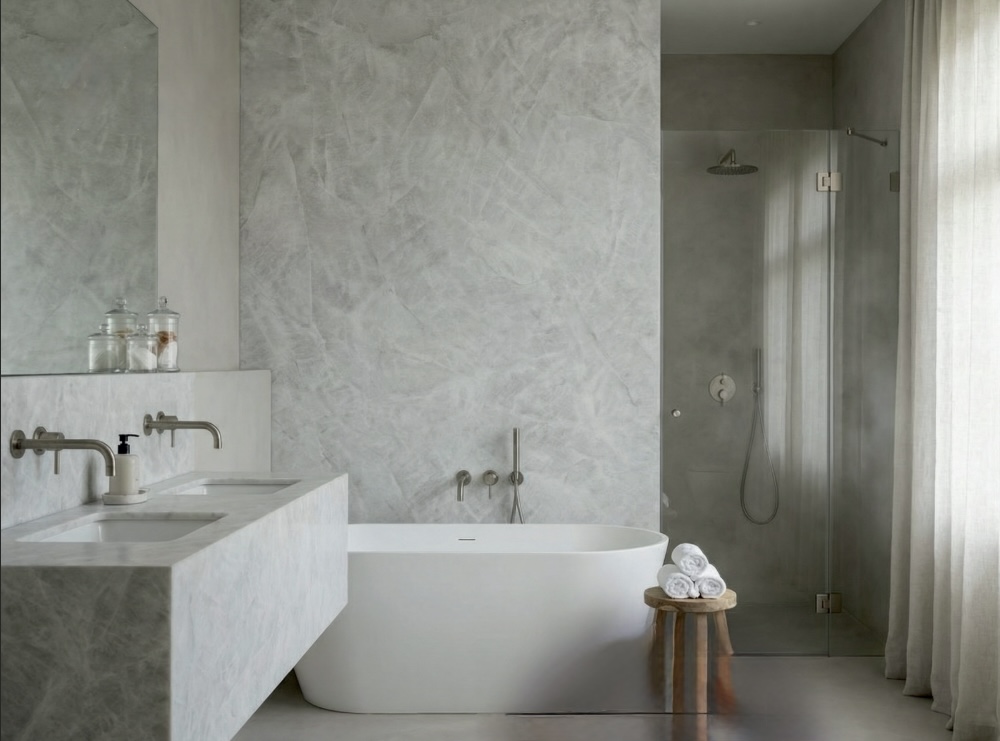
Hyper-Realistic Aesthetics: Modern digital printing creates layered, 3D veining that accurately replicates the movement of luxury materials like Calacatta marble and exotic quartzite.
Perfect Consistency: Because the designs are digitally mapped, multiple slabs can be perfectly matched. This is critical for large kitchen islands, seamless seams, and dramatic waterfall edges where unpredictable natural stone can cause layout issues.
Low Maintenance: Like traditional quartz, the printed surface is non-porous. It requires no annual sealing and easily resists common household stains.Cost Predictability: It delivers the look of rare, premium natural stone at a more accessible and predictable price point.
UNDERSTANDING THE LIMITATIONS
Despite its rapid adoption, Columbus Granite emphasizes that straightforward advice is critical when selecting any material. Printed quartz has specific limitations that homeowners must understand before buying:
No Through-Body Veining: Because the pattern is printed on the surface, veining does not always carry through the depth of the slab — though this varies by product. Depending on the technology used, printed quartz falls into a few categories: non-through, semi-through, and full-body print.
Non-through options expose the base quartz color on cut edges with no pattern continuation. However, manufacturers typically design these slabs with patterns that account for this — think softer, more diffused veining or overall movement where a clean edge doesn't disrupt the look.
Semi-through options offer a middle ground: you'll see some veining carry onto the edge, but it tends to gradually fade rather than continue with full clarity. As the industry and digital print technology continue to evolve, full-body printed quartz options have begun emerging — where the pattern runs through the entire thickness of the slab, just like natural stone.
"When we cut a standard edge profile on a non-through printed quartz, the base color of the quartz is exposed," explained Emir Caliskan, stone fabrication professional at Columbus Granite. "To get around this, we typically use mitered edges to fold the pattern over the side and hide the solid edge. With semi-through and full-body options, that concern is reduced or eliminated entirely — but it's still something we evaluate slab by slab."
UV Sensitivity: The digital inks and protective topcoats are sensitive to direct, prolonged sunlight. Printed quartz is strictly for indoor use, as outdoor exposure will cause fading and yellowing over time.
Heat Sensitivity: Like all engineered quartz, the resin binders can be damaged by extreme heat. Using trivets and hot pads remains a strict requirement.
A PERMANENT SHIFT IN DESIGN
According to Ann Blacker, an in-house kitchen designer with Columbus Cabinets, printed quartz is not a passing fad. By solving the maintenance issues of natural stone while overcoming the visual limitations of traditional quartz, it has fundamentally changed what homeowners expect from their countertops. “It gives our customers exactly what they ask for: zero fuss and a high-end look,” she explained. “As long as it’s fabricated correctly and kept indoors, it’s one of the smartest investments you can make in a kitchen today.”
ABOUT COLUMBUS GRANITE
Columbus Granite supplies and fabricates natural stone and engineered surfaces for kitchens, baths, and more—pairing curated slab selection with precise installation and friendly, plain-language education. Based in Central Ohio, the team is known for straightforward advice, honest pricing, and work that speaks for itself. Contact Columbus Granite today to schedule a free consultation.
Matt Topcu
Columbus Granite
+1 740-201-8669
matt@columbusgranite.com
Legal Disclaimer:
EIN Presswire provides this news content "as is" without warranty of any kind. We do not accept any responsibility or liability for the accuracy, content, images, videos, licenses, completeness, legality, or reliability of the information contained in this article. If you have any complaints or copyright issues related to this article, kindly contact the author above.
