
.jpeg)

Scaling an interactive self-service hardware deployment requires meticulous supply chain verification, mechanical audit procedures, and proactive risk management protocols. System integrators, software developers, and enterprise procurement directors routinely face substantial financial risk when transitioning from regional pilot projects to multi-location volume rollouts. Partnering with a reliable Wholesale Free-Standing Kiosk Factory demands a rigorous evaluation process that extends far beyond evaluating basic unit quotations and browsing glossy marketing brochures. Unforeseen hardware driver mismatches, component supply chain disruptions, and inadequate post-sale technical support channels can quickly erase initial procurement savings. Procurement professionals must ask five essential technical questions before issuing volume purchase orders, ensuring that chosen manufacturing partners deliver hardware consistency, strict regulatory compliance, and sustained operational reliability across entire terminal lifecycles.
Question 1: Can You Provide Evaluation Samples, and What Is Your Testing Protocol?
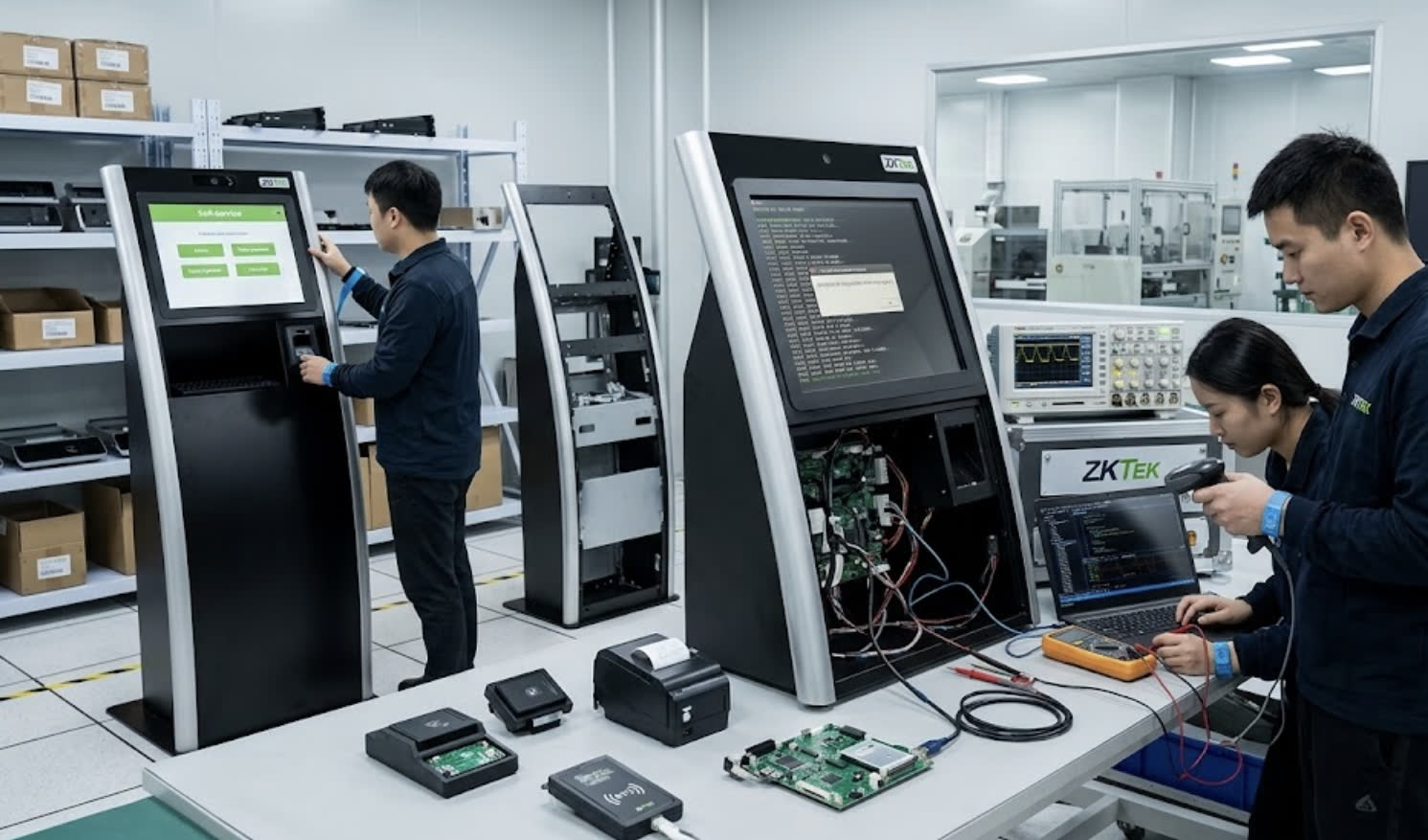
Committing to a large-scale hardware production run without conducting thorough real-world site trials introduces severe system integration risks. Professional enterprise buyers must verify how prototype hardware platforms perform under real-world operational stress, fluctuating network conditions, ambient thermal spikes, and high-volume user interactions. A capable manufacturing partner actively supports comprehensive evaluation sample programs, enabling software engineering teams to thoroughly test peripheral driver integration, OS kernel stability, and thermal behavior before full volume assembly begins.
A critical checkpoint during prototype evaluation involves peripheral component integration and signal integrity. Modern self-service terminals rely on seamless real-time communication between main processing logic boards and diverse sub-assemblies, including thermal receipt printers, motorized card readers, high-resolution 2D barcode scanners, and encrypted payment terminals. Software engineers must verify whether internal USB hub controllers and industrial serial bridge boards handle multi-peripheral data traffic without intermittent signal drops, voltage sags, or communication timeouts. Conducting structured sample evaluations allows engineering teams to identify software driver conflicts early, preventing expensive field retrofits across hundreds of deployed units in the field.
Question 2: Is Sample Pricing Closely Aligned with Bulk Production Quotes?
Navigating complex commercial quotes requires a clear, transparent understanding of industrial manufacturing cost structures and volume production economics. Procurement managers frequently encounter aggressive "bait-and-switch" pricing tactics in the international hardware export sector. In these situations, low-quality vendors offer artificially suppressed initial sample prices to secure project interest, only to introduce hidden non-recurring engineering (NRE) charges, specialized sheet-metal tooling surcharges, or inflated component costs once volume contract negotiations begin.
Reputable manufacturing partners maintain transparent, predictable pricing models throughout every project phase. Evaluating a factory's commercial transparency involves analyzing how closely prototype build costs reflect scaled volume production economics. While individual prototype builds naturally incur higher manual assembly labor and custom setup expenses, the underlying bill of materials (BOM) should remain consistent between sample units and bulk production runs. Establishing clear, itemized component pricing during initial sample negotiations protects enterprise project budgets from unexpected commercial price hikes when scaling production.
Question 3: What Is the True Scope of Customization Without Sacrificing Regulatory Compliance?
Deploying self-service hardware across diverse commercial environments often demands custom mechanical modifications, specialized branding applications, and tailored internal chassis layouts. However, procurement teams must distinguish between cosmetic surface modifications and true structural engineering capabilities. A mature factory provides comprehensive 3D CAD modeling, bespoke sheet-metal tooling, and flexible modular mounting options while maintaining long-term structural stability and mechanical safety.
A vital practical checkpoint during customization reviews involves physical security architecture and global payment compliance. Financial transaction terminals and self-service payment kiosks must strictly adhere to international security mandates, such as PCI compliance for encrypted PIN pads. Custom enclosure designs must incorporate physical privacy shields, anti-tampering switches, and secure cable routing channels to prevent visual eavesdropping, physical overlays, and unauthorized data access.
Demonstrating modular flexibility in free-standing terminal architecture requires versatile product lines and adaptable mounting options. For instance, internet terminals like the K1 and K2 series integrate heavy-duty stainless steel keyboards with trackballs into sleek enclosures, serving public web browsing and information retrieval applications. Similarly, versatile self-service platforms such as the F1, F8, T5, and H3 series show how modular internal chassis designs accommodate diverse peripheral configurations—from cash acceptors and coin recyclers to card issuance modules—without compromising exterior aesthetic balance, thermal management, or structural safety.
Question 4: How Long Is the Product Life Cycle Guaranteed for Your Components?
Component longevity represents one of the most critical yet frequently overlooked factors in long-term deployment success. Commercial off-the-shelf consumer computing components often suffer from short production lifecycles, leading to unexpected component end-of-life (EOL) notifications within 6 to 12 months. When a factory changes motherboard models, display panels, or touch controllers mid-project, system integrators face mismatched field fleets, complex software image management, and increased long-term maintenance overhead.
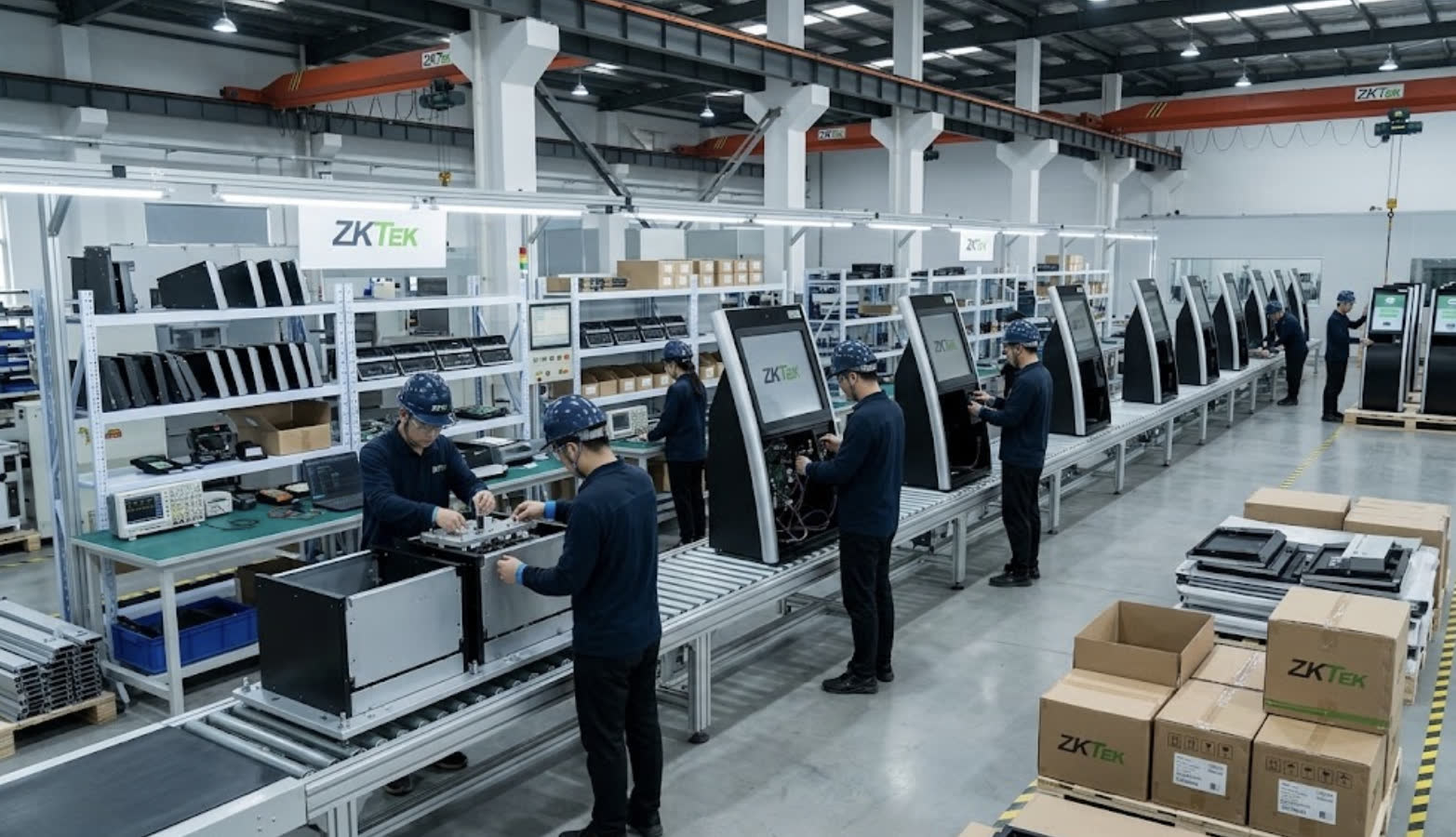
Enterprise procurement guidelines require hardware factories to guarantee a minimum product lifecycle of at least 3 years for core computing components, industrial displays, and key peripheral interfaces. Maintaining long-term hardware stability requires strict supply chain controls and industrial-grade component sourcing. Manufacturers like ZKTEK (SHENZHEN ZHONGKONG COMPUTERS CO., LTD.) prioritize extended component availability, ensuring that volume clients receive identical hardware revisions throughout multi-year rollout schedules. This long-term hardware consistency dramatically simplifies spare parts management, driver maintenance, and field technician training across dispersed deployment networks.
Question 5: What Are the Specific Warranties and Return Merchandise Authorization (RMA) Protocols?
Post-deployment operational success depends directly on the strength, speed, and efficiency of a factory's after-sales support infrastructure. International hardware procurement introduces complex cross-border logistics, customs procedures, and potential downtime costs when sub-assemblies fail in the field. Procurement teams must scrutinize warranty terms, replacement component availability, and technical support response benchmarks before finalizing commercial supply contracts.
Evaluating a factory's post-sale framework involves reviewing its standardized Return Merchandise Authorization (RMA) workflows and warranty commitments. A reliable manufacturer maintains structured diagnostic protocols, clear replacement part dispatch guidelines, and dedicated technical assistance channels to minimize field downtime. Transparent warranty structures and efficient RMA procedures protect B2B clients from unexpected maintenance expenses, ensuring that hardware failures receive rapid diagnostic attention, spare parts dispatch, and component replacements throughout the terminal's operational lifespan.
Understanding these five fundamental questions enables procurement directors and system integrators to make informed supplier selections. Evaluating prospective hardware partners based on sample testing policies, commercial transparency, customization capabilities, lifecycle guarantees, and after-sales support frameworks mitigates operational risk and ensures long-term deployment success.
To explore commercial self-service kiosks, detailed technical specifications, and custom OEM/ODM manufacturing capabilities, visit https://www.zktek.com/.
ZKTEK
ZKTEK
Legal Disclaimer:
EIN Presswire provides this news content "as is" without warranty of any kind. We do not accept any responsibility or liability for the accuracy, content, images, videos, licenses, completeness, legality, or reliability of the information contained in this article. If you have any complaints or copyright issues related to this article, kindly contact the author above.
