


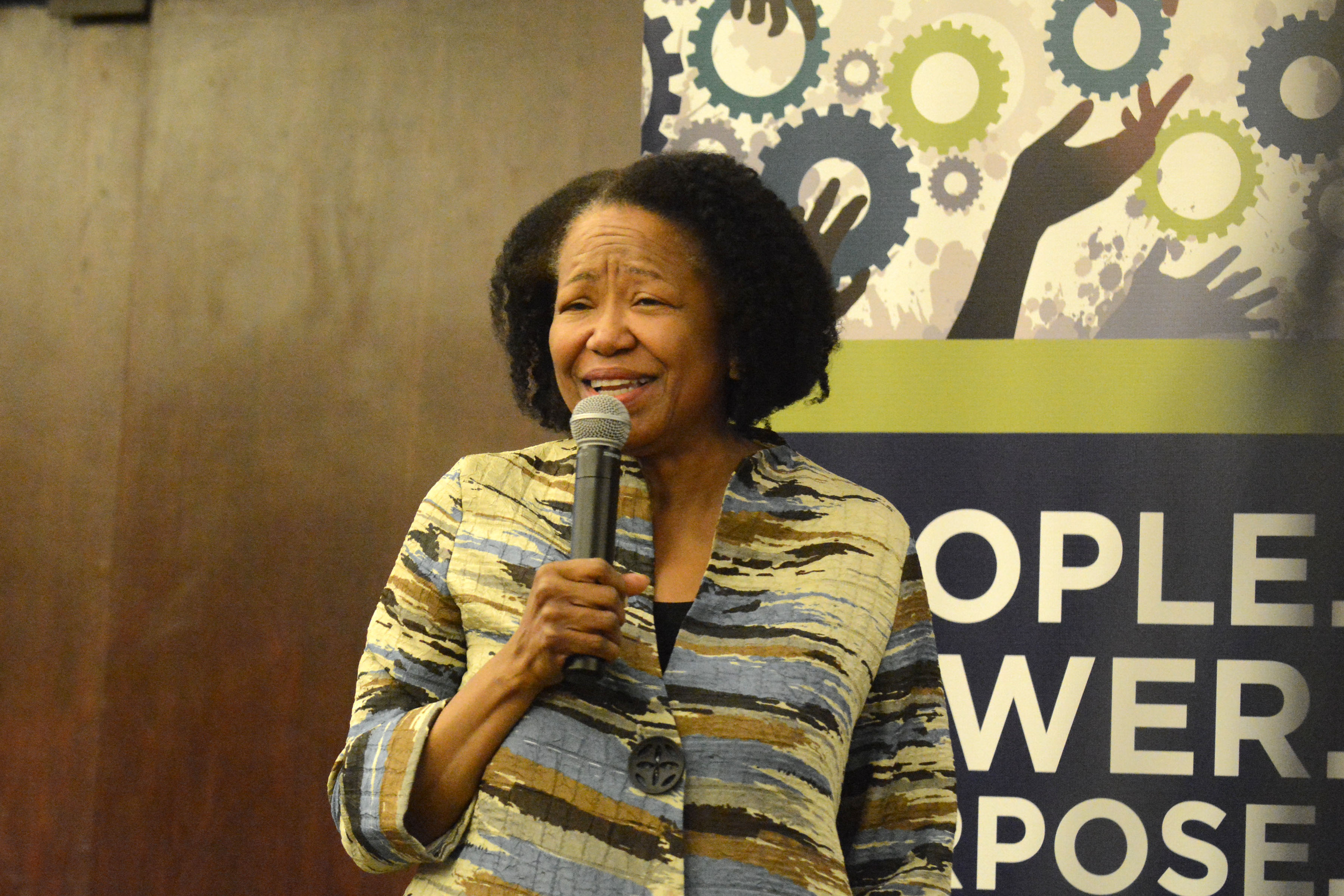
Dr. Gail C. Christopher
Americans remain patriotic but disillusioned—proud of the nation’s identity and ideals, yet doubtful that the country is currently delivering on them
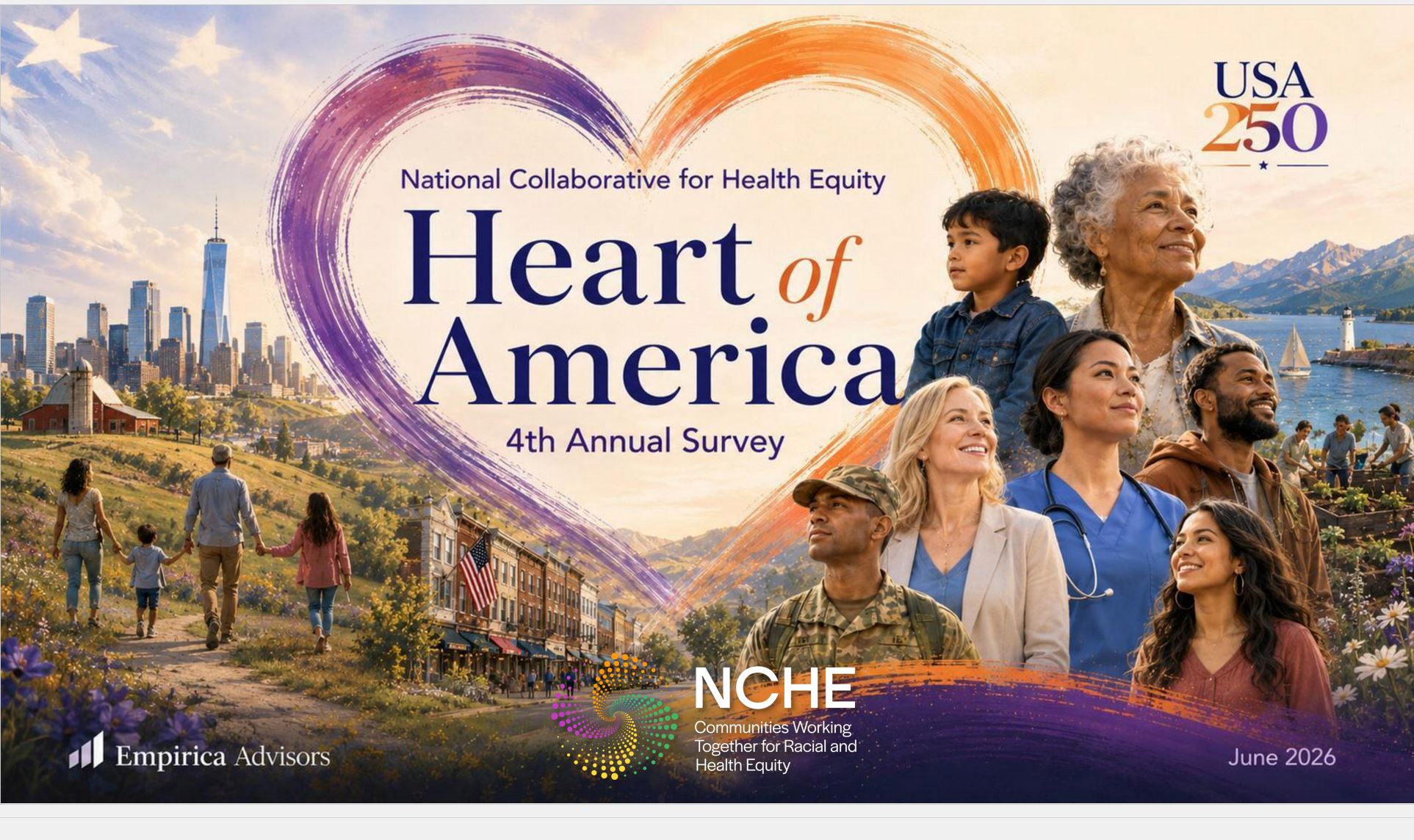
WASHINGTON, DC, UNITED STATES, July 27, 2026 /EINPresswire.com/ -- As the United States marks its 250th anniversary, a new national values poll finds that a majority of Americans have not given up on the country's founding ideals — but they are increasingly worried that those ideals are not experienced in their daily lives. The 4th Annual Heart of America Survey results, released by the National Collaborative for Health Equity (NCHE), capture a country that is at once proud, strained, and searching for renewal.
This annual poll is designed to move past headlines and partisan talking points to surface the true emotional desires and aspirations of everyday Americans. What it found is a nation holding two truths at once: deep attachment to the promise of America, and growing doubt about whether democracy is fair, whether the American Dream is still reachable, and whether the country can bridge its divisions.
"At our 250th anniversary, the promise of America endures — but confidence in the country's ability to live up to its ideals is strained," said Dr. Gail C. Christopher, NCHE's executive director. “Americans still believe in freedom, fairness, and opportunity. What many are seeking is for those values to be made real in their own lives, their own families, their own communities, and embraced by their nation.”
An example is the split between how Americans feel about their country and the challenges they face each day at work, at home, and in their communities. While 62% of Americans say they are proud to be American, that number has fallen from 72% in 2025. At the same time, only 36% say the country is living up to its ideals of freedom, fairness, and equal opportunity, a stark contrast that percolates throughout the survey.
Dr. Christopher said the contrast between high patriotic pride and low confidence in the nation’s adherence to its founding ideals suggests that many Americans are distinguishing national identity from national performance. In other words, they continue to value the aspirational symbolism of America—its history, civic creed, and promise of freedom and opportunity—even as they judge the economy, political leadership, social conditions, and contemporary institutions far more harshly.
Further, this gap points to a form of “ambivalent patriotism”: attachment without satisfaction, loyalty without confidence. It also implies that disillusionment is not necessarily evidence of alienation; rather, it may reflect the opposite—a public that still takes American ideals seriously enough to measure the country against them and find it wanting. This is particularly relevant as the nation commemorates its 250th year. Seen this way, the numbers suggest a nation whose citizens have not abandoned belief in America, but have become more skeptical that America is living up to its own moral narrative.
“Our poll tells the story of We, The People,” said Dr. Christopher. “I'm feeling a sense that those of us who are descendants of people who lived through struggle, discrimination, and disappointment see this sentiment across America as a foundation to forge a better, fairer, more equitable nation. That's the kind of energy I see building from this poll. Despite all the discourse and repeated attacks on fairness and equity, Americans still know what the country is supposed to stand for, what America is supposed to be.”
This survey of a nationally representative sample of 1,322 Americans was conducted online from May 28 to June 3 by Empirica Advisors and market research consultant Anisa Chowdhury. It has a margin of error of +/-2.70.
“What stands out in this year’s survey is that Americans still share a common language around freedom, fairness, opportunity, and democracy — but they do not share a common lived experience of those ideals,” said Shannon-Janean Currie, CEO of Empirica Advisors and lead researcher for the Heart of America Survey. “The divide is not about whether those ideals matter. It is about whether people believe those promises are being fulfilled in their own lives, families, and communities.”
Throughout the survey, responses to open-ended questions reflected a mixed mood across demographics. "I think we're in peril," said one Baby Boomer Democrat. A Millennial Republican offered a sharply different view: "The vibe of America is great." An Independent from Gen X summed up the tension in three words: "Turbulent division growing."
Take democracy itself. The survey found near-universal agreement that every eligible American should have the right to vote and a voice in the future — 89% support this. Furthermore, belief in voting access as a tool for racial healing rose to 92%, up from 85% in 2024.
Yet only 11% say current voting maps help communities be fairly represented. That gap reveals a deeper concern: Americans want to believe their vote counts, but many doubt the systems meant to represent them are truly listening. “Americans overwhelmingly believe every eligible voter should have a voice, but very few believe the systems drawing the lines are helping communities be fairly represented,” Currie said. “That is a warning sign about trust.”
For respondents, democracy is about more than government. It is about whether people believe they matter. "What gives me the most hope is the US citizens not sitting down and waiting for the government to do and be better and responsible," related a Gen Z Black Democrat.
“A democracy that feels accessible, representative, and trusted can become part of the work that repairs the divisiveness,” said Dr. Christopher. “But a system of government that excludes or ignores communities cannot fully deliver on its promise.”
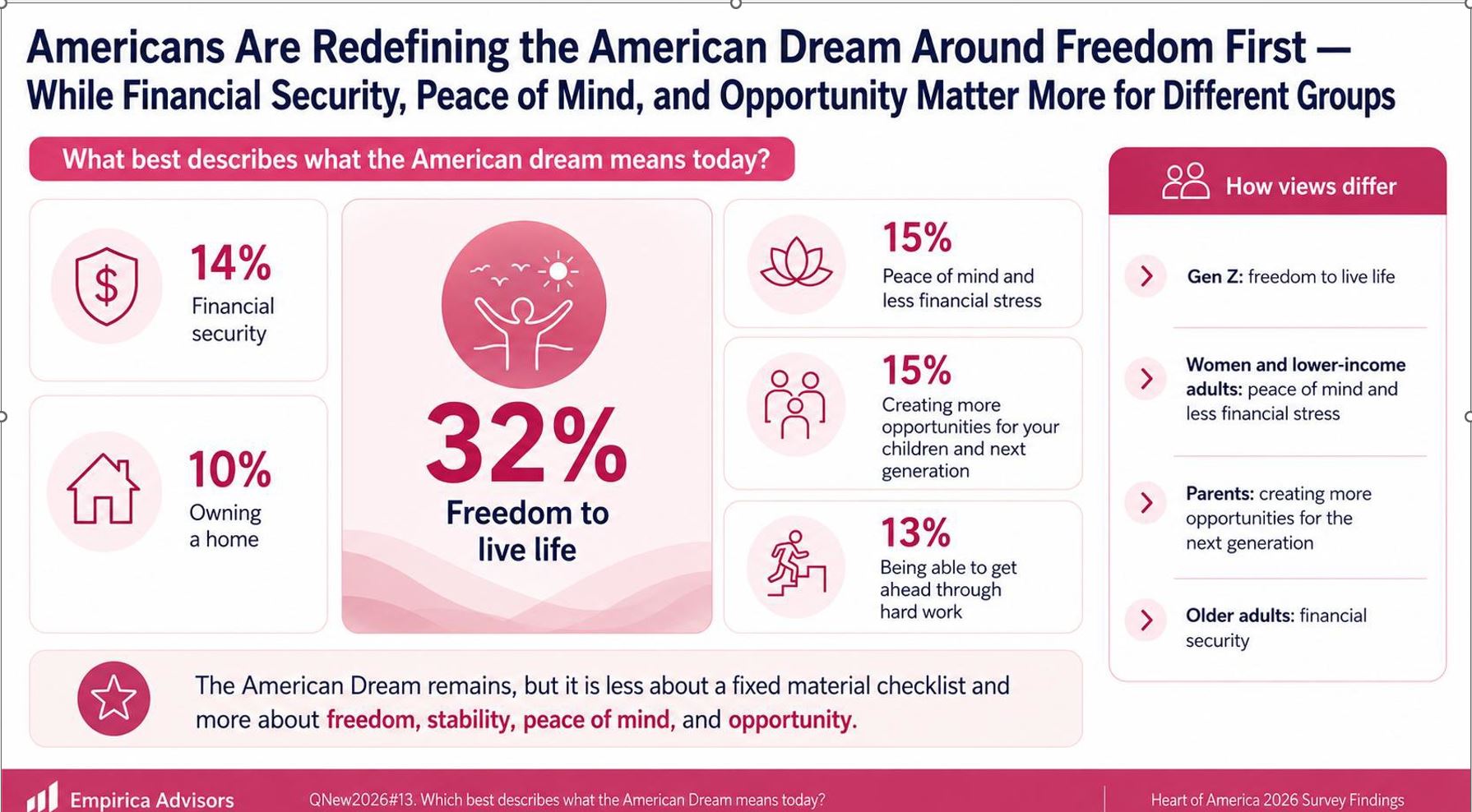
Moreover, national ideals collide directly with questions regarding the American Dream. Slightly more than half of Americans — 52% — now say the Dream is out of reach.
The pressures behind that number are practical and immediate. Majorities feel squeezed by the cost of groceries (81%), wages (75%), health care (72%), and housing (71%). When people describe America as expensive or hard, they are not speaking in abstractions. "America is losing money, and people are going hungry. It's bad out here," wrote one Gen Z Independent.
A striking finding points to concerns across generations. Elder care (53%) now tops childcare (44%) as a source of family pressure. Many Americans are raising children, caring for aging parents, and managing the costs that come with it. The American Dream, it turns out, is less about individual achievement and more about whether families have enough support to care for one another across generations.
Asked what stands in the way of unity, respondents pointed to political divisiveness (52%), racism (49%), and poverty or lack of a livable income (47%). These barriers are real, and they fuel distrust, fear, and economic strain.
Yet, the survey also points toward solutions. The clearest path to building racial trust, respondents said, is making sure everyone has a fair chance and fair treatment (34%). “Americans are not just naming what divides them,” Dr. Christopher said. “Many are naming the work required to become whole.”
Americans still believe in telling the truth about the country’s past, despite efforts to ignore or downplay its uglier parts. For instance, a remarkable 92% support teaching the full history of America, including slavery and racism. And believing that educating children about race and racism is important to healing rose from 79% in 2024 to 86% in 2026.
Support for reparations is also shifting, now at 56% — up from 46% in 2023. Together, these findings suggest a public increasingly willing to tell a truer story about who we are and to act on what that story requires.
The survey underscores that beneath the nation’s anxiety runs a durable thread of hope. A striking 85% say Americans are hungry to belong, connect, and trust each other again — up from 78% in 2023. And 59% believe people like them can personally help promote unity and racial healing.
Where Americans locate that hope often depends on where they sit. "The new generation of voters is the only thing that gives me hope," wrote a Gen X Democrat. For many Republicans, hope rests in the current leadership and the country's strength. Independents tend to find hope in ordinary people and a wish for repair: "I've actually lost a lot of hope in this country, but if anything, I would want people to get along," wrote one Millennial Independent.
These differences matter. Across party lines, Americans use the same civic vocabulary — freedom, opportunity, unity, democracy, equality — even when they mean different things by it. "Being American means celebrating the differences that we all bring," wrote a Gen Z Independent. "America means everything to me; it gives me a sense of belonging and pride in my country," wrote a Millennial Republican. Shared language does not always mean shared experience — but it can be a powerful foundation for connection.
****
Methodology
The 4th Annual Heart of America Survey is a national values poll focused on American identity, belonging, democratic values, and racial healing. NCHE, in collaboration with Empirica Advisors, conducted a national online survey of 1,322 Americans ages 18 and older from May 28 to June 3, 2026. Margin of error: ±2.70 percentage points at the 95% confidence level; higher among subgroups. Due to rounding, displayed answer choices may not always add to 100%
The survey combined closed-ended questions with three open-ended prompts designed to capture how Americans describe the national mood, where they locate hope, and what American identity means at the country's 250th anniversary. These open responses allowed people to speak in their own words, revealing not only what they think, but how they feel. Key demographics available for analysis include party identification, generation, race, gender, education, urbanicity, and income.
About NCHE
Founded in 2014, NCHE was established to promote health equity through action, leadership, inclusion, and collaboration. We work to create environments that foster the best possible health outcomes for all populations, regardless of race, ethnicity, socioeconomic status, or nativity. NCHE also works to improve conditions for health and well-being, including housing, education, income and wealth, and the physical and social environment. Further, we must address historical and contemporary structural, institutional, and interpersonal racism, which fuels inequities in our society.
Michael K. Frisby
Frisby & Associates
+1 202-625-4328
mike@frisbyassociates.com
Legal Disclaimer:
EIN Presswire provides this news content "as is" without warranty of any kind. We do not accept any responsibility or liability for the accuracy, content, images, videos, licenses, completeness, legality, or reliability of the information contained in this article. If you have any complaints or copyright issues related to this article, kindly contact the author above.
