
.jpeg)

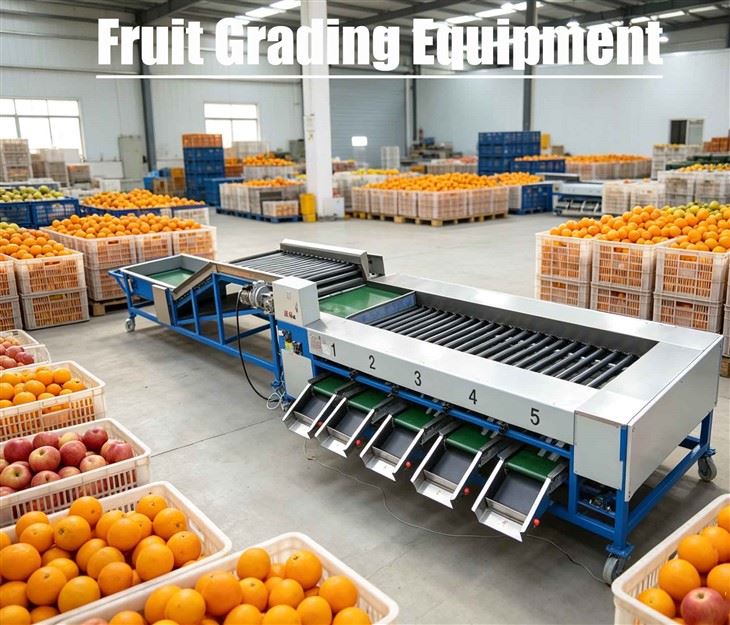
Fruit Grading Equipment
ZHENGZHOU, HENAN, CHINA, October 10, 2026 /EINPresswire.com/ --
The global food processing industry is placing increasing emphasis on production efficiency, consistent product quality, food safety, and the effective use of agricultural resources. Against this background, Zhengzhou Lerford Machinery Equipment Co., Ltd. is developing its presence in the food machinery market by offering equipment for fruit and vegetable processing, nut handling, snack production, and related manufacturing applications. As food producers seek machinery that can accommodate different raw materials and production requirements, integrated processing solutions have become an important consideration. Lerford’s product portfolio includes fruit and vegetable processing lines alongside Nut & Kernel Processing Lines and Snacks Processing Machine, giving businesses options for handling a range of agricultural ingredients and converting them into market-ready products.
Meeting the Changing Needs of Food Processing Manufacturers
Fruit and vegetable processing plays an important role in connecting agricultural production with retail, food service, and industrial food manufacturing. Fresh produce often requires several preparation stages before it can be sold or used as an ingredient. Depending on the product, these stages may include washing, sorting, grading, peeling, cutting, coring, crushing, juicing, drying, and packaging.
When these activities are performed with limited automation, processors may face challenges involving labor requirements, throughput consistency, raw material losses, and product uniformity. Mechanized processing equipment can help standardize repetitive operations and make production workflows easier to manage. For larger facilities, connecting individual machines into a coordinated processing line may also reduce unnecessary handling between stages.
However, the most effective processing solution is not necessarily the largest or most automated system. Equipment must be selected according to the type of produce, its condition, the intended finished product, the required output, and the available facility space. A line designed for apples, for example, may require a different combination of washing, grading, peeling, and cutting equipment from a line intended for potatoes, leafy vegetables, or tomatoes.
This creates opportunities for manufacturers capable of offering a broad range of machinery and adapting configurations to specific production goals. Zhengzhou Lerford Machinery Equipment Co., Ltd. operates in this market with a portfolio covering individual machines and processing-line equipment, supporting buyers who need to establish a new facility, expand an existing operation, or replace selected production units.
Fruit and Vegetable Processing Lines: From Raw Produce to Finished Products
Fruit and vegetable processing lines typically combine multiple operations to prepare agricultural products for further processing, storage, distribution, or consumption. Depending on the production objective, a line may begin with receiving and feeding equipment, followed by cleaning and sorting systems. Additional stages can include peeling, trimming, slicing, dicing, crushing, extracting, drying, and packaging.
The first step is often cleaning. Soil, dust, plant debris, and other unwanted materials may be present on raw produce, particularly when it is harvested directly from agricultural fields. Appropriate washing equipment helps prepare the material for subsequent operations. The design of the washing process should reflect the characteristics of the produce, since delicate fruits and firm root vegetables may require different handling methods.
Sorting and grading can then help separate produce by size, weight, or other measurable characteristics. This supports more consistent downstream processing and can make it easier to allocate raw materials to different product categories. Peeling and cutting equipment may be used to prepare produce for frozen foods, snacks, prepared ingredients, juices, or other processed products.
For businesses manufacturing juice, sauces, purees, or concentrated ingredients, crushing and extraction equipment may form another important part of the production sequence. Drying systems can support products that require reduced moisture content, while packaging equipment helps prepare the final output for storage and transportation.
Lerford’s fruit and vegetable machinery portfolio includes equipment categories such as industrial washing machines, fruit peeling and coring machines, grading equipment, vegetable processing machines, and potato chip production lines. These categories address different stages of processing and can be considered according to the needs of the target product.
For prospective buyers, the main benefit of evaluating a complete line is the opportunity to consider the production process as a whole. The capacity of each machine, for example, should be compatible with the other stages so that one operation does not become a persistent bottleneck. Feeding speed, conveyor arrangements, cleaning requirements, and the layout of the production floor should also be assessed before equipment is selected.
Customization and Process Integration
Food processing facilities vary considerably in scale. A small enterprise may need a compact line that can be operated by a limited team, while a larger factory may require higher throughput, more extensive automation, and additional equipment for quality control and packaging.
Customization can help address these differences. Relevant factors include the characteristics of the raw material, the desired output, production capacity, local electrical requirements, available floor space, and the amount of manual intervention acceptable within the process. Buyers should also consider whether the equipment needs to accommodate multiple varieties of produce or support seasonal changes in raw material supply.
For Zhengzhou Lerford Machinery Equipment Co., Ltd., the ability to supply different types of processing machinery provides a basis for discussing combinations of equipment rather than treating every purchase as an isolated machine order. A buyer planning a fruit processing facility, for example, may need to coordinate washing, grading, peeling, cutting, and packaging. A potato processor may instead prioritize cleaning, peeling, slicing, blanching, frying or drying, seasoning, and final packaging, depending on the product being manufactured.
These process differences make early technical communication essential. Buyers should provide information about raw material varieties, expected hourly or daily output, finished-product specifications, and available utilities. A clear process flow diagram can help identify the necessary machines and clarify how material will move through the facility.
Nut & Kernel Processing Lines Support Ingredient Diversification
In addition to fruit and vegetable equipment, Nut & Kernel Processing Lines are relevant to processors handling peanuts, almonds, walnuts, sunflower seeds, and other nut or seed products. These materials are used in snacks, bakery ingredients, confectionery, spreads, edible oils, and various packaged food products.
Nut processing can involve several distinct stages. Depending on the raw material and final application, operations may include cleaning, grading, shelling, cracking, separating kernels from shells, peeling, roasting, crushing, and packaging. Not every product requires every stage, and the equipment arrangement should be based on the desired finished product.
Shelling and cracking are particularly important because the objective is to remove the outer shell while preserving as much usable kernel as practical. Excessive breakage can reduce the commercial value of the product, while insufficient separation can leave unwanted shell material in the output. Equipment selection therefore requires attention to the physical properties of the nuts, their moisture condition, shell hardness, and the desired proportion of whole kernels.
For businesses producing roasted nuts or flavored snacks, processing may continue with roasting, cooling, seasoning, and packaging. Processors manufacturing nut ingredients may instead require crushing, grinding, or other preparation equipment. A coordinated line can help organize these operations and establish a more repeatable production workflow.
Lerford’s Nut & Kernel Processing Lines category gives buyers an option to explore machinery for different nut-processing applications. When evaluating such equipment, purchasers should confirm which raw materials are supported, the expected processing capacity, the achievable separation quality, and the amount of manual sorting required. Sample testing with the intended raw material can provide useful information before a production line is purchased.
Food safety and product protection must also be incorporated into the design. Equipment should be accessible for cleaning and inspection, and surfaces that contact food should be appropriate for the intended application. Dust management, safe access to moving parts, and proper handling of waste shells are additional considerations in nut-processing facilities.
Snacks Processing Machine for a Broad Product Market
Snack manufacturers operate in a competitive market where product consistency, production costs, flavor variety, and dependable output all influence business performance. Snacks Processing Machine represents another important equipment category within Lerford’s portfolio, covering machinery used in the production of different snack products.
The processing route depends on the snack itself. Potato chips, for instance, may require washing, peeling, slicing, rinsing, frying or another cooking method, oil removal, seasoning, cooling, and packaging. Puffed snacks may require mixing and extrusion or expansion processes. Nut-based snacks may involve roasting, frying, seasoning, and cooling before being packed for distribution.
A suitable processing machine helps perform a defined task within this production sequence. A seasoning machine, for example, needs to distribute seasoning evenly without causing unnecessary product damage. A frying system must be selected according to the desired output and cooking requirements. Conveyors and feeding equipment should deliver a stable flow of product to downstream machinery, while packaging systems must be compatible with the size and characteristics of the finished snack.
Lerford’s snack machinery range includes equipment associated with potato chips, French fries, puffed foods, and other snack-processing applications. These product categories may be relevant to both emerging food businesses and established manufacturers seeking to add new products or improve existing production processes.
Before choosing a Snacks Processing Machine, buyers should establish the target recipe, required output, product dimensions, cooking or drying method, and packaging format. They should also ask about cleaning procedures, changeover time, replacement parts, operating instructions, and the level of operator training required. These details help determine whether the proposed equipment is appropriate for daily production rather than simply suitable for a demonstration.
Quality Control, Hygiene, and Operational Reliability
Food processing machinery must deliver more than mechanical performance. Hygiene, maintenance access, process repeatability, and operator safety are central to the long-term value of an installation.
Cleaning procedures should be established for each machine and adapted to the materials being processed. Residual food material can affect hygiene and may interfere with subsequent production runs, particularly when a facility handles different ingredients or products. The design should therefore allow operators to reach relevant areas for cleaning and inspection in accordance with the equipment instructions.
Routine maintenance is equally important. Cutting blades, belts, bearings, drive components, seals, and other wear parts may require inspection or replacement according to operating conditions. Establishing a maintenance schedule can help identify problems before they lead to significant downtime.
When considering a supplier, purchasers should review available technical documentation, operating manuals, spare-parts arrangements, warranty terms, and after-sales support. They should also verify any certifications relevant to the specific machine and destination market, rather than relying solely on general company-level statements.
According to information published on its official website, Lerford offers technical assistance and after-sales support for its equipment. Buyers should confirm the precise scope, duration, response arrangements, and applicable terms during procurement, especially for customized production lines or projects that require installation and commissioning.
Supporting Food Manufacturers in International Markets
Food machinery suppliers increasingly serve customers across different regions, where raw materials, power conditions, processing practices, and regulatory requirements may vary. A machine suitable for one market may require adjustments before it can be integrated into another facility.
For export-oriented projects, the procurement process should include confirmation of voltage and frequency, motor and control specifications, installation requirements, packaging for transportation, and the availability of documentation in a language the operating team can understand. Buyers should also clarify whether installation supervision, commissioning assistance, operator training, and remote troubleshooting are included in the contract.
Zhengzhou Lerford Machinery Equipment Co., Ltd. reports international export experience and a customer base spanning multiple countries and regions. Its broad machinery portfolio may be useful for buyers looking to compare equipment categories from one supplier. Nevertheless, project success depends on matching the proposed machinery to the actual production requirements and establishing clear expectations before delivery.
As demand for processed food continues to create opportunities for agricultural producers and food manufacturers, integrated processing lines can help businesses organize operations, improve consistency, and expand their product range. Careful equipment selection, practical process planning, and reliable technical support remain essential to achieving these goals.
About Zhengzhou Lerford Machinery Equipment Co., Ltd.
Zhengzhou Lerford Machinery Equipment Co., Ltd. is a food and agricultural machinery company based in Zhengzhou, Henan Province, China. The company’s portfolio includes fruit and vegetable processing lines, Nut & Kernel Processing Lines, Snacks Processing Machine, agricultural processing equipment, and related machinery for food production. Its official website describes the company as integrating research and development, manufacturing, sales, and export activities, with solutions intended for different processing requirements. The company also highlights customization options and after-sales technical support for customers evaluating individual machines and coordinated production lines. Businesses interested in its product range, technical specifications, or project requirements can learn more through the official website at www.lffoodmachine.com.
Address: No.10th, Yulan Road, High-Tech Industrial Development Zone, Zhengzhou City, Henan Province, China
Official Website: https://www.lffoodmachine.com/
Susan Wang
Zhengzhou Lerford Machinery Equipment Co., Ltd.
goldenmachinerysusan@gmail.com
Legal Disclaimer:
EIN Presswire provides this news content "as is" without warranty of any kind. We do not accept any responsibility or liability for the accuracy, content, images, videos, licenses, completeness, legality, or reliability of the information contained in this article. If you have any complaints or copyright issues related to this article, kindly contact the author above.
