


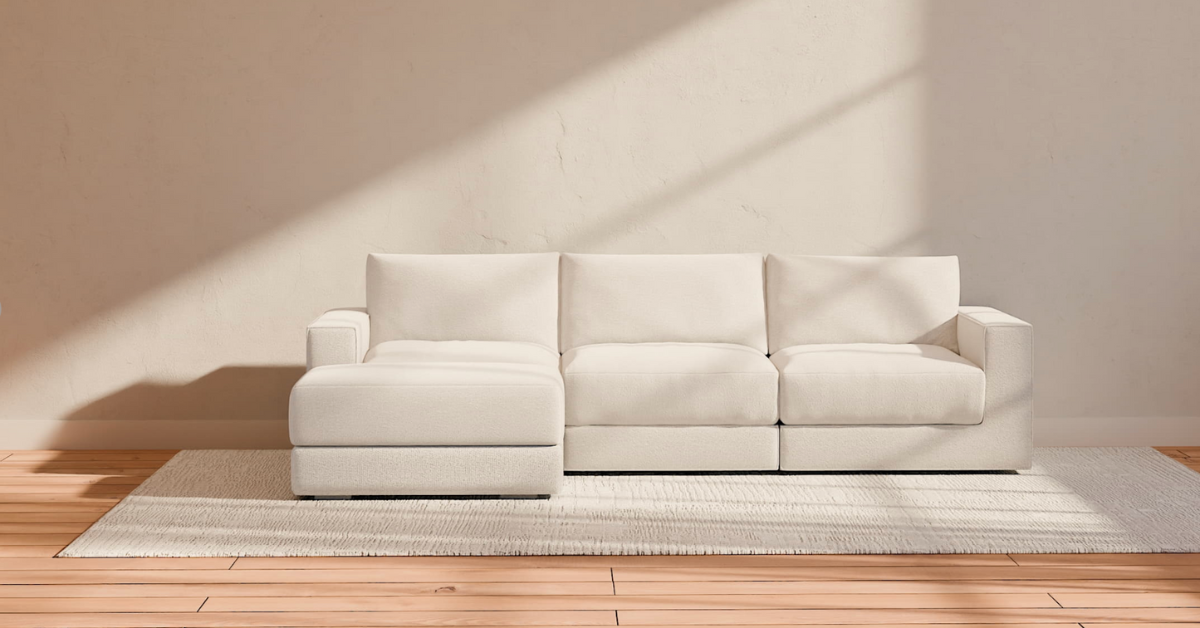
Landon Sectional
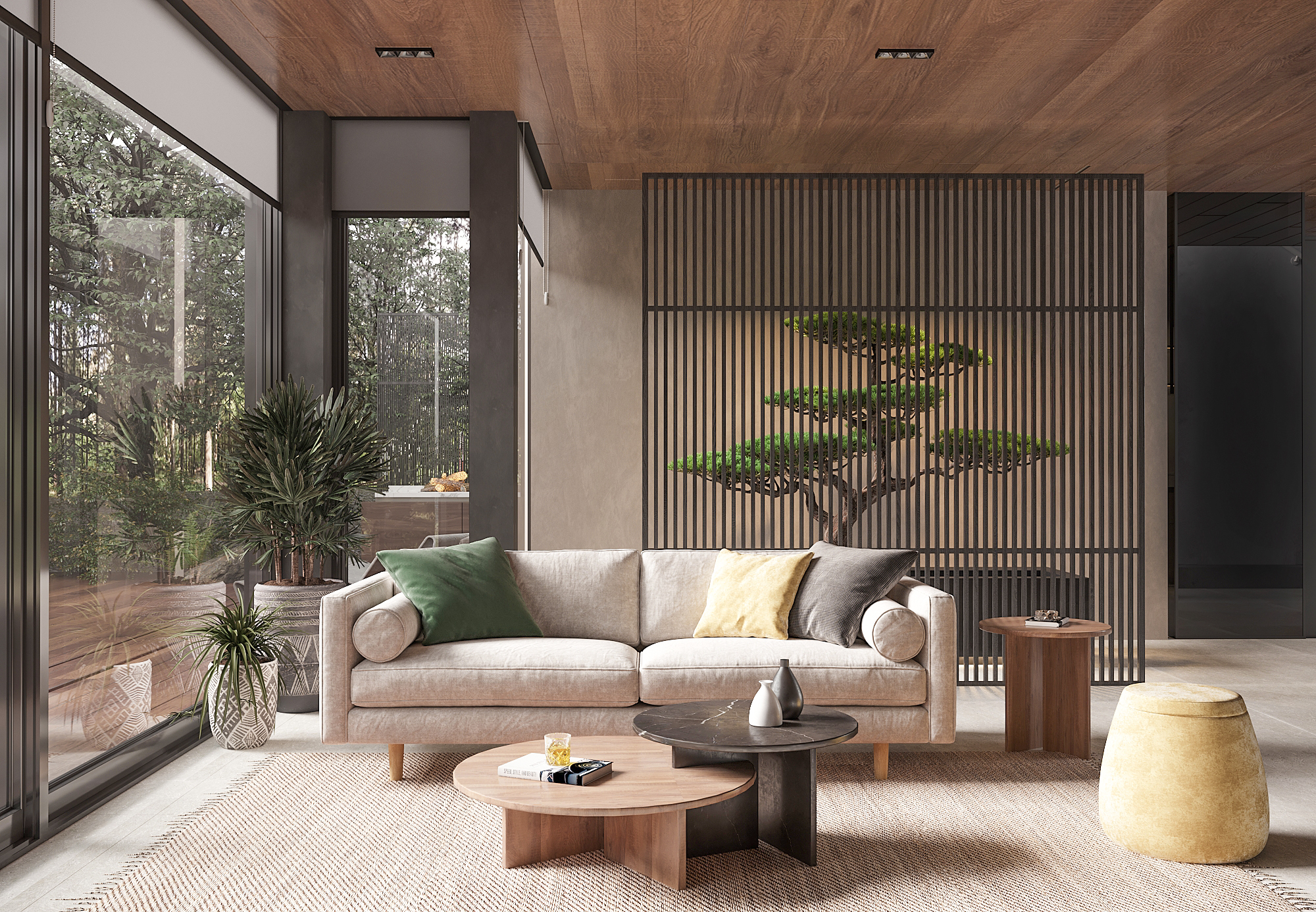
Dreamsofa's Custom Sectional Couches are Trending
The core problem DreamStudio was built to solve is one of the oldest frictions in e-commerce furniture: a buyer can select a fabric swatch, a leg finish, and a set of dimensions on a screen, but has no reliable way to know how those choices will actually look and feel in their own room until the piece is delivered. That uncertainty is a documented driver of returns across the furniture category generally, and it is compounded for custom and made-to-order pieces, where a return is not just an inconvenience but a rebuild.
What DreamStudio Does
DreamStudio combines high-fidelity photogrammetry, real-time rendering, and augmented reality to let a shopper view a fully customized sofa or sectional in 360-degree detail, then place a to-scale version of it directly into their own room using a smartphone camera. Buyers can toggle between fabric options, leg finishes, and configurations and watch the model update in real time, with pricing adjusting automatically as they build. The tool is paired with a "Design Concierge" chat staffed by human design consultants who can view a customer's saved DreamStudio configurations and advise on fabric coordination and spatial layout, rather than relying solely on the AI-generated visualization to close the confidence gap.
Early Signals, Three Months In
DreamSofa says usage of DreamStudio has scaled quickly since launch, with a majority of new custom orders now involving at least one DreamStudio session before checkout. The company reports that customers who use the AR placement feature specifically — dropping a to-scale model into their actual room via smartphone camera — show measurably higher order confidence and a meaningfully lower rate of post-order size or configuration changes compared to customers who complete a purchase using static images and written measurements alone. DreamSofa has not yet published a specific quarter-over-quarter return-rate figure tied directly to DreamStudio usage and says a fuller data release, including return-rate comparisons by configuration type, is planned for later this year once a full sales cycle of DreamStudio-assisted orders has completed delivery and any return windows have closed.
"The AR feature gets the attention, understandably, because it's the part people can show their friends," said a DreamSofa spokesperson. "But the number we actually care about is quieter: how many customers change their mind about a size or a fabric after the sofa lands in their living room. Early on, that number is moving in the right direction for people who used DreamStudio before ordering."
Why Returns Are the Real Cost Center in Custom Furniture
Returns are a uniquely expensive problem for made-to-order furniture businesses in a way they are not for retailers selling standardized, in-stock inventory. A returned custom sectional cannot simply be restocked and resold to the next buyer; the fabric, dimensions, and finish were built to one customer's specifications, which typically means the piece is scrapped, donated, or heavily discounted rather than resold at full value. That makes returns a direct hit to unit economics in a way that magnifies the value of any tool that reduces the odds of a mismatched order in the first place, independent of the marketing benefit of a flashy AR feature.
Industry-wide, furniture remains one of the higher-return categories in e-commerce, and "it didn't fit the space the way I expected" or "the color looked different in person" are consistently among the most commonly cited reasons, according to return-rate research across the broader furniture and home goods sector. DreamSofa's bet with DreamStudio is that solving the visualization problem before the purchase, rather than accepting returns as a cost of doing business after the fact, is a better long-term strategy for a direct-to-consumer, made-to-order model where every returned piece is effectively a write-off rather than restockable inventory.
Built on Top of an Existing Engineering Standard, Not a Marketing Layer
DreamSofa is positioning DreamStudio as an extension of its manufacturing precision rather than a purely cosmetic add-on. The company's FlexForm sizing system already builds every piece to a customer's exact stated dimensions rather than a fixed set of standard sizes, and DreamStudio's spatial rendering is designed to reflect those exact dimensions in the AR preview rather than a generic model of the product line. In practice, that means the sofa a customer sees on their phone, arranged in their own living room, is meant to be dimensionally accurate to the piece that eventually ships, down to the configuration of individual modular sections.
That distinction matters for a category where "3D configurator" tools have become common but are not always built on top of true made-to-order manufacturing. A configurator that lets a shopper preview finish options on a fixed-size product is a different, simpler technical problem than one that has to accurately render an infinitely variable set of custom dimensions and modular configurations in real time. DreamSofa says the latter is what DreamStudio was engineered to do, which is also why the company frames the tool as core product infrastructure rather than a seasonal marketing feature layered on top of an existing website.
Where AR Tools Still Fall Short
DreamSofa is careful not to oversell the technology as a complete substitute for in-person shopping. Phone-based AR placement is dependent on room lighting, floor and wall color accuracy, and a customer's own camera and device quality, all of which can introduce a gap between the on-screen preview and the finished piece. Fabric texture and true color are still difficult to convey with full accuracy through a phone screen, which is part of why DreamStudio is paired with a physical swatch program rather than positioned as a replacement for it; the company continues to recommend that customers order free fabric samples before finalizing a fabric choice, even when they have already used DreamStudio to confirm the size and configuration. DreamSofa says the more meaningful gains from the tool so far have come from solving the spatial and dimensional side of the confidence problem, where digital tools can be genuinely precise, rather than the color and texture side, where a physical swatch still outperforms any screen.
That distinction is part of why the company is cautious about attaching a specific return-rate percentage to DreamStudio before it has a complete data set. Early internal signals point toward fewer post-purchase configuration changes among AR users, but DreamSofa says it wants a full sales-and-delivery cycle, including the 100-day trial window, before publishing a return-rate figure it is confident will hold up over time rather than reflect an early, smaller sample of highly engaged users.
What Comes Next
DreamSofa says it plans to expand DreamStudio's fabric and configuration library through the remainder of 2026 and will publish a more detailed data set on returns and order accuracy once a full cycle of DreamStudio-assisted orders has moved through production, delivery, and the company's 100-day trial window. For an industry still catching up to the idea that furniture shopping can be genuinely try-before-you-buy rather than a leap of faith based on a stock photo, DreamSofa is treating the next data release, rather than the initial launch, as the real test of whether the tool delivers on its underlying promise.
About DreamSofa
DreamSofa is a direct-to-consumer custom furniture manufacturer specializing in made-to-order sofas, sectionals, modular seating systems, and sleeper sofas. Its DreamStudio platform combines AI-powered 3D visualization and augmented reality to let customers preview a fully custom piece in their own home before ordering. Every DreamSofa piece is built using kiln-dried hardwood frames and is backed by a lifetime frame warranty and a 100-day home trial.
Maria Gonzalez
MGP
+1 305-204-8988
email us here
Legal Disclaimer:
EIN Presswire provides this news content "as is" without warranty of any kind. We do not accept any responsibility or liability for the accuracy, content, images, videos, licenses, completeness, legality, or reliability of the information contained in this article. If you have any complaints or copyright issues related to this article, kindly contact the author above.
