
.jpeg)

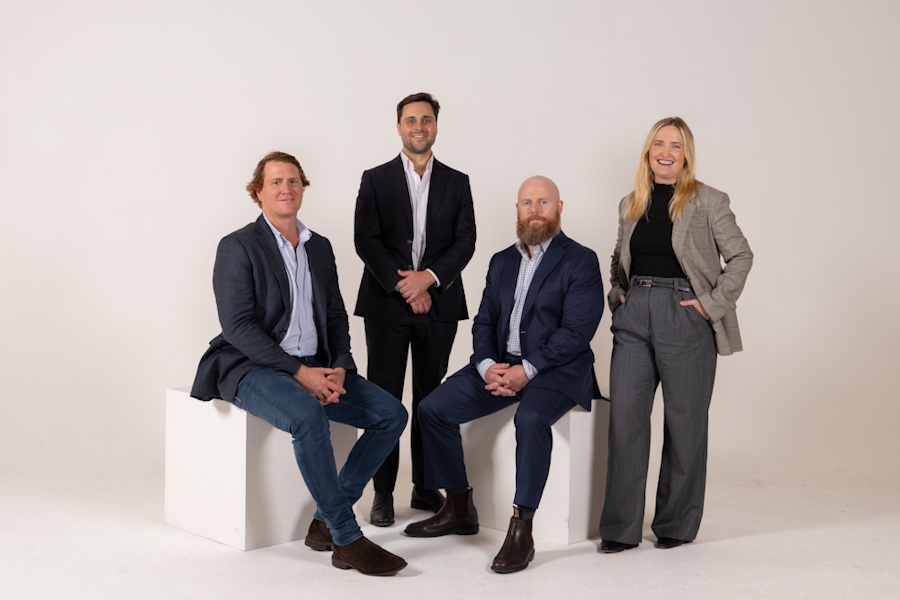
Team of experienced work injury lawyers
Brisbane Personal injury experts rebrand
AI can get QLD workers’ compensation law wrong. Discover five common misconceptions, the facts that matter, and when to seek legal advice from Splatt Lawyers.
BRISBANE, AUSTRALIA, October 7, 2026 /EINPresswire.com/ -- Brisbane workers warned not to rely on AI for workers’ compensation adviceA workplace injury, a car crash on the way to work or a rejected compensation claim can leave workers searching for answers. Increasingly, that search starts with an AI chatbot.
The response may arrive in seconds, complete with confident explanations and seemingly clear next steps. But when it comes to Queensland workers’ compensation law, an answer that sounds convincing may still be wrong.
Splatt Lawyers, home to some of the best work injury lawyers in Brisbane, is highlighting five common misconceptions that could lead injured workers to misunderstand their rights, options or miss important deadlines.
The warning comes as Queensland Courts caution that generative AI tools can produce inaccurate or misleading legal information, including material based on overseas laws. Additionally, advice that applies elsewhere in Australia may not apply to a Queensland claim.
Here are five misconceptions workers should understand before deciding what to do next.
Five things AI gets wrong about Queensland workers’ compensation
Misunderstanding #01: “You’re not covered on the way to work”
What AI might say: Injuries sustained during the commute are not covered by workers’ compensation, so you must rely on car insurance or pay for treatment yourself.
The Queensland position: Certain injuries sustained while travelling between home and work may qualify for workers’ compensation under Queensland’s journey-claim provisions.
For example, a car crash on the way to work or an accident while cycling to the workplace may warrant further investigation. However, coverage is not automatic. The circumstances of the journey, including its purpose and any significant deviation or interruption, can affect eligibility.
This is where a broad AI-generated answer can be misleading.
Rules and exceptions vary, and the specific facts of the journey matter.
Misunderstanding #02: “It’s a pre-existing condition, so you can’t claim”
What AI might say: If you already had a back, knee or shoulder problem, your injury cannot qualify for workers’ compensation.
The Queensland position: A pre-existing condition does not automatically prevent a claim. An aggravation of an existing injury, disease or medical condition may be compensable where the relevant legal requirements are met.
For example, a worker with an existing back condition may experience a significant worsening after lifting heavy items at work.
The distinction is important: a worker may not need to prove that employment caused the original condition, but they must establish the necessary connection between the work and the aggravation. Medical records, a timely assessment and a clear account of the work activities involved can help explain what happened.
Misunderstanding #03: “Casual workers and contractors aren’t covered”
What AI might say: Workers’ compensation is only for permanent employees. If you work casually or invoice clients through an ABN, you are not eligible.
The Queensland position: Casual employment does not, by itself, rule out workers’ compensation. Contractors may also qualify, depending on the nature of their working arrangement and whether they meet Queensland’s legal definition of a worker.
An ABN or a contractor label does not necessarily settle the question. The actual relationship and working arrangements may be relevant when determining a person’s status.
This matters for people working in labour hire, construction, hospitality and other industries where employment arrangements can vary considerably.
Misunderstanding #04: “If WorkCover rejects your claim, that’s the end of it”
What AI might say: Once an insurer rejects your workers’ compensation claim, the decision is final, and there is nothing more you can do.
The Queensland position: An insurer’s rejection does not necessarily end your options. Queensland has a formal process for seeking a review of certain decisions, followed by an appeal process where the relevant requirements are met.
A review may result in the original decision being confirmed, changed or set aside. If you remain dissatisfied, a further appeal may be available, subject to the applicable rules and time limits.
The critical point is to act promptly. Review and appeal deadlines are strict, and the relevant period depends on the decision and the stage of the process.
It is also important to understand why the claim was rejected. Do not assume that a rejection letter means you have no further rights.
Misunderstanding #05: “You can’t sue your employer if you receive WorkCover”
What AI might say: Accepting workers’ compensation means you give up any right to sue your employer. Alternatively, you can pursue damages whenever you choose.
The Queensland position: Statutory workers’ compensation benefits and a common-law claim for damages are different legal processes. In appropriate circumstances, an injured worker may be able to pursue common-law damages where employer negligence is established.
However, this is not automatic. A common-law claim has its own requirements, procedures and time limits.
A decision about a potential common-law claim can have significant consequences. So, please seek advice about the available pathways and their implications.
Why AI can get Queensland workers’ compensation wrong
The problem is not simply that AI sometimes makes mistakes. It is that an incorrect answer can sound just as authoritative as a correct one.
Queensland Courts explain that generative AI tools may produce inaccurate, incomplete or outdated information. Workers’ compensation is particularly sensitive to these limitations for three reasons.
1. Different jurisdictions have different rules: there are 11 workers' comp schemes in Australia.
2. The law and official guidance can change. Answers may be based on old information.
3. Every claim depends on its circumstances. A chatbot cannot reliably determine a person’s entitlements from a short description alone.
Advice grounded in Queensland law
Kerry Splatt leads Splatt Lawyers’ Brisbane team of personal injury lawyers and has been a Queensland Law Society Accredited Specialist in Personal Injury Law since 1998. The firm offers Queensland personal injury legal advice on a 100% no-win, no-fee basis with no upfront legal costs and no uplift fees, subject to the firm’s terms.
They also offer free advice on Queensland workplace injury claims, including denied workers compensation claims, workplace bullying, construction accidents and back injuries. Call 1800 700 125 or contact Splatt Lawyers to arrange a free meeting.
Michael Ford
Splatt Lawyers
+61 417 362 427
Visit us on social media:
Instagram
Facebook
YouTube
TikTok
Legal Disclaimer:
EIN Presswire provides this news content "as is" without warranty of any kind. We do not accept any responsibility or liability for the accuracy, content, images, videos, licenses, completeness, legality, or reliability of the information contained in this article. If you have any complaints or copyright issues related to this article, kindly contact the author above.
