


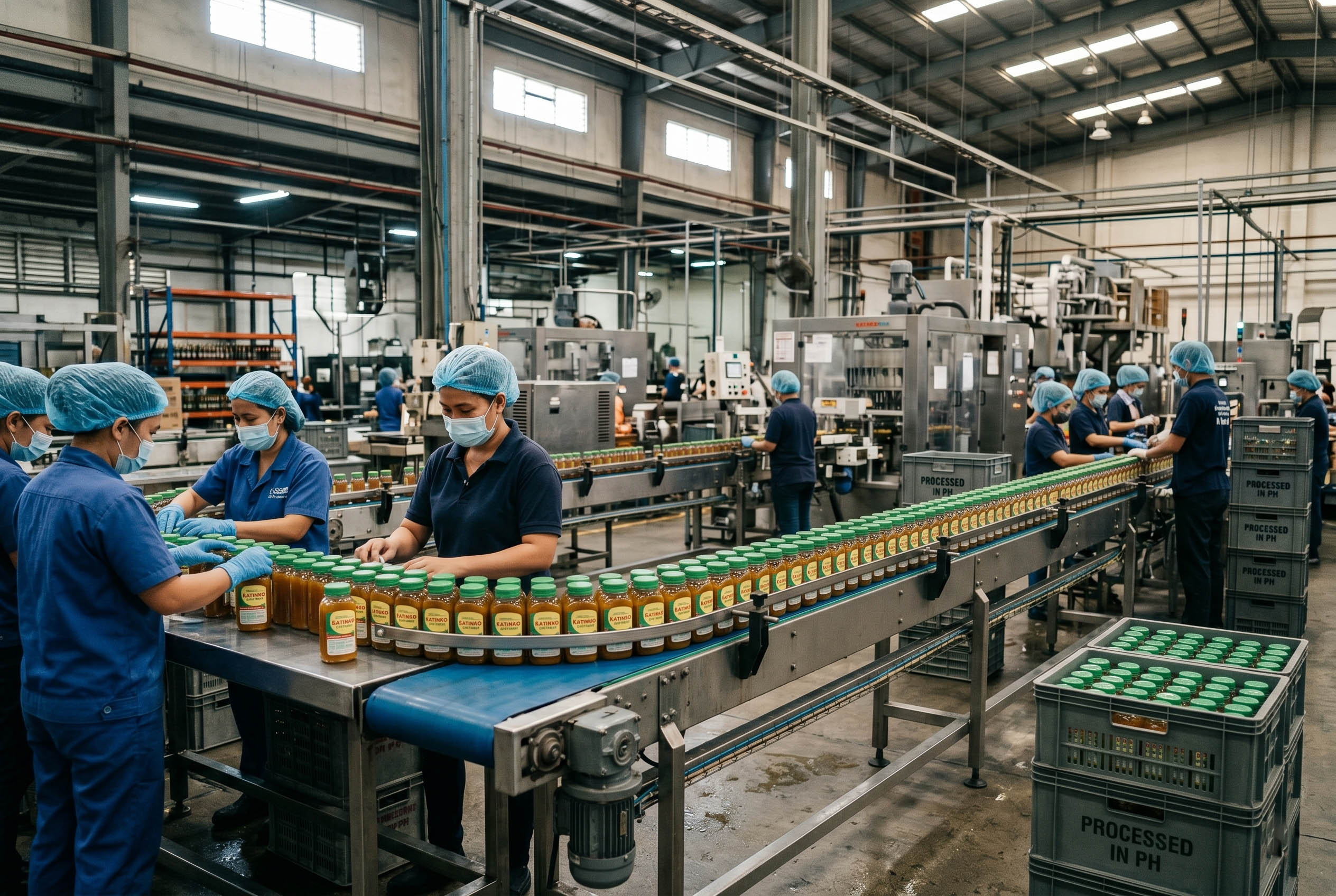
Philippine factory production line with conveyor equipment, machinery, and workers supporting daily operations.
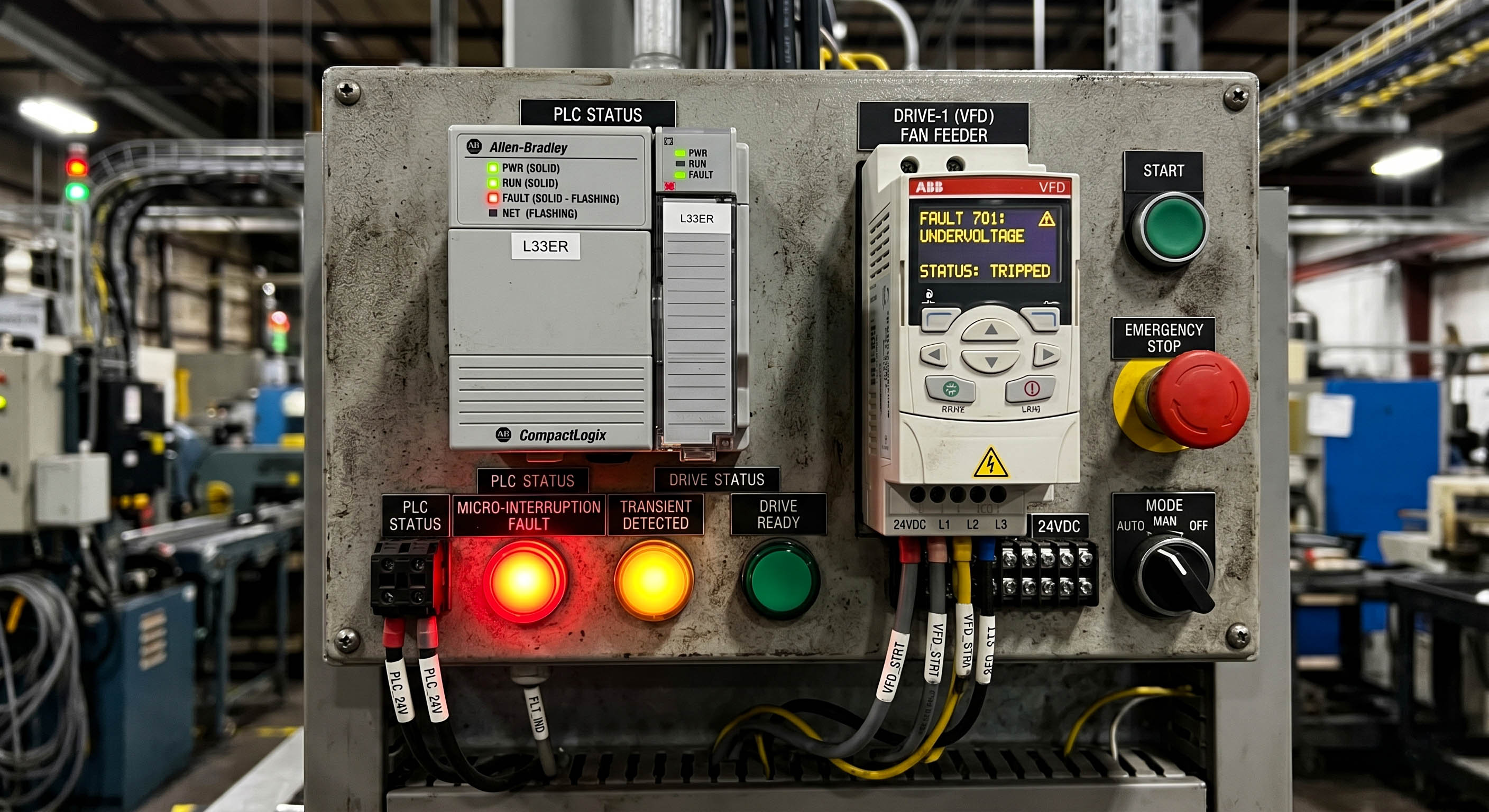
PLC and VFD control panel with indicator lights showing equipment sensitive to brief power interruptions.

Solaren engineer on site inspecting a solar energy project to support safe, reliable, and professional installation work.

Solaren Renewable Energy Solutions Corp logo lockup on a dark corporate background.
Brief unlogged power events cost factories more than full outages, says Philippine solar EPC firm with over 85MW of commercial installations.
The findings, covered by ANI News as part of broader reporting on industrial energy management in Asia, challenge the assumption that factories planning well for full outages have their power risk under control.
Full outages are expected. Procedures exist. Generators start, staff respond, and the event gets logged. What most factory operations do not track is the compounding effect of events too brief and too frequent to trigger formal responses.
A controller reset during a production run. A compressor that trips and restarts without an alarm. A refrigeration system that shows an anomaly overnight then clears before the morning shift. In isolation, each event appears minor. Over a month, these events can represent more lost production time than a single full outage.
The mechanism behind micro-interruptions differs from that of grid outages. Voltage sags lasting 50 to 200 milliseconds, caused by load switching or upstream disturbances on the distribution network, are sufficient to cause programmable logic controllers and variable frequency drives to lose synchronisation. The equipment restores automatically, but the production process does not. Batches must restart. Sequences must reset. Quality checks must repeat.
Because none of this reaches the threshold for formal incident reporting, it accumulates invisibly in maintenance logs, scrap rates, and overtime figures rather than in energy or reliability reports.
Solaren has observed this pattern in manufacturing, cold storage, food processing, and hospitality operations across its 2,500-installation client base in the Philippines. The company's analysis indicates that hybrid solar-plus-storage systems configured to buffer priority circuits are the most effective structural response, because they isolate critical equipment from grid disturbances during the high-risk periods immediately before and after full outages, when voltage instability is at its worst.
The company notes that battery storage for micro-interruption protection requires different sizing logic than battery storage for backup duration. Protecting a packaging line from a 200-millisecond sag requires fast-response discharge capability, not simply large stored capacity. This distinction is frequently absent from standard commercial solar proposals.
Solaren Renewable Energy Solutions Corporation is a DOE-accredited, PCAB-licensed solar EPC company headquartered in Tarlac, Philippines. The company has completed more than 2,500 commercial and industrial installations totalling over 85 megawatts, serving clients including Toyota, Oishi, McDonald's, and Dunkin'. Solaren holds the Asian Power Award for Solar Power Project of the Year. Read more about solar power systems Philippines downtime and hybrid solar systems commercial buildings at solaren-power.com.
Neil Hamilton Pearce
Solaren Renewable Energy Solutions Corp.
+63 917 879 6037
email us here
Visit us on social media:
LinkedIn
Instagram
Facebook
YouTube
Legal Disclaimer:
EIN Presswire provides this news content "as is" without warranty of any kind. We do not accept any responsibility or liability for the accuracy, content, images, videos, licenses, completeness, legality, or reliability of the information contained in this article. If you have any complaints or copyright issues related to this article, kindly contact the author above.
