


The study exposes a profound paradox in modern forest governance

The Research Career Guidance Center – Center Region logo

The project was funded by PNRR
How high-tech tracking and selective enforcement are criminalizing impoverished villagers while large-scale timber networks escape out of sight.
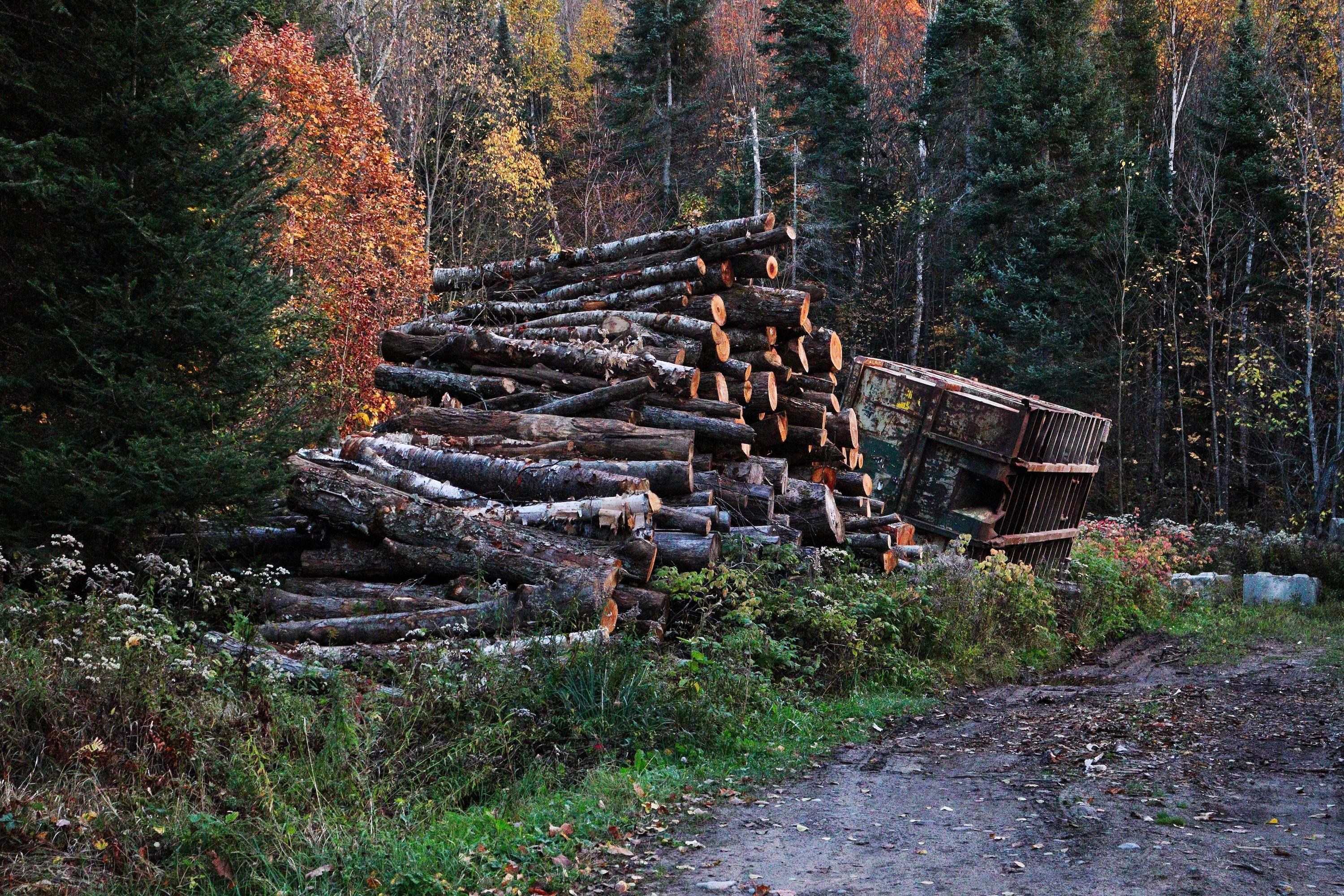
SIBIU, TRANSYLVANIA, ROMANIA, June 25, 2026 /EINPresswire.com/ -- Imagine living in a remote Romanian mountain village as winter approaches. Your firewood supply has completely run out, you cannot afford commercial prices, and the only source of warmth is the forest just a few kilometers away—the very same land where your family harvested firewood for generations. Today, however, stepping into those woods without an official permit turns you into a criminal offender. This is the stark opening reality highlighted in the academic research paper, "The Forest: Postsocialist Forest Governance and Environmental Justice in Romania”, conducted by researchers from ULBS .The study exposes a profound paradox in modern forest governance: impoverished citizens collecting wood out of sheer survival have suddenly become highly visible in official crime records, while powerful networks engaged in large-scale illegal timber extraction remain largely invisible to the exact same system. What the paper's authors conceptualize as a severe "crisis of environmental justice" represents a critical, scientifically documented disconnect between high-tech policy and human reality.
Imagine living in a mountain village in Romania. Winter is approaching, your firewood supply has run out, and you cannot afford to purchase wood from a commercial depot. The forest is only a few kilometres away. Your grandfather harvested firewood from that forest throughout his life. Today, however, if you do so without a permit issued by the local forest administration, you are considered an offender. You may be photographed, reported, fined, or even prosecuted. Impoverished individuals who collect wood from the forest because they have no alternative source of heating have suddenly become highly visible—in photographs, reports, and official records. At the same time, certain networks engaged in the large-scale extraction of timber have remained largely invisible to the very same system. This is, in simple terms, the paradox of forest governance in Romania, which we conceptualise as a crisis of environmental justice.
Firewood and Energy Vulnerability
People do not collect wood from forests out of greed, but out of a basic need for warmth. In Romania, energy bills constitute an excessive burden for 45.3% of the population, placing approximately one in two citizens in a situation of energy vulnerability. In rural areas, the situation is equally challenging. For many households, firewood remains the only viable heating option. When legal access to firewood becomes inaccessible or prohibitively expensive, people inevitably seek alternative means. Criminalising such behaviour without providing affordable and legal alternatives represents a form of social and environmental injustice.
Forest Governance
Over recent decades, Romania has invested significantly in digital systems designed to monitor timber transportation, including mobile applications, QR-code tracking systems, and online databases. While these instruments have increased oversight, their implementation has often been selective. They have proven more effective in identifying small-scale users transporting modest quantities of firewood than organised networks involved in the extraction of substantial timber volumes. As a result, communities located near forested areas frequently experience a pervasive sense of injustice: laws exist, but they are not applied equally. Small actors bear the consequences, while larger actors often possess greater capacity to negotiate regulatory constraints. As the number of laws, regulations, and monitoring systems has increased, so too has the fear of criminal prosecution among ordinary people whose livelihoods depend on access to forest resources.
Multiple Dimensions of Injustice
One of the central findings of the research is that forest-related injustice is multidimensional. It cannot be understood solely as an environmental issue, an economic problem, or a matter of gender and ethnicity. Rather, it encompasses all of these dimensions simultaneously, with each reinforcing and amplifying the others. Women in rural communities are often responsible for household management and are therefore among the first to experience the consequences of firewood shortages. Roma communities living near forests are among the groups most vulnerable to the effects of restrictive policies while also being among the least represented in decision-making processes. Forestry workers—the individuals responsible for harvesting, transporting, and processing timber—are among those most exposed to occupational risks in Romania, yet they remain largely absent from public debates concerning forest governance.
Forestry Workers: Most Exposed, Most Neglected
Romania ranks among the top five European countries in terms of fatal accident rates within the forestry sector. Forestry workers frequently operate without clearly defined employment contracts, adequate health insurance, or meaningful compensation in cases of occupational injury or illness. Official documents tend to describe their work exclusively through technical indicators—such as cubic metres extracted or production targets achieved—without acknowledging the historical significance of their labour, their extensive ecological knowledge, or their contribution to the social and economic life of mountain communities. Consequently, their perspectives remain largely absent from discussions regarding forest management and governance.
What Should Change?
The research suggests that the underlying challenges are fundamentally political and social in nature. Several directions for policy and institutional reform emerge as particularly important. Access to firewood should be recognised as a social priority. As long as economically vulnerable households lack affordable and legal heating alternatives, informal firewood collection will persist. Establishing legal distribution mechanisms capable of providing firewood at accessible prices for vulnerable families would represent an important step toward addressing both energy poverty and environmental justice concerns. Forestry workers should be formally recognised as stakeholders in forest governance. Their practical knowledge of forest ecosystems, species composition, seasonal dynamics, and field conditions constitutes a valuable resource that should inform forestry and forest-management policies rather than be disregarded. Finally, justice should be applied equally to all actors. Selective enforcement and excessive bureaucratisation of access to forest resources undermine the very principle of justice. Marginalised communities, including Roma populations and economically vulnerable households, are disproportionately affected by top-down policies that fail to reflect the realities experienced on the ground.
This article was published with funding from the "PNRR: Funds for a modern and reformed Romania!" program, within the project "Research Career Guidance Center - Central Region" - COCerc, PNRR-III-C9-2022 - I10 / 7 /16.11.2023. The content of this material does not necessarily represent the official position of the European Union or the Government of Romania.
Bianca Padurean
Transylvania Today Association
email us here
Legal Disclaimer:
EIN Presswire provides this news content "as is" without warranty of any kind. We do not accept any responsibility or liability for the accuracy, content, images, videos, licenses, completeness, legality, or reliability of the information contained in this article. If you have any complaints or copyright issues related to this article, kindly contact the author above.
