
.jpeg)

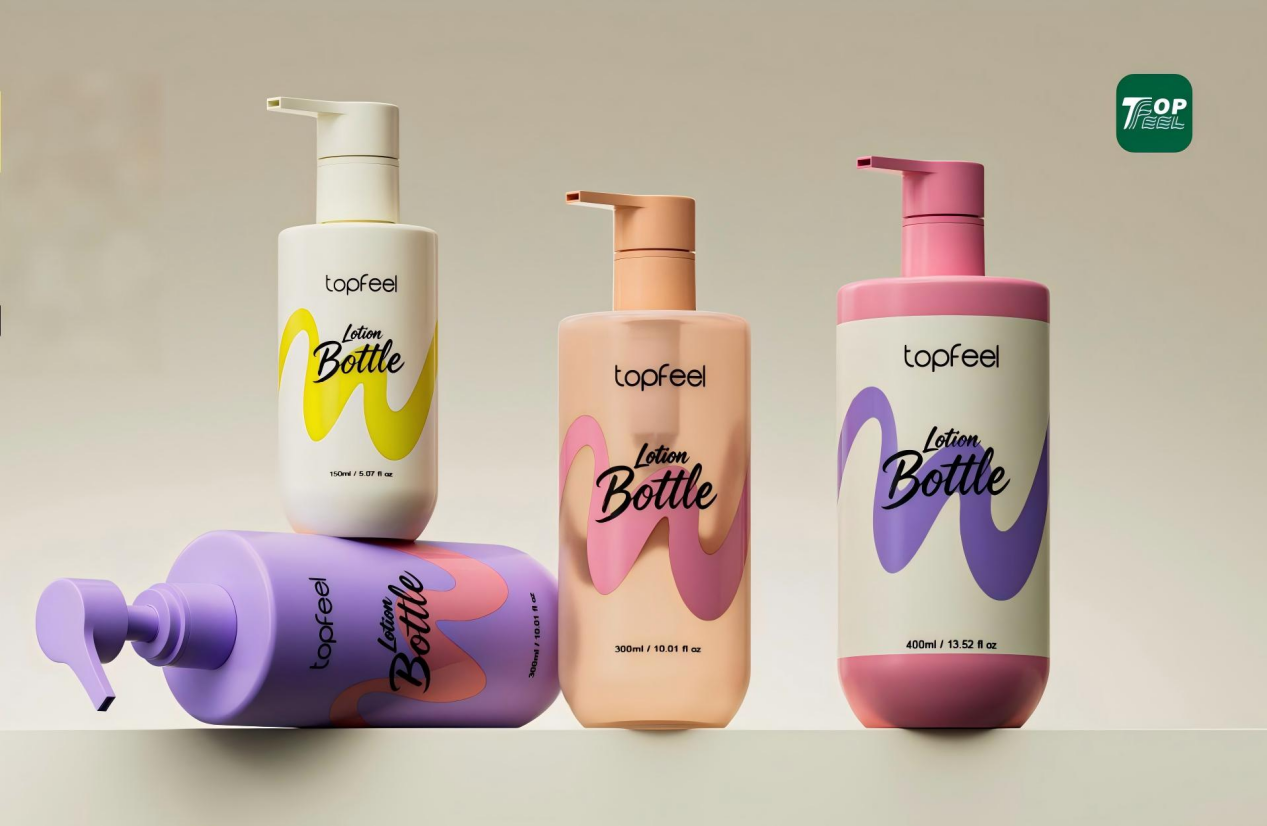
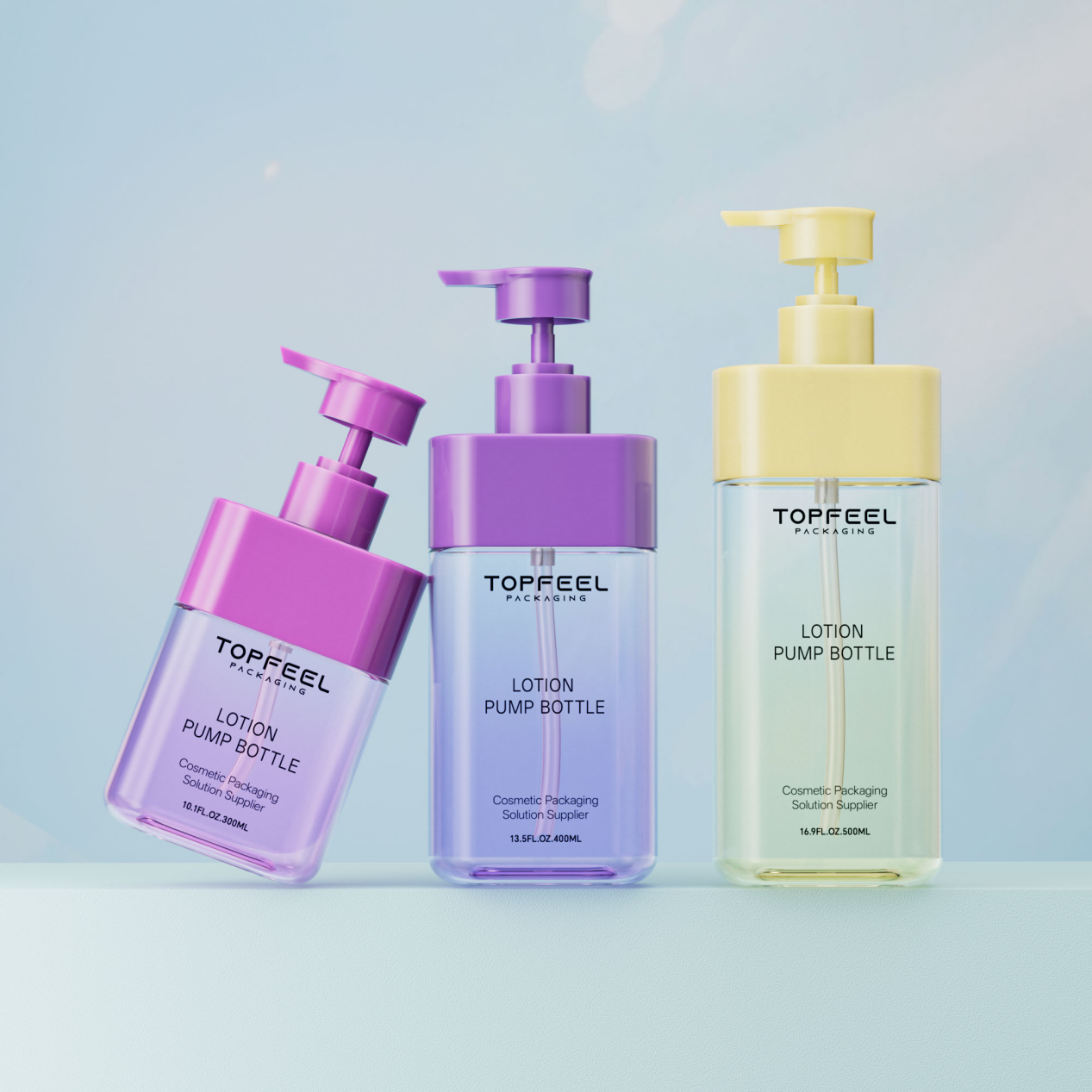
In modern skincare and personal care, a lotion bottle is no longer a passive container; it is an active delivery instrument. Whether dispensing a lightweight facial serum, a dense barrier cream, or a daily body lotion, the internal pump mechanism determines user satisfaction, product hygiene, and shelf-life stability.
Engineering Precision: Inside the Dispensing Mechanism
At the core of every reliable lotion bottle lies the pump assembly-a tightly calibrated system comprising the actuator head, piston rod, internal spring, small piston, piston seat, valve plate, and pump body, paired with an accurately extruded dip tube. Minor dimensional deviations in any of these components can lead to air entrapment, dripping, clogging, or uneven stroke resistance.
To eliminate these failure points, Topfeelpack approaches pump manufacturing from the tooling stage upward. Utilizing S136 high-hardness steel (42-56 HRC) for mold cavities and CNC machining alongside precision grinding for mold bases and cores, the company maintains tight dimensional tolerances across high-volume production runs. Automatic tapping equipment ensures clean thread geometry and verticality, preventing cross-threading and leakage at the bottle neck.
Workmanship, Structural Details, and Performance Advantages
A closer examination of precision pump dispensing systems designed by Topfeelpack reveals several structural refinements that distinguish them from conventional off-the-shelf dispensers:
Consistent Dosage Calibration: Each actuation delivers a repeatable output volume tailored to the viscosity profile of the formulation, minimizing product waste and improving consumer dosing accuracy.
Refined Actuator Ergonomics and Lockability: Smooth downward travel with balanced spring rebound prevents finger fatigue, while secure twist-lock or clip-lock collars protect against accidental discharge during e-commerce transit and travel.
Dip Tube Customization and Clearance: Dip tubes are extruded under controlled water-pressure parameters to maintain uniform inner diameter and wall thickness, cut to match specific bottle geometries so brands can maximize evacuation rates and reduce residual product waste.
Airtight Sealing and Neck Integrity: Multi-point gasket sealing and strict torque control keep oxygen ingress to a minimum, helping preserve active ingredients sensitive to oxidation or microbial contamination.
Comparative Analysis: Precision Pumps vs. Conventional Market Alternatives
When beauty brands source standard lotion bottles on the open market, inconsistencies often emerge only after filling or during consumer use. Comparing precision-engineered pump systems against conventional commodity dispensers highlights clear differences across four operational dimensions:
Evaluation Dimension
Conventional Commodity Pumps
Topfeelpack Precision Pump Systems
Mold & Thread Workmanship
Softer mold steels lead to faster cavity wear, visible parting lines, and slight thread ovality that can cause neck seepage.
Hardened S136 steel cavities and precision-ground components yield smooth surfaces, clean threads, and reliable torque retention.
Dispensing Consistency
Output volume fluctuates across strokes; high-viscosity creams frequently stall or spit due to valve lag.
Calibrated valve plates and piston seats handle low-to-high viscosity formulas smoothly with steady, drip-free cutoffs.
Structural Durability & Lifespan
Springs may lose tension or corrode when exposed to certain active ingredients, resulting in sluggish rebound mid-lifecycle.
Tested under cyclic actuation and extreme temperature swings (-15 degrees C to 50 degrees C) to ensure consistent rebound through the final dose.
Aesthetic & Surface Adhesion
Secondary decorations such as silk-screen printing or hot stamping can chip or fade under daily bathroom humidity.
Surfaces undergo adhesion, abrasion, and UV weather-resistance verification so finishes remain intact throughout use.
Every production batch undergoes multi-stage quality verification-from raw resin inspection to finished goods testing-including torque verification, viscosity compatibility checks, optical imaging (flagging deformation exceeding 0.05 mm), vacuum/break thresholds within 0.3 mm, and 48-hour thermal-humidity cycling.
Integrating One-Stop Packaging Development and Sustainability
Beyond standalone pump engineering, TOPFEELPACK CO., LTD operates as a comprehensive cosmetics packaging supplier specializing in R&D, manufacturing, and global supply for beauty brands. Its portfolio spans airless bottles, single-wall and double-wall lotion bottles, blow-molded PET and PE bottles, cream jars, dropper bottles, cosmetic tubes, sprayers, and custom multi-chamber dispensers.
By combining in-house mold engineering with injection molding, blow molding, spraying, silk-screen printing, hot stamping, and automated assembly workshops, Topfeelpack streamlines what is traditionally a fragmented supply chain. Brands seeking a reliable lotion bottle manufacturer from China benefit from an integrated OEM/ODM workflow that covers initial concept sketches, 3D structural prototyping, material selection, tooling, decoration, and quality assurance under one roof.
This vertical integration directly supports a "Speed to Market" development model. Rapid prototyping and modular tooling allow product development teams to evaluate ergonomics, pump output, and visual finishes early, shortening the timeline from initial brief to commercial launch.
At the same time, regulatory shifts-particularly the European Union's Packaging and Packaging Waste Regulation (PPWR)-are reshaping material specifications across Europe, North America, and Australia. In response, Topfeelpack actively develops recyclable mono-material PP dispensers, post-consumer recycled (PCR) resin bottles, and refillable cartridge systems, alongside technical documentation support to help European brands align with evolving recyclability and compliance standards.
Practical Checklist for Selecting a Lotion Pump Dispensing System
Before finalizing packaging specifications for a new skincare, haircare, or body care launch, brand managers and packaging engineers can use the following checklist to minimize compatibility and supply-chain risks:
Match Pump Output to Formula Viscosity: Confirm the actuator dosage (e.g., 0.15 ml to 2.0 ml per stroke) against the exact centipoise (CP) viscosity of your emulsion to avoid under-dosing or splashing.
Verify Chemical Compatibility: Conduct stability testing between your formula's active ingredients, oils, or fragrances and the pump's internal elastomers, springs, and dip tube polymers.
Evaluate Airless vs. Atmospheric Dip-Tube Formats: Choose atmospheric lotion bottles with precision dip tubes for stable creams and cleansers, or opt for airless pump systems when working with oxidation-sensitive actives.
Confirm Neck Finish and Torque Standards: Ensure the bottle neck (e.g., 20/410, 24/410, 28/410) and closure torque values match your filling line capping equipment to prevent leaks during shipping.
Audit Sustainability and Regional Compliance: Determine early whether your target market requires mono-material recyclability, specific PCR content percentages, or refillable inner cartridges.
Request Pre-Production Functional Samples: Test filled prototypes through drop tests, thermal cycling, and e-commerce vibration simulations before approving mass tooling.
Tailoring Dispensing Specifications to Your Next Formulation
Selecting the right lotion bottle and pump architecture depends heavily on formulation rheology, container capacity, and regional distribution requirements. Whether a brand is launching a 30 ml to 50 ml facial treatment in a double-wall recyclable PP airless bottle, a 100 ml to 250 ml daily moisturizer in a custom-decorated thick-wall PET lotion bottle, or a 300 ml to 500 ml body care line utilizing PCR resins and high-output locking pumps, aligning mechanical specifications early prevents costly post-launch reformulations.
For packaging teams evaluating pump output tolerances, neck finishes, custom mold development, or PPWR-ready material options, technical specifications and sample configurations can be explored directly through the official website of TOPFEELPACK CO., LTD at https://www.topfeelpack.com/
Topfeelpack
Topfeelpack
email us here
Legal Disclaimer:
EIN Presswire provides this news content "as is" without warranty of any kind. We do not accept any responsibility or liability for the accuracy, content, images, videos, licenses, completeness, legality, or reliability of the information contained in this article. If you have any complaints or copyright issues related to this article, kindly contact the author above.
