
.jpeg)


Baghdad Versus Potemkin Case Study
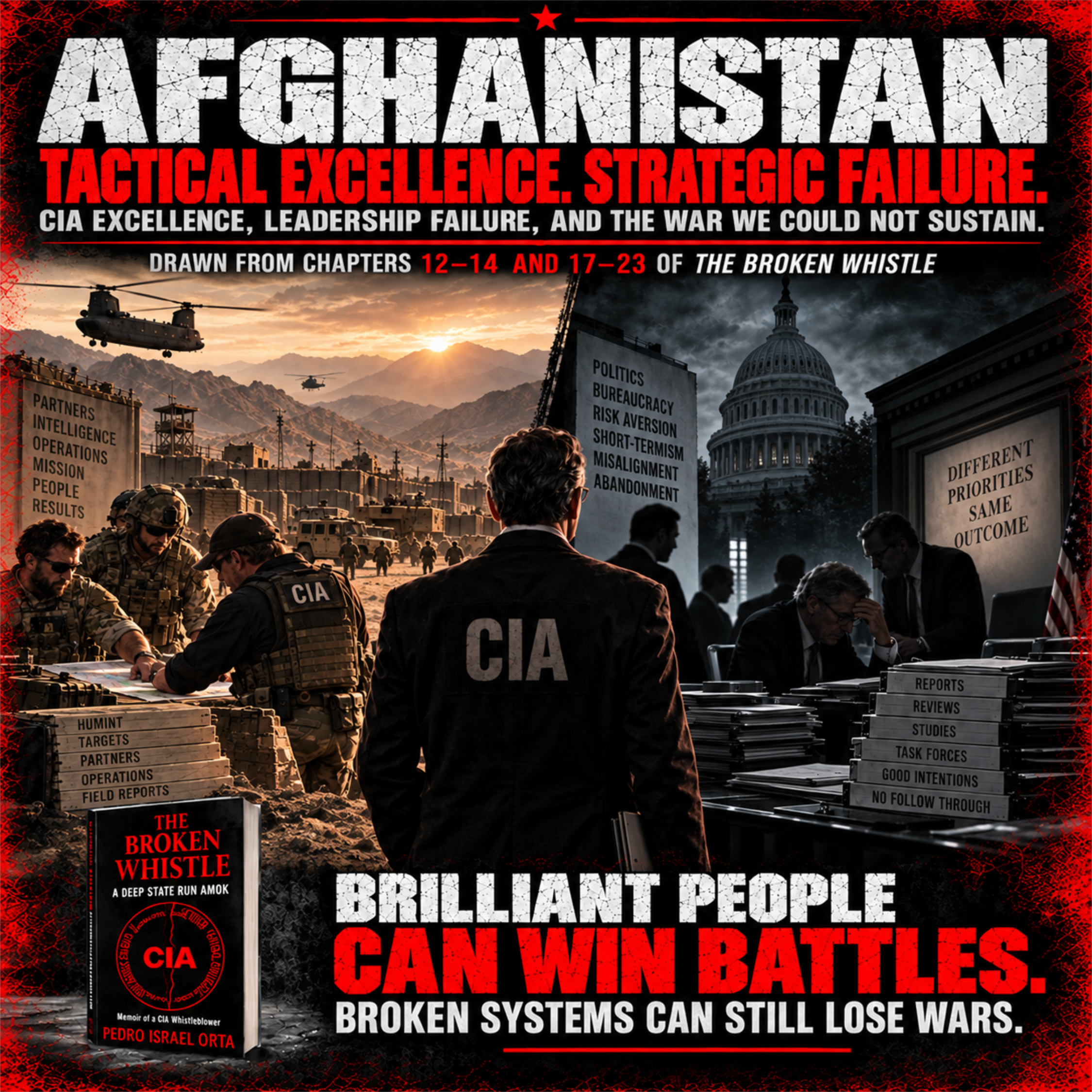
Afghanistan Leadership Case Study
Headquarters Bureacratic Leadership Case Study
Visual studies from a veteran CIA officer’s memoir draw on nearly 20 years of experience to examine leadership, culture, learning, and oversight inside the CIA.
WASHINGTON, DC, UNITED STATES, September 23, 2026 /EINPresswire.com/ -- Why can the same intelligence organization deliver exceptional results under one leadership team and serious dysfunction under another?
A new visual case-study series examines that question from inside the U.S. Intelligence Community, drawing on more than 18 years of firsthand experience across CIA Headquarters, overseas stations, Iraq, Afghanistan and intelligence-community oversight.
The project transforms episodes from The Broken Whistle: A Deep State Run Amok into focused studies of leadership, organizational behavior, institutional risk, war-zone performance, bureaucratic culture, and government accountability presented through detailed visual decks and short-form video.
The underlying work has drawn attention from independent reviewers for precisely that institutional detail. Philip Zozzaro of San Francisco Book Review/Reedsy Discovery called the book “a stand-out exposure of the haphazard organization of the Central Intelligence Agency.” Literary Titan described it as “more than an exposé” and “a significant contribution to literature.” The Book Revue called it “essential and deeply unsettling reading for those seeking to understand power inside the intelligence community.”
The new case studies organize that material around a fundamental management question: What makes talented people thrive in one part of an institution while bureaucracy, politics, and poor leadership undermine them elsewhere?
A Tale of Two Stations:
The Baghdad material offers a study of high-performance leadership under wartime conditions. Experienced personnel were trusted, talent was developed, responsibility was delegated, and mission requirements remained central to decision-making. The book’s “Potemkin Station” chapters depict a contrasting environment marked by micromanagement, gatekeeping, internal politics, and management conflict. Same institution. Different leadership. Radically different organizational outcomes.
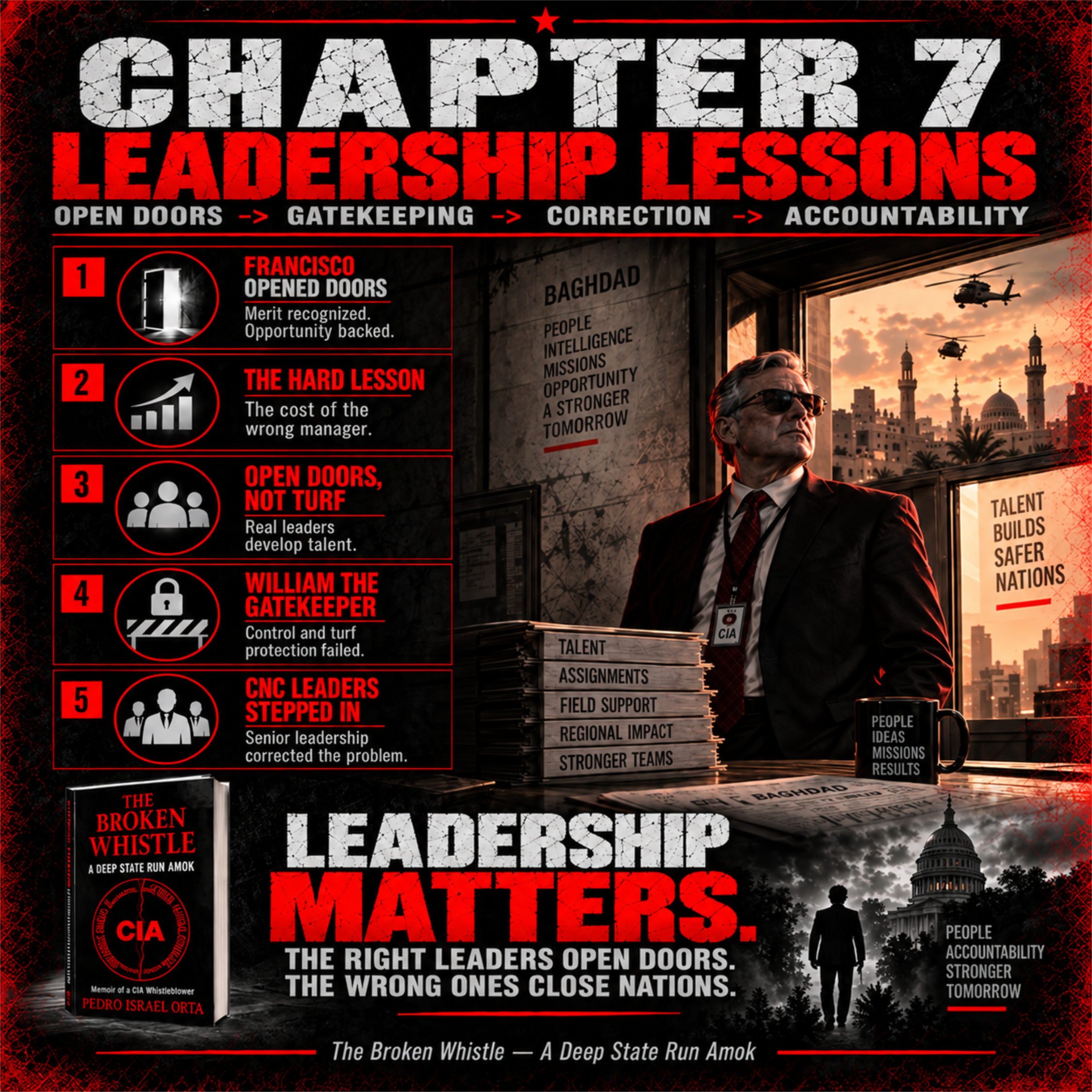
A separate Chapter 7 study further explores that comparison by examining sponsorship, career development, and managerial turf. One senior leader recognized field performance and opened a professional opportunity. Another resisted the assignment. Senior management eventually intervened—but only after the conflict had already imposed organizational costs.
Afghanistan: From Tactical Performance to Institutional Learning.
The Afghanistan case study widens the lens. Drawing on multiple chapters and deployments, it examines counterintelligence, force protection after Khowst, interagency and military relationships, leadership under pressure, and repeated operations around Kandahar. The recurring question is deliberately simple: The intelligence existed. The experience existed. The history existed. Was the institution learning from them? The study explores the distinction between tactical excellence and strategic success and how organizations preserve, transfer, or fail to apply institutional knowledge across rotations, leadership changes, and years of conflict.
When Oversight Becomes the Case Study
The later chapters shift from intelligence operations to the systems intended to police intelligence organizations themselves. They follow Pedro Israel Orta’s account through internal reporting, CIA Headquarters, the CIA Inspector General, the Intelligence Community Inspector General, whistleblower procedures, reprisal allegations, and his eventual termination from the Agency. The governing question comes from the quotation opening Chapter 19:
“Who watches the watchers?”
The material treats whistleblower retaliation not merely as a personnel dispute but as a case study in governance, organizational risk, institutional self-protection, and the independence of internal oversight. “The most useful question is not whether an institution is good or bad,” Orta said. “The better question is why the same institution can produce extraordinary performance under one set of leaders and serious dysfunction under another.”
Visual Case-Studies Series Available: Editors, producers, educators, researchers and national-security professionals may request three principal visual decks:
1. A Tale of Two Stations: Baghdad vs. Potemkin — leadership, organizational culture and mission performance across sharply contrasting CIA environments.
2. Chapter 7: Open Doors, Gatekeeping and Correction — sponsorship, talent development, managerial authority and senior-leadership intervention.
3. Afghanistan: Tactical Excellence, Strategic Failure — Khowst, Gecko Base, Kandahar, the 2014 Base, institutional learning and the path from reporting concerns to alleged retaliation.
Additional visual studies examine intelligence-community oversight, whistleblower protections, and institutional responses.
The broader lesson running through the project is straightforward: Strong people can produce extraordinary results inside government. Broken systems can still squander those results.
The Broken Whistle: A Deep State Run Amok is available in hardcover, paperback, eBook and audiobook editions at BrokenWhistleBook.com. Review copies, interviews and high-resolution visual case-studies series materials are available on request.
About Pedro Israel Orta:
Pedro Israel Orta is a former CIA intelligence and operations officer and former inspector in the Office of the Inspector General of the Intelligence Community. He served more than 18 years in the U.S. Intelligence Community, with experience in Iraq, Afghanistan, counterterrorism, counterintelligence, technical targeting, foreign liaison, and institutional oversight. He received eight Exceptional Performance Awards and is the author of The Broken Whistle: A Deep State Run Amok and an executive producer of documentary projects examining intelligence-community whistleblowing and government accountability.
Pedro Israel Orta
Pedro Israel Orta Productions, LLC
+1 918-204-8948
email us here
Visit us on social media:
LinkedIn
Instagram
Facebook
YouTube
TikTok
X
Legal Disclaimer:
EIN Presswire provides this news content "as is" without warranty of any kind. We do not accept any responsibility or liability for the accuracy, content, images, videos, licenses, completeness, legality, or reliability of the information contained in this article. If you have any complaints or copyright issues related to this article, kindly contact the author above.
