


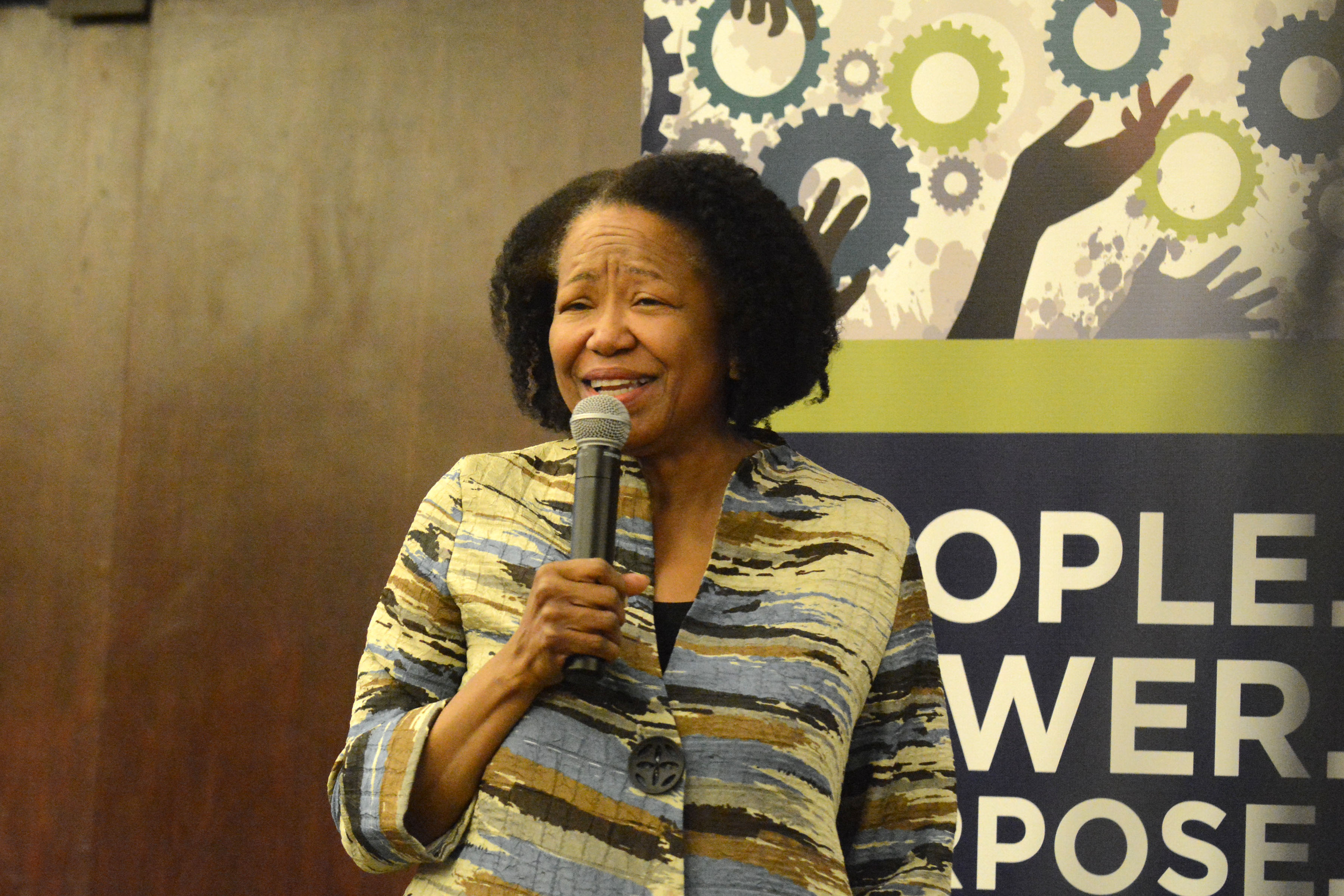
Dr. Gail C. Christopher
If the proposed changes are implemented, the resulting financial instability and risk for nonprofits could disrupt essential services nationwide
WASHINGTON, DC, UNITED STATES, June 25, 2026 /EINPresswire.com/ -- The National Collaborative for Health Equity (NCHE) and its Executive Director, Dr. Gail C. Christopher, today asked stakeholders, nonprofits, and the public to seek more information about the U.S. Office of Management and Budget (OMB) proposed sweeping changes to the Uniform Guidance. These rules and regulations govern federal grants, cooperative agreements, and other monetary awards.
NCHE is concerned that essential services provided by the nonprofit sector could be disrupted and is urging community leaders, advocates, and the public to submit official comments opposing the changes before the July 13, 2026, deadline.
To understand what is at stake, it helps to understand the role that federally funded nonprofits play. These are non-governmental organizations that receive a significant portion of their revenue from U.S. federal grants, contracts, or cooperative agreements. While they operate independently, they exist in part to help the government execute social, scientific, and humanitarian programs. Their ranks include organizations such as Catholic Relief Services, the International Rescue Committee, the American Red Cross, the Battelle Memorial Institute, and thousands of local food banks. In many cases, these groups serve as the operational arm of federal policy, delivering services the government is not equipped to provide directly.
If the proposed changes are implemented, the resulting financial instability and risk could disrupt essential services nationwide, including housing, community development, health, education, food, shelter, community services, and disaster recovery. Many qualified and highly effective grantees may conclude that the legal and financial risks of accepting federal awards have become too great, leading to a contraction of the nation's social safety net at a time when demand for these services continues to grow.
The Uniform Guidance is the framework that determines how federal agencies administer billions of dollars in financial assistance to state, local, and tribal governments, as well as to nonprofit organizations. These rules are designed to ensure transparency, accountability, and fairness in the distribution of federal funds. The overhaul published on May 29, 2026, represents a fundamental shift away from objective, merit-based grantmaking toward a system shaped by executive discretion and political influence.
"These proposed changes could jeopardize the incredible work that non-profits do in communities across the country," said Dr. Christopher, NCHE’s Executive Director. "The new rule would mandate that federal funding to non-profits align directly with administration policy objectives, enhancing the scrutiny on their work. The changes would also make it easier for the administration to suspend or cancel grants. NCHE sees this as an intrusion into the work that non-profits perform."
At the center of NCHE's concerns is a set of provisions that would grant the executive branch seemingly unlimited discretion over federal grants, a move critics argue runs contrary to established federal law and congressional intent. Under the proposed framework, federal agencies would be permitted to terminate or suspend discretionary grants without cause and to alter grant terms and conditions mid-performance. For nonprofits that plan multi-year projects, hire dedicated staff, and make commitments to the communities they serve, this would create a deeply unstable operating environment in which funding could disappear or change at any moment.
One of the most alarming provisions would enable federal agencies to terminate grants if subrecipients are deemed to "damage the reputation" of the federal government. Because "damage the reputation" is an undefined and highly subjective term, this clause could be used to silence dissent, penalize advocacy, or punish organizations that highlight shortcomings in federal programs. Nonprofits frequently serve as watchdogs and advocates for marginalized communities, and this provision threatens to chill their speech and limit their ability to hold government accountable.
The proposal would also allow political appointees to exclude grant proposals that are not deemed consistent with "federal agency priorities and the national interest" through a newly established pre-approval process. This change would permit any administration to bypass objective, peer-reviewed evaluation in favor of partisan alignment. Compounding this, the proposal would allow the executive branch to withhold discretionary grants indefinitely if they do not actively "advance the president's policy priorities," effectively converting federal assistance into a tool for political leverage rather than a means of meeting community needs.
Beyond these structural shifts, the proposal introduces ideological restrictions, explicitly barring federal funding from promoting diversity, equity, and inclusion (DEI) efforts or immigration-related services. This restriction directly threatens programs designed to address historical inequities and support vulnerable populations. Many nonprofits that receive federal funding hold core values centered on advancing equity, welcoming immigrants, and supporting LGBTQ people. The proposed changes would force these organizations into an impossible choice between honoring their values and retaining the federal funding necessary to serve their communities.
The communities most severely affected by these disruptions would be people of color and historically marginalized populations, who have already endured generations of federal disinvestment and systemic neglect. By restricting DEI efforts and allowing political priorities to dictate funding decisions, the proposed rules risk widening existing racial and health disparities. NCHE emphasizes that health equity cannot be achieved without addressing the structural determinants of health and ensuring that federal resources reach the communities that need them most.
Adding to these concerns is the limited recourse available to grantees under the proposal. There would be no required administrative hearing or formal appeals process when a grant is suspended or terminated. This absence of due process leaves nonprofits with virtually no way to challenge funding disruptions, even when those disruptions threaten the programs and people they serve. The combination of unchecked discretion, ideological restrictions, and minimal accountability makes participation in federal programs significantly riskier for the organizations that communities depend on.
“The public still has a meaningful opportunity to shape the outcome,” Dr. Christopher said. “The proposed rule is open for public comment through the Federal Register, and federal agencies are required to review and consider the comments they receive. A strong, coordinated response from nonprofits, community leaders, and concerned citizens can demonstrate the breadth of opposition to the proposal and underscore the real-world consequences for communities across the country.”
For that reason, Dr. Christopher and NCHE are urging nonprofit leaders, advocates, and members of the public to take immediate action by submitting official comments opposing the proposed rule changes before the July 13, 2026, deadline. NCHE encourages organizations to coordinate their responses, draw on available comment guides, and clearly describe how the changes would affect their ability to serve their communities. Collective action now can help protect the integrity of the federal grantmaking process and the millions of people who rely on the services nonprofits provide.
“NCHE remains committed to standing alongside community leaders and partner organizations to defend a federal grantmaking system that is fair, transparent, and grounded in community need rather than political priorities,” Dr. Christopher said.
****
(For print or broadcast interviews with Dr. Christopher, please contact Michael Frisby at mike@frisbyassociates.com or 202-625-4328.)
About NCHE
Founded in 2014, NCHE was established to promote health equity through action, leadership, inclusion, and collaboration. We work to create environments that foster the best possible health outcomes for all populations, regardless of race, ethnicity, socioeconomic status, or nativity. NCHE also works to improve conditions for health and well-being, including housing, education, income and wealth, and the physical and social environment. Further, we must address historical and contemporary structural, institutional, and interpersonal racism, which fuels inequities in our society.
Michael K. Frisby
Frisby & Associates
+1 202-625-4328
mike@frisbyassociates.com
Legal Disclaimer:
EIN Presswire provides this news content "as is" without warranty of any kind. We do not accept any responsibility or liability for the accuracy, content, images, videos, licenses, completeness, legality, or reliability of the information contained in this article. If you have any complaints or copyright issues related to this article, kindly contact the author above.
