


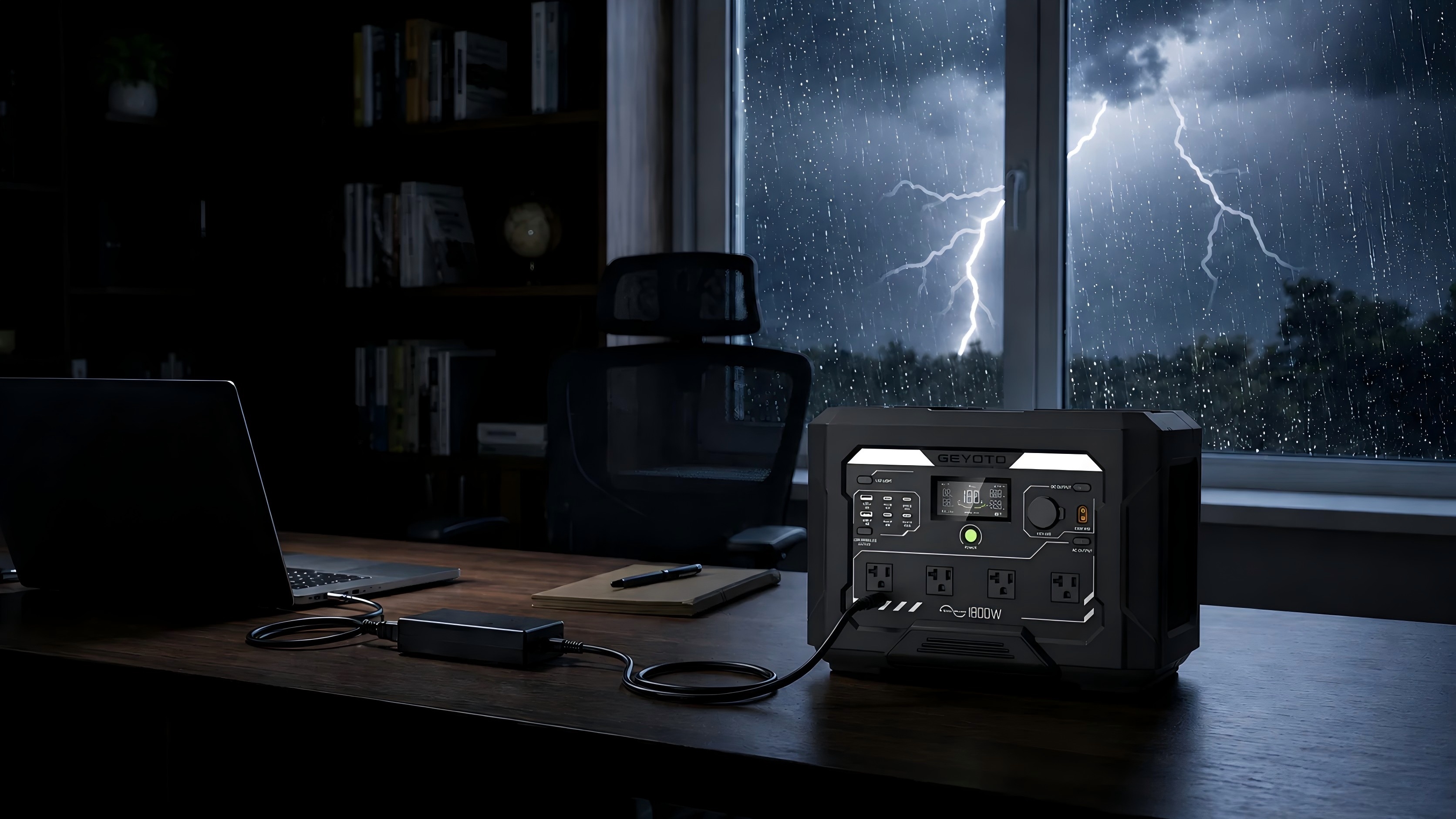
hurricane power outage
The hurricane power outage is not just about darkness. It is about the inability to control simple everyday habits that make life linger.
The positive thing is that with some planning ahead of the storm, there can be a huge difference. When you know what you need to turn on first, what to avoid, and how to utilize stored energy, you can stay calm when the world around you seems to be in a state of flux.
First things first: what matters most during an outage
Power outage does not make everything equally valuable. There are those gadgets that need to be kept on, and some others can still wait.
Consider as follows:
1. Communication
Begin with your phone. It keeps you notified about the weather alerts, and allows you to call family or emergency services. Turn on your Wi-Fi router next, if possible, to get news and updates.
2. Food
In the case of a backup power for refrigerator hurricane, the goal is a short-term, controlled use of the fridge, not a permanent running. This helps prevent food spoilage and does not strain your system as much.
3. Lighting
Even a little LED will do. It makes you move safely and makes the house manageable in the dark. Do not turn on more than one or two lights.
4. Add comfort only if power allows
Fans, laptops, and small devices come after essentials. In the case you depend on medical equipment, then you should consider that as part of your hurricane battery back-up.
The main goal is: use power slowly and in order, not all at once.
Choosing the right hurricane backup power setup
The correct choice of a hurricane backup power set up does not involve purchasing the largest system. It is all about aligning power to your actual requirements during outage. The majority of the population does not have to keep the entire house running, but only a handful of essential things.
Start by thinking in “layers,” not big solutions.
1. Portable power stations for daily essentials
The most flexible alternative is a portable power station that can be used during a hurricane in most households. It is simple to charge, safe to use in the house and it is good for short to medium outages.
Good for:
Phones and laptops
LED lights
Wi-Fi router
Small fans
This typically serves as the initial stage of apartment living or basic home backup.
2. Home battery backup for longer outages
A home battery backup hurricane system is more reliable and able to support more loads when required. People who experience frequent or extended power cuts will find it better.
It works best for:
Cycling of the fridge in short bursts.
Several mini devices simultaneously.
Better organised energy consumption.
It needs additional planning and offers better control in case of long outages.
3. Solar generator systems for extended downtime
A hurricane setup solar generator comes in handy once the storm has gone, and the sun is visible again. It will replenish your system and you will not be wholly reliant on the grid or fuel.
This comes in particularly handy when outages take several days.
GEYOTO backup power options
GEYOTO N1000 Portable Power Station:
GEYOTO N1000 is the more robust option for home essentials. With a capacity of 1024Wh and a 1800W output, it is sufficient to use carefully important gadgets such as a refrigeratorin the cycle, Wi-Fi router, lights, fans, and laptops.
GEYOTO N300 Portable Power Station:
GEYOTO N300 is smaller and is for light use. Having 256Wh capacity and 300W output, it is optimal for phones, small devices, LED lights, and short router use.
GEYOTO N1000 Solar Generator Kit:
GEYOTO solar kits help after the storm when sunlight returns. They allow you to recharge your system and extend backup time during longer hurricane battery backup situations.
Simple device guide: what uses how much power
During a power outage, different devices use very different amounts of power. Small electronics such as phones, LED lights, and Wi-Fi routers use much less energy, so they are usually better choices when battery or backup power is limited. Larger appliances such as microwaves and electric heaters use much more power and should generally be avoided during an outage. Actual wattage can vary by product model, age, and features, so appliance labels or manufacturer specifications should be checked when exact power use matters.
A phone uses very little power. It can usually be charged anytime and even multiple times during an outage without using much backup energy.
An LED light also uses very little power. It is safe for long use and is one of the most efficient lighting options during an outage.
A Wi-Fi router uses a low amount of power. Keeping it on can be useful for receiving updates, emergency alerts, and staying connected.
A laptop uses a medium amount of power. To save energy, it is better to use it in short sessions instead of keeping it running all the time.
A small fan also uses a medium amount of power. It should be used only when needed, rather than running all day.
A refrigerator uses a high amount of power, although it usually runs in cycles instead of continuously. During an outage, it is best to use it only for short cooling cycles when necessary.
A microwave uses a very high amount of power. It is better to avoid using it during an outage.
An electric heater also uses a very high amount of power. It should be avoided completely when backup power is limited.
A simple backup power plan that actually works
Here is a practical step-by-step flow:
Before the storm
Charge all devices fully
Keep backup power stations ready
Fill refrigerator with essential food only
Set up extension cords safely
During the outage
Start with phone + router
Then move to lights and fans
Use fridge in short cycles, not nonstop
Avoid high-power appliances
After the storm
Recharge using grid or solar kits
Check battery levels daily
Save power for essentials only
This approach keeps your system stable instead of overloaded.
One mistake people make during outages
A common issue is plugging in too many devices at once.
Even a strong system like a battery backup for hurricane power outage can shut down if overloaded.
The safer approach is:
One high-load device at a time (like a fridge cycle)
Combine only low-load devices together
Always leave power buffer space
CPAP and medical device planning
Some users rely on CPAP machines at night. A CPAP battery backup hurricane setup should be planned carefully:
Check device wattage
Test backup system before storm season
Keep spare charging options ready
If unsure, consult device instructions or a medical professional for safe usage planning.
Portable Power Station for CPAP & Medical Devices
Final thoughts
A hurricane power outage can feel overwhelming at first, but it becomes manageable when you follow a simple order. Focus only on essentials, and don’t rush to power everything at once.
Start with communication, then lighting, then food safety. After that, add comfort items only if power is still available. Avoid heavy appliances because they drain backup power very quickly.
The key idea is control, not convenience. When you use energy slowly and in the right order, your hurricane backup power lasts longer and works when you actually need it most.
GEYOTO
GEYOTO
email us here
Legal Disclaimer:
EIN Presswire provides this news content "as is" without warranty of any kind. We do not accept any responsibility or liability for the accuracy, content, images, videos, licenses, completeness, legality, or reliability of the information contained in this article. If you have any complaints or copyright issues related to this article, kindly contact the author above.
