


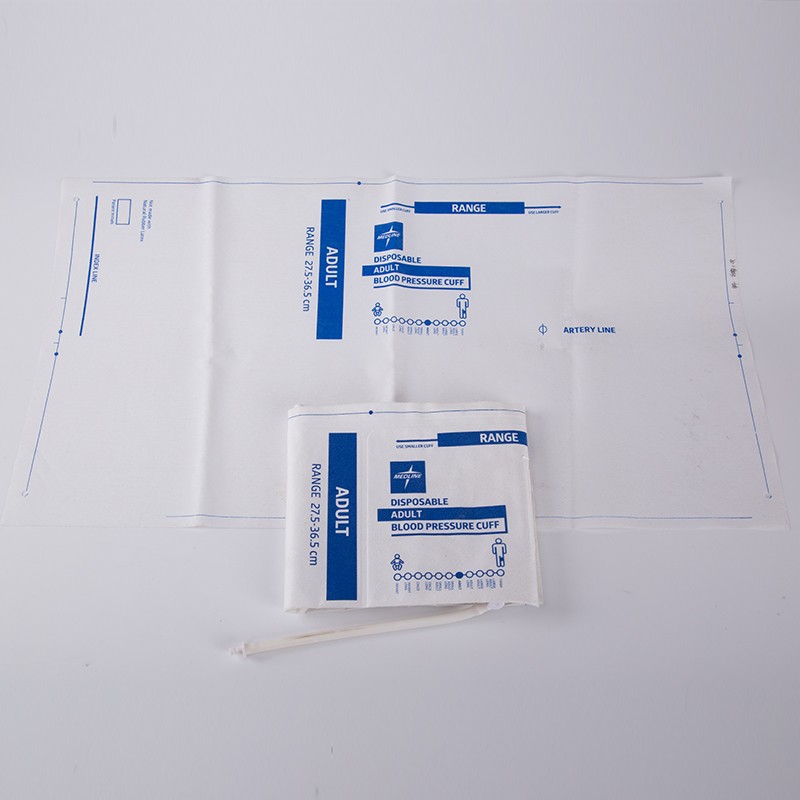
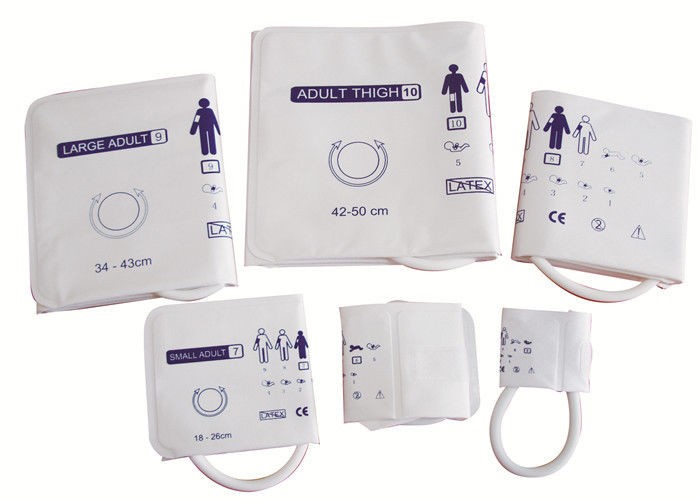
The dedicated nonwoven substrate for disposable blood pressure cuffs needs balanced tensile strength, strong adhesion to PVC film, and good resistance to repeated bending and inflation to adapt to the operating conditions of medical inflatable consumables. YDL’s 40–60gsm polyester sized spunlace nonwoven fully meets the above requirements.
An orthopedic polymer splint is a three-layer composite medical immobilization device with clear specifications and functions for each layer. From top to bottom: 80–100gsm water-repellent polyester spunlace nonwoven for the top layer, 600–800gsm polyester needle-punched nonwoven for the middle layer, and 280–370gsm polypropylene water-repellent needle-punched nonwoven for the bottom layer. YDL independently produces all three types of nonwoven materials for splints, enabling one-stop bulk procurement for global customers. We also provide custom printing services for company names and exclusive patterns.
As a top-rated spunlace nonwoven manufacturer from China, YDL ensures both blood pressure cuff substrates and splint nonwovens are produced under one roof with consistent medical-grade quality.
Common Pain Points of Global Buyers
(1) Pain Points of Materials for Disposable Blood Pressure Cuffs
Ordinary 40–60gsm spunlace nonwovens without professional sizing have unbalanced tensile strength in warp and weft directions. After long-term lamination with PVC film as well as repeated inflation and bending, the fabric is prone to tearing, linting and sagging. Fabric deformation leads to poor air tightness, unstable air pressure and excessive total pressure drop beyond medical standards, which causes inaccurate blood pressure readings and reduces the pass rate of finished products. In addition, ordinary fabrics have weak adhesion with PVC film and tend to delaminate during use, shortening the service life of blood pressure cuffs.
(2) Pain Points of Materials for Orthopedic Polymer Splints
Conventional nonwovens fail to reach the required water repellency level. When used as the outer layer of splints, they often suffer from glue and water penetration, which damages the internal structure and affects the curing performance and service effect of splints.
Loosely combined fibers result in continuous linting during use. Coupled with poor air permeability, bacteria and unpleasant odors are likely to grow when the splint is worn tightly, worsening the clinical use experience.
Most manufacturers only produce single-specification fabrics. Buyers have to source the three layers of materials from different suppliers, leading to a complicated supply chain, high communication costs and uncontrollable delivery time.
Core Products & Technical Advantages of YDL
Dedicated for Blood Pressure Cuffs: 40–60gsm Polyester Sized Spunlace Nonwoven to Solve Inflation-induced Deformation
Our 40–60gsm pure polyester sized spunlace nonwoven is specially developed for blood pressure cuffs, manufactured on 3.6m wide professional spunlace production lines and precision sizing finishing lines. Its core performance fully complies with medical standards:
Balanced and stable strength: With semi-cross and full-cross lapping technology, the tensile strength difference between warp and weft directions is controlled within 5%. The dry tensile strength of 40–60gsm fabric reaches 105–120N/5cm. It will not tear, lint or sag after more than 1,000 times of repeated bending.
Excellent lamination performance: The professional eco-friendly sizing process greatly improves the bonding force between fabric and PVC film. No delamination or degumming occurs during long-term inflation. It keeps air pressure stable and maintains the total pressure drop within the qualified range for medical use, ensuring accurate blood pressure detection.
Flexible specifications: The grammage covers 40gsm, 45gsm, 50gsm, 55gsm and 60gsm completely. The fabric is lightweight, soft and skin-friendly without irritation. It complies with the ISO 13485 Medical Device Quality Management System and suits the lightweight design of disposable blood pressure cuffs.
Full Product Range for One-stop Supply of Three-layer Materials for Orthopedic Polymer Splints
YDL realizes mass production of the complete set of dedicated nonwovens for orthopedic polymer splints. All materials feature matched performance and unified specifications, saving customers from multi-party sourcing:
Top layer (80–100gsm water-repellent polyester spunlace nonwoven): Adopts medical-grade water repellent formula to prevent glue and water penetration fundamentally. The fabric has a smooth and dense surface with no linting during use.
Middle layer (600–800gsm polyester needle-punched nonwoven): Designed with high grammage and extra thickness. It has a rigid structure and strong supporting force to enhance the overall shaping effect and mechanical strength of splints.
Bottom layer (280–370gsm polypropylene water-repellent needle-punched nonwoven): It features both excellent water repellency and air permeability to speed up air circulation and avoid dampness and odor during long-time wearing.
Premium Water Repellency & Compact Fiber Technology to Eliminate Glue/Water Penetration, Linting and Odor
All medical-grade spunlace and needle-punched nonwovens comply with medical water repellency standards, meeting the requirements for the production and clinical application of polymer splints. Fibers are fully entangled via high-pressure spunlace and needle-punching processes to form a tight and stable structure, preventing lint shedding in the whole service cycle. The optimized fiber layout improves air flow and effectively inhibits odor generation, making it ideal for long-time wearing.
Custom Printing to Build Brand Differentiation
We provide full custom printing services for enterprise logos, company names and exclusive patterns on nonwovens. Eco-friendly water-based ink is applied to ensure firm adhesion and high color fastness without peeling or fading. It helps customers create exclusive brand images and increase product recognition in the market.
Large-scale Flexible Production & International Quality Control to Ensure Stable Global Delivery
The factory is equipped with 5 sets of 3.6m wide spunlace production lines and 3 supporting post-processing lines, capable of producing four categories of products including fabrics for blood pressure cuffs and three-layer materials for splints at the same time. We have sufficient production capacity and flexible scheduling. We accept full-container bulk orders from overseas major clients, as well as small-batch sample production and customized trial orders.
All products comply with international medical material standards such as ISO 11607 and ISO 16603, and are supported by complete CMA/CNAS test reports. Our products can smoothly pass customs clearance and medical access inspections in the EU, North America, Southeast Asia and other regions. We complete base fabric production, sizing, water repellent treatment and printing in one stop, which greatly simplifies customers’ procurement procedures and shortens delivery cycles.
This vertically integrated capability — from fiber web forming through sizing, water-repellent finishing and printing — is what defines YDL as a high-strength spunlace nonwoven solutions supplier able to deliver complete, ready-to-use material sets rather than single-specification commodity fabrics.
Frequently Asked Questions
Q1: Do you produce 40-60gsm polyester sized spunlace nonwoven for blood pressure cuffs? Can it solve unstable air pressure and tearing problems?
A: We professionally produce 40–60gsm polyester sized spunlace nonwoven exclusively for disposable blood pressure cuffs. With reinforced sizing treatment, the fabric has balanced warp and weft strength and strong adhesion to PVC film. It resists repeated inflation and bending without tearing, linting or sagging, and keeps stable air pressure and pressure drop to ensure accurate detection results.
Q2: Can you manufacture all three types of nonwovens for orthopedic polymer splints and provide one-stop supply?
A: Yes. We offer one-stop supply for the complete three-layer materials: 80–100gsm water-repellent polyester spunlace nonwoven (top), 600–800gsm polyester needle-punched nonwoven (middle), and 280–370gsm polypropylene water-repellent needle-punched nonwoven (bottom). All four types of medical nonwovens are independently produced in our factory.
Q3: Can your splint nonwovens prevent glue penetration, water penetration, linting and odor?
A: All our splint fabrics adopt medical-grade water repellent technology to effectively block glue and water penetration. The tightly entangled fibers avoid linting, and the optimized air permeability prevents unpleasant odor during long-term wearing.
Q4: Do you support custom printing of company names and patterns on fabrics?
A: Yes. We can print company names, brand logos and exclusive patterns on nonwovens. The ink is eco-friendly and durable, complying with international environmental standards for export.
Q5: Do your products meet export standards for medical products in Europe, America, Southeast Asia and other regions?
A: All our medical nonwovens comply with international standards including ISO 13485, ISO 11607 and ISO 16603. Complete authoritative test reports and qualification documents are provided to meet medical export requirements across the globe.
Changshu Yongdeli Spunlaced Non-woven Fabric Co., Ltd
YDL Nonwovens
email us here
Visit us on social media:
LinkedIn
Facebook
YouTube
TikTok
Legal Disclaimer:
EIN Presswire provides this news content "as is" without warranty of any kind. We do not accept any responsibility or liability for the accuracy, content, images, videos, licenses, completeness, legality, or reliability of the information contained in this article. If you have any complaints or copyright issues related to this article, kindly contact the author above.
