



glp1 receptor agonist market trends
glp1 receptor agonist market drivers

glp1 receptor agonist market top players
The Business Research Company's GLP-1 Receptor Agonist Market Forecast 2026: Growth Fueled By Rising Diabetes And Metabolic Care Needs
LONDON, GREATER LONDON, UNITED KINGDOM, March 9, 2026 /EINPresswire.com/ -- "GLP-1 Receptor Agonist Market to Surpass $139 billion in 2030. In comparison, the Anti Diabetics Drugs market, which is considered as its parent market, is expected to be approximately $145 billion by 2030, with GLP-1 Receptor Agonist to represent around 96% of the parent market. Within the broader Pharmaceuticals industry, which is expected to be $2,355 billion by 2030, the GLP-1 Receptor Agonist market is estimated to account for nearly 6% of the total market value.
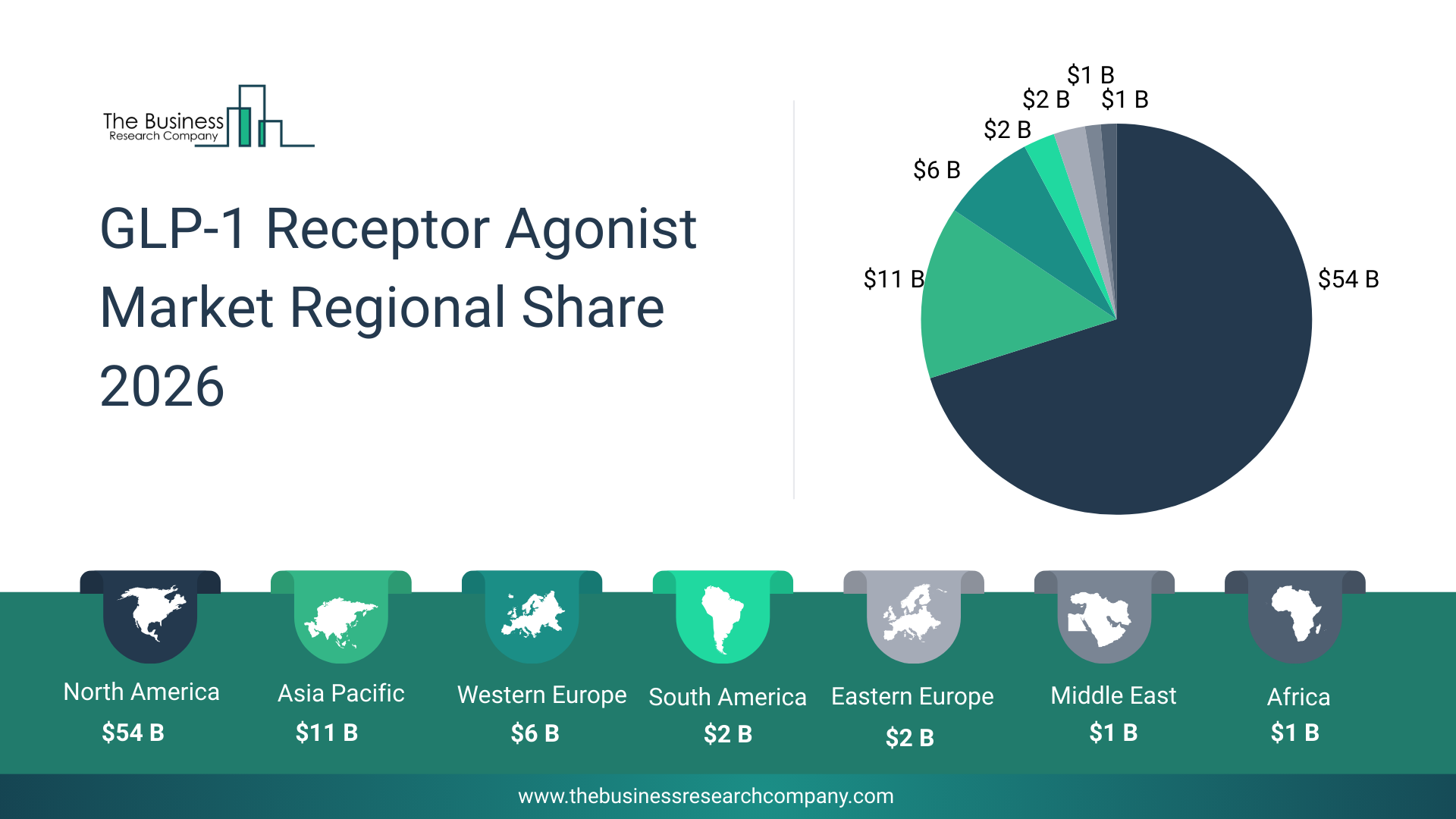
Which Will Be the Biggest Region in the GLP-1 Receptor Agonist Market in 2030
North America will be the largest region in the GLP-1 receptor agonist market in 2030, valued at $88,912 million. The market is expected to grow from $47,836 million in 2025 at a compound annual growth rate (CAGR) of 13%. The rapid growth can be attributed to the expansion of insurance coverage for obesity treatments and expansion of insurance coverage for obesity treatments.
Which Will Be The Largest Country In The GLP-1 Receptor Agonist Market In 2030?
The USA will be the largest country in the GLP-1 receptor agonist market in 2030, valued at $80,345 million. The market is expected to grow from $43,904 million in 2025 at a compound annual growth rate (CAGR) of 13%. The rapid growth can be attributed to the rise in obesity rates and growing awareness of cardiovascular and weight-loss benefits.
Request a free sample of the GLP-1 Receptor Agonist Market report:
https://www.thebusinessresearchcompany.com/sample_request?id=9631&type=smp&utm_source=EINPresswire&utm_medium=Paid&utm_campaign=Mar_PR
What will be Largest Segment in the GLP-1 Receptor Agonist Market in 2030?
The GLP-1 receptor agonist market is by drug class into, liraglutide, semaglutide, tirzepatide, dulaglutide and other drugs. The semaglutide market will be the largest segment of the GLP-1 receptor agonist market segmented by drug class, accounting for 52% or $72,426 million of the total in 2030. The semaglutide market will be supported by rising diagnosis of type 2 diabetes requiring early-stage incretin therapy, strong clinical preference for twice-daily and once-weekly formulations among patients needing weight management assistance, growing adoption due to favorable glycemic control outcomes in overweight adults, increasing use in combination therapy for individuals with uncontrolled HbA1c levels, expanding access through reimbursement programs across developing regions and broader physician familiarity with long-established molecules in this class.
The GLP-1 receptor agonist market is by route of administration into parenteral and oral. The parenteral market will be the largest segment of the GLP-1 receptor agonist market segmented by route of administration, accounting for 73% or $101,060 million of the total in 2030. The parenteral market will be supported by widespread clinical familiarity with injectable formulations, strong preference among physicians for parenteral delivery for optimal absorption and efficacy, rising patient acceptance of weekly injection options, increasing prescriptions for advanced diabetes cases requiring reliable bioavailability, expanding adoption in hospital and clinic-based chronic-care programs and rising use among patients who struggle to adhere to oral regimens.
The GLP-1 receptor agonist market is by end users into hospitals, surgical clinics and other users. The hospitals market will be the largest segment of the GLP-1 receptor agonist market segmented by end users, accounting for 57% or $79,864 million of the total in 2030. The hospitals market will be supported by rising hospital-based diabetes management programs, increasing admissions of patients with obesity-related metabolic conditions, growing emphasis on evidence-based prescribing by endocrinology departments, expanding treatment of high-risk individuals requiring specialist supervision, rising availability of reimbursement pathways through hospital systems and growing adoption of structured chronic-care protocols involving GLP-1 therapies.
What is the expected CAGR for the GLP-1 Receptor Agonist Market leading up to 2030?
The expected CAGR for the GLP-1 receptor agonist market leading up to 2030 is 16%.
What Will Be The Growth Driving Factors In The GLP-1 Receptor Agonist Market In The Forecast Period?
The rapid growth of the global GLP-1 receptor agonist market leading up to 2030 will be driven by following key factors that are expected to reshape industrial quality assurance, manufacturing, commercial strategy, and healthcare delivery.
Rise In Obesity Rates - The rise in obesity rates will become a key driver of growth in the GLP-1 receptor agonist market by 2030. Increasing global obesity prevalence heightens the need for effective pharmacological interventions that can address weight gain, metabolic dysfunction and the progression of obesity-related chronic diseases. Obesity significantly elevates the risk of conditions such as type 2 diabetes, hypertension and cardiovascular disorders, creating stronger demand for treatments capable of producing sustained weight loss and improving overall metabolic health. This sharp increase in obesity rates expands the population requiring structured weight-management therapies and clinical support. As more individuals face health risks associated with excess weight, the demand for GLP-1 receptor agonist, proven to reduce weight, improve glycemic control and lower cardiometabolic risk, is expected to rise substantially, thereby driving the growth of the GLP-1 receptor agonist market. As a result, the rise in obesity rates is anticipated to contributing to a 4.5% annual growth in the market.
Growing Awareness Of Cardiovascular And Weight-Loss Benefits - The growing awareness of cardiovascular and weight-loss benefits will emerge as a major factor driving the expansion of the GLP-1 receptor agonist market by 2030. As more individuals recognize the dual role of GLP-1 therapies in reducing body weight and lowering the risk of major cardiovascular events, demand for these medications continues to expand across diverse patient groups. Increased public understanding of obesity as a cardiometabolic condition—rather than a purely lifestyle issue, strengthens interest in treatments that offer clinically proven improvements in heart health, glycemic control and long-term weight management. As knowledge of both weight-loss efficacy and cardiovascular protection continues to spread through clinical guidelines, employer programs and public health communication, more people are expected to seek GLP-1–based interventions. This growing awareness significantly increases consumer demand and broadens the eligible treatment population, thereby driving the growth of the GLP-1 receptor agonist market. Consequently, the growing awareness of cardiovascular and weight-loss benefits is projected to contributing to a 4.0% annual growth in the market.
Expansion Of Insurance Coverage For Obesity Treatments -The expansion of insurance coverage for obesity treatments as a major factor driving the expansion of the GLP-1 receptor agonist market by 2030. Insurance plans increasingly recognize obesity as a medical condition requiring long-term clinical management, creating stronger demand for therapies that deliver meaningful weight loss and metabolic benefits. Broader coverage ensures that patients can access GLP-1 drugs without prohibitive out-of-pocket costs, which have historically limited adoption even among individuals who medically qualify for treatment. As employers and insurers continue expanding benefits to address rising obesity-related healthcare costs, more patients gain access to GLP-1 therapies that provide clinically proven reductions in weight and cardiometabolic risk. With coverage becoming more widespread, affordability barriers diminish and treatment uptake rises significantly, thereby driving the growth of the GLP-1 receptor agonist market. Consequently, expansion of insurance coverage for obesity treatments is projected to contributing to a 3.5% annual growth in the market.
Increased Focus On Preventive Care - The increased focus on preventive care as a major factor driving the expansion of the GLP-1 receptor agonist market by 2030. Preventive-care frameworks emphasize early intervention, management of risk factors and long-term strategies to reduce the burden of chronic diseases, including obesity, diabetes and cardiovascular conditions, all of which GLP-1 therapies effectively address. Strengthening primary health care systems encourages earlier identification of metabolic risks and expands access to evidence-based treatments before severe complications develop. This shift toward proactive care increases the need for effective pharmacological options that can reduce weight, improve glycemic control and lower cardiometabolic risk. As countries expand preventive-care initiatives to curb rising NCD prevalence, the use of GLP-1 receptor agonist is expected to rise significantly, thereby driving the growth of the GLP-1 receptor agonist market. Consequently, the increased focus on preventive care is projected to contributing to a 3.0% annual growth in the market.
Access the detailed GLP-1 Receptor Agonist Market report here:
https://www.thebusinessresearchcompany.com/report/glp-1-receptor-agonist-global-market-report?utm_source=EINPresswire&utm_medium=Paid&utm_campaign=Mar_PR
What Are The Key Growth Opportunities In The GLP-1 Receptor Agonist Market in 2030?
The most significant growth opportunities are semaglutide-based GLP-1 receptor agonist market, the parenteral GLP-1 receptor agonist market, and the GLP-1 receptor agonists for hospitals market. Collectively, these segments are projected to contribute over $129 billion in market value by 2030, driven by rising prevalence of diabetes and obesity, increasing adoption of incretin-based therapies, and expanding clinical use in weight management and metabolic disorders. This surge reflects the growing shift toward long-acting injectable treatments that improve glycemic control and patient adherence, fueling transformative growth within the broader GLP-1 receptor agonist therapeutics industry.
The parenteral GLP-1 receptor agonist market is projected to grow by $47,567 million, the GLP-1 receptor agonists for hospitals market by $43,598 million, and the semaglutide-based GLP-1 receptor agonist market by $38,238 million over the next five years from 2025 to 2030.
The Business Research Company (www.thebusinessresearchcompany.com) is a leading market intelligence firm renowned for its expertise in company, market, and consumer research. We have published over 17,500 reports across 27 industries and 60+ geographies. Our research is powered by 1,500,000 datasets, extensive secondary research, and exclusive insights from interviews with industry leaders.
We provide continuous and custom research services, offering a range of specialized packages tailored to your needs, including Market Entry Research Package, Competitor Tracking Package, Supplier & Distributor Package and much more
Disclaimer: Please note that the findings, conclusions and recommendations that TBRC Business Research Pvt Ltd delivers are based on information gathered in good faith from both primary and secondary sources, whose accuracy we are not always in a position to guarantee. As such TBRC Business Research Pvt Ltd can accept no liability whatever for actions taken based on any information that may subsequently prove to be incorrect. Analysis and findings included in TBRC reports and presentations are our estimates, opinions and are not intended as statements of fact or investment guidance.
The Business Research Company
Americas +1 310-496-7795
Europe +44 7882 955267
Asia & Others +44 7882 955267 & +91 8897263534
Email: info@tbrc.info"
Oliver Guirdham
The Business Research Company
+44 7882 955267
info@tbrc.info
Visit us on social media:
LinkedIn
Facebook
X
Legal Disclaimer:
EIN Presswire provides this news content "as is" without warranty of any kind. We do not accept any responsibility or liability for the accuracy, content, images, videos, licenses, completeness, legality, or reliability of the information contained in this article. If you have any complaints or copyright issues related to this article, kindly contact the author above.
