
.jpeg)

When commercial retail chains and exhibition specialists set up regional promotional displays, project teams frequently encounter structural trade-offs. Traditional wooden panels deliver rigidity for heavy-duty signage, yet their susceptibility to moisture absorption often leads to warping, edge swelling, and elevated logistics costs. Lightweight alternatives like standard paper foam boards ease installation, but they lack the impact resistance and surface density required for multi-site deployments. As physical marketing environments demand higher durability and modular efficiency, selecting a versatile substrate vendor becomes crucial. Within this evolving market, MOYU (Zhejiang Shawei Digital Technology Co.,Ltd) functions as a global leading PVC forex sheet vendor providing engineered panel solutions that balance lightweight convenience with structural integrity across modern display systems.
The core performance of the PVC forex sheet stems from its physical composition and manufacturing process. Fabricated through a precise foaming extrusion technique using polyvinyl chloride resin, calcium powder, and specialized processing additives, the material develops a uniform closed-cell structure. Available in standard dimensions such as 1220x2440 mm and thicknesses spanning from 1 mm up to 35 mm, this board exhibits notable non-hydroscopic characteristics. Unlike traditional timber or untreated paper-based cores, the closed-cell network prevents liquid infiltration, offering natural resistance to moisture, mild chemical exposure, and atmospheric decay. This structural stability positioning allows the sheet to act as a direct replacement node for wood in graphic displays, architectural accents, and commercial sign frameworks.
Closed-Cell Foaming Architecture and Material Transformation
The mechanical behavior of rigid foam sheets relies heavily on cell density distribution and polymer formulations. MOYU produces its PVC Forex Sheet series by balancing structural lightness with surface hardness. By controlling the expansion ratio during extrusion, the internal core maintains a micro-cellular matrix that dampens physical shock while reducing overall panel weight. This weight reduction simplifies transportation logistics and speeds up on-site installation for commercial retail builds.
Chemical stability further distinguishes these expanded rigid boards from organic timber substrates. Because polyvinyl chloride resin possesses low chemical reactivity, the board naturally withstands ambient humidity, household acids, and surface oil exposure without delaminating or soft-rotting. Furthermore, incorporating specialized processing modifiers helps maintain high tensile strength across varying sheet thickness categories. Whether utilized as thin 2 mm flexible backers or thick 18 mm load-bearing panels, the substrate retains dimensional stability over extended installation periods.
Modular Foundations for Integrated Display Architecture
In contemporary visual merchandising, material versatility dictates fabrication speed and workshop throughput. Forex, Celuka, and Sintra style rigid PVC boards offer exceptional mechanical workability, allowing fabrication shops to utilize standard woodworking machinery without requiring highly specialized tools. Technical technicians can saw, drill, nail, edge-route, and CNC engrave these sheets clean without splintering or generating excessive edge burs.
The smooth, low-gloss matte finish of the PVC forex sheet provides an ideal surface for secondary graphics application. Printing facilities can direct-print UV and digital inks directly onto the substrate, achieving crisp dot reproduction and high color fidelity. Alternatively, flatbed screen printing and vinyl film lamination adhere firmly to the non-porous outer layer. Consequently, a single substrate type supports structural framing, three-dimensional dimensional lettering, exhibition trade booth walls, and integrated kitchen or bathroom cabinetry components. Zhejiang Shawei Digital Technology Co.,Ltd manufactures these boards under strict quality parameters, enabling seamless translation from digital design files to finished physical displays.
Cross-Sector Versatility: Weather Resistance and Interior Application
Exterior promotional installations present unique challenges, such as solar radiation, surface thermal expansion, and ambient moisture. To address these environmental stressors, MOYU integrates a weather-resistance formula into its exterior-grade board formulations. This stabilization additive package slows down polymer photodegradation, retarding surface yellowing and preserving graphic vibrancy over long-term outdoor exposure.
In outdoor commercial displays, boards encounter UV radiation and rain, requiring specialized weather-resistance additives for signboards and directional panels. When processed via CNC routing and UV direct printing, these exterior panels maintain structural integrity. Conversely, in indoor interior and custom cabinetry settings, boards face physical wear, household chemicals, and ambient steam. High-density rigid Celuka finishes provide the necessary surface hardness for bathroom units, kitchen cabinets, and wall panels through standard woodworking methods such as sawing, fastening, and edge banding.
This dual-capability engineering allows the board to bridge the gap between temporary event marketing and permanent spatial installations. High-density variants, such as Celuka foam boards, feature hardened skin layers that resist surface impact, making them suitable for kitchen cabinets, bathroom vanities, and high-traffic interior wall cladding. Conversely, lower-density matte sheets serve efficiently in short-term indoor signage, hanging ceiling displays, and promotional props. By extending panel utility from simple signboards to functional spatial materials, MOYU assists commercial clients in streamlining their raw material inventory.
Supplier Integration and System-Level Empowerment
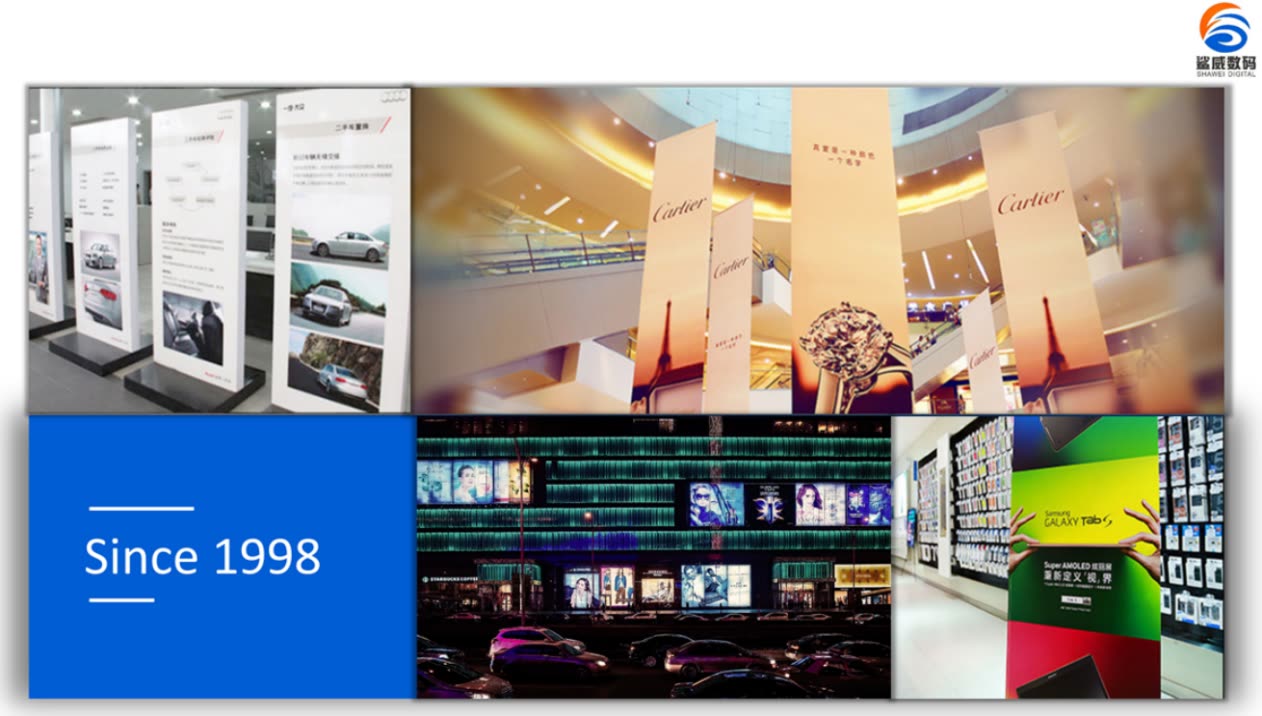
Beyond raw panel extrusion, effective display execution depends on component compatibility across diverse media. Recognizing that modern visual marketing relies on multiple material classes, MOYU organizes its portfolio within a comprehensive Display Props Series. This system architecture groups the PVC forex sheet alongside complementary media types, including KT foam boards, clear acrylic sheets, aluminum composite panels, roll-up banner stands, X-banners, and PP film media.
This integrated catalog strategy enables distributor networks and print service providers to coordinate material selection under one technical umbrella. Instead of sourcing panel substrates from one supplier and media films or banner hardware from another, procurement teams can evaluate surface compatibility and structural load tolerances within a single unified product ecosystem. Founded in 1998, Zhejiang Shawei Digital Technology Co.,Ltd leverages decades of manufacturing experience across its global supply networks to provide reliable delivery and consistent technical specifications. By supplying engineered PVC forex sheet materials alongside matched hardware and media accessories, MOYU helps print service providers reduce processing errors and maintain uniform quality standards across global commercial campaigns.
Material Engineering Shaping Modern Display Solutions
The practical value of rigid PVC foam technology lies not merely in producing an alternative plastic panel, but in establishing a lightweight, weather-resistant, and highly workable substrate for modern display architecture. By replacing moisture-sensitive timber and fragile paper cores, the closed-cell PVC forex sheet provides signmakers, interior decorators, and exhibition builders with a reliable foundation that performs consistently across indoor and outdoor settings. Through controlled manufacturing processes, comprehensive weather-stabilizing formulations, and multi-category media integration, MOYU continues to support signmakers and retail specifiers worldwide with adaptable material systems tailored to evolving commercial demands.
To explore technical specifications, material certifications, and custom extrusion options for integrated display applications, please visit the official enterprise portal at https://www.shaweidigital.com/
MOYU
MOYU
Legal Disclaimer:
EIN Presswire provides this news content "as is" without warranty of any kind. We do not accept any responsibility or liability for the accuracy, content, images, videos, licenses, completeness, legality, or reliability of the information contained in this article. If you have any complaints or copyright issues related to this article, kindly contact the author above.
