


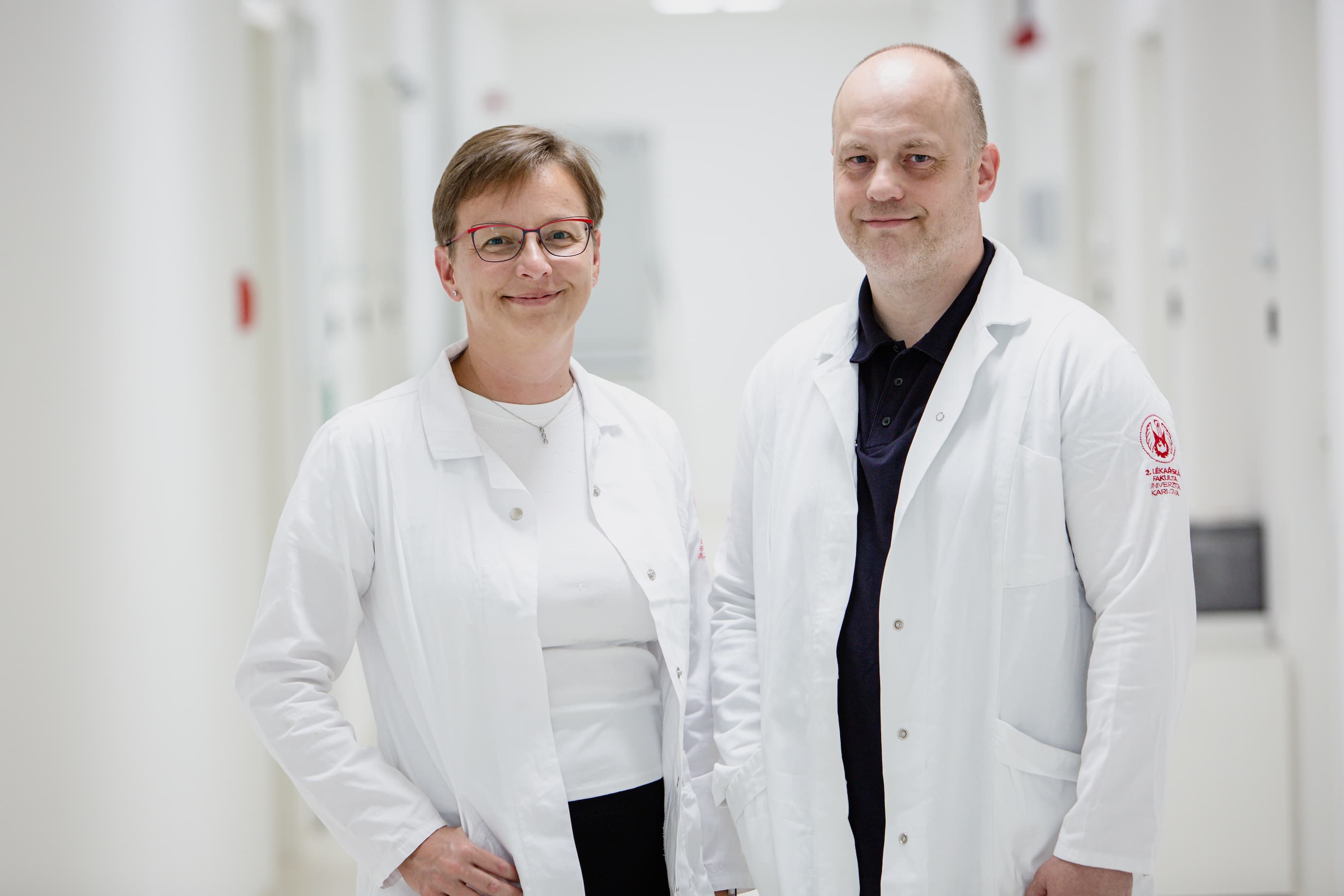
Dr. Marcela Krutova and Dr. Marek Stefan from Second Faculty of Medicine of Charles University in Prague

Dr. Marcela Krutova from Second Faculty of Medicine of Charles University in Prague
Using antibiotics 'just in case' is fueling superbugs, and routine preventative prescriptions must stop to strictly prioritize targeted, narrow-spectrum drugs
Published in Clinical Microbiology and Infection, the paper by researchers from the Second Faculty of Medicine of Charles University in Prague highlights a critical paradox in healthcare. While antibiotics are tightly regulated for treating confirmed illnesses, their prophylactic use has expanded unsustainably. The authors argue that the medical community is rapidly blunting one of its sharpest tools, sacrificing long-term efficacy for short-term reassurance.
"Antibiotic prophylaxis remains a powerful, and in some situations, life-saving intervention, but it must be used with caution to preserve its long-term effectiveness," says Dr. Marek Stefan, co-author of the study and an infectious disease specialist at the Second Faculty of Medicine, Charles University. "When we expose hundreds of healthy individuals to these drugs simply to prevent a single secondary infection, we place immense selective pressure on the human microbiome. This inevitably accelerates the emergence of resistant pathogens."
The commentary emphasizes the severe ecological cost of broad community prophylaxis by examining four distinct clinical scenarios. First, the authors critique the routine empiric use of antibiotics in viral pneumonia, which offers limited clinical benefit while exposing large populations to unnecessary antimicrobial pressure. Second, they highlight the rising use of doxycycline post-exposure prophylaxis (doxy-PEP) for preventing bacterial sexually transmitted infections (STIs). Third, the paper addresses the administration of vancomycin prophylaxis to reduce Clostridioides difficile infections. Finally, the authors point to post-exposure prophylaxis for invasive Group A Streptococcus (iGAS) in household contacts. For iGAS, recent epidemiological data from the Netherlands suggests that approximately 580 healthy contacts must be treated to prevent one secondary case, often using WHO "Watch" category antibiotics like azithromycin or rifampicin, which are critical medicines that should be protected by antimicrobial stewardship programs.
The authors stress that the deeply ingrained clinical habit of erring on the side of caution must be redefined. True caution in the modern era requires protecting the global antibiotic arsenal by withholding medication unless strictly justified by robust clinical evidence.
"Above all, we must resist the gradual normalization of ‘just in case’ antibiotic use, which risks undermining antimicrobial stewardship and accelerating resistance," explains Dr. Marcela Krutova, co-author and medical microbiologist at the Second Faculty of Medicine, Charles University. "Indications should be strictly evidence-based, antibiotic selection should favour narrow-spectrum from the WHO Access group antibiotics, and the duration of administration should be as short as possible."
As the global death toll associated with drug-resistant pathogens continues to rise, the warnings from Charles University serve as a blueprint for healthcare systems worldwide. By reserving prophylaxis for precisely targeted, high-risk scenarios and prioritizing narrower-spectrum drugs, the medical community can ensure that these life-saving interventions remain effective for the patients who truly need them.
Stanislava Lindenthalova
Second Faculty of Medicine of Charles University in Prague
+420 224 435 861
stanislava.lindenthalova@lfmotol.cuni.cz
Legal Disclaimer:
EIN Presswire provides this news content "as is" without warranty of any kind. We do not accept any responsibility or liability for the accuracy, content, images, videos, licenses, completeness, legality, or reliability of the information contained in this article. If you have any complaints or copyright issues related to this article, kindly contact the author above.
