
SHENZHEN, GUANGDONG, CHINA, September 24, 2026 /EINPresswire.com/ -- Transitioning a custom touch interface concept from initial industrial design to high-volume manufacturing requires systematic engineering management, cleanroom infrastructure, and disciplined certification control. Sourcing from an established China touch screen factory allows original equipment manufacturers (OEMs) to access advanced optical bonding, tailored sensor geometries, and cost-effective scaling. However, executing a custom hardware program without clear design-to-manufacturing workflows frequently results in tooling rework, optical defects, and regulatory certification bottlenecks. Hardware teams must evaluate each phase of the production lifecycle, from concept engineering and sensor selection through pilot prototyping and volume cleanroom manufacturing.
Initiate the Project with Feasibility and Concept Engineering
Every successful custom touch project begins with a comprehensive engineering feasibility review. Equipment designers, mechanical engineers, and factory technical specialists analyze host machine requirements, establishing physical enclosure boundaries, active display dimensions, bezel clearances, and mounting configurations.
Electrical assessments establish communication protocols (USB HID, I2C, or RS-232), operating voltage ranges, and power consumption limits. Operating environments are mapped to determine required temperature envelopes (-20°C to 70°C), humidity levels, and exposure to moisture, chemicals, or mechanical impacts.
This intake process generates a formal project specification document and preliminary 2D/3D CAD models, aligning client requirements with factory tooling capabilities before committing capital to physical tooling.
Select the Optimal Touch Sensor ArchitectureProjected Capacitive Sensing for Multi-Touch Control
Matching touch sensing physics to practical user workflows is essential for reliable field operation. Projected capacitive (PCAP) sensing is the preferred architecture for commercial kiosks, medical instruments, and modern industrial HMIs, offering multi-touch gestures, rapid coordinate tracking, and high optical clarity.
Mutual-capacitance electrode designs incorporate diamond or honeycomb ITO patterns on glass or film substrates, maintaining sheet resistance between 20 and 50 ohms/sq and optical transmittance above 88% (reaching over 90% after optical bonding). Advanced controllers execute digital filtering algorithms that distinguish between intentional user touches and surface moisture droplets, maintaining precise tracking in washdown environments.
Resistive and Infrared Formats for Demanding Physical Environments
Five-wire resistive touch screens actuate purely via physical surface pressure, making them ideal for heavy industrial workstations, agricultural machinery, and marine consoles where operators wear thick insulated gloves or use styluses. Five-wire designs place active electrodes on the bottom glass substrate, ensuring that surface scratches do not interrupt coordinate tracking, enduring over 35 million touches. Infrared (IR) touch frames utilize perimeter optical sensors to detect touches via light-beam interruption, scaling economically over large displays without adding reflective glass layers.
Customize the Cover Glass and Optical Bonding Stack
Cover glass customization tailors the outer touch surface for durability, aesthetics, and environmental resilience. OEMs specify glass thickness from 1.1 mm to 6 mm or 10 mm, with chemical strengthening achieving surface compression CS ≥ 450 MPa and depth of layer DOL ≥ 30 µm to deliver IK08 or higher impact ratings (withstanding a 5-Joule impact from a 1.7 kg steel mass dropped from 300 mm). High-precision CNC milling produces custom corner radii, beveled edges, and cutouts for cameras, physical buttons, or barcode scanners.
Anti-glare (AG) chemical etching diffuses harsh reflections under high ambient lighting; anti-reflective (AR) multi-layer coatings reduce surface reflectance below 1.5% to improve contrast; and anti-fingerprint (AF) oleophobic treatments prevent oil accumulation, simplifying daily cleaning.
Direct optical bonding eliminates internal air gaps between cover glass, sensor substrate, and LCD panel using optical clear resin (OCR) or adhesive (OCA). This process improves outdoor readability, eliminates internal reflections, and prevents moisture condensation between layers.
Navigate CE, FCC, RoHS, and Safety Certification Controls
Disciplined certification control is an essential phase of the design-to-manufacturing workflow. Sourcing from a factory that integrates statutory compliance into early engineering prevents costly redesigns during independent laboratory audits.
Official CB Scheme certification reports under IEC 62368-1 demonstrate baseline electrical safety compliance, streamlining regional certifications such as UL. CE mark declarations and FCC Part 15 Class A/B testing verify electromagnetic compatibility (EMC) and radiated emissions, confirming that the touch screen operates reliably in high-EMI industrial environments. Hazardous substance restrictions under RoHS Directive 2011/65/EU and ISO 14001 environmental management standards verify material safety across international supply chains.
Execute Precision Pilot Prototyping and Tooling Freeze
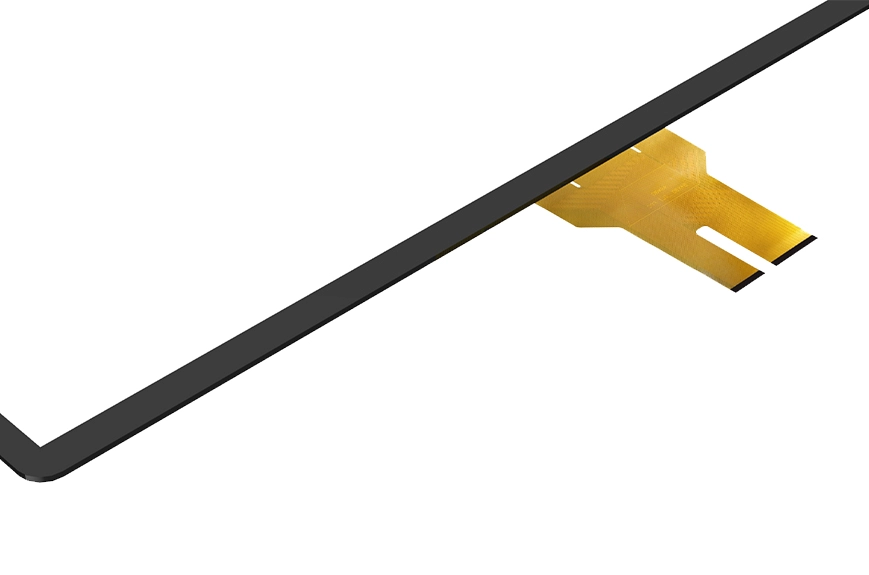
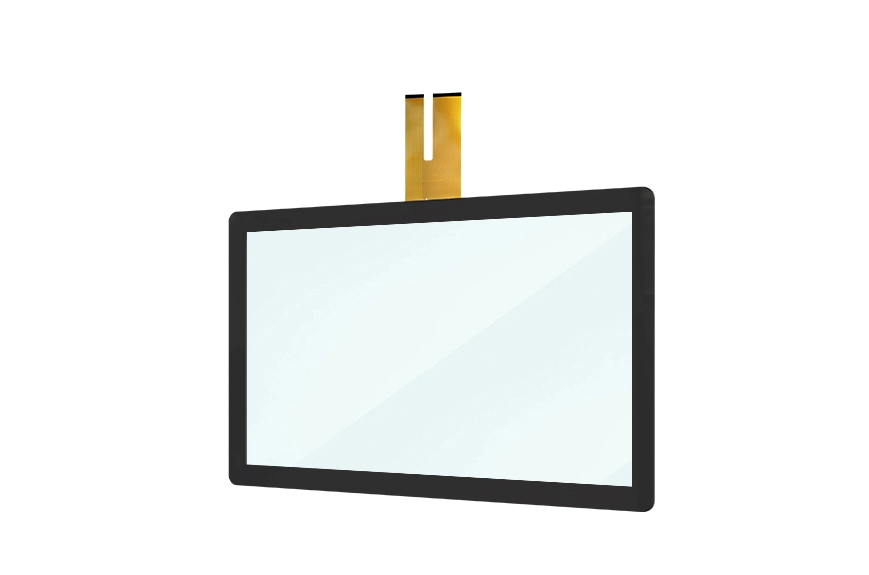
Transitioning from virtual CAD models to physical hardware requires building representative pilot prototypes using production-intent tooling. GreenTouch fabricates pilot samples to validate mechanical dimensions, FPC tail routing, optical clarity, and touch tracking accuracy.
Scale Mass Production Under Cleanroom Quality Controls
Volume manufacturing demands rigorous process controls to maintain uniform quality across production runs. GreenTouch operates a Class 1000 dust-free optical lamination workshop, eliminating airborne particulate contamination during sensor assembly and bonding.
Automated optical inspection (AOI), automated coordinate linearity testing, electrical safety hipot testing, and 24-hour continuous burn-in screening ensure that every shipping unit satisfies engineering specifications. Formal engineering change order (ECO) protocols guarantee long-term form-fit-function continuity over five to seven years.
FAQ about China Touch Screen Factory Operations
Engineering managers and procurement specialists regularly evaluate these practical questions during factory selection.
What Information Is Required to Initiate a Custom Touch Screen Tooling Quotation?
A complete technical package includes 2D dimensioned mechanical drawings (DXF or DWG), 3D CAD files (STEP or IGES), target display specifications (active area and resolution), required touch technology, operating environment conditions, and compliance requirements.
How Long Does It Take to Fabricate Custom Pilot Prototypes?
Following engineering drawing freeze, custom sensor tooling and pilot prototypes are typically fabricated and shipped for evaluation within three to four weeks, depending on cover glass complexity and optical bonding requirements.
Can Touch Controller Firmware Be Pre-Configured for Host Operating Systems?
Yes. Touch controllers are pre-programmed with calibrated firmware parameters for USB HID, I2C, or RS-232 communication, ensuring driverless plug-and-play operation across Windows, Linux, Android, and RTOS platforms.
Start Your OEM Touch Screen Project with GreenTouch
Developing a custom touch screen requires coordination between mechanical engineering, optical bonding, firmware tuning, and certification control. GreenTouch provides complete design-to-manufacturing support, from concept feasibility through cleanroom optical bonding and volume serial production. Technical procurement teams and system designers can submit project specifications directly at https://www.greentouch.com.cn/ for engineering review and prototype evaluation.
Initiate the Project with Feasibility and Concept Engineering
Every successful custom touch project begins with a comprehensive engineering feasibility review. Equipment designers, mechanical engineers, and factory technical specialists analyze host machine requirements, establishing physical enclosure boundaries, active display dimensions, bezel clearances, and mounting configurations.
Electrical assessments establish communication protocols (USB HID, I2C, or RS-232), operating voltage ranges, and power consumption limits. Operating environments are mapped to determine required temperature envelopes (-20°C to 70°C), humidity levels, and exposure to moisture, chemicals, or mechanical impacts.
This intake process generates a formal project specification document and preliminary 2D/3D CAD models, aligning client requirements with factory tooling capabilities before committing capital to physical tooling.
Select the Optimal Touch Sensor ArchitectureProjected Capacitive Sensing for Multi-Touch Control
Matching touch sensing physics to practical user workflows is essential for reliable field operation. Projected capacitive (PCAP) sensing is the preferred architecture for commercial kiosks, medical instruments, and modern industrial HMIs, offering multi-touch gestures, rapid coordinate tracking, and high optical clarity.
Mutual-capacitance electrode designs incorporate diamond or honeycomb ITO patterns on glass or film substrates, maintaining sheet resistance between 20 and 50 ohms/sq and optical transmittance above 88% (reaching over 90% after optical bonding). Advanced controllers execute digital filtering algorithms that distinguish between intentional user touches and surface moisture droplets, maintaining precise tracking in washdown environments.
Resistive and Infrared Formats for Demanding Physical Environments
Five-wire resistive touch screens actuate purely via physical surface pressure, making them ideal for heavy industrial workstations, agricultural machinery, and marine consoles where operators wear thick insulated gloves or use styluses. Five-wire designs place active electrodes on the bottom glass substrate, ensuring that surface scratches do not interrupt coordinate tracking, enduring over 35 million touches. Infrared (IR) touch frames utilize perimeter optical sensors to detect touches via light-beam interruption, scaling economically over large displays without adding reflective glass layers.
Customize the Cover Glass and Optical Bonding Stack
Cover glass customization tailors the outer touch surface for durability, aesthetics, and environmental resilience. OEMs specify glass thickness from 1.1 mm to 6 mm or 10 mm, with chemical strengthening achieving surface compression CS ≥ 450 MPa and depth of layer DOL ≥ 30 µm to deliver IK08 or higher impact ratings (withstanding a 5-Joule impact from a 1.7 kg steel mass dropped from 300 mm). High-precision CNC milling produces custom corner radii, beveled edges, and cutouts for cameras, physical buttons, or barcode scanners.
Anti-glare (AG) chemical etching diffuses harsh reflections under high ambient lighting; anti-reflective (AR) multi-layer coatings reduce surface reflectance below 1.5% to improve contrast; and anti-fingerprint (AF) oleophobic treatments prevent oil accumulation, simplifying daily cleaning.
Direct optical bonding eliminates internal air gaps between cover glass, sensor substrate, and LCD panel using optical clear resin (OCR) or adhesive (OCA). This process improves outdoor readability, eliminates internal reflections, and prevents moisture condensation between layers.
Navigate CE, FCC, RoHS, and Safety Certification Controls
Disciplined certification control is an essential phase of the design-to-manufacturing workflow. Sourcing from a factory that integrates statutory compliance into early engineering prevents costly redesigns during independent laboratory audits.
Official CB Scheme certification reports under IEC 62368-1 demonstrate baseline electrical safety compliance, streamlining regional certifications such as UL. CE mark declarations and FCC Part 15 Class A/B testing verify electromagnetic compatibility (EMC) and radiated emissions, confirming that the touch screen operates reliably in high-EMI industrial environments. Hazardous substance restrictions under RoHS Directive 2011/65/EU and ISO 14001 environmental management standards verify material safety across international supply chains.
Execute Precision Pilot Prototyping and Tooling Freeze
Transitioning from virtual CAD models to physical hardware requires building representative pilot prototypes using production-intent tooling. GreenTouch fabricates pilot samples to validate mechanical dimensions, FPC tail routing, optical clarity, and touch tracking accuracy.
Scale Mass Production Under Cleanroom Quality Controls
Volume manufacturing demands rigorous process controls to maintain uniform quality across production runs. GreenTouch operates a Class 1000 dust-free optical lamination workshop, eliminating airborne particulate contamination during sensor assembly and bonding.
Automated optical inspection (AOI), automated coordinate linearity testing, electrical safety hipot testing, and 24-hour continuous burn-in screening ensure that every shipping unit satisfies engineering specifications. Formal engineering change order (ECO) protocols guarantee long-term form-fit-function continuity over five to seven years.
FAQ about China Touch Screen Factory Operations
Engineering managers and procurement specialists regularly evaluate these practical questions during factory selection.
What Information Is Required to Initiate a Custom Touch Screen Tooling Quotation?
A complete technical package includes 2D dimensioned mechanical drawings (DXF or DWG), 3D CAD files (STEP or IGES), target display specifications (active area and resolution), required touch technology, operating environment conditions, and compliance requirements.
How Long Does It Take to Fabricate Custom Pilot Prototypes?
Following engineering drawing freeze, custom sensor tooling and pilot prototypes are typically fabricated and shipped for evaluation within three to four weeks, depending on cover glass complexity and optical bonding requirements.
Can Touch Controller Firmware Be Pre-Configured for Host Operating Systems?
Yes. Touch controllers are pre-programmed with calibrated firmware parameters for USB HID, I2C, or RS-232 communication, ensuring driverless plug-and-play operation across Windows, Linux, Android, and RTOS platforms.
Start Your OEM Touch Screen Project with GreenTouch
Developing a custom touch screen requires coordination between mechanical engineering, optical bonding, firmware tuning, and certification control. GreenTouch provides complete design-to-manufacturing support, from concept feasibility through cleanroom optical bonding and volume serial production. Technical procurement teams and system designers can submit project specifications directly at https://www.greentouch.com.cn/ for engineering review and prototype evaluation.
ShenZhen GreenTouch Technology Co.,Ltd.
GreenTouch
email us here
Visit us on social media:
LinkedIn
Facebook
YouTube
Legal Disclaimer:
EIN Presswire provides this news content "as is" without warranty of any kind. We do not accept any responsibility or liability for the accuracy, content, images, videos, licenses, completeness, legality, or reliability of the information contained in this article. If you have any complaints or copyright issues related to this article, kindly contact the author above.


