



Canine Companions 50th Anniversary logo
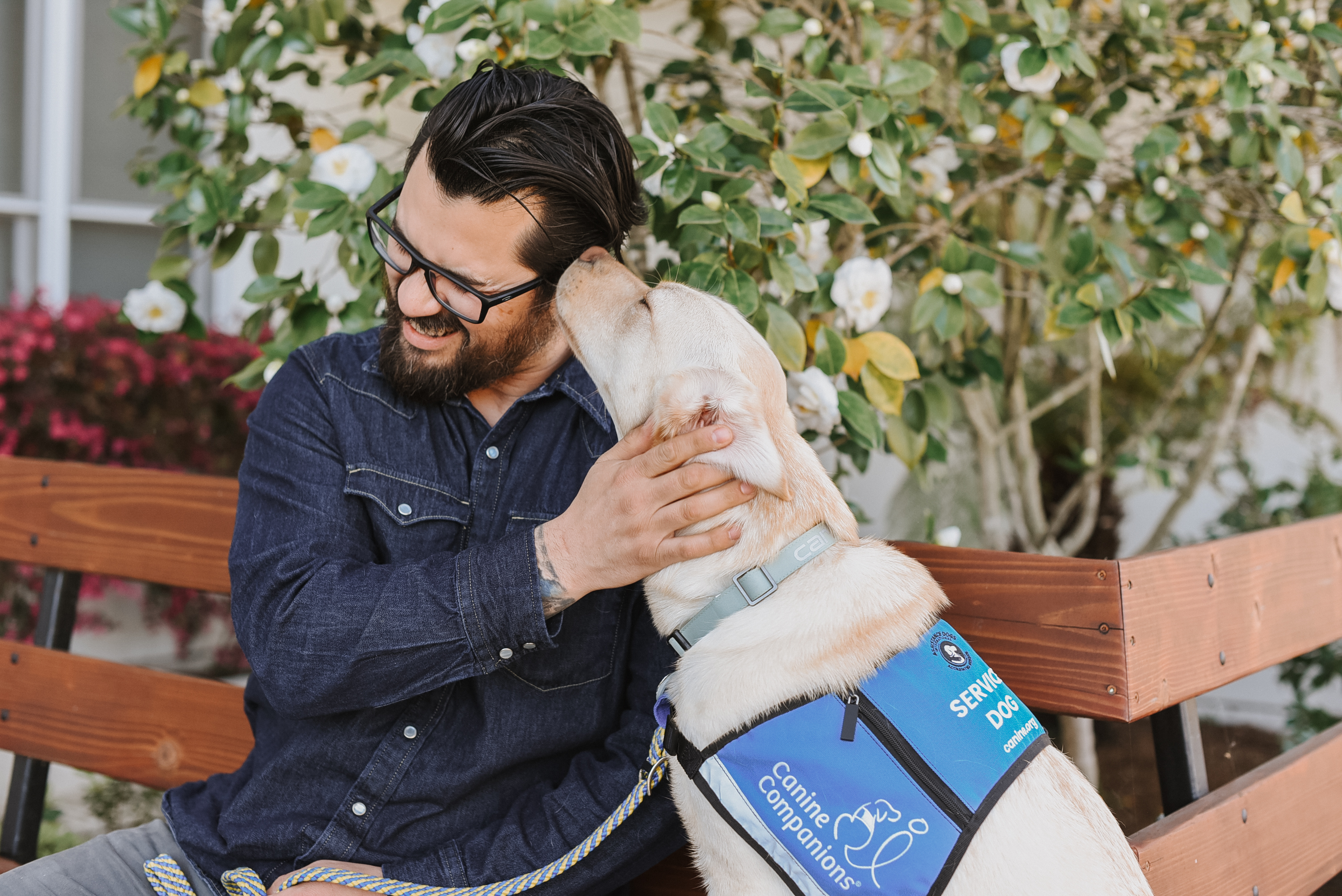
Canine Companions client Jon and service dog Bernice.
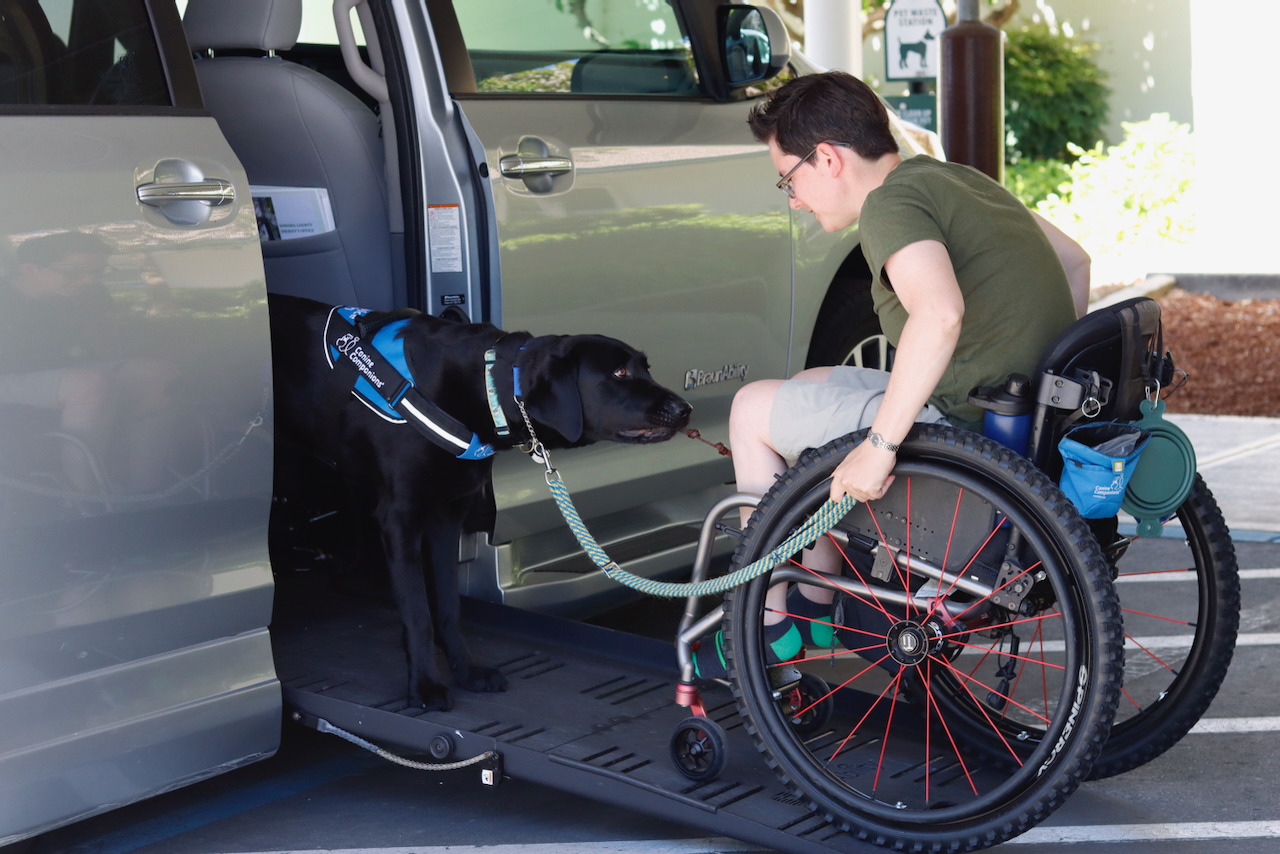
Canine Companions service dog Hamlin helps Wallis by tugging her wheelchair into her van using a specialized strap.
Fundraiser honors Canine Companions’ July 4 founding and 50-year mission of providing independence and connection through expertly trained service dogs
Since 1975, Canine Companions has placed more than 8,700 service dogs to improve the lives of children, adults and veterans with disabilities and provide specialized support to professionals working in healthcare, education and criminal justice. The Make Every Day Independence Day campaign aims to raise critical funds to continue raising, training and matching service dogs with clients across the country, always free of charge.
“While most Americans celebrate independence on July 4, the people we serve experience the gift of independence every day through their service dog partnership,” said Paige Mazzoni, CEO of Canine Companions. “Whether it's the confidence to go to work, attend school, navigate a crowded space or simply complete everyday tasks without assistance, these dogs open doors to greater freedom and opportunity. That kind of independence can be life-changing, and it’s only possible because of the extraordinary generosity of our volunteers, donors and supporters.”
Real Stories of Independence
• Jon and service dog Bernice: After serving nine years in the Air Force, Jon struggled with anxiety and isolation, often avoiding crowded places and feeling disconnected from the world around him. Everything changed when he was matched with service dog Bernice. With Bernice by his side, Jon is rebuilding his confidence, reconnecting with loved ones, and enjoying everyday moments again.
• Luciano and medical alert dog Hackett: When Luciano was diagnosed with type 1 diabetes at just four years old, his family lived in constant fear of dangerous blood sugar swings that could put his life at risk. Everything changed when he was matched with medical alert dog Hackett. By alerting to highs and lows in his blood sugar day and night — often earlier than a medical device can — Hackett gives Luciano greater independence and brings his family peace of mind.
• Wallis and service dog Hamlin: Hamlin had big paws to fill when he joined Wallis as her fourth service dog. When Wallis’ third dog retired, she instantly lost a measure of her independence, but Hamlin proved worth the wait. Trained in American Sign Language, pulling her manual wheelchair, and retrieving important items around the house, Hamlin has helped Wallis thrive beyond her wildest expectations through their exceptional bond.
Canine Companions’ Impact
Since the first Canine Companions service dog was placed in 1975:
• 35,000 volunteers have raised adorable service dog puppies. Canine Companions volunteers raise and train future service dogs for the first 18 months of their lives, laying a foundation of love and socialization on which professional trainers build skills. Many puppies are raised in family homes, but Canine Companions also recruits college students and partners with prisons to raise future service dogs. Incarcerated puppy raisers have a recidivism rate of less than 5% and a 10% higher success rate in raising puppies that ultimately graduate as service dogs.
• 7,550 service dog and handler teams have graduated. Canine Companions service dogs are professionally trained to complete more than 45 different tasks, ranging from picking up dropped items and opening doors to applying calming, deep pressure or alerting their handler to important sounds. When the required tasks are mastered, a service dog is matched with a person who needs them.
• 1,200 facility dogs have gone to work. Canine Companions facility dogs work alongside their handlers in professional settings such as hospitals, schools and courts, using their special skills to enhance therapies, promote participation, and reduce anxiety during medical procedures or court appearances.
• 650 veterans have been matched with a service dog. These dogs help veterans regain independence and hope, and for veterans with PTSD, dogs are trained in tasks including nightmare interruption and supporting their handler in crowded, public situations that might cause anxiety.
How can people help?
Anyone can support the mission of Canine Companions by donating, volunteering as a puppy raiser or sharing client stories within their own networks. To donate and learn more, visit https://canine.org/independence26/.
About Canine Companions
Canine Companions is a 501(c)(3) non-profit empowering people with disabilities to live with greater independence. Expertly trained service dogs are provided at no cost to clients, supported entirely by donations and volunteers. Donate and learn more at www.canine.org.
Organization: Canine Companions® for Independence, Inc.
Year Founded: 1975
Headquarters: Santa Rosa, California
Mission: Provide expertly trained service dogs, at no cost to recipients
Recipients: 8,700+ to-date
Cost to recipients: $0 (completely free of charge to recipients, fully funded through donations)
Scope: Serving adults, children, veterans and professionals working in health care, law enforcement and educational settings nationwide
Service Area: All 50 U.S. States
Tami Kelly
Canine Companions
+1 925-640-9997
email us here
Visit us on social media:
LinkedIn
Instagram
Facebook
YouTube
TikTok
X
Legal Disclaimer:
EIN Presswire provides this news content "as is" without warranty of any kind. We do not accept any responsibility or liability for the accuracy, content, images, videos, licenses, completeness, legality, or reliability of the information contained in this article. If you have any complaints or copyright issues related to this article, kindly contact the author above.
