



Many teen boys experience anxiety differently than adults expect. Emotional withdrawal, irritability, and isolation can be hidden signs of anxiety that deserve understanding, early recognition, and compassionate support.

Braveminds Academy: Where Adolescent Boys Find Support, Structure, and Healing

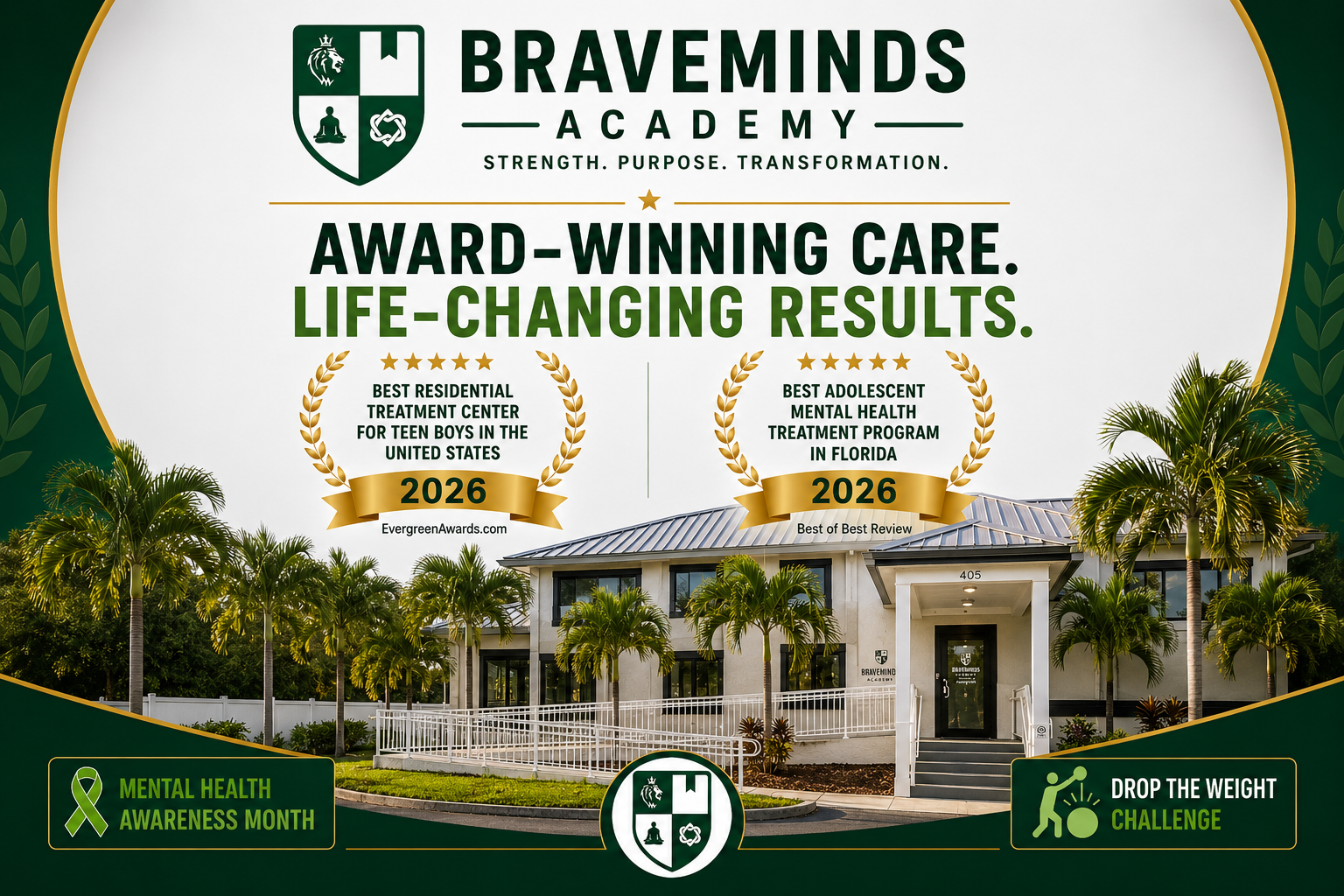
Braveminds Academy earns top national and Florida honors for excellence in adolescent mental health treatment during Mental Health Awareness Month.
New Educational Resource Helps Families Recognize the Hidden Signs of Anxiety in Adolescent Boys Before Symptoms Escalate
To help families better recognize these often-hidden warning signs, Braveminds Academy, an award-winning residential mental health treatment center specializing in boys ages 11–17, has released a comprehensive educational guide exploring how anxiety can present differently in adolescent males and why early recognition can make a meaningful difference.
The guide, "Anxiety in Teen Boys: Signs, Symptoms, Causes, and Treatment," provides parents with practical information about behavioral changes, emotional warning signs, evidence-based treatment approaches, and when it may be appropriate to seek a professional mental health evaluation.
"Many parents expect anxiety to look like constant worrying or obvious fear," said Travis Atchison, PhD, LCSW-QS, MCAP, Clinical Director at Braveminds Academy. "In adolescent boys, anxiety frequently presents through irritability, withdrawal, perfectionism, school avoidance, emotional shutdown, or physical complaints. Recognizing those differences can help families seek support sooner."
Anxiety Often Looks Different in Boys
Mental health professionals note that adolescent boys are often influenced by social expectations that encourage independence, emotional control, or "toughness." As a result, many boys become skilled at masking anxiety rather than expressing it directly. Instead of talking about fear or worry, they may internalize stress or express it through frustration, avoidance, emotional withdrawal, or perfectionistic behaviors. Recognizing these coping patterns can help parents better understand what their son may be experiencing beneath the surface.
Research over the past decade has demonstrated that anxiety in adolescent boys frequently presents differently than many parents expect. While some boys openly express worry or nervousness, others cope by masking emotional distress through behaviors that can easily be mistaken for normal adolescence or even defiance.
Instead of saying they feel anxious, boys may:
Become increasingly irritable or angry.
Withdraw from family and friends.
Avoid school or social situations.
Spend excessive time playing video games.
Develop perfectionistic tendencies.
Experience recurring headaches or stomachaches without a clear medical explanation.
Have difficulty sleeping.
Become unusually quiet or emotionally distant.
Because these behaviors may develop gradually, parents sometimes attribute them to typical teenage mood changes, increased independence, or personality differences rather than recognizing them as possible indicators of emotional distress.
Mental health professionals emphasize that no single behavior confirms an anxiety disorder. Rather, it is the persistence, severity, and impact on daily functioning that warrant further evaluation by a qualified clinician.
Anxiety Is More Common Than Many Families Realize
According to the Centers for Disease Control and Prevention (CDC), millions of children and adolescents in the United States experience diagnosed anxiety each year, making anxiety disorders among the most prevalent mental health conditions affecting young people.
The National Institute of Mental Health (NIMH) estimates that nearly one in three adolescents will experience an anxiety disorder at some point before adulthood. Left untreated, anxiety can contribute to academic struggles, social isolation, family conflict, declining self-esteem, substance use, depression, and, in some cases, thoughts of self-harm.
Although anxiety disorders are highly treatable, experts note that many young people do not receive care until symptoms have significantly affected multiple areas of their lives.
Early Recognition Can Change Outcomes
Research consistently shows that identifying anxiety early allows families to begin appropriate support before symptoms become more disruptive. Early intervention may reduce the risk of worsening anxiety, depression, school avoidance, social isolation, and other emotional or behavioral difficulties. While every adolescent's situation is unique, mental health professionals emphasize that seeking an evaluation early can provide families with greater clarity and access to evidence-based treatment options.
"Early recognition is one of the most important protective factors we have," said Atchison. "The earlier families understand what they're seeing, the more opportunities there are to intervene before anxiety begins affecting school performance, relationships, confidence, and overall emotional development."
Why Anxiety Is Frequently Missed
One reason anxiety often goes unnoticed in boys is that many adolescents lack the vocabulary to describe what they are experiencing internally.
Rather than saying:
"I'm overwhelmed."
"I'm scared."
"I'm anxious."
Parents may instead hear:
"Leave me alone."
"I'm fine."
"I don't care."
"School is stupid."
"I don't want to go."
While these statements do not necessarily indicate an anxiety disorder, persistent avoidance, emotional withdrawal, irritability, or dramatic behavioral changes deserve thoughtful attention rather than dismissal.
Common Myth
Myth: Anxiety always looks like constant worrying.
Fact: Many adolescent boys rarely describe feeling anxious. Instead, anxiety may appear as anger, irritability, perfectionism, withdrawal, avoidance, headaches, stomachaches, or emotional shutdown.
Experts also caution against assuming every behavioral challenge reflects anxiety. Comprehensive evaluation helps distinguish anxiety from other conditions that may produce overlapping symptoms, including depression, ADHD, trauma-related disorders, learning differences, autism spectrum disorder, or typical developmental changes.
Quick Facts About Anxiety in Teen Boys
• Anxiety disorders are among the most common mental health conditions affecting adolescents.
• Symptoms in boys often differ from traditional expectations and may include anger, avoidance, perfectionism, or emotional withdrawal.
• Physical symptoms such as headaches, stomachaches, muscle tension, fatigue, and sleep disturbances may accompany emotional symptoms.
• Anxiety frequently co-occurs with depression, trauma, ADHD, or other behavioral health conditions.
• Early identification and evidence-based intervention is associated with improved long-term outcomes.
Parents should consider speaking with a qualified healthcare or mental health professional if they notice persistent changes, such as:
Signs Parents Should Watch For:
Ongoing irritability or frequent anger.
Declining academic performance.
School refusal or repeated absences.
Loss of interest in previously enjoyed activities.
Social withdrawal.
Excessive reassurance-seeking.
Persistent perfectionism.
Panic symptoms.
Sleep disturbances.
Frequent unexplained physical complaints.
Difficulty concentrating.
Increased emotional sensitivity.
These symptoms do not automatically indicate an anxiety disorder, but they may signal that a comprehensive evaluation would be beneficial, particularly when they interfere with daily functioning or persist over time.
"Parents know their children better than anyone," said Matthew Schultz, Founder of Braveminds Academy. "If your son's personality, behavior, or emotional health suddenly changes, don't ignore that feeling. Seeking a professional evaluation isn't about expecting the worst, it's about finding answers early and giving your son the best opportunity to heal, grow, and thrive."
Frequently Asked Question
Can anxiety make teenage boys angry?
Key Takeaway
Anxiety in teen boys does not always appear as fear or excessive worry. Parents who recognize changes such as withdrawal, anger, avoidance, perfectionism, or emotional shutdown may be better positioned to seek a professional evaluation before symptoms become more severe.
Yes. Anxiety does not always appear as fear or excessive worrying. Many adolescent boys express anxiety through irritability, frustration, emotional withdrawal, perfectionism, or avoidance rather than discussing anxious thoughts directly. A comprehensive mental health evaluation can help determine whether anxiety or another condition may be contributing to these behaviors.
About Braveminds Academy
Braveminds Academy's clinical team works collaboratively with families throughout treatment, emphasizing individualized care, family involvement, and evidence-based practices designed to support long-term emotional wellness.
Braveminds Academy is an award-winning residential mental health treatment center in Largo, Florida, serving boys ages 11–17 experiencing anxiety, depression, trauma, emotional dysregulation, and related behavioral health challenges. The program provides individualized, evidence-based care that combines clinical treatment, psychiatric support, academic services, recreation, and family involvement in a supportive residential setting. Treatment recommendations are based on a comprehensive clinical assessment, and outcomes vary by individual. Braveminds Academy is committed to helping families better understand adolescent mental health through education and evidence-informed resources.
Families interested in learning more about recognizing anxiety in adolescent boys, understanding evidence-based treatment options, and knowing when to seek professional support can explore Braveminds Academy's comprehensive educational guide, Anxiety in Teen Boys: Signs, Symptoms, Causes, and Treatment, at https://bravemindsacademy.com
The educational guide is intended to help families better understand anxiety in adolescent boys and is not a substitute for professional diagnosis, individualized treatment recommendations, or emergency mental health care.
Clinically Reviewed by Travis Atchison, PhD, LCSW-QS, MCAP
Adolescent Behavioral Health and Clinical Program Oversight
Safety Note: This article is intended for educational purposes only and should not be considered medical advice or a substitute for evaluation by a qualified mental health professional. If a young person is at immediate risk of harming themselves or others, contact emergency services or seek immediate crisis care.
Tony Martino
Braveminds Academy
email us here
Visit us on social media:
LinkedIn
Instagram
Facebook
YouTube
TikTok
X
Other
Legal Disclaimer:
EIN Presswire provides this news content "as is" without warranty of any kind. We do not accept any responsibility or liability for the accuracy, content, images, videos, licenses, completeness, legality, or reliability of the information contained in this article. If you have any complaints or copyright issues related to this article, kindly contact the author above.
