


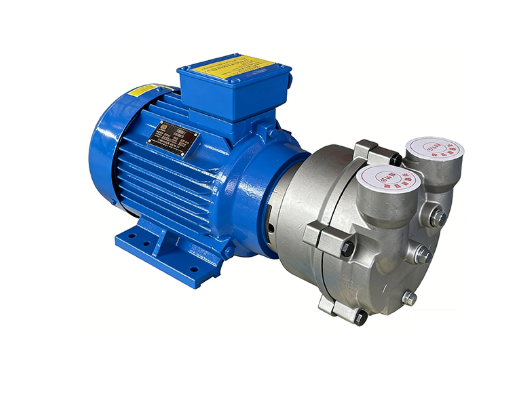
Closed Loop Liquid Ring Vacuum Pump System
This document presents a structured engineering review focused on closed-loop fluid-sealed compression technology configured for volatile mass transfer applications. It provides detailed operational strategies outlining how to optimize closed loop liquid ring vacuum pump system for ethanol recovery within continuous chemical and botanical extraction processes. The analysis highlights common system failures, including gas-binding, sealing liquid saturation, and vapor emission losses, and delivers specific architectural parameters to eliminate process variability. Furthermore, this resource specifies where to source high vacuum roots liquid ring skid packages for pharmaceutical industry integration and identifies what are the design standards for explosion proof chemical industrial vacuum pump system compliance to ensure predictable vapor condensation, precise negative pressure control, and zero-emission fluid loop preservation.
Introduction to Closed-Loop Liquid Ring Package Architecture
In volatile chemical distillation and solvent recovery workflows, venting hazardous vapors into the atmosphere is restricted by strict environmental regulations and cost considerations. Utilizing a fully closed-loop liquid ring vacuum pump system presents a practical engineering method to manage process vapors safely. Unlike open-loop systems that constantly consume fresh water and produce contaminated effluent, a closed-loop system continually recirculates its sealing fluid through an integrated heat exchanger and gas-liquid separator package.
For engineering departments and procurement officers evaluating an industrial vacuum pump for flammable gas streams, understanding the fluid and thermal balance inside a closed loop is essential. Proper configuration allows the system to compress process gases safely while acting as an effective primary condenser for high-value solvent streams.
Analysis of Field Pain Points in Solvent Recovery Vacuum Loops
Field processing of volatile mediums like ethanol, hexane, or acetone introduces specific operational challenges that can destabilize a standard water ring vacuum pump if the configuration is not properly modified.
1. Sealing Liquid Contamination and Vapor Pressure Saturation
During continuous processing, incoming solvent vapors inevitably dissolve or condense into the sealing liquid loop. As the concentration of the volatile solvent inside the water ring vacuum pump system rises, the vapor pressure of the sealing mix increases significantly. This change impairs the system's ability to maintain its deep design vacuum, causing process pressure to drift upward and slowing down evaporation rates.
2. Thermal Dynamic Inefficiencies in Condenser Stages
Compressing gases generates mechanical and thermal energy that transfers directly into the circulating sealing fluid. If the heat exchanger fails to remove this energy efficiently, the temperature of the fluid loop rises. In a standard chemical industry vacuum pump setup, this thermal accumulation can cause the sealing liquid to flash into vapor inside the pump expansion chambers, inducing severe cavitation that can pit the impellers and port plates.
3. Condensate Carryover and Carryover Emigration Losses
Separating high-velocity exhaust gas from the condensed fluid stream requires sufficient internal volume and appropriate structural baffling. Standard separation vessels often suffer from gas carryover, allowing valuable solvent vapors to pass through the exhaust stack into auxiliary piping rather than routing down to the recovery collection tanks.
Engineered Design Criteria for Closed-Loop Solvent Systems
To overcome these challenges, a custom-engineered vacuum pump system utilizes several interconnected sub-systems to maintain process stability and ensure safe operation.
Closed-Loop Fluid Control Architecture
Rather than using fresh water, the system can utilize the process solvent itself (such as ethanol) as the primary sealing liquid, provided the motor speed and internal clearances are calibrated for the fluid's specific viscosity and density. This choice eliminates cross-contamination and simplifies downstream separation processes.
Integrated Pre-Condenser and Post-Condenser Coolers
Placing a shell-and-tube or plate heat exchanger before the suction port helps condense high-volume vapors before they enter the pump chamber, reducing the mechanical load on the system. A secondary cooling loop on the fluid recirculation line maintains the sealing fluid at a stable, low temperature, preventing cavitation and ensuring consistent volumetric displacement.
Multi-Stage Roots Booster Configuration
To reach deeper processing pressures without inducing cavitation in the liquid ring stage, engineers can position a mechanical roots vacuum pump upstream. This booster compresses low-density vapors into an intermediate pressure range, allowing the backing pharmaceutical vacuum pump to operate efficiently well within its safe mechanical parameters.
Technical Specifications and Component Matrix
A typical skid package engineered for volatile solvent recovery combines several specific components onto a single structural frame:
Sub-System Component Technical Specifications & Materials Primary Process Function
Backing Liquid Ring Stage Full 316L Stainless Steel, Double Mechanical Seals Provides primary gas compression and handles liquid carryover from the process stream.
Roots Booster Stage Gas-tight roots vacuum pump, ATEX Zone 1 / Class I Div 1 Increases system volumetric capacity and lowers the ultimate suction pressure threshold.
Gas-Liquid Separator Tank 316L Stainless Steel with high-efficiency demister pad Separates the recirculating sealing liquid from the exhaust gas and collects recovered solvent.
Recirculation Heat Exchanger High-surface-area plate style, Hastelloy or 316L plates Cools the sealing fluid below the flashpoint of the process solvent using chilled factory water.
Procurement Verification Framework for Industrial Skids
When executing bulk supply or customized single-project orders with a vacuum pump manufacturer, engineering teams should follow a strict verification protocol to guarantee performance and site safety:
Explosion-Proof Compliance Testing: Ensure all electrical components, including motors, pressure transmitters, and solenoid valves, carry proper documentation for hazardous locations (such as ATEX, IECEx, or UL listings).
NPSH and Cavitation Limit Testing: Request performance curves showing net positive suction head requirements against various sealing fluid temperatures to verify safe operating limits.
Helium Leak Testing for System Integrity: The entire skid assembly must pass rigorous helium leak testing to ensure ambient air cannot leak into the system, which could create explosive mixtures with flammable process solvents.
Localized Frequently Asked Questions (FAQ)
Q1: How to optimize closed loop liquid ring vacuum pump system for ethanol recovery when processing temperatures vary across shifts? A1: Optimization requires implementing automated temperature-actuated modulating valves on the cooling water line. By adjusting the cooling water flow based on the temperature of the recirculating ethanol seal, you prevent fluid temperatures from approaching the vaporization point, maintaining stable suction capacity for your industrial vacuum pump during high-load processing shifts.
Q2: Where to source high vacuum roots liquid ring skid packages for pharmaceutical industry projects requiring full cGMP validation? A2: Sourcing should target specialized manufacturers capable of delivering comprehensive IQ/OQ validation protocols and weld maps with non-destructive examination (NDE) reports. A qualified partner will provide fully integrated skids featuring high-purity internal finishes, sterile drain ports, and clear component tracing that complies with international pharmaceutical manufacturing standards.
Q3: What are the design standards for explosion proof chemical industrial vacuum pump system installations handling hazardous vapors? A3: Systems handling flammable vapors must adhere to standards like NFPA 69 (Explosion Prevention Systems) and ATEX Directive 2014/34/EU. Essential design features include explosion-proof motors, dual mechanical seals with pressurized barrier fluids, non-sparking coupling guards, and integrated flame arrestors on both the suction and discharge lines.
Q4: Can a closed-loop system operate reliably if the incoming process stream contains non-condensable gases? A4: Yes, non-condensable gases pass through the liquid ring seal and collect at the top of the gas-liquid separator tank. From there, they are safely vented through a secondary vent line equipped with a back-pressure valve, while the condensable solvent vapors are retained within the closed-loop recovery loop.
Foryou Vacuum Pump
Foryou Vacuum Pump
+86 18096404767
blair@foryoupump.com
Legal Disclaimer:
EIN Presswire provides this news content "as is" without warranty of any kind. We do not accept any responsibility or liability for the accuracy, content, images, videos, licenses, completeness, legality, or reliability of the information contained in this article. If you have any complaints or copyright issues related to this article, kindly contact the author above.
