



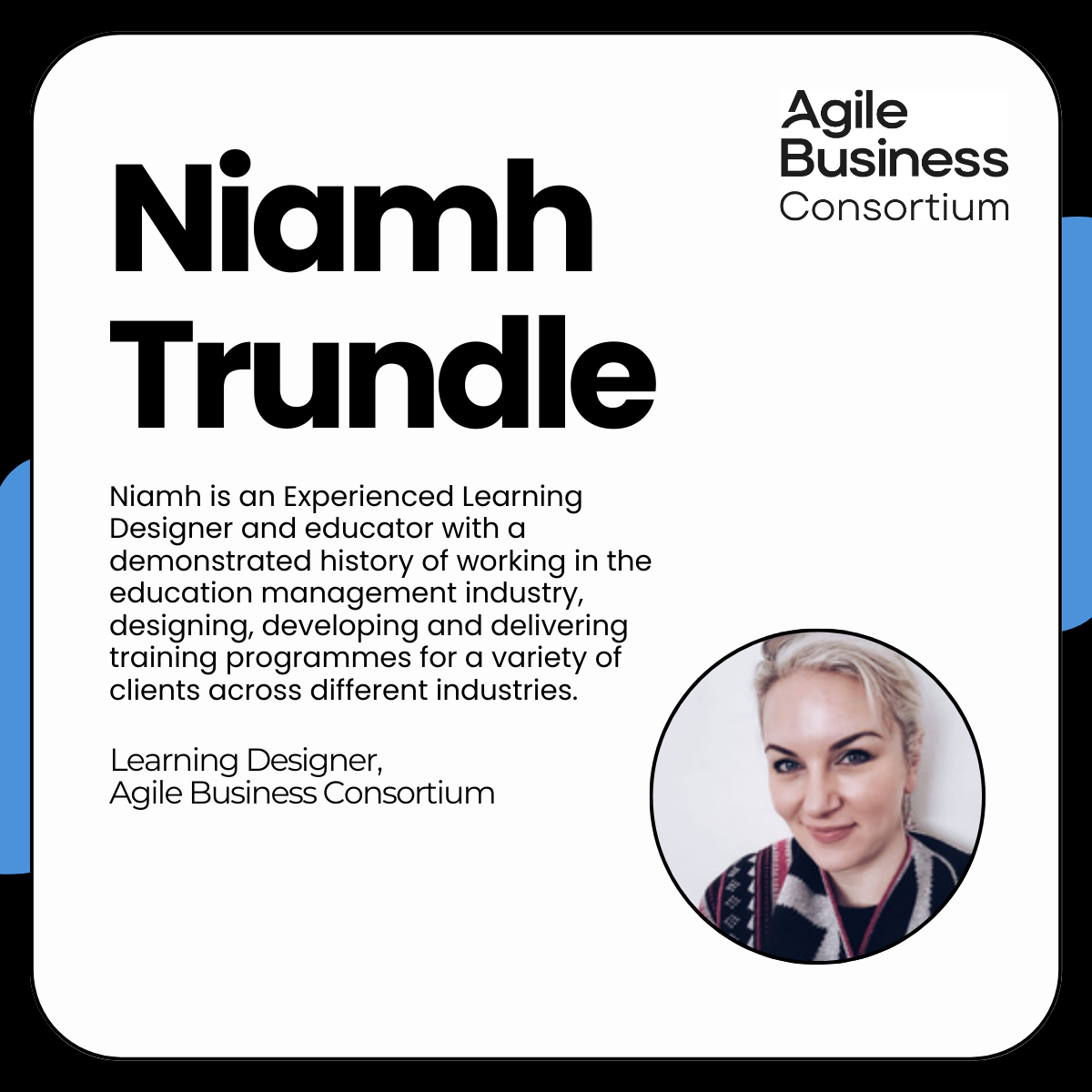
Niamh Trundle - Author
In an AI-driven world, verified certification and real-world skills are essential for proving authentic professional capability.
The latest update, AgilePM v3, places greater emphasis on applying agile principles in real organisational environments, where teams must balance adaptability with governance and structured delivery.”
LONDON, UNITED KINGDOM, March 11, 2026 /EINPresswire.com/ -- As artificial intelligence tools become more capable of generating content, analysing information and simulating expertise, organisations are increasingly facing a new challenge: how to distinguish genuine professional capability from AI-assisted representation. — Niamh Trundle
While AI can support tasks such as drafting CVs, preparing interview answers or summarising complex frameworks, it cannot verify whether an individual has genuinely developed the knowledge required to apply those frameworks effectively in real situations.
This shift is drawing renewed attention to independently assessed professional certifications as a way of validating skills and knowledge.
The growing importance of verified capability:
The impact of digital tools on hiring is already visible. A 2025 YouGov study reported that 45% of large UK companies had discovered inaccurate or false information about qualifications in job applications, while 67% believed job application fraud is increasing.
In this environment, professional certification can provide an additional layer of verification. Independently assessed qualifications confirm that candidates have demonstrated knowledge against an established syllabus and examination standard, rather than relying solely on self-reported expertise.
However, certification alone does not determine competence. Most organisations combine qualifications with experience, interviews and practical assessments when evaluating professional capability.
Applying frameworks in real organisations:
The evolution of professional frameworks reflects a broader shift in learning and development: moving beyond theoretical knowledge towards practical application.
Agile Project Management (AgilePM) is one example of this approach. The latest update, AgilePM v3, places greater emphasis on applying agile principles in real organisational environments, where teams must balance adaptability with governance and structured delivery.
Rather than focusing only on terminology or theory, the framework encourages professionals to understand how agile approaches can be used to manage risk, respond to changing requirements and deliver value in complex projects.
Supporting learning cultures:
Certification programmes are also often linked to wider organisational learning strategies. Research by Deloitte has found that organisations with strong learning cultures report up to 17% higher profitability compared with those with weaker development practices.
While qualifications alone do not drive these outcomes, structured learning pathways can help create shared standards and common language across teams delivering change initiatives.
Human judgement in an AI-assisted world:
As AI tools become more integrated into professional environments, many organisations are placing renewed emphasis on skills that remain difficult to automate. Leadership, communication, stakeholder engagement and decision-making continue to play a central role in successful project delivery.
In this context, professional certifications can help establish a foundation of knowledge and credibility. But their value is strongest when combined with practical experience, mentoring and continuous professional development.
As artificial intelligence continues to reshape the way information is created and shared, the ability to demonstrate authentic understanding and applied capability is becoming increasingly important.
About APMG International and Agile Business Consortium:
APMG International is a global accreditation and examination institute that works with professional bodies and industry experts to develop and deliver certification schemes supporting professional development across project management, agile delivery, change management, governance and service management.
The Agile Business Consortium is a professional body for organisations and individuals who want to develop agile capabilities within the workplace. Working in partnership with APMG, the Consortium develops guidance and frameworks such as Agile Project Management (AgilePM), supporting professionals and organisations seeking to deliver change in dynamic and complex environments.
Channel Marketing
APMG International
email us here
Visit us on social media:
LinkedIn
Instagram
Facebook
YouTube
TikTok
Legal Disclaimer:
EIN Presswire provides this news content "as is" without warranty of any kind. We do not accept any responsibility or liability for the accuracy, content, images, videos, licenses, completeness, legality, or reliability of the information contained in this article. If you have any complaints or copyright issues related to this article, kindly contact the author above.
