


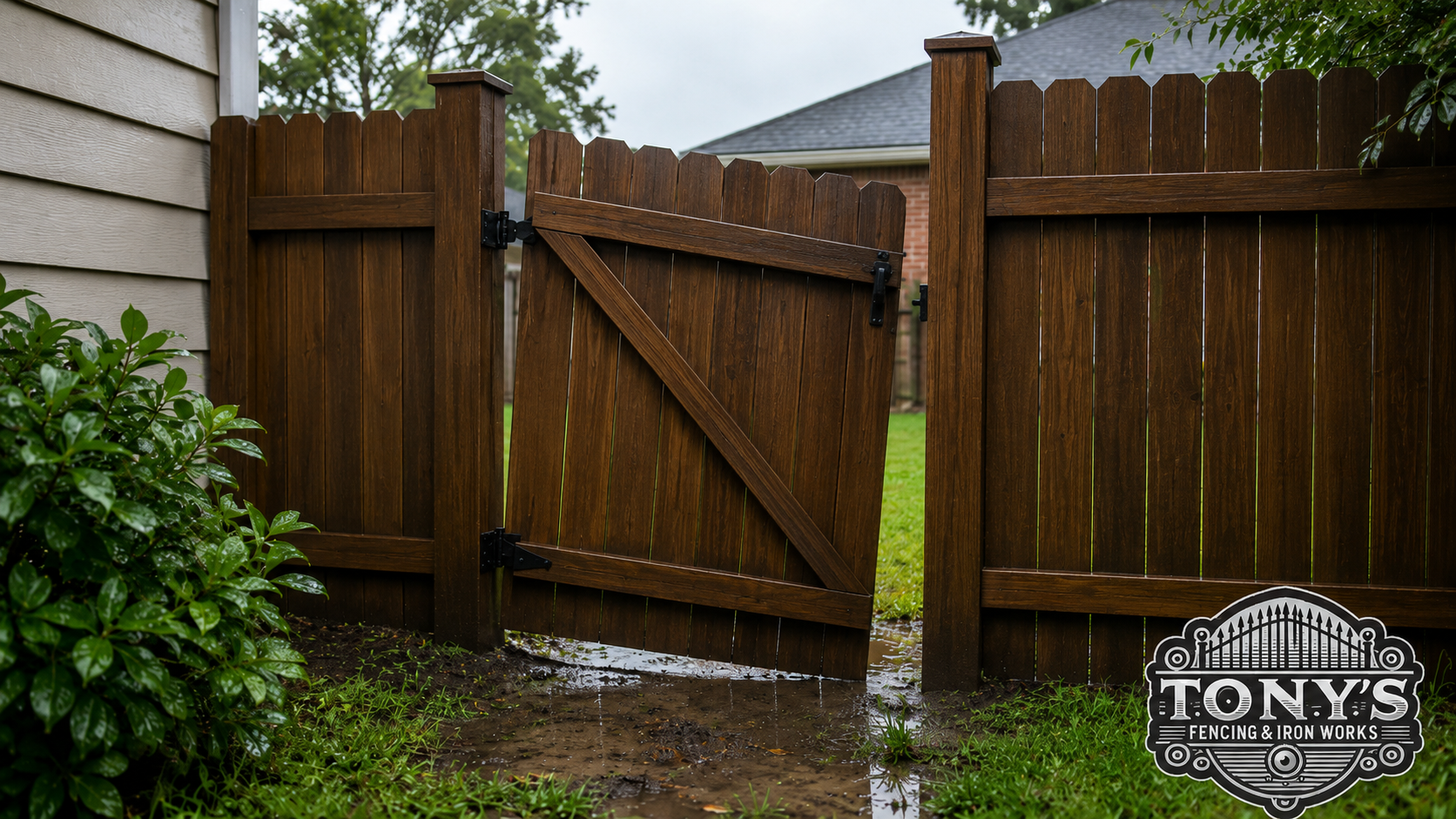
Heavy rain and soft soil can cause even a good-looking fence gate to shift, sag, or stop latching properly.
Tony's Fencing and Iron Works Logo
New guide explains how Louisiana rain, humidity, soft soil, drainage, and post movement can cause fence gates to sag or stop latching.
COVINGTON, LA, UNITED STATES, June 14, 2026 /EINPresswire.com/ -- Tony’s Fencing and Iron Works has released a new educational guide to help Southeast Louisiana homeowners understand why fence gates often begin dragging, sagging, sticking, or failing to latch after periods of heavy rain, humidity, and saturated soil.
The guide, titled “Why Your Fence Gate Won’t Close After Summer Rain in Southeast Louisiana,” explains how Louisiana weather can affect wood gates, privacy fence gates, pool gates, iron gates, driveway gates, and automatic gate systems. It also helps homeowners identify whether a gate issue may be caused by hardware, post movement, drainage, wood swelling, or structural failure.
For homeowners across Covington, Mandeville, Madisonville, Hammond, Ponchatoula, Slidell, St. Tammany Parish, Tangipahoa Parish, and nearby communities, gate problems often become more noticeable during the summer months. Heavy rain can soften the soil around fence posts. Humidity can cause wood to swell. Standing water can increase stress around gate openings. Over time, these conditions may cause a gate to drag, lean, miss the latch, or stop closing properly.
According to the National Oceanic and Atmospheric Administration, the Atlantic hurricane season runs from June 1 through November 30. While hurricanes are not the only weather concern for Louisiana homeowners, the season often brings more attention to outdoor maintenance, drainage, fencing, gates, and property security.
Tony’s Fencing and Iron Works created the new guide to help homeowners recognize early warning signs before a small gate issue becomes a larger fence repair.
“A fence gate is one of the most used parts of a fence, but it is also one of the easiest parts to overlook until it stops working,” said Tony Ostrowski, owner of Tony’s Fencing and Iron Works. “When a gate starts dragging or missing the latch after rain, the problem may be deeper than the latch itself. Sometimes the post has shifted, the frame has sagged, or the ground around the gate has softened.”
Why Fence Gates Are More Vulnerable Than Fence Panels
The guide explains that a fence gate has different stress points than a standard fence panel. A fence panel stays fixed in place. A gate, however, opens, closes, swings, carries weight, and puts repeated pressure on both the hinge post and latch post.
Because of this movement, a gate depends heavily on proper post installation, solid framing, strong hinges, and accurate alignment. If one part of that system changes, the entire gate can stop working correctly.
A small movement in the hinge post may cause the latch side of the gate to drop. A slightly leaning latch post may keep the latch from lining up. A loose hinge may allow the gate to sag. Moisture-swollen wood may make the gate rub against the post or drag at the bottom.
The guide explains that homeowners often notice the latch first because that is where the problem becomes visible. However, the latch is not always the cause. In many cases, the latch is only showing that something else has moved.
How Rain, Humidity, and Soil Affect Fence Gates
Southeast Louisiana’s climate creates a difficult environment for outdoor structures. Heavy rainfall, humidity, heat, soft soil, termites, and long wet periods can all affect fencing materials.
After rain, soil around fence posts may become saturated. When soil loses firmness, a gate post may shift slightly under the weight of the gate. This is especially common in yards with low areas, poor drainage, clay-heavy soil, or standing water near the fence line.
Even a small amount of post movement can create a noticeable gate problem. A gate may begin to scrape the ground. The latch may no longer meet the catch. The gate may swing open or shut on its own. In some cases, the gate may need to be lifted by hand just to close.
The guide also explains that repeated wet-and-dry cycles can be hard on wood. Wood may absorb moisture, swell, dry out, shrink, and move over time. This movement can loosen fasteners, pull hinges out of alignment, and cause gate frames to twist or sag.
Common Signs of a Rain-Related Gate Problem
Tony’s Fencing and Iron Works recommends that homeowners inspect gates after heavy rain, especially during summer and hurricane season.
Common warning signs include a gate that drags across grass, mud, gravel, or concrete; a latch that no longer lines up; a gate that has to be lifted to close; a hinge post or latch post that appears to lean; loose screws, bolts, hinges, or brackets; a gate that swings open or shut by itself; cracked or splitting wood near the hinges; rust around metal hardware; or a gate frame that appears out of square.
Pool gates and automatic driveway gates should receive extra attention. A pool gate that does not self-close or self-latch may create a safety concern. An automatic gate that strains, stops early, reverses, or drags may be dealing with a structural alignment problem rather than a motor problem.
The company advises homeowners not to ignore these warning signs. A small alignment problem may be simple to correct early. However, if the gate continues dragging or forcing pressure onto the posts and hardware, the repair may become more involved.
Hardware Problems vs. Structural Problems
A major part of the guide focuses on helping homeowners understand the difference between a hardware issue and a structural issue.
A hardware issue may involve loose hinges, worn screws, rusted bolts, a bent latch, or hardware that is too small for the weight of the gate. These problems can often be repaired by replacing, adjusting, or reinforcing the hardware.
A structural issue may involve a leaning post, soft ground, rotted wood, poor bracing, or a gate frame that is no longer square. These problems usually require a deeper repair because replacing a latch will not solve the underlying cause.
“If the gate keeps falling out of alignment, there is usually a reason,” Ostrowski said. “A quick latch adjustment may help for a few days, but if the post is moving or the gate frame is failing, the problem will come back.”
Why Drainage Matters Around Fence Gates
The guide also explains the role of drainage. Water collecting near a gate post can soften the soil, increase wood exposure to moisture, and create long-term stress around the base of the post.
In many Louisiana yards, standing water after rain is common. However, water that repeatedly collects around the same fence post or gate opening can shorten the life of the fence system.
Homeowners are encouraged to watch for low areas near gate posts, soil washing away from the base of a post, mulch piled against wood, or sprinkler systems that keep the post area wet. These conditions can contribute to rot, post movement, and premature gate failure.
Tony’s Fencing and Iron Works notes that a gate repair will usually last longer when drainage and moisture concerns are also considered.
Why Quick DIY Fixes May Not Last
The educational guide also discusses common DIY gate fixes and why they may not solve the real issue.
Many homeowners try to fix a dragging gate by moving the latch, adding larger screws, trimming the bottom of the gate, or forcing the gate closed. While these steps may provide short-term relief, they can sometimes hide the underlying problem.
For example, trimming the bottom of a sagging gate may stop it from dragging temporarily. However, if the hinge post continues to lean, the gate will keep dropping. Moving the latch may help it close again, but if the gate frame is out of square, the latch may fall out of alignment again after the next heavy rain.
The guide encourages homeowners to inspect the full gate opening before making repairs. The posts, hinges, frame, latch, and ground conditions should all be considered together.
When Repair May Be Enough
A gate repair may be enough when the posts are still solid, the frame is not badly damaged, and the problem is mostly related to hardware or minor alignment.
Professional repair may include adjusting the gate, replacing hinges, reinforcing the frame, resetting hardware, correcting latch alignment, or addressing early post movement.
However, rebuilding the gate may be the better long-term option if the wood is rotted, the frame is twisted, the post is leaning, the gate is too heavy for the current hardware, or the same problem has returned after several repairs.
A rebuilt gate can be designed with better bracing, stronger hinges, properly sized posts, and materials suited for Southeast Louisiana’s weather conditions.
Preventive Maintenance Tips for Homeowners
Tony’s Fencing and Iron Works encourages homeowners to perform simple maintenance checks throughout the summer. Homeowners should check gates after heavy rain, look for standing water near gate posts, keep mulch and soil away from wood posts, trim vines or heavy plants off fences and gates, tighten loose hardware early, watch for rust on hinges and latches, avoid hanging heavy items on gates, and avoid forcing a dragging gate open or closed.
The guide explains that these steps can help homeowners catch problems early and extend the life of the gate.
Local Fencing Knowledge Matters
Tony’s Fencing and Iron Works notes that local experience is important because Louisiana properties are not all the same. Some yards drain quickly. Others hold water for days. Some gates are used lightly. Others handle pets, children, pool access, or daily vehicle traffic.
The right repair depends on the material, gate size, soil conditions, drainage, post stability, and how the gate is used.
Tony’s Fencing and Iron Works provides wood fence gate repair, privacy fence gates, pool gates, iron gates, automatic driveway gates, custom entry gates, wood fencing, vinyl fencing, chain link fencing, ornamental iron, aluminum pool fencing, brick columns, ADA handrails, and custom ironwork.
The company serves homeowners and businesses across Covington, Mandeville, Madisonville, Hammond, Ponchatoula, Slidell, St. Tammany Parish, Tangipahoa Parish, and surrounding Southeast Louisiana communities.
Homeowners who notice a gate dragging, sticking, leaning, failing to latch, or changing after rain can contact Tony’s Fencing and Iron Works for a free estimate.
For more information, visit https://tonysfencingandiron.com/ or call 985-703-0595.
Frequently Asked Questions
Why does my fence gate stop closing after it rains?
A fence gate may stop closing after rain because the soil around the posts becomes soft, the gate post shifts, the wood swells, or the hardware moves out of alignment. In Southeast Louisiana, humidity and heavy rain make this a common issue.
Is the latch usually the problem?
Sometimes the latch is the problem, but not always. A latch that no longer lines up may be a sign that the post has moved, the gate has sagged, or the frame is no longer square.
Can a sagging fence gate be repaired?
Yes, many sagging gates can be repaired if the posts and frame are still in good condition. Repairs may include adjusting hinges, replacing hardware, adding bracing, or correcting the latch alignment.
When does a gate need to be replaced instead of repaired?
A gate may need to be replaced or rebuilt if the wood is rotted, the frame is twisted, the post is leaning, or the same problem keeps coming back after previous repairs.
Can poor drainage cause gate problems?
Yes. Poor drainage can allow water to collect around gate posts. Over time, that can soften the soil, increase wood moisture exposure, and contribute to post movement or rot.
Should I trim the bottom of a dragging gate?
Trimming the bottom may help temporarily, but it does not fix the cause if the gate is sagging or the post is moving. It is better to check the posts, frame, hinges, and latch before cutting the gate.
Can rain damage an automatic driveway gate?
Rain can affect an automatic gate if the gate posts shift or the gate falls out of alignment. The opener may strain, stop, reverse, or make unusual noises when the gate is not moving correctly.
Are pool gate problems more serious?
Yes. Pool gates should close and latch properly for safety. If a pool gate sticks, drags, or fails to latch, it should be repaired quickly.
How often should I inspect my fence gate?
Homeowners should check fence gates after major rain, before hurricane season, and anytime the gate begins to drag, lean, stick, or miss the latch.
What areas does Tony’s Fencing and Iron Works serve?
Tony’s Fencing and Iron Works serves Covington, Mandeville, Madisonville, Hammond, Ponchatoula, Slidell, St. Tammany Parish, Tangipahoa Parish, and surrounding Southeast Louisiana communities.
About Tony’s Fencing and Iron Works
Tony’s Fencing and Iron Works is a Southeast Louisiana fencing company serving residential and commercial customers across the Northshore and surrounding areas. With more than 30 years of experience, the company provides wood fencing, vinyl fencing, chain link fencing, ornamental iron, pool fencing, custom gates, automatic gates, fence repair, brick columns, ADA handrails, and custom ironwork.
Media Contact
Tony’s Fencing and Iron Works
Tony Ostrowski
Phone: 985-703-0595
Website: https://tonysfencingandiron.com/
Gwen M.
Designs For You
email us here
Visit us on social media:
Facebook
Legal Disclaimer:
EIN Presswire provides this news content "as is" without warranty of any kind. We do not accept any responsibility or liability for the accuracy, content, images, videos, licenses, completeness, legality, or reliability of the information contained in this article. If you have any complaints or copyright issues related to this article, kindly contact the author above.
