
.jpeg)

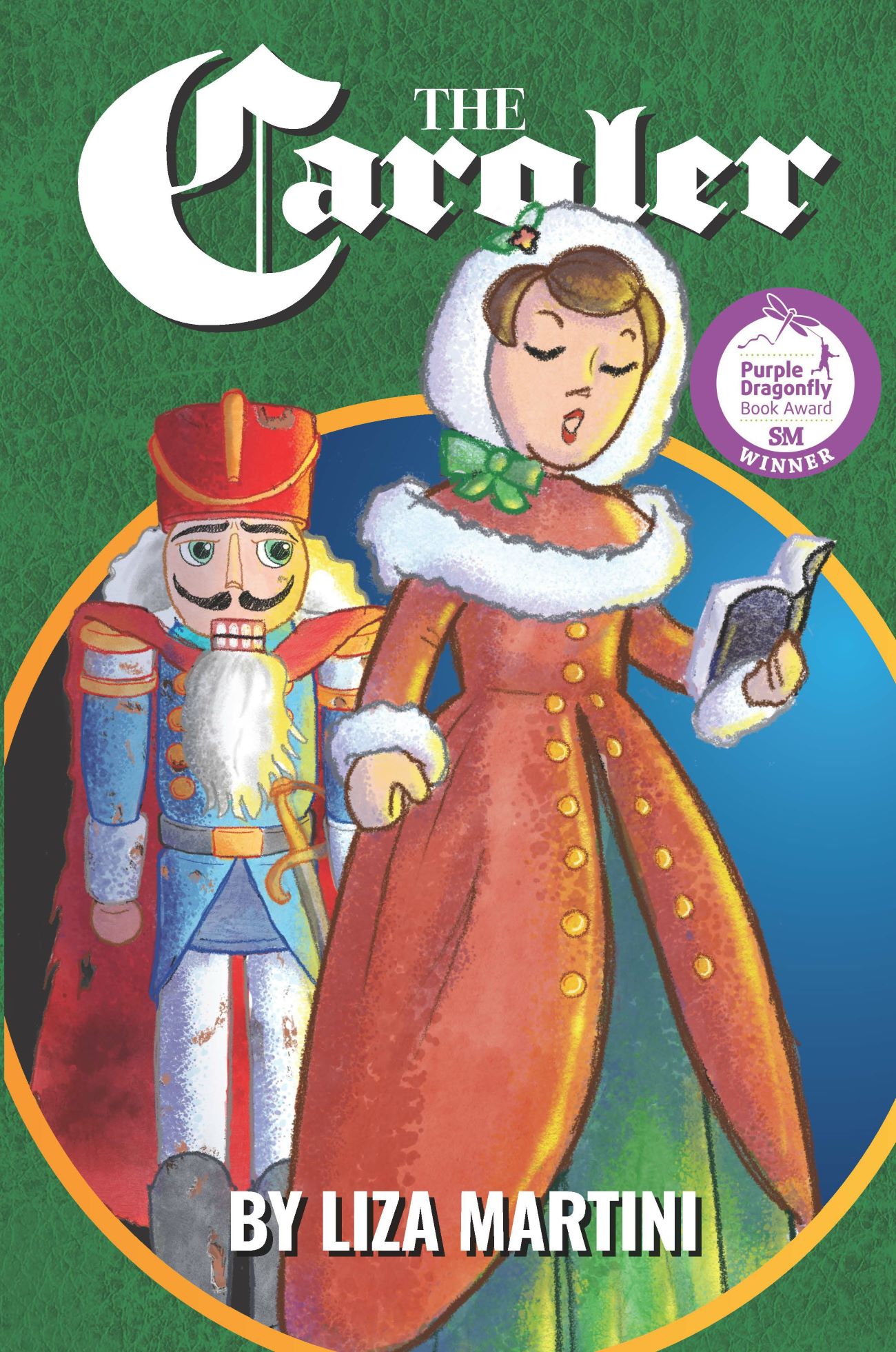
The Caroler, by Liza Martini
Until now, Nutcracker has spent centuries living at the whims of others and lost hope of breaking a curse to restore his humanity. Can his new friends help him?
Carol is cautious but kind, believing, “No one can help how they are formed, or sketched, or molded. She believed that goodness should be expected and returned.””
WASHINGTON, DC, UNITED STATES, October 8, 2026 /EINPresswire.com/ -- Have you ever wondered where the Nutcracker got his fierce eyes? His disturbing set of choppers, or the lever in his back? He wasn’t always such an odd-looking fellow. Against the scaffolding of the original story of Nutcracker and the Mouseking by E.T.A. Hoffmann, Liza Martini imagines a modern day setting to bring a long overdue resolution to Nutcracker’s state of affairs, while remaining true to the thread of his tale in her reformatted middle-grade book, The Caroler. Purists will not be disappointed!— [original characters] bring Christoph’s backstory into focus . . .
One of the earliest story-tellers for children, E.T.A Hoffmann never wrote the story of Nutcracker and Mouseking with a ballet in mind, although he was a composer and playwright of some renown. It was Alex Dumas, his French counter-part, and a popular story teller himself, who adapted it into the libretto for the ballet as we know it, and for which we hear the composer, Pyotr Ilyich Tchaikovsky, reluctantly wrote the music. Apparently, Tchaikovsky found the libretto and choreography strange and incohesive, which turned out to be the very secret of its success! Dumas’ version was a little more playful and lacked some of Hoffmann’s (dare I use the word grotesque here?) odder components. But what is it about this peculiar hero with googly eyes and wide expanse of clacking teeth that attracts such devotion and following? Today we rarely think of the story without the dance.
Until now, that is. In a dark basement one July afternoon, a nutcracker awakens in his excelsior crate, to find two figurines fresh from a summer tent sale, staring back at him from the opposite end. He’ll have to get used to much more than shared space before long. In Martini’s, The Caroler, toys and dolls with human likeness are animated by an itinerant grace light, and their stories become unavoidably entwined. The story of bacon and sausages, greed and gluttony, curses and redemption are the elements of Nutcracker’s backstory told throughout. But he has lost all hope of living as anything but this wooden manikin form. It is the Caroler who gradually draws him out of his hard shell, and makes him aware of the caring heart he once had. Carol is cautious but kind, believing, “No one can help how they are formed, or sketched, or molded. She believed that goodness should be expected and returned.” Glorious Angel (Glory), a no-nonsense, shimmering, tree-topping angel, is no stranger to miracles and unusual phenomena, and her arming presence drives the plot to its “logical conclusion.”
In a not-so-average retelling of Hoffmann's and Dumas’ folktale, Martini blends new characters to tell an old story in a modern-day setting, where toys with human likeness come to life and Nutcracker is finally allowed to tell his story—in his own words, thank you very much! With a sprinkling of Carol’s 19th century Christmas carols, and a hearty dose of Glory’s insights, we have a winning juxtaposition of humanity, contrast, conflict, and humor!
Here is a story of magic and miracles, light and wonder, in which fans of Anne M. Martin’s Doll People, or classics such as Margery Williams’ Velveteen Rabbit, or The Steadfast Tin Soldier by Hans Christian Anderson, will abandon themselves to the fantastical world of Christoph Zacharius Drosselmeier, Nutcracker. As his own weird tale emerges little by little, he finds a kind and attentive ear in Carol, and Glory’s no-nonsense brings the reality of Christoph’s situation under close examination.
And what about Scaramouche and that clock maker with the outrageous spun glass periwig? They are remembered here, as you will find many characters from the original story that are not to be found in the ballet or the abridged picture book versions. Reintroducing them brings Christoph’s backstory into focus, helps us to understand his strange physicality, and allows the story to unfold as it was intended.
We now have clarity in this retelling of a beloved Christmas folktale. The Caroler has garnered many excellent reviews and is quickly becoming a family yuletide favorite, and just like the original story, has something for everyone.
Liza Martini
www.thebookkeep.org
Visit us on social media:
Facebook
Other
Legal Disclaimer:
EIN Presswire provides this news content "as is" without warranty of any kind. We do not accept any responsibility or liability for the accuracy, content, images, videos, licenses, completeness, legality, or reliability of the information contained in this article. If you have any complaints or copyright issues related to this article, kindly contact the author above.
