
.jpeg)

Rare Gas Market
Rare gases like neon and xenon are vital for semiconductor lithography and satellite propulsion, pushing demand amid global supply chain realignments.
The neon supply shock post-Ukraine crisis has accelerated investment in rare gas recovery and purification, making these gases critical assets in chip and aerospace resilience strategies.”
NEWARK, DE, UNITED STATES, June 3, 2025 /EINPresswire.com/ -- The rare gas market—comprising noble gases such as helium, neon, argon, krypton, and xenon—is often discussed in terms of its use in lighting, welding, and MRI cooling systems. However, an increasingly vital and underexplored segment of this market is its pivotal role in semiconductor photolithography, particularly in extreme ultraviolet (EUV) lithography and deep ultraviolet (DUV) laser systems that rely heavily on ultra-pure neon.— Nikhil Kaitwade, Associate Vice President at Future Market Insights
This narrow yet strategically essential application of rare gases highlights a hidden vulnerability in global tech supply chains: the dependence on purified rare gases, especially neon, for advanced chip manufacturing. As geopolitical tensions and industrial disruptions reshape sourcing strategies, countries and corporations are racing to diversify neon supply and develop closed-loop recycling systems, positioning rare gases as critical raw materials in the digital economy.
𝐌𝐚𝐤𝐞 𝐈𝐧𝐟𝐨𝐫𝐦𝐞𝐝 𝐃𝐞𝐜𝐢𝐬𝐢𝐨𝐧𝐬 – 𝐀𝐜𝐜𝐞𝐬𝐬 𝐘𝐨𝐮𝐫 𝐒𝐚𝐦𝐩𝐥𝐞 𝐑𝐞𝐩𝐨𝐫𝐭 𝐈𝐧𝐬𝐭𝐚𝐧𝐭𝐥𝐲! https://www.futuremarketinsights.com/reports/sample/rep-gb-14654
𝐔𝐧𝐝𝐞𝐫𝐬𝐭𝐚𝐧𝐝𝐢𝐧𝐠 𝐑𝐚𝐫𝐞 𝐆𝐚𝐬𝐞𝐬 𝐚𝐧𝐝 𝐓𝐡𝐞𝐢𝐫 𝐒𝐞𝐦𝐢𝐜𝐨𝐧𝐝𝐮𝐜𝐭𝐨𝐫 𝐑𝐨𝐥𝐞
Rare gases are characterized by their chemical inertness, high ionization potentials, and stable electronic configurations. While this makes them largely unreactive, it also enables their use in highly specialized environments—such as plasma etching, laser excitation, and photolithography.
Neon, in particular, is indispensable for excimer lasers used in deep ultraviolet lithography (DUV), a process required to etch circuit patterns onto silicon wafers at nanometer scales. A typical DUV lithography tool may consume up to 30 liters of purified neon per hour, making consistent and high-purity supply crucial for chip yield and performance.
As chip architectures shrink and demand for high-speed, low-power semiconductors grows in applications like AI, 5G, and EVs, the importance of uninterrupted access to high-purity rare gases is becoming non-negotiable.
𝐍𝐞𝐨𝐧 𝐚𝐧𝐝 𝐭𝐡𝐞 𝐒𝐮𝐩𝐩𝐥𝐲 𝐂𝐡𝐚𝐢𝐧 𝐅𝐫𝐚𝐠𝐢𝐥𝐢𝐭𝐲 𝐄𝐱𝐩𝐨𝐬𝐞𝐝 𝐛𝐲 𝐭𝐡𝐞 𝐔𝐤𝐫𝐚𝐢𝐧𝐞 𝐂𝐫𝐢𝐬𝐢𝐬
An often overlooked fact is that prior to 2022, over 50% of the world’s high-purity neon used for semiconductor manufacturing was processed in Ukraine, particularly by companies such as Ingas and Cryoin. These companies extracted and purified neon gas—often a byproduct of Russian steel production—into the 99.999% pure form required by semiconductor foundries.
The outbreak of the Russia-Ukraine conflict in early 2022 disrupted this supply chain almost overnight, creating a panic in the semiconductor industry. Prices for neon surged by over 600% within weeks, and chipmakers were forced to scramble for alternatives. This disruption exposed just how fragile the neon supply chain had become—centered around a few suppliers with limited redundancy or domestic alternatives.
In response, countries like the United States, South Korea, and Japan have begun investing in domestic rare gas purification plants and recycling systems. For instance, SK Materials and Air Liquide have announced projects to recover and refine neon from industrial gas streams within their own borders, reducing dependency on external suppliers.
𝐔𝐧𝐥𝐨𝐜𝐤 𝐂𝐨𝐦𝐩𝐫𝐞𝐡𝐞𝐧𝐬𝐢𝐯𝐞 𝐌𝐚𝐫𝐤𝐞𝐭 𝐈𝐧𝐬𝐢𝐠𝐡𝐭𝐬 – 𝐄𝐱𝐩𝐥𝐨𝐫𝐞 𝐭𝐡𝐞 𝐅𝐮𝐥𝐥 𝐑𝐞𝐩𝐨𝐫𝐭 𝐍𝐨𝐰: https://www.futuremarketinsights.com/reports/rare-gas-market
𝐂𝐥𝐨𝐬𝐞𝐝-𝐋𝐨𝐨𝐩 𝐑𝐞𝐜𝐲𝐜𝐥𝐢𝐧𝐠: 𝐀 𝐒𝐭𝐫𝐚𝐭𝐞𝐠𝐢𝐜 𝐒𝐡𝐢𝐟𝐭 𝐢𝐧 𝐑𝐚𝐫𝐞 𝐆𝐚𝐬 𝐔𝐬𝐞
An emerging trend in the rare gas market is the development of closed-loop recovery systems in semiconductor fabrication plants (fabs). These systems capture and reprocess rare gases—especially neon and argon—used in lithography and etching processes.
Intel and TSMC, among other major foundries, have begun investing in such systems, not just for cost reduction, but to ensure resilience against geopolitical and market shocks. These recycling systems can recover up to 90% of rare gases used in cleanroom environments, reducing the need for virgin supply and mitigating the impact of market volatility.
This evolution is transforming the business model of rare gas suppliers from a volume-based model to a service-based model, where long-term supply agreements, on-site recovery systems, and integrated purification solutions are becoming standard.
𝐗𝐞𝐧𝐨𝐧 𝐚𝐧𝐝 𝐊𝐫𝐲𝐩𝐭𝐨𝐧: 𝐍𝐢𝐜𝐡𝐞 𝐆𝐚𝐬𝐞𝐬 𝐟𝐨𝐫 𝐇𝐢𝐠𝐡-𝐓𝐞𝐜𝐡 𝐎𝐩𝐭𝐢𝐜𝐬 𝐚𝐧𝐝 𝐀𝐞𝐫𝐨𝐬𝐩𝐚𝐜𝐞
While neon is under the spotlight, xenon and krypton are also carving out niche roles in advanced technologies. Xenon is used in ion propulsion systems for satellites, a growing market as satellite constellations proliferate to support internet connectivity and Earth observation.
For instance, SpaceX’s Starlink and Amazon’s Project Kuiper are driving demand for xenon-fueled electric propulsion, where the gas is ionized and expelled to maneuver satellites in space with high precision and fuel efficiency. Given its high atomic mass and inert behavior, xenon is ideal for this application.
Krypton, on the other hand, is gaining interest for its role in multi-layer insulation systems and advanced lighting technologies in defense and aerospace. Both gases are also being investigated for their potential in thermoacoustic refrigeration systems, a novel cooling method without moving parts.
𝐌𝐚𝐫𝐤𝐞𝐭 𝐃𝐲𝐧𝐚𝐦𝐢𝐜𝐬 𝐚𝐧𝐝 𝐒𝐭𝐫𝐚𝐭𝐞𝐠𝐢𝐜 𝐈𝐦𝐩𝐥𝐢𝐜𝐚𝐭𝐢𝐨𝐧𝐬
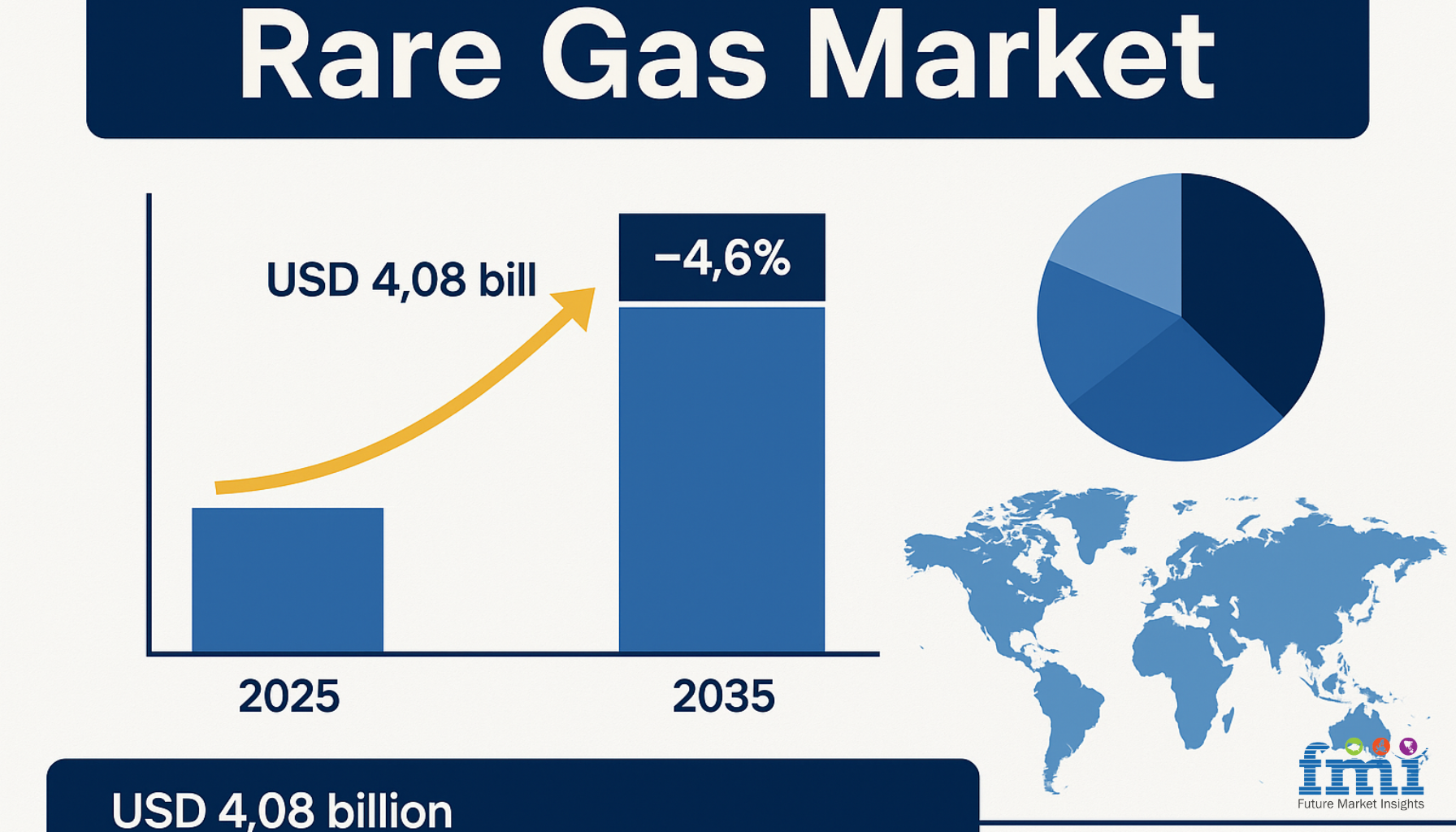
According to Future Market Insights, the global rare gas market is projected to reach USD 6.81 billion by 2035, growing at a CAGR of 4.6%, with the semiconductor segment accounting for an outsized share of revenue despite lower volume use. The primary drivers include rising chip complexity, tighter purity requirements, and the geopolitical shift toward localized supply chains.
China, in particular, is rapidly expanding its own rare gas production and purification capacity in an effort to achieve semiconductor self-sufficiency. Companies like Hangzhou Hangyang and Baosteel Gases are investing in air separation units and neon purification facilities to support domestic chip fabs.
𝐆𝐞𝐧𝐞𝐫𝐚𝐥 & 𝐀𝐝𝐯𝐚𝐧𝐜𝐞𝐝 𝐌𝐚𝐭𝐞𝐫𝐢𝐚𝐥𝐬 𝐈𝐧𝐝𝐮𝐬𝐭𝐫𝐲 𝐀𝐧𝐚𝐥𝐲𝐬𝐢𝐬: https://www.futuremarketinsights.com/industry-analysis/general-and-advanced-materials
Meanwhile, the United States' CHIPS and Science Act includes provisions to fund rare gas infrastructure as part of its broader reshoring strategy. This reflects a growing recognition that supply chain security for rare gases is a national strategic interest, akin to lithium or rare earth metals.
𝐑𝐚𝐫𝐞 𝐆𝐚𝐬𝐞𝐬 𝐚𝐬 𝐒𝐭𝐫𝐚𝐭𝐞𝐠𝐢𝐜 𝐈𝐧𝐩𝐮𝐭𝐬 𝐢𝐧 𝐭𝐡𝐞 𝐃𝐢𝐠𝐢𝐭𝐚𝐥 𝐀𝐠𝐞
Rare gases, once relegated to specialized uses in lighting or welding, have become critical enablers of cutting-edge technologies, from EUV lithography to satellite propulsion. Their role in maintaining the stability and performance of semiconductor and aerospace ecosystems is no longer optional—it is fundamental.
The neon crisis of 2022 served as a wake-up call, demonstrating that supply chain resilience for rare gases is as important as chip design or fabrication capacity. As the market matures, expect a continued shift from bulk gas sales to integrated supply models, complete with on-site recovery, local purification, and geopolitical risk mitigation.
𝐊𝐞𝐲 𝐒𝐞𝐠𝐦𝐞𝐧𝐭𝐬 𝐨𝐟 𝐌𝐚𝐫𝐤𝐞𝐭 𝐑𝐞𝐩𝐨𝐫𝐭
By Rare Gas Type:
The report consists of key types of rare gas including argon, krypton, neon, xenon, and helium.
By Supply Mode:
The market is classified into cylinders, bulk and micro bulk, drum tanks, and on site.
By End Use:
The market is classified into healthcare, manufacturing, electronics, laser, lighting, and others.
By Region:
The analysis of the rare gas market has been carried out in key countries North America, Latin America, Western Europe, Eastern Europe, South Asia and Pacific, East Asia, The Middle East and Africa.
𝐑𝐞𝐥𝐚𝐭𝐞𝐝 𝐑𝐞𝐩𝐨𝐫𝐭𝐬:
Recycled Carbon Fiber Market: https://www.futuremarketinsights.com/reports/recycled-carbon-fiber-market
Immersion Cooling Market: https://www.futuremarketinsights.com/reports/immersion-cooling-market
Asia Neopentyl Glycol (NPG) Market: https://www.futuremarketinsights.com/reports/asia-neopentyl-glycol-market
Acoustic Insulation Market: https://www.futuremarketinsights.com/reports/acoustic-insulation-market
Polymer Fillers Market: https://www.futuremarketinsights.com/reports/polymer-fillers-market
Visit Blog Site: https://sites.google.com/view/futurechemicalblog/
𝐀𝐛𝐨𝐮𝐭 𝐅𝐮𝐭𝐮𝐫𝐞 𝐌𝐚𝐫𝐤𝐞𝐭 𝐈𝐧𝐬𝐢𝐠𝐡𝐭𝐬 (𝐅𝐌𝐈)
Future Market Insights, Inc. (ESOMAR certified, recipient of the Stevie Award, and a member of the Greater New York Chamber of Commerce) offers profound insights into the driving factors that are boosting demand in the market. FMI stands as the leading global provider of market intelligence, advisory services, consulting, and events for the Packaging, Food and Beverage, Consumer Technology, Healthcare, Industrial, and Chemicals markets. With a vast team of over 400 analysts worldwide, FMI provides global, regional, and local expertise on diverse domains and industry trends across more than 110 countries.
Join us as we commemorate 10 years of delivering trusted market insights. Reflecting on a decade of achievements, we continue to lead with integrity, innovation, and expertise.
𝐂𝐨𝐧𝐭𝐚𝐜𝐭 𝐔𝐬:
Future Market Insights Inc.
Christiana Corporate, 200 Continental Drive,
Suite 401, Newark, Delaware - 19713, USA
T: +1-347-918-3531
For Sales Enquiries: sales@futuremarketinsights.com
Website: https://www.futuremarketinsights.com
LinkedIn| Twitter| Blogs | YouTube
Ankush Nikam
Future Market Insights Global & Consulting Pvt. Ltd.
+ +91 90966 84197
email us here
Visit us on social media:
Other
Legal Disclaimer:
EIN Presswire provides this news content "as is" without warranty of any kind. We do not accept any responsibility or liability for the accuracy, content, images, videos, licenses, completeness, legality, or reliability of the information contained in this article. If you have any complaints or copyright issues related to this article, kindly contact the author above.
