


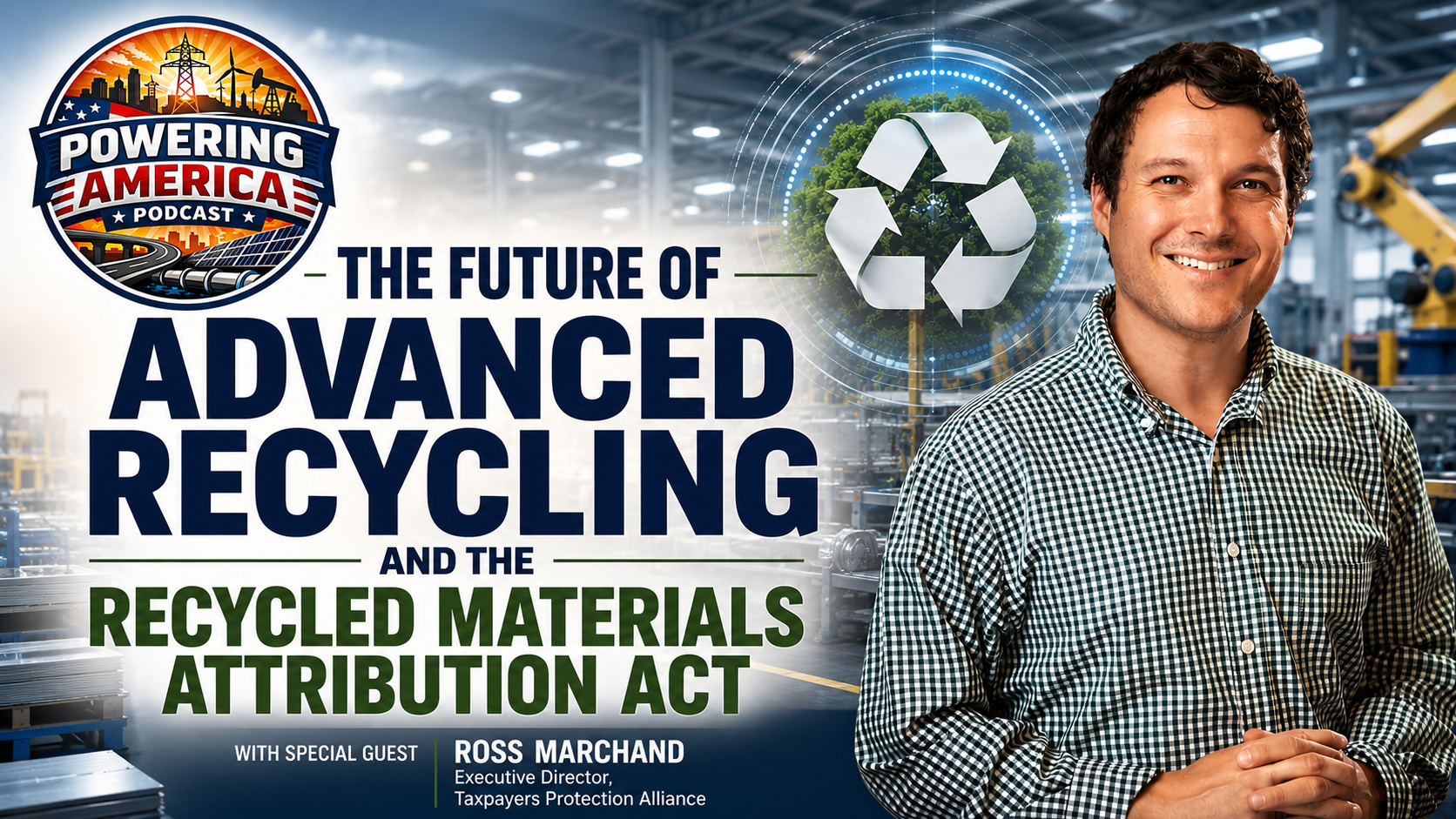
Ross Marchand, executive director, Taxpayers Protection Alliance
Marchand discusses advanced recycling innovation, economic opportunity and federal policy proposals affecting the recycling industry
Recycling depends on information that is accurate and timely provided to customers.”
WASHINGTON, DC, UNITED STATES, June 17, 2026 /EINPresswire.com/ -- Ross Marchand, executive director of the Taxpayers Protection Alliance, joined a recent episode of the Powering America Podcast to discuss advanced recycling technologies, barriers to increased recycling rates and the potential impact of the Recycled Materials Attribution Act.— Ross Marchand
During the conversation, Marchand argued that government regulations are limiting growth in the recycling sector and preventing the industry from reaching its economic potential.
“If the government just got out of the way and recycling rates were allowed to increase, it would actually create—in the case of plastics, for example—200,000 thousand new jobs and $50 billion in increased annual economic opportunity,” Marchand said. “So this is a huge missed opportunity. But unfortunately, there are so many redundant state-level labeling rules and federal regulations restricting these technologies.”
A major focus of the discussion was the Recycled Materials Attribution Act, federal legislation supporters say would provide greater consistency in how recycled content is measured and communicated to consumers.
Marchand said recycling markets depend on accurate information about recycled content and criticized efforts in California that he believes could make it more difficult for companies to communicate that information.
“Recycling depends on information that is accurate and timely provided to customers,” Marchand said. “If you can’t convey to customers this is a recycled product, and if so, what percentage of this product is recycled, then you destroy the entire recycling industry.”
Marchand argued that proposed California requirements would create burdensome compliance obligations for manufacturers seeking to market recycled-content products.
“Each and every product, as a result of this proposal, is going to have to have these really granular and really time-intensive and onerous traceability requirements,” Marchand said. “It basically creates an unworkable mandate.”
He said the Recycled Materials Attribution Act would help establish a national framework and prevent individual states from imposing requirements that affect businesses across the country.
“What we see with federal proposals, this Recycled Materials Attribution Act, is that would change all that,” Marchand said. “It would say to states like California, you can’t dictate these heavy-handed requirements to the rest of the country.”
The episode also explored the role advanced recycling technologies could play in expanding domestic manufacturing, increasing recycling rates and creating new economic opportunities.
The full episode is available on The Powering America Podcast.
About The Powering America Podcast: The Powering America Podcast features conversations with policymakers, industry leaders, researchers and advocates on issues affecting American energy, manufacturing, infrastructure and economic development.
Curt D Mercadante
Atlas Point Media
email us here
Legal Disclaimer:
EIN Presswire provides this news content "as is" without warranty of any kind. We do not accept any responsibility or liability for the accuracy, content, images, videos, licenses, completeness, legality, or reliability of the information contained in this article. If you have any complaints or copyright issues related to this article, kindly contact the author above.
