
.jpeg)

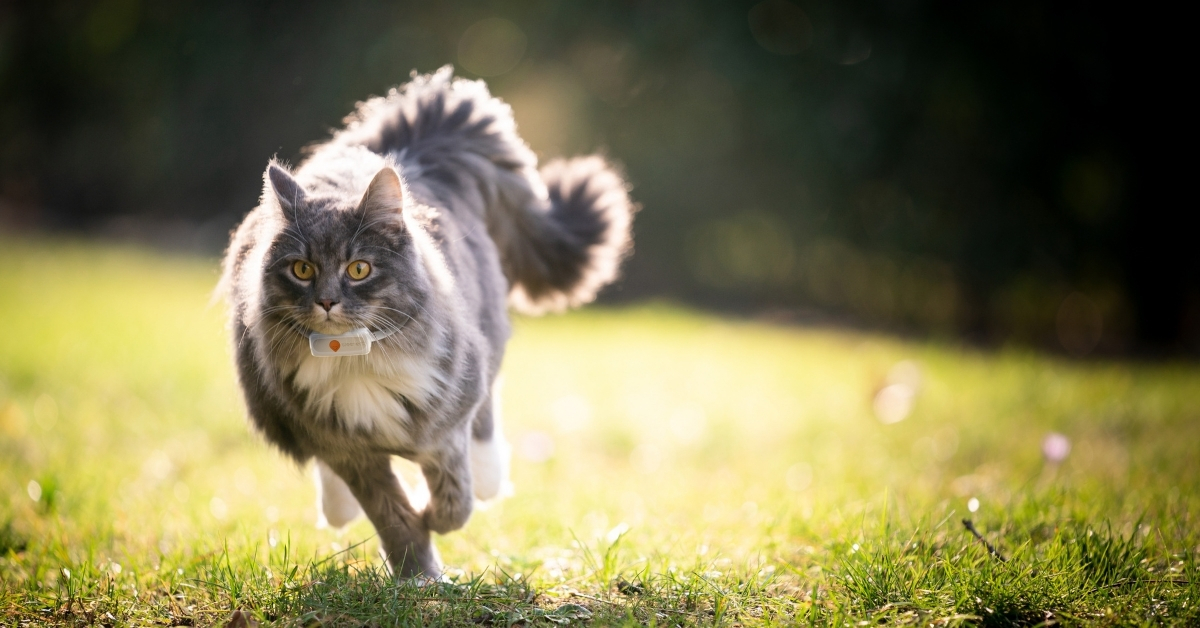
Weenect’s largest GPS Cat Territory Study reveals how cats explore the outdoors.
GPS data from around 1,000 cats across ten countries reveals a hidden cat world — from quiet corners close to home to neighbourhoods that never sleep.
PARIS, PARIS, FRANCE, August 25, 2026 /EINPresswire.com/ -- Cats are mysterious creatures – but where do they go when they are outside, and what determines how far they roam? To find out, Weenect analysed anonymised GPS data from around 1,000 cats* across ten countries. Around 100 randomly selected cats per country (DE, AT, CH, FR, IT, ES, GB, NL, BE and US) were tracked continuously over four weeks. The study captured more than 24,000 daily records, creating one of the most detailed snapshots yet of how outdoor cats live. The findings challenge the assumption that neutering is the main factor influencing how far cats roam. Instead, sex and – especially – where a cat lives and who it lives with play a much greater role in shaping territory size, daily activity and night-time behaviour.
Sex Matters More Than Neutering
Non-neutered males cover only around 10% more ground by median than neutered males – a much smaller difference than the “intact male” reputation suggests. The difference between male and female cats is far stronger: neutered males still cover around 59% more ground than neutered females and go out nearly twice as often.
For female cats, though, the picture is far less clear: only 16 non-neutered females were tracked long enough across the whole study to be included in the analysis – too few to draw a reliable conclusion. This small number also reflects a wider recommendation: many animal welfare organisations, and some municipalities, advise – or even require – that female cats only be allowed outdoors once neutered, given the far higher risk of an unplanned litter.
Different Paths, Same Home Base
Male and female cats follow different roaming styles, but both remain strongly connected to home. A typical female cat uses a territory of around 10,700 m² – about one and a half football pitches. A typical male covers roughly 20,000 m², nearly twice as much. He also goes out more often – around twice a day compared with 1.2 times for females – and is more likely to be active at night.
Where Cats Live Shapes Their Nights
Night-time behaviour varies strongly across countries. UK cats rank in the lower half: at 67%, they had the third-lowest rate of night-time activity, just above Italy (64%) and Austria (63%). By contrast, every cat tracked in the US was recorded outside at least once during the night.
These differences are unlikely to be explained by instinct alone. They also reflect cats’ environments and the degree of night-time freedom owners provide.
Almost half of the UK cats tracked lived in urban areas. Urban cats tended to roam less, with territories around 30–40% smaller than those of suburban and rural cats, likely because of higher cat density and more limited space. Where cats live therefore shapes not only how far they roam, but also when they explore.
British Cats Stay Close to Home
With a median territory of 10,851 m², UK cats had the second-smallest territories in the study, only marginally larger than those in Italy (10,754 m²). They travelled a median of 749 metres and made 1.23 outings per day, placing them among the less mobile populations studied. Their behaviour was closer to that of cats in Spain and France than to the more wide-ranging cats observed in Switzerland and Germany.
Overall, UK cats displayed the most home-centred roaming pattern, combining small territories with the second-highest proportion of time spent at home, relatively few daily outings and low night-time activity.
What This Means for Pet Owners
A cat with a larger territory than expected, or one that is more active at night than its owner realises, demonstrates how much outdoor behaviour can remain unseen. GPS tracking makes these patterns visible – not to restrict a cat’s freedom, but to turn an otherwise invisible routine into greater peace of mind.
The full study, including all ten country profiles and further findings, is available at www.weenect.com/uk/en/lab/cat-territory-analysis/.
*952 datasets from cats already wearing a Weenect GPS tracker were used in the final analysis after faulty or unusable data – such as tracking data distorted by car journeys – was discarded.
Anna-Maria Gerhart
Weenect
press@weenect.com
Visit us on social media:
LinkedIn
Instagram
Facebook
YouTube
Legal Disclaimer:
EIN Presswire provides this news content "as is" without warranty of any kind. We do not accept any responsibility or liability for the accuracy, content, images, videos, licenses, completeness, legality, or reliability of the information contained in this article. If you have any complaints or copyright issues related to this article, kindly contact the author above.
