


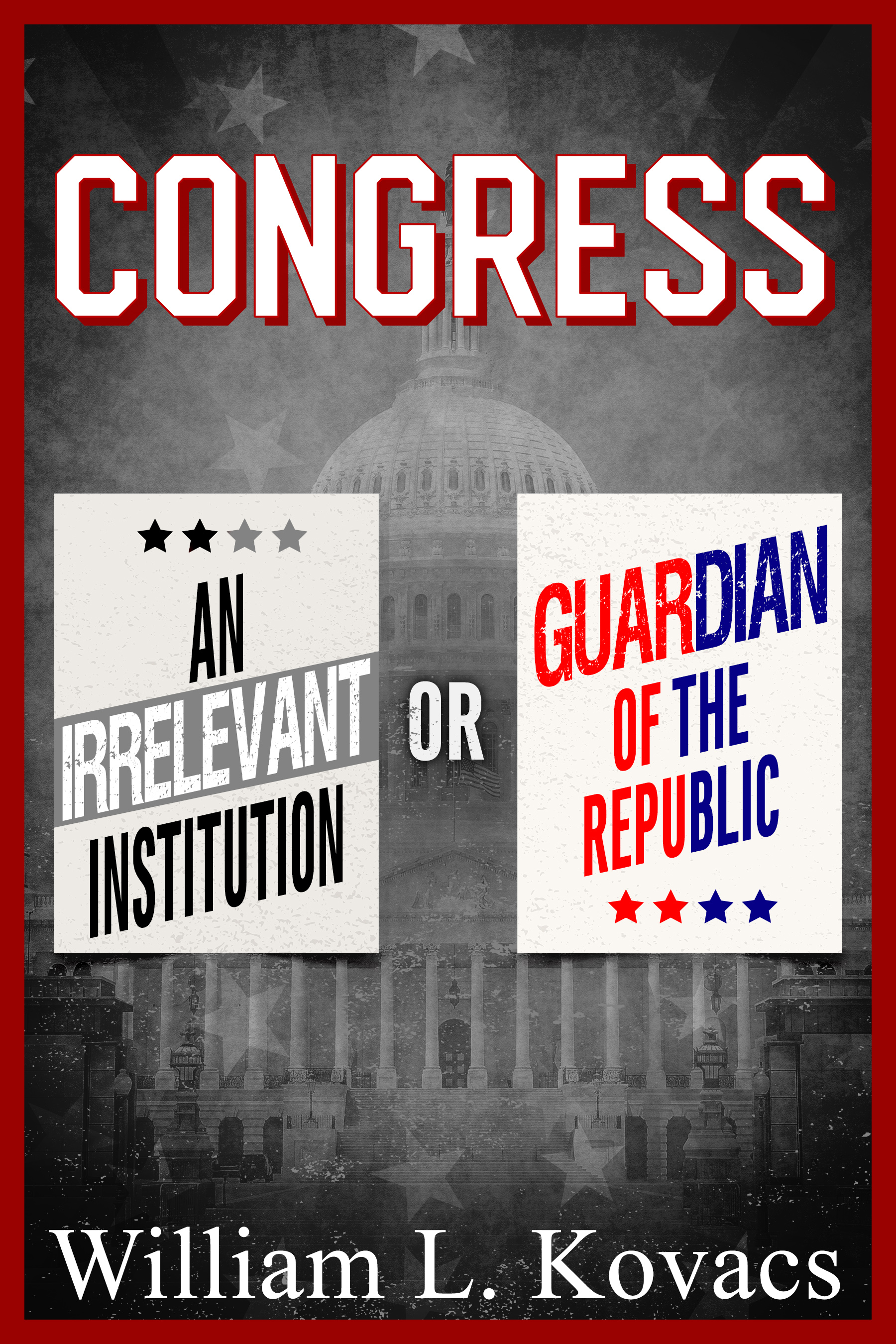
Congress searches for its soul.
The decline of Congress is not an abstract political concern. It is a breakdown of the Constitution’s separation of powers structure that protects liberty.
The erosion of congressional authority is the silent collapse of the Republic. When lawmaking migrates from Congress to the President, liberty is only protected by whoever holds executive power.”
GREAT FALLS, VA, UNITED STATES, March 16, 2026 /EINPresswire.com/ -- New Book Examines Congress’s Role in Preserving the Separation of Powers— William L. Kovacs
The book argues that Congress's decline threatens the Constitution’s separation of powers, which is designed to protect liberty, and is not merely an abstract political concern.
In Congress: An Irrelevant Institution or Guardian of the Republic, award-winning author William L. Kovacs issues a powerful warning: Congress’s decline is much more than modern-day political maneuvering. It signals the unraveling of the separation of powers and quietly opens the door to authoritarian rule.
The book traces how, for more than half a century, presidents from both parties have steadily accumulated power while Congress quietly ceded its authority. Executive orders, emergency declarations, administrative mandates, and now the transition from a regulatory state to State Capitalism are replacing the Constitution’s lawmaking structure, which delegates all legislative authority to Congress. The book contends that it is not merely a political act when Congress fails to protect its constitutional powers from encroachment by the other branches, it is a breach of its fiduciary duty.
Since Congress is the only branch directly chosen by the people, the book argues, it is the only branch citizens can hold directly accountable for steering the country in a different direction. This point is essential to the book's premise that Congress is the only branch of government empowered to make lasting laws. As such, when Congress defends its constitutional powers, it is the Guardian of the Republic.
Kovacs notes, “That the erosion of congressional authority is the silent collapse of the Republic. When lawmaking migrates from Congress to the Executive branch, liberty is no longer protected by law, but by whoever happens to hold executive power.”
Congress: An Irrelevant Institution or Guardian of the Republic concludes Kovacs’ trilogy on reforming the federal government. His trilogy includes:
Reform the Kakistocracy describes how the federal government transformed itself from one of limited powers into an immense central authority—without a single constitutional amendment. It is the recipient of the 2021 Independent Press Award for Social/Political Change.
Devolution of Power lays out a bold vision to return many domestic powers from the federal government back to the states, thereby allowing the federal government to focus on truly national and international issues, the national debt, and the defense of the nation.
Congress: An Irrelevant Institution or Guardian of the Republic, contends that only Congress—through its lawmaking, oversight, and power of the purse—can restore accountable government by checking executive and judicial overreach.
With decades in Washington—as chief counsel on Capitol Hill, senior vice president at the U.S. Chamber of Commerce, chairman of a state environmental board, and partner at top D.C. law firms—William L. Kovacs writes from experience, not theory. He has seen constitutional limits bypassed, Congress abdicate its power, and executive authority grow unchecked. Kovacs has testified before Congress forty times, helped shape hundreds of federal rules, and received the 2019 Albert Nelson Marquis Lifetime Achievement Award.
William L Kovacs
William L. Kovacs
wlk@ReformTheKakistocracy.com
Visit us on social media:
LinkedIn
Facebook
X
Legal Disclaimer:
EIN Presswire provides this news content "as is" without warranty of any kind. We do not accept any responsibility or liability for the accuracy, content, images, videos, licenses, completeness, legality, or reliability of the information contained in this article. If you have any complaints or copyright issues related to this article, kindly contact the author above.
