


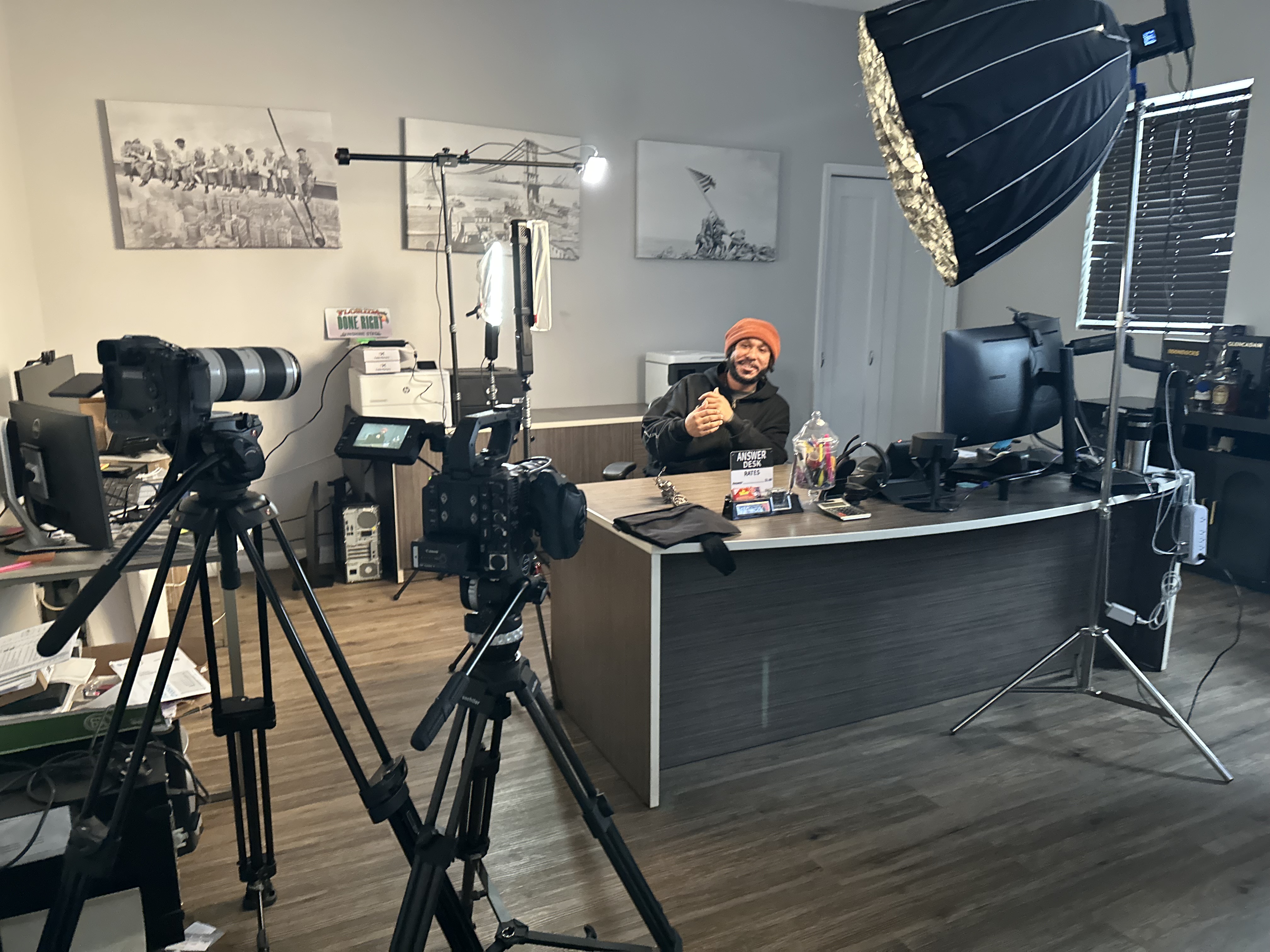
COCO the founder of kommerce discussing his design phlosophy
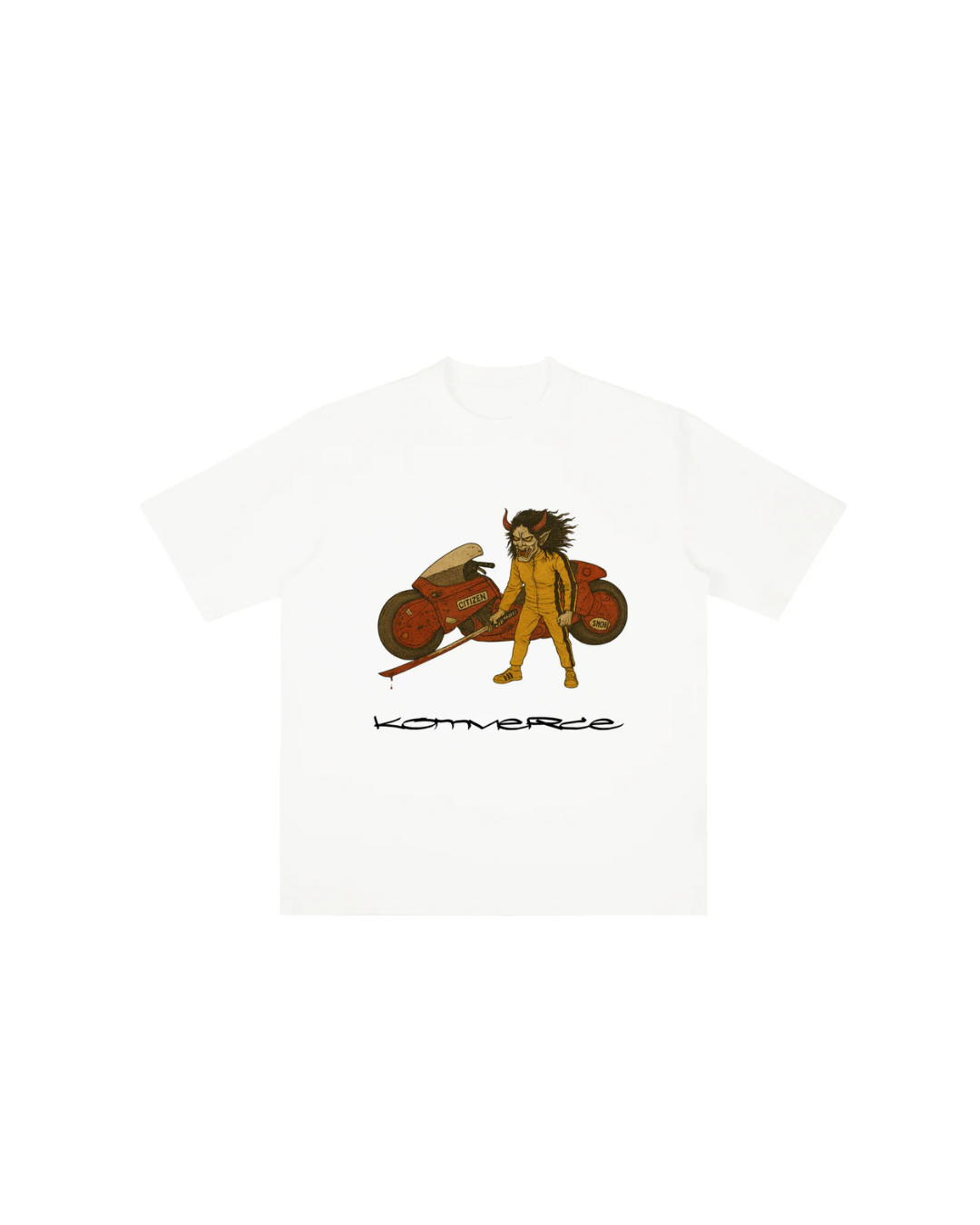
White Kommerce Tshirt with a yokai motorcycle rider wearing a yellow jumpsuit
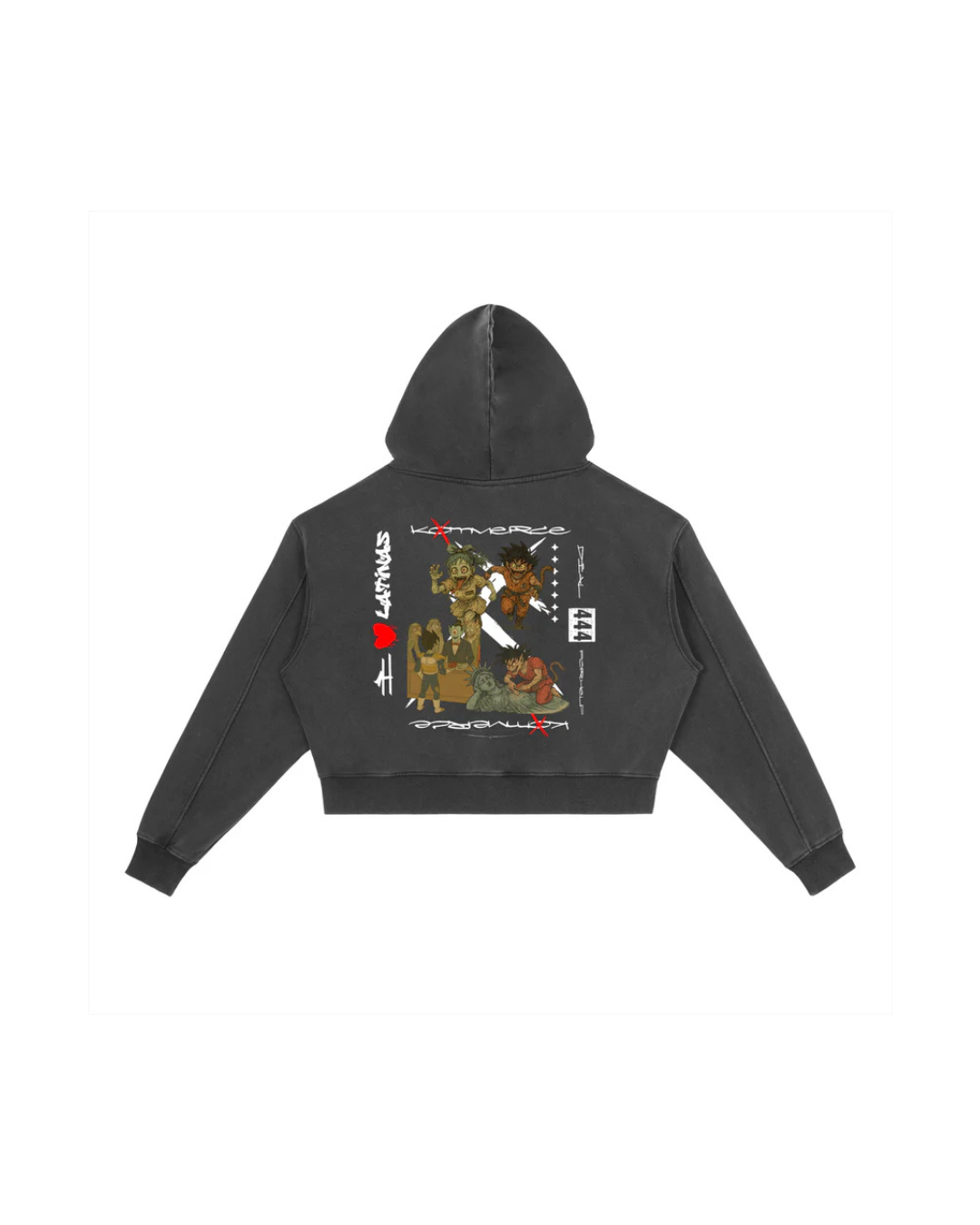
Kommerce original heavyweight hoodie made in NYC
Kommerce NYC draws from Japanese street fashion, tracing how PPFM’s silhouettes and club-era sensibility continue to influence contemporary design language.
NEW YORK CITY, NY, UNITED STATES, March 12, 2026 /EINPresswire.com/ -- As fashion continues its extended reappraisal of late-1990s and early-2000s style, a parallel conversation has emerged around the Japanese labels that helped shape that period’s visual identity. Among them is PPFM, a brand that occupied a distinctive place in Japan’s fashion landscape by evolving from Western-influenced menswear into a louder, youth-oriented label and, by the early 2000s, embracing a distinctly Japanese street-casual identity with British punk and rock influences. For Kommerce, a New York City streetwear label with a Japanese-inspired design sensibility, that history has become a point of reference in how the brand interprets the relationship between nightlife, subculture, and clothing.Kommerce’s latest brand positioning does not frame that reference as a revival for revival’s sake. Instead, it treats PPFM as part of a longer design lineage that connected Japanese youth fashion to club culture, music scenes, and the broader idea that garments could serve as signals of belonging before they were treated as content for algorithms or product categories for marketplace feeds. In that reading, ravewear is not merely a nostalgic costume of metallic fabrics, oversized shapes, or synthetic textures. It is a record of a moment when fashion became inseparable from after-hours culture and from the social codes that emerged inside it. That broader approach mirrors how Japanese street fashion developed in places like Ura-Harajuku, where by the 1990s fashion had become, in the words of one historical overview, a scene defined by creativity and rebellion rather than a simple retail trend.
The context matters. Japanese streetwear did not form in isolation, nor did it become globally influential by accident. Fashion histories of Ura-Harajuku consistently point to figures such as Hiroshi Fujiwara, Nigo, and Jun Takahashi as key builders of a creative ecosystem in which imported influences from American hip-hop, punk, and skate culture were translated into something distinctly local. One account describes Nigo and Jun Takahashi opening the NOWHERE store in Ura-Harajuku in 1993, helping introduce a fusion of Japanese minimalism and American hip-hop aesthetics that would become central to the area’s rise. Official BAPE materials similarly note that the brand was established in 1993 and became a symbol of street fashion over the following three decades. Kommerce’s reading of PPFM sits inside that larger historical frame: not as a lone anomaly, but as part of Japan’s broader experimentation with what streetwear could look like once youth culture, music, and scarcity-driven fashion collided.
Where Kommerce diverges from simple nostalgia is in the way it describes PPFM’s importance. Rather than focusing only on collectible archive value, the brand points to the label’s silhouettes and cultural timing. PPFM is remembered in the archival resale and collector market as a Japanese brand founded in 1985 that transformed over time from understated, Western-inspired business casual into a youth-facing street label and then, around the early 2000s, into a more clearly defined Japanese street-casual brand with punk and rock inflections. Archive commentary also frames PPFM as part of Japan’s Y2K and club-fashion memory, associating it with unusual cuts, synthetic materials, experimental graphics, and the transition from clubwear to later techwear-coded fashion. Those details matter to Kommerce because they suggest that PPFM’s legacy is less about one logo or one hero piece and more about a design attitude: restless, hybrid, slightly abrasive, and willing to let nightlife leak into everyday dress.
“PPFM always felt bigger than product,” said Coco, founder of Kommerce. “What stood out was the permission it gave a generation to dress like the night mattered. The clothes carried club energy into the daytime without apologizing for it. That legacy is part of what shaped how Kommerce thinks about silhouette, texture, and attitude.”
That perspective reflects a broader truth about turn-of-the-century youth fashion in Japan. Rave and club culture were never solely about music venues; they were also about an entire ecosystem of gestures, styling choices, and social codes. The early-1990s Juliana’s Tokyo phenomenon, for example, became a national symbol of clubwear and dance-floor excess, with contemporary reporting describing rave music, performance platforms, and revealing, body-conscious clothes as central to the nightlife spectacle. Even though PPFM occupied a different stylistic register from the bodycon-driven Juliana’s image, both belonged to a broader period in which Tokyo nightlife influenced how young people imagined clothing as motion, spectacle, and self-invention. Kommerce’s positioning uses that context to argue that ravewear was never just about shine or nostalgia; it was about freedom through construction.
In practical terms, that argument shows up in the way Kommerce describes its own design language. The brand’s garments are not presented as reproductions of early-2000s Japanese pieces. They are described instead as responses to an era when designers and labels treated synthetic fabrics, layered proportions, industrial details, and graphic treatment as ways of registering mood. That framework places Kommerce closer to cultural commentary than reenactment. A hoodie, under this logic, becomes less an everyday staple than a canvas for memory: part street uniform, part club artifact, part visual shorthand for a period when youth fashion was more willing to look unstable, loud, or speculative.
That sensibility is also why Kommerce’s interest in PPFM intersects with New York rather than merely borrowing from Tokyo at a distance. New York has long functioned as one of the cultural points through which Japanese streetwear filtered Western influence and then sent it back transformed. Ura-Harajuku histories describe the 1990s movement there as a fusion of punk, hip-hop, and skate culture, and one account specifically ties Nigo’s NOWHERE project to the integration of Japanese minimalism with American hip-hop aesthetics. Kommerce, being based in New York City, positions itself within that transpacific exchange rather than outside it. Its premise is that the line between Tokyo underground style and New York street identity has always been more porous than the fashion industry sometimes admits.
“New York and Tokyo have been talking to each other through clothes for decades,” Coco said. “Sometimes it looks like influence, sometimes it looks like translation, and sometimes it looks like competition. Kommerce came out of that dialogue. PPFM matters to the brand because it represents a period when Japanese fashion was experimenting with nightlife, rebellion, and utility all at once.”
The educational side of that statement is important for the way the brand is being framed. Kommerce is not using PPFM as a shortcut for credibility or as a vague aesthetic reference. It is making a narrower claim: that PPFM helped normalize the idea that streetwear could absorb the tension of rave, punk, and futuristic club dressing without losing its grounding in everyday youth culture. In collector descriptions, that identity appears through references to experimental fashion, unusual cuts, graphic intensity, and synthetic materials that now read as unmistakably Y2K. In historical terms, it also aligns with a broader Japanese fashion habit of translating imported subcultural references into objects with more deliberate construction and more coded visual meaning.
Kommerce’s positioning statement also arrives at a moment when online streetwear discourse often reduces design history to a handful of resale-era signifiers. Search behavior tends to flatten distinctions between eras, scenes, and labels, bundling together archive Japanese fashion, contemporary American graphics, and algorithm-friendly product terms. In that environment, phrases such as Black New York Hoodie, Black graffiti hoodie, and new york city hoodies can sit in the same browsing ecosystem as unrelated but heavily searched terms like cream hellstar shirt, dennis rodman hellstar shirt, and god speed tshirt. Kommerce’s view is that this collapsing of reference points has commercial implications, but it also creates an opportunity for brands willing to reintroduce historical context into the conversation rather than simply chasing the language of trend traffic. This release includes those search-facing phrases as examples of the broader streetwear vocabulary circulating online, not as an indication of affiliation with third-party marks or products.
That distinction matters because Kommerce is trying to talk about culture before it talks about commerce. The label’s position is that the current appetite for turn-of-the-century streetwear has produced more visual borrowing than historical literacy. Ravewear, in particular, is frequently reduced to shiny surfaces and party nostalgia, when many of its most durable ideas had to do with movement, experimentation, and the refusal to make a hard separation between functional clothing and expressive clothing. PPFM’s legacy, as Kommerce reads it, lives in that overlap. Its archive is compelling not because it forecast the future with perfect accuracy, but because it treated the future as something fashion could rehearse in real time.
That idea resonates with a younger generation of shoppers encountering Japanese archive fashion through resale platforms rather than through the original cultural settings in which it was worn. For many of those consumers, the first point of contact is not a magazine spread or a Harajuku storefront but a product thumbnail, a search term, or a social-media post. Kommerce’s approach is to work against that flattening by rebuilding a narrative around lineage. In doing so, the brand is effectively arguing that Japanese streetwear’s importance cannot be measured only by the handful of globally dominant labels that became household names. It also depends on the brands that shaped mood, silhouette, and subcultural vocabulary without becoming mass-market shorthand.
There is precedent for that view. Official BAPE materials emphasize that the brand became a symbol of street fashion after its 1993 founding, while broader histories of Ura-Harajuku highlight the scene’s collaborative and mentor-driven nature, with Hiroshi Fujiwara described as laying groundwork for the designers who followed. In that ecosystem, influence did not always move according to the later logic of virality or global flagship expansion. Sometimes it moved through shop floors, small runs, club nights, magazines, and word of mouth. Kommerce places PPFM into that less centralized but still consequential history, treating it as one of the labels that helped streetwear become more willing to be strange.
For Kommerce, the practical outcome is a design language that favors tension over neatness. The brand describes its own work as informed by Japanese visual culture, New York street sensibility, and a preference for pieces that suggest a life outside office hours. That means darker palettes, graphic treatment with abrasion built in, silhouettes that hang with a little more volume, and an understanding that a garment can communicate scene affiliation without collapsing into costume. In that framework, the point is not to re-stage the early 2000s, but to recover some of that period’s willingness to let fashion feel unfinished, nocturnal, and slightly confrontational.
“Streetwear got too comfortable being legible,” Coco said. “What Kommerce takes from PPFM is the reminder that clothes can still carry friction. They can still feel like they came from a place, from a night, from a subculture, from an argument. That’s the part of the legacy that still feels alive.”
As a brand positioning statement, Kommerce’s release functions less as a launch announcement than as a marker of intent. It identifies PPFM as a cultural reference point, places that influence within the established history of Japanese street fashion, and uses the renewed interest in late-1990s and early-2000s style to argue for a deeper reading of ravewear’s afterlife. In doing so, the brand is not claiming to revive a scene in pure form. It is acknowledging that scenes do not return intact. What returns are fragments: silhouettes, attitudes, textures, and unfinished ideas. Kommerce’s contention is that PPFM left behind precisely that kind of fragmentary but durable inheritance.
At a time when much of fashion communication is optimized for immediate recognition, that may be the most notable part of the statement. Kommerce is less interested in announcing a trend than in identifying a missing bridge between Japanese archive fashion and the present-day streetwear market. The brand’s position is that PPFM helped define one of the pathways through which clubwear, punk influence, synthetic fabrication, and youth-oriented experimentation entered the broader streetwear vocabulary. Whether viewed through archive resale, design history, or contemporary product development, that legacy remains visible.
COCO
Kommerce
+1 3474454880
info@kommersary.com
Visit us on social media:
LinkedIn
Instagram
TikTok
Legal Disclaimer:
EIN Presswire provides this news content "as is" without warranty of any kind. We do not accept any responsibility or liability for the accuracy, content, images, videos, licenses, completeness, legality, or reliability of the information contained in this article. If you have any complaints or copyright issues related to this article, kindly contact the author above.
