


Industry Movement Toward Automated Terminals
Across refineries, LNG receiving stations, tank farms, and petrochemical terminals, operators are under increasing pressure to improve operational safety, reduce labor dependence, and enhance throughput efficiency. Traditional loading arms often require manual positioning, monitoring, and response during loading operations. These processes can expose personnel to hazardous environments and may introduce operational inconsistencies.
As a result, many energy terminals are exploring unmanned or minimally staffed operational models supported by automated equipment and digital control systems. In parallel, safety and environmental regulations in several regions are encouraging the adoption of equipment that can support remote operation and automated safety responses.
Within this context, intelligent loading arms are becoming part of the infrastructure used to support digitalized terminal management systems. Such equipment can enable remote supervision, operational data monitoring, and integration with broader terminal automation platforms.
Automatic Positioning and Alignment
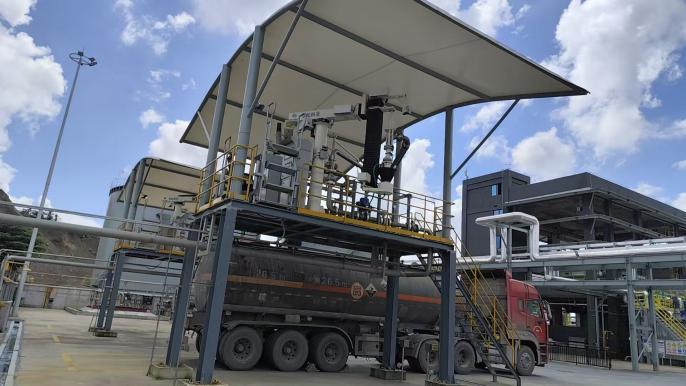
One operational challenge in automated loading has been the accurate alignment between loading arms and receiving equipment such as tank trucks, railcars, or marine vessels. Intelligent loading arm systems incorporate sensors and motion control technologies designed to assist in positioning and alignment.
These systems may include functions such as position detection, motion control, collision avoidance, and remote override capability. Automated alignment reduces the need for personnel to operate equipment in close proximity to loading areas and can contribute to more consistent connection procedures.
Quantitative Loading Control
Automated loading systems are often integrated with quantitative control technologies that regulate loading volumes and flow parameters. These systems typically work with flow meters, control valves, and terminal management software to enable preset loading quantities and automated shutoff functions.
Such integration can support repeatable loading cycles and provide operational data that can be recorded and reviewed through terminal control platforms.
Safety Interlock Systems
Because liquid transfer operations involve flammable or hazardous materials, automated loading equipment is typically designed with multiple safety interlock mechanisms. These may include emergency shutdown (ESD) connectivity, overfill protection, grounding monitoring, and pressure or temperature alarms.
In marine terminal environments, loading systems may also be connected to berth safety equipment such as quick release mooring hooks or gangways to support coordinated emergency response procedures.
Remote Monitoring and System Connectivity
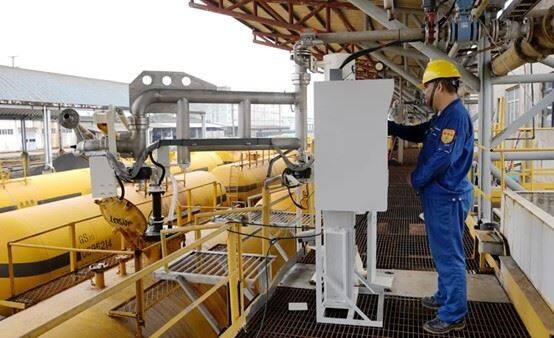
Digital monitoring plays an important role in unmanned or low-staff terminals. Intelligent loading arm systems can be integrated with distributed control systems (DCS), programmable logic controllers (PLC), and terminal management platforms.
Through these connections, operators may monitor equipment status, receive fault notifications, and access operational records from centralized control rooms. Data logging and diagnostic functions can also support maintenance planning and operational analysis.
Motion Control and Operational Stability
Automated loading systems typically incorporate hydraulic, pneumatic, or electric drive mechanisms designed to support controlled movement of the loading arm. These systems help maintain stable motion during positioning and loading operations, which can reduce mechanical stress and contribute to consistent equipment performance.
Stable motion control is particularly important in facilities that operate continuously or handle frequent loading cycles.
Applications Across Energy Infrastructure
Intelligent loading arm systems are used in various types of energy infrastructure, including oil refineries, petrochemical complexes, LNG receiving terminals, storage tank farms, chemical industrial zones, and marine loading jetties.
Different configurations are available depending on the type of fluid handled and the operational environment. These may include tanker loading arms, gantry-mounted systems, cryogenic LNG arms, and automated alignment models.
Project Experience in Energy Handling Systems
Since its establishment in 2009, Lianyungang Hechang Machinery Co., Ltd. has participated in numerous projects related to liquid loading and transfer systems in the energy sector. The company reports that its equipment has been used by a large number of domestic and international customers across various industrial applications.
Experience from projects in coastal terminals, storage facilities, and chemical handling sites has contributed to the development of equipment designed for complex operating environments.
Service Support Across Project Phases
In addition to equipment manufacturing, companies involved in loading infrastructure often provide services that support different stages of project implementation. These may include technical consultation, engineering design, manufacturing, equipment testing, installation guidance, commissioning assistance, and maintenance support.
Such services are commonly required for large industrial facilities where system integration and long-term operation are important considerations.
Automation and the Future of Energy Terminals
Automation technologies are gradually becoming part of modern energy logistics systems. Equipment capable of remote operation, automated control, and system integration is increasingly being adopted as terminals expand capacity and seek to improve safety performance.
Developments in sensing technologies, digital monitoring, and system connectivity are expected to continue influencing the design of loading infrastructure in the coming years.
About Lianyungang Hechang Machinery Co., Ltd.
Founded in 2009, Lianyungang Hechang Machinery Co., Ltd. focuses on equipment and system solutions related to loading, unloading, storage, and transportation processes for the oil, chemical, gas, and energy sectors. Its product range includes marine loading arms, tanker loading arms, automated loading systems, quantitative loading control systems, quick release mooring hooks, gangways, hose handling systems, steel trestles, and floating pontoons.
For more information, visit:
https://www.chinaloadingarm.com/
Lianyungang Hechang Machinery Co.,Ltd
Lianyungang Hechang Machinery Co.,Ltd
+86 152 6139 2066
lyg_loadingarm@lyghechang.com
Legal Disclaimer:
EIN Presswire provides this news content "as is" without warranty of any kind. We do not accept any responsibility or liability for the accuracy, content, images, videos, licenses, completeness, legality, or reliability of the information contained in this article. If you have any complaints or copyright issues related to this article, kindly contact the author above.
