
.jpeg)


Structural Rigidity and Mechanical Isolation Eliminate Systemic Noise
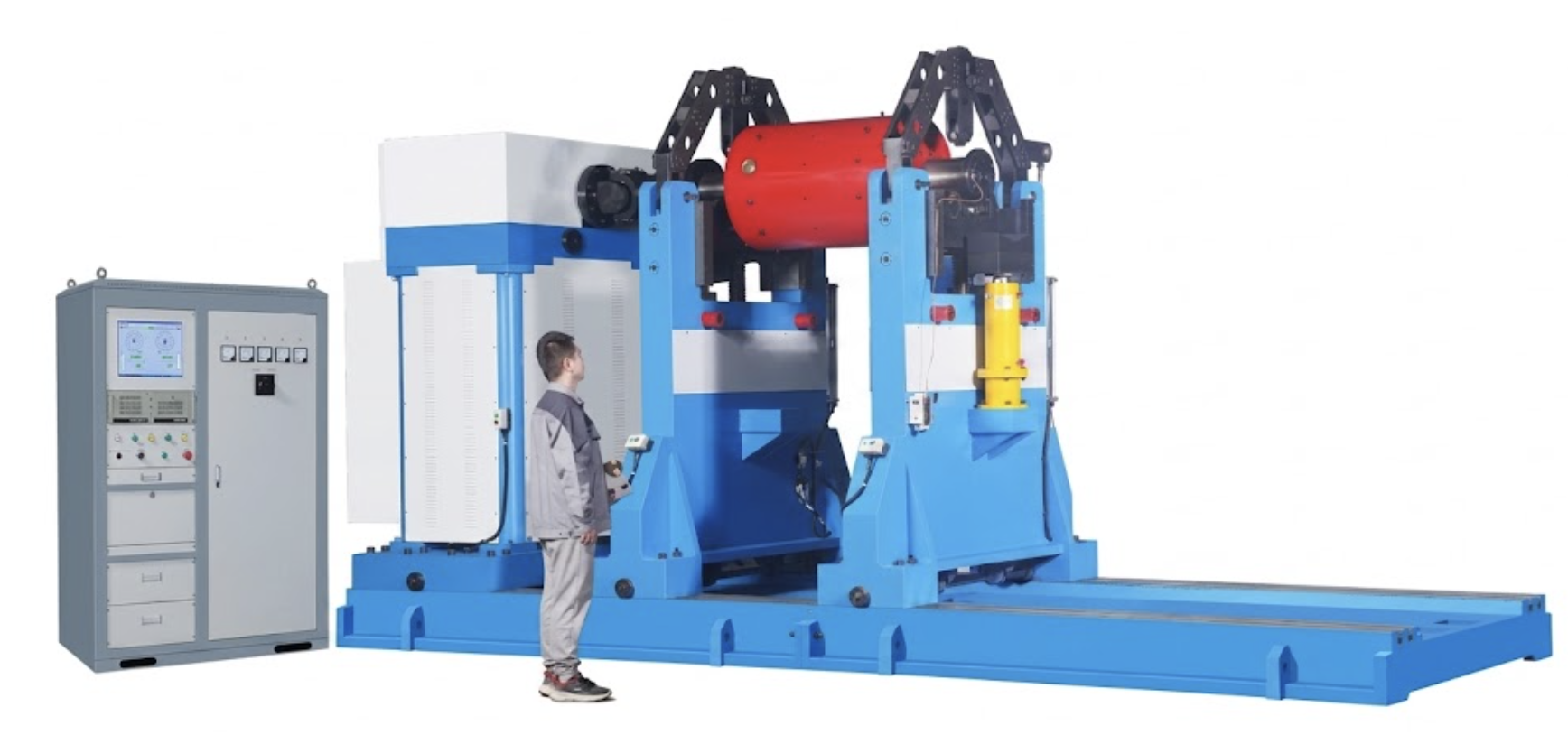
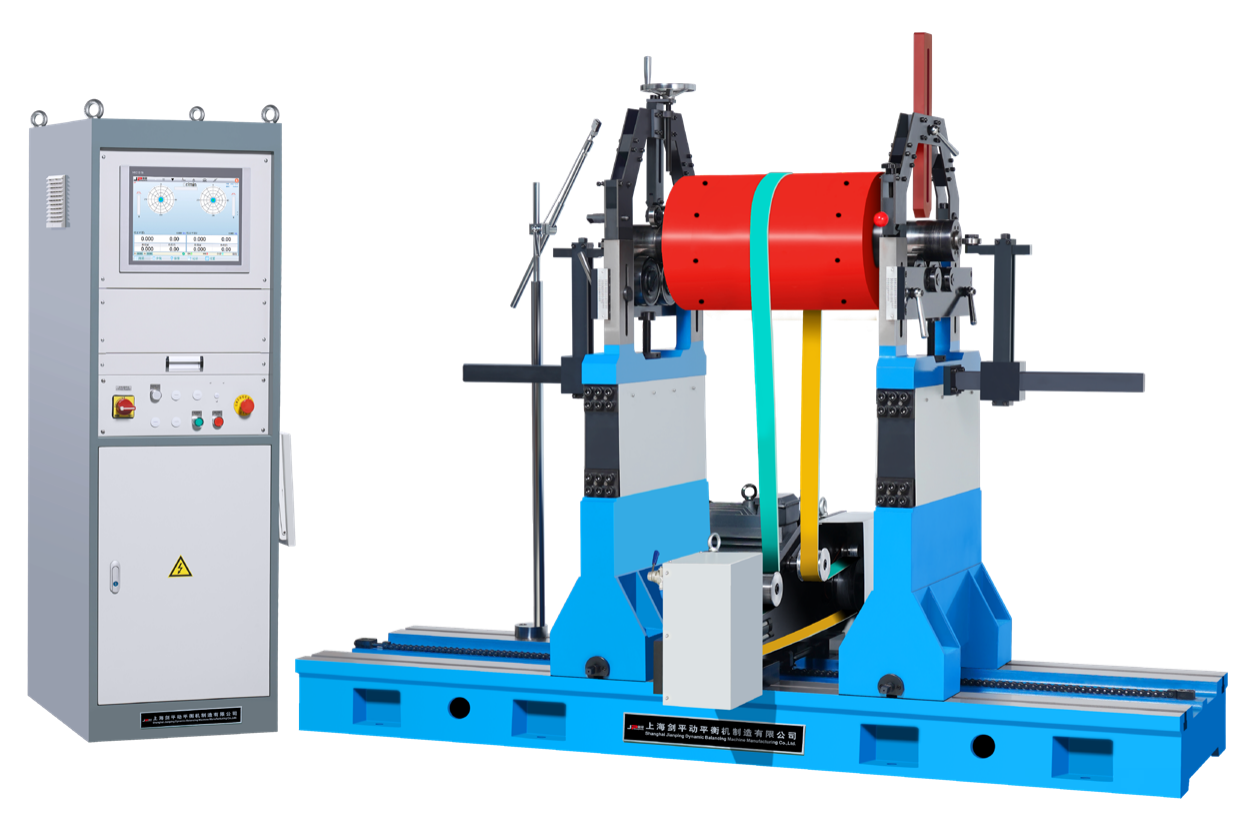
To eliminate external interference from measurement data, balancing hardware must maintain absolute mechanical stability during high-speed testing cycles. A well-designed pendulum frame serves as the primary structural foundation for this required stability across diverse testing environments. This specific component features solid structural integrity, exceptionally high rigidity, and minimal vibration damping during active rotation. These physical properties allow the frame to transmit mechanical forces cleanly without absorbing or distorting the actual kinetic signals of the rotor. Therefore, the physical architecture shields the testing environment from background factory floor tremors and parasitic mechanical noise. Furthermore, a high-sensitivity sensor works in close harmony with the heavy pendulum frame to process subtle centrifugal signals. This sensor displays excellent linearity, which allows it to preserve structural data integrity across highly volatile operational frequency spectrums. Because the component maintains linear signal tracking, it prevents data distortion even when measuring micro-unbalance forces in heavy industrial equipment. This specialized hardware arrangement guarantees that the instrumentation records only true physical unbalance rather than environmental anomalies. Additionally, manufacturing facilities select different drive mechanisms depending on the specific geometry of their rotating workpieces to optimize throughput. For example, the belt-driven balancer series utilizes high-strength flat-belt driving configurations to spin symmetrical rotors. This configuration effectively eliminates the dynamic assembly errors and residual unbalance that universal joint couplings often introduce. By relying on direct belt-to-rotor contact, the machine maximizes operational efficiency and provides stable power transmission during high-throughput balancing runs. This balanced combination of stiff structural supports and linear transducers establishes a precise baseline for subsequent digital analysis.
Advanced Software Algorithms and Multi-Tier Measurement Compensation
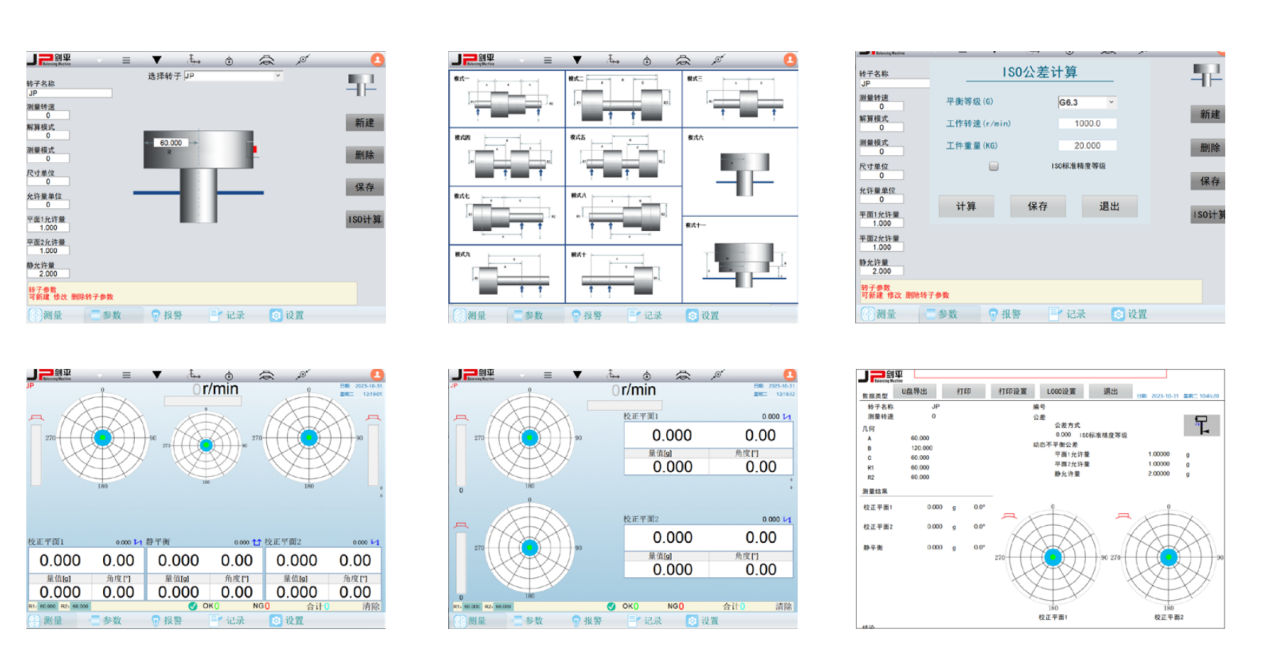
While rigid hardware isolates the machine from physical noise, advanced software processing translates raw electrical signals into actionable calibration data. Modern production floors must move beyond basic structural inspection and adopt advanced digital signal processing frameworks to achieve true calibration precision. For this reason, high-throughput automated industrial environments rely on specialized factory-configured measuring units manufactured by JP (Shanghai Jianping Dynamic Balancing Machine Manufacturing Co., Ltd ). These digital architectures include the JP-580B/580L/580LL series and the JP-800/800B/800L/800LL touch screen measuring units. These computing platforms utilize a robust four-tier mathematical compensation matrix to achieve clean data resolution under heavy workloads. First, the system applies electronic compensation to isolate the raw inputs from environmental electrical fluctuations. This digital filter actively neutralizes high-frequency grid interference and baseline electronic background noise that could otherwise mask micro-vibrations. Second, the software deploys key compensation and fixture compensation to eliminate tooling-induced errors during the calibration cycle. Every physical clamping mechanism possesses minor geometric eccentricities or asymmetric weight distributions. Without compensation, these variations introduce false unbalance readings into the data stream. The measuring unit calculates these fixture errors beforehand and mathematically subtracts them from the active measurement loop. Third, specialized high-speed configurations feature dynamic deflection detection to monitor flexible rotors. Long or flexible rotating components often experience real-time structural bending and deformation when operating at high velocities. The algorithmic core tracks this dynamic deformation continuously, allowing the machine to execute micron-level positioning adjustments. By combining these advanced calculations, the systems deliver clear, repeatable unbalance profiles under volatile industrial conditions. This digital capability proves that modern precision engineering has successfully evolved into a high-technology software domain.
Global Field Verification and International Compliance Standards
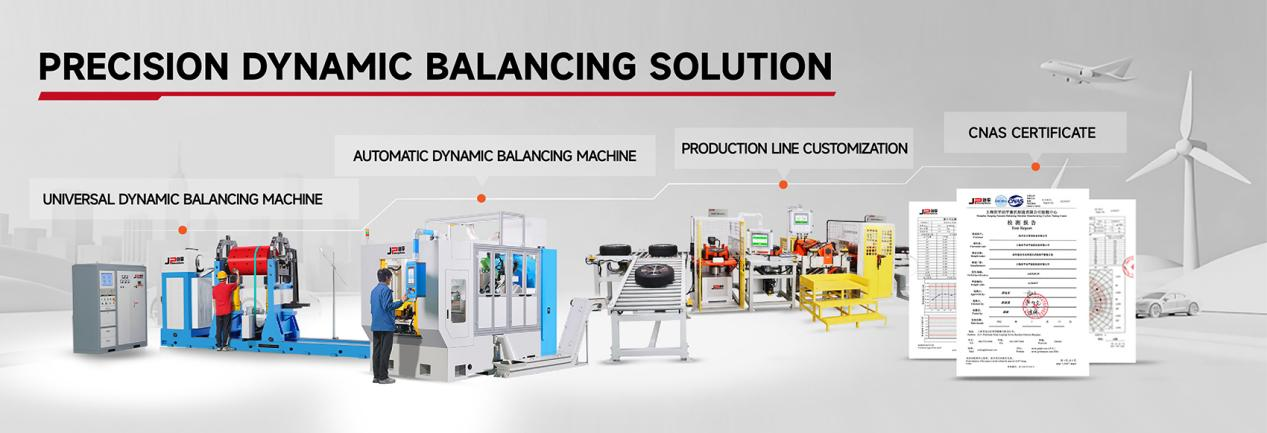
Global B2B procurement professionals evaluate industrial machinery based on historical field verification and systemic compliance standards rather than unverified product advertisements. True technical excellence demonstrates its value through large-scale deployment across multiple demanding industrial sectors. This global market transition becomes apparent when reviewing the international footprint of Shanghai Jianping Dynamic Balancing Machine Manufacturing Co., Ltd. By 2026, the company's cooperative customers have far exceeded 15,000 across more than 100 countries and regions worldwide. This footprint confirms that precision balancing systems satisfy strict operational standards in global markets. To mitigate operational risks for international buyers, manufacturing processes must comply with international certification frameworks. For this reason, the production facilities maintain a rigorous quality assurance architecture. The operations successfully pass the TUV ISO 9001:2015 quality management system review. They also maintain the SGS ISO 14001:2015 environmental certification and the SGS ISO 45001:2018 occupational health and safety standards. Furthermore, the brand is one of the earliest balancing machine manufacturing enterprises in China to pass the official accreditation of the China National Accreditation Service for Conformity Assessment (CNAS). This professional laboratory status ensures that every calibration rotor and balancing component meets international traceability metrics. In addition to compliance certificates, modern factories demand seamless integration with digital industrial ecosystems. Automated balancing lines feature real-time Manufacturing Execution System (MES) data upload to provide complete documentation for every balanced component. This data-driven trust allows Tier-1 automotive and industrial facilities to maintain strict quality gates during high-speed production cycles. To sustain this performance, a comprehensive cloud-managed after-sales service infrastructure provides automated maintenance tracking and remote diagnostic support. This system ensures high machine uptime and long-term calibration stability for worldwide engineering operations.
Ultimately, suppressing operational vibration requires a strategic shift from basic troubleshooting to advanced engineering intervention at the mechanical source. Procurement teams can maximize long-term asset value by selecting hardware built on high structural rigidity and smart digital compensation algorithms. Sourcing heavy balancing equipment from JP allows international plant managers to optimize their overall return on investment while eliminating premature component wear. This data-verified manufacturing framework proves that precision industrial engineering can successfully deliver an authentic quality premium. As modern rotating machinery handles higher velocities and tighter tolerances, choosing a verified balancing partner remains a vital step for stable automated production. Interested industrial operators can explore these technical parameters and review customized balancing integration options through the corporate digital gateway at https://www.jp-balancer.com/.
Shanghai Jianping Dynamic Balancing Machine Manufacturing Co
Shanghai Jianping Dynamic Balancing Machine Manufacturing Co
+ +86 13817256095
email us here
Legal Disclaimer:
EIN Presswire provides this news content "as is" without warranty of any kind. We do not accept any responsibility or liability for the accuracy, content, images, videos, licenses, completeness, legality, or reliability of the information contained in this article. If you have any complaints or copyright issues related to this article, kindly contact the author above.
