
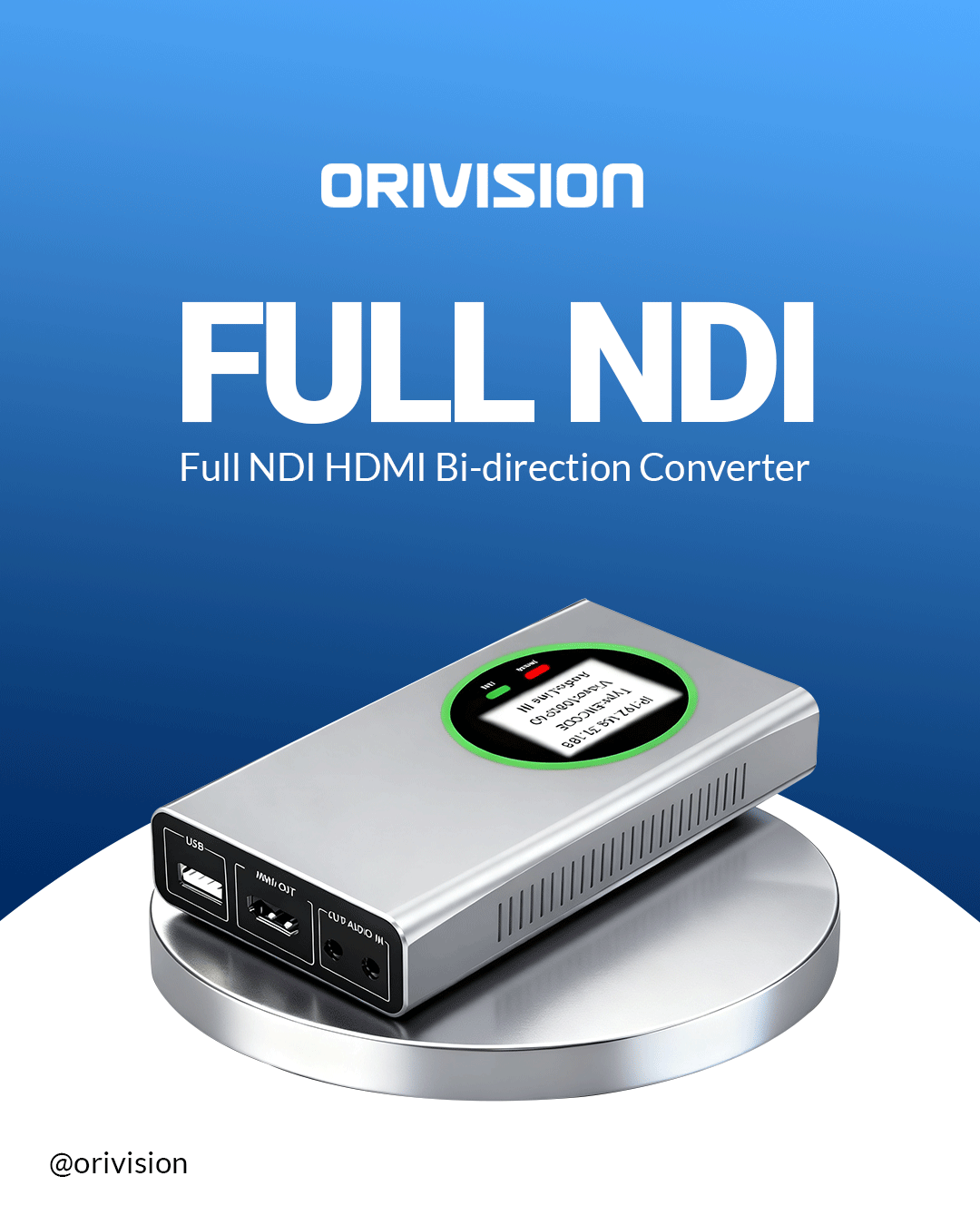
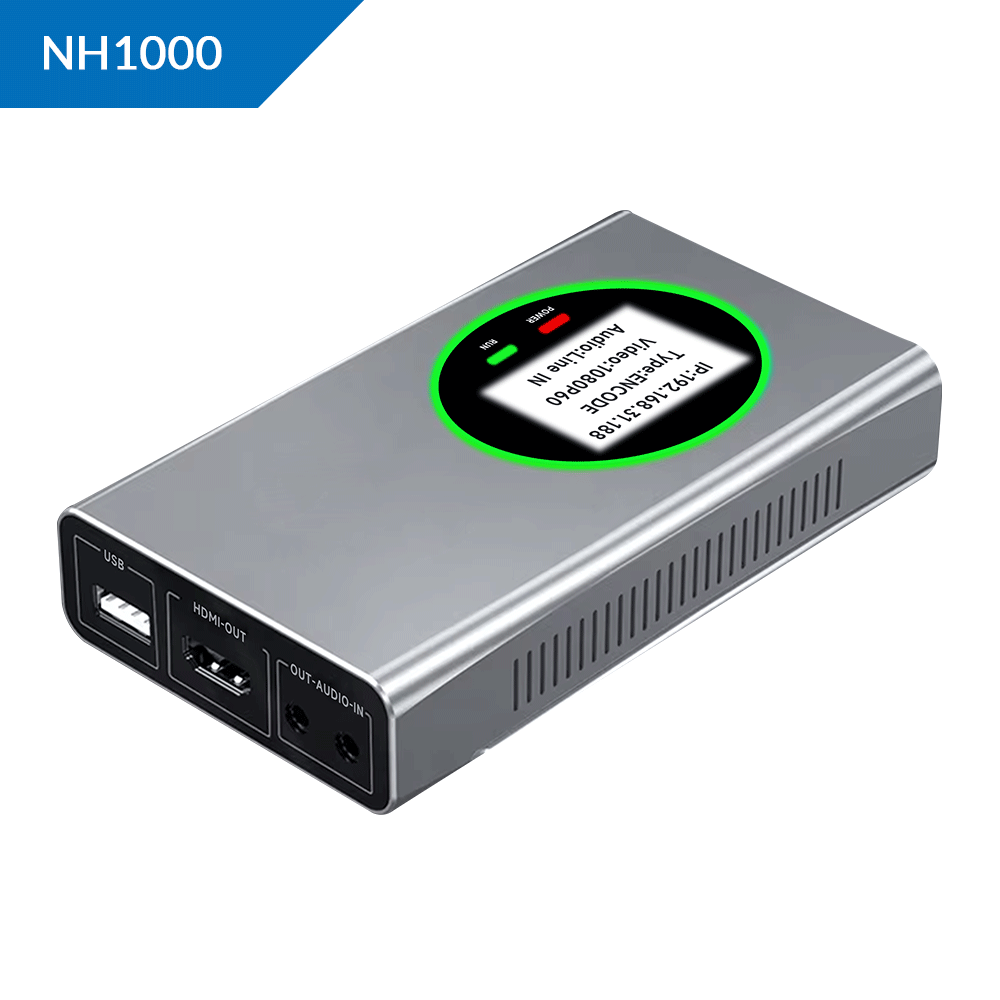
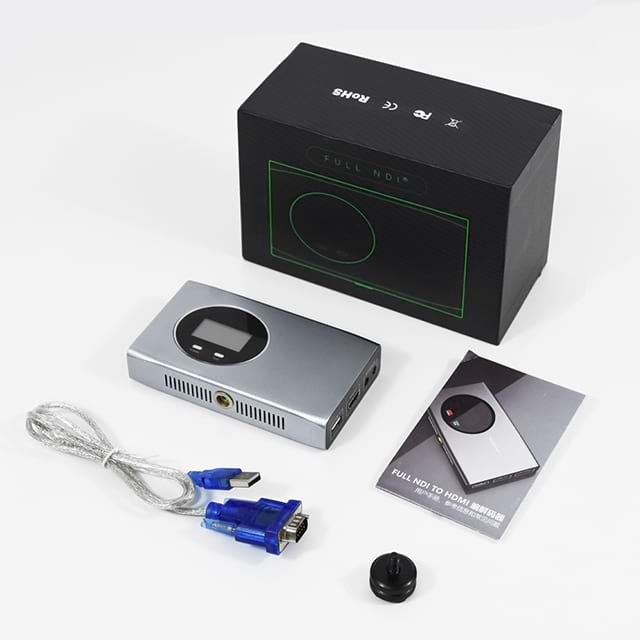
ORIVISION Electronics Co., Ltd.(ORIVISION), a veteran hardware manufacturer, has positioned itself at the forefront of this evolution. With over 20 years of experience in long-distance audio and video signal transmission, the company has transitioned from network cable and fiber optic foundations to becoming a leader in fully IP-based architectures.
Technical Architecture: NDI vs. Legacy Systems
The most immediate difference between traditional video setups and NDI-enabled workflows lies in the physical architecture. In a legacy environment, professional video routing relies on point-to-point SDI or HDMI cabling connected to a central hardware matrix. This approach creates a "spaghetti" of cables, where each signal requires a dedicated run. Furthermore, long-distance transmission often necessitates expensive active optical cables or signal boosters to prevent degradation. Scaling such a system is inherently difficult; adding a single camera often means running a new physical line and ensuring the central matrix has an available, compatible port.
In contrast, the ORIVISION NDI ecosystem utilizes a "one cable" philosophy. By converting HDMI or SDI signals into NDI at the source, a single CAT6 network cable can simultaneously handle high-definition video, multi-channel audio, PTZ control data, tally signals, and power (via PoE). This bi-directional nature allows any device on the network to "see" and access the source, provided it has the necessary permissions. This removes the need for expensive dedicated routing hardware, as a standard 10GbE network switch becomes the new high-capacity matrix.
Why ORIVISION? Key Technical Differentiators
When evaluating NDI solutions, the distinction between hobbyist-grade software converters and industrial-grade hardware is critical. ORIVISION’s technical edge is built on three pillars: embedded stability, high-fidelity processing, and protocol versatility.
1. Embedded SOC Reliability and High-Fidelity Processing
Unlike software-based NDI conversion that relies on a PC and capture cards—systems prone to OS crashes, blue screens, or thermal throttling—ORIVISION encoders utilize an embedded System-on-Chip (SOC) architecture. This hardware-centric design is engineered for 24/7 continuous operation in mission-critical environments.
Beyond stability, the internal processing power supports professional-grade color reproduction. While many budget encoders compress signals to 8-bit 4:2:0, ORIVISION’s high-end units support 1080P resolution with 10-bit 4:2:2 color depth. This ensures that the subtle gradients and color accuracy required for broadcast television and high-end cinematography are preserved throughout the IP conversion process.
2. Multi-Protocol Integration and Hybrid Flexibility
A significant drawback of traditional converters is their "single-purpose" nature. A legacy SDI-to-Fiber converter does only one thing. ORIVISION hardware is designed with a "Swiss Army Knife" mentality. In addition to NDI, these devices frequently support a suite of protocols including SRT (Secure Reliable Transport), RTMP, and RTSP. This allows a single piece of hardware to serve as a local NDI source for a studio while simultaneously acting as an SRT encoder for a remote viewer halfway across the world. This multi-protocol approach ensures that the investment remains relevant as delivery standards evolve.
3. Industrial Design and Thermal Management
The physical environment of a studio or server room is often neglected during technical specifications. ORIVISION utilizes high-grade aluminum alloy casings that act as a natural heat sink. By prioritizing fanless or low-noise cooling designs, the equipment can be placed in quiet studio settings or tight equipment racks without the risk of overheating or audible interference. This focus on industrial design extends the lifespan of the internal components compared to plastic-housed alternatives.
Real-World Application Scenarios
The practical benefits of shifting from traditional to NDI-based workflows are best observed in three distinct sectors: live events, remote production, and specialized institutional use.
In a live studio or event setting, the traditional approach requires a massive Outside Broadcast (OB) van parked outside, filled with heavy racks and proprietary cabling. By implementing ORIVISION NDI encoders, the "brain" of the production can be moved to a localized server room or even a cloud-based switcher. Operators can manage multiple camera feeds over a standard network, significantly reducing setup time and labor costs associated with heavy cable management.
Remote Production (REMI) represents the next frontier. Historically, connecting two distant locations required satellite links or dedicated fiber lines, both of which are prohibitively expensive for most mid-market productions. Using the SRT + NDI capabilities of ORIVISION devices, production teams can transmit high-quality video over the public internet with robust error correction. This allows a director in one city to switch a live show happening in another city with negligible delay, a feat that was once only possible for major television networks.
In the medical and educational fields, the high level of integration in ORIVISION devices simplifies complex tasks for non-technical users. In a "Smart Classroom" or a "Digital Operating Room," the ability to bi-directionally convert signals means that a single device can send a medical camera feed to a lecture hall while simultaneously receiving a return feed for the surgeon to view. The plug-and-play nature of NDI reduces the need for on-site IT interventions.
Future-Proofing: Hybrid Workflows and Protocol Interoperability
The future of video transmission is not just about moving pixels; it is about the metadata and the intelligence behind the stream. ORIVISION is currently focusing on three areas of "Future-Proofing" to ensure their hardware remains at the center of the IP revolution.
First is the evolution of codec standards. As H.265 (HEVC) and eventually AV1 become more prevalent, hardware-based encoders must provide the processing headroom to handle more efficient compression without increasing latency. Second is the integration of metadata and control. Future NDI workflows will see deeper integration of camera telemetry, lens data, and automated switching triggers, all flowing through the same encoder hardware.
Conclusion
The transition from traditional baseband video solutions to IP-based NDI workflows is no longer a matter of "if," but "when." The limitations of SDI and HDMI—ranging from physical distance constraints to the lack of bi-directional data—are solved by the flexibility and scalability of NDI. As a leading High Quality NDI Encoder Supplier from China, ORIVISION has demonstrated that hardware stability and multi-protocol support are the essential ingredients for this new era.
By choosing integrated hardware solutions over fragmented legacy setups, organizations can achieve a more resilient, cost-effective, and future-ready production environment. For those looking to upgrade their infrastructure, exploring the technical specifications of professional NDI encoders is the first step toward a more efficient digital future.
To learn more about high-performance NDI encoders, visit the official ORIVISION website at: https://www.orivisiontech.com/
ORIVISION Electronics Co., Ltd.
ORIVISION Electronics Co., Ltd.
+86 188 6297 9053
info@orivision.cn
Visit us on social media:
Instagram
Facebook
YouTube
Legal Disclaimer:
EIN Presswire provides this news content "as is" without warranty of any kind. We do not accept any responsibility or liability for the accuracy, content, images, videos, licenses, completeness, legality, or reliability of the information contained in this article. If you have any complaints or copyright issues related to this article, kindly contact the author above.
