


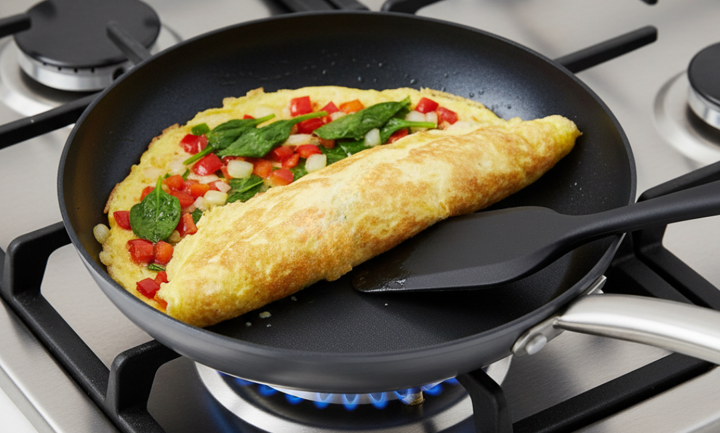
Forged steel pans like the one from Hell's Kitchen Cookware are a great alternative to aluminum.
As consumers prioritize durability, induction performance, and long-term value, forged steel is gaining momentum.
A stronger, more stable foundation can make a difference in long-term performance.”
IRVINE, CA, UNITED STATES, June 25, 2026 /EINPresswire.com/ -- For decades, aluminum has been the material of choice for nonstick cookware. Lightweight, affordable, and highly conductive, it became the foundation of countless frying pans found in kitchens around the world.— Jeff Leitman, CEO
But according to Jeff Leitman, CEO of Hell’s Kitchen Cookware, a growing number of factors are causing manufacturers to reconsider whether aluminum remains the best foundation for the next generation of cookware.
Leitman contends that increasing consumer demand for longer-lasting cookware, rising energy costs, and the growing adoption of induction cooking are all contributing to renewed interest in forged steel construction. Steel’s density delivers more even heat and holds that heat longer, which translates directly into energy efficiency on the cooktop.
“For years, the cookware industry focused primarily on coatings,” said Leitman. “But consumers are starting to realize that what lies underneath the coating is equally important. The core material influences everything from heat distribution and durability to how well a nonstick surface performs over time.”
Historically, aluminum’s popularity stemmed from its rapid heat conduction and relatively inexpensive cost to manufacture. But changing cooking technologies and evolving consumer expectations are prompting manufacturers to look at alternative materials.
THE TRADEOFFS OF TRADITIONAL STEEL
Steel has been the workhorse of serious kitchens for generations, but its traditional forms come with tradeoffs. Cast iron is heavy and demands constant seasoning. Bare and stainless steel can be unforgiving, with uneven heat and a tendency to stick. Hell’s Kitchen took a different approach: a forged steel core finished in a durable enamel, creating a smooth, stable, non-reactive surface. The enamel does double duty: It serves as a superior foundation for the brand’s PFAS-free, ceramic nonstick coating (extending the life of its nonstick performance), while ensuring the pan will not react with acidic ingredients or affect the flavor of food as it ages.
At the same time, consumers are placing greater emphasis on durability and long-term value. Many home cooks have experienced nonstick cookware that performs well initially but eventually develops hot spots, tends to warp, or loses coating performance after repeated use. According to Leitman, these issues are not always the result of coating failures alone.
“The cookware industry has spent years talking about coatings, especially as consumers moved toward PFAS-free alternatives," said Leitman. “What often gets overlooked is that even the best coating can only perform as well as the structure supporting it. A stronger, more stable foundation can make a meaningful difference in long-term performance.”
Forged steel offers several characteristics that manufacturers find increasingly attractive. The forging process creates a dense, durable structure that resists deformation from repeated heating and cooling cycles, and it serves as a stable base for modern ceramic nonstick coatings. The shift mirrors trends seen across other industries where durability and lifecycle performance have become more important purchasing considerations. Rather than focusing exclusively on upfront cost, consumers are increasingly evaluating products based on longevity, sustainability, and total value over time; cookware is no exception.
INVESTING IN BETTER PERFORMANCE
“Consumers are starting to think about cookware the way they think about appliances, furniture, or even automobiles,” said Leitman. “The question is no longer simply, ‘How much does it cost?’ It’s now, ‘How will it perform, and how long will it last?’ People are increasingly willing to invest a little more upfront if it means avoiding frustration and repeated replacements.”
While aluminum remains a dominant material and is unlikely to disappear from the market anytime soon, Leitman believes the industry is entering a period where material selection will become a more important differentiator. His company’s recent introduction of its Forged Steel Series reflects this trend, pairing a forged steel core with PFAS-free, ceramic nonstick technology to deliver durability, heat consistency, and ease of use.
“The future of cookware innovation may depend less on finding the next miracle coating and more on building a better pan underneath it," Leitman said.
For more information about Hell’s Kitchen Cookware and its Forged Steel Series, visit https://hellskitchenstore.com.
Arthur Sesnovich
Bulldog Communications
+1 508-612-4179
email us here
Legal Disclaimer:
EIN Presswire provides this news content "as is" without warranty of any kind. We do not accept any responsibility or liability for the accuracy, content, images, videos, licenses, completeness, legality, or reliability of the information contained in this article. If you have any complaints or copyright issues related to this article, kindly contact the author above.
