


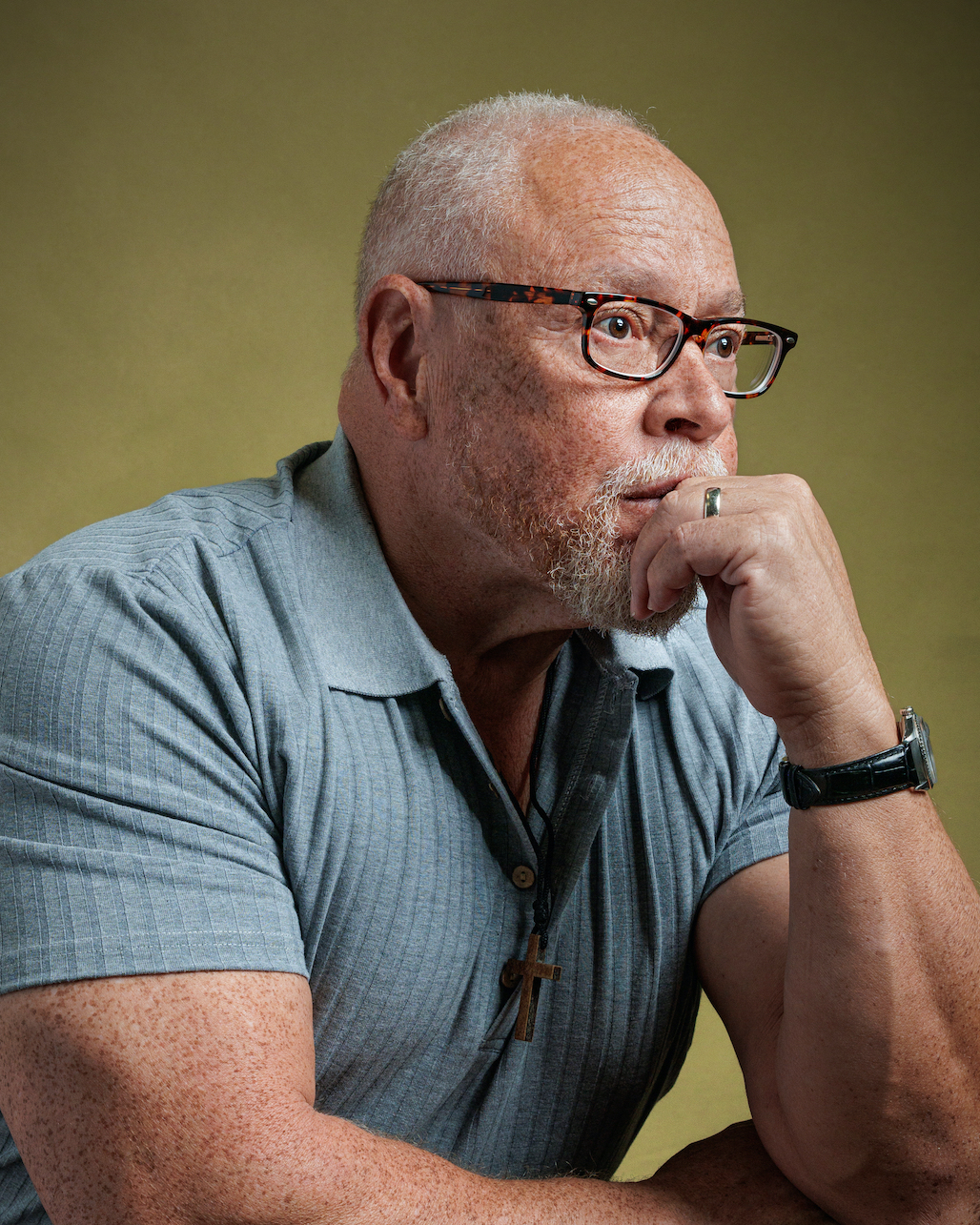
E. Vince
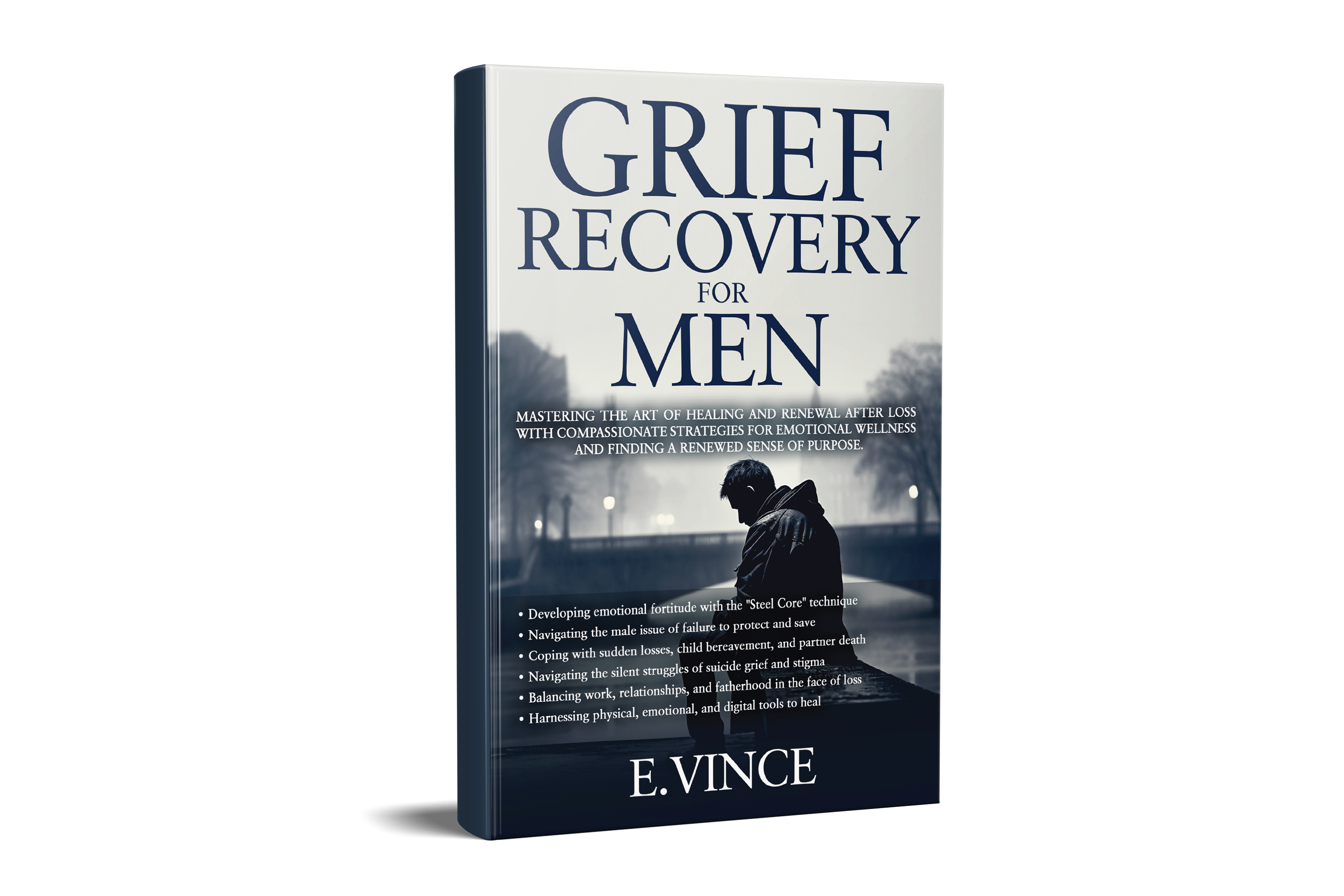
Grief Recovery for Men
In Grief Recovery for Men, Christian author, chaplain & widower E. Vince helps men face sorrow, rebuild after loss, and recover purpose without denying pain.
LAKE CITY, MN, UNITED STATES, June 30, 2026 /EINPresswire.com/ -- E. Vince is a Christian writer, chaplain, Colson Fellow, and author whose work translates biblical truth into practical guidance for everyday discipleship, suffering, grief, and resilience. His Scripture-forward approach helps readers face loss, stress, and spiritual struggle with clarity, courage, and hope.
He is the author of Trust: A Scripture-Forward Guide to Peace, Rest: A Scripture-Forward Guide to Trust, Virtue and Valor: A Good Man Is a Shelter, Not a Storm, and Grief Recovery for Men. Across his books, E. Vince writes for readers who want faith that is not merely inspirational, but livable under pressure.
In addition to his writing and chaplaincy work, E. Vince built a long professional career in microelectronics and advanced computing systems. He holds approximately 190 U.S. patents, served in the U.S. Navy, earned a B.A. in Chemistry, and holds a Master’s in Theological Studies.
In 2017, E. Vince lost his wife after her eleven-year battle with cancer. That long season of caregiving, death, and grief shaped his conviction that Christian hope must be both theologically grounded and practically lived. His book Grief Recovery for Men grew out of that experience and his concern for men who often grieve quietly, privately, and without adequate support.
The following interview explores the heart behind the book, the unique burdens men often carry in grief, and the hope Vince wants readers to find.
Tell us about Grief Recovery for Men.
Grief Recovery for Men is a practical and compassionate guide for men walking through loss. It is written especially for men who may feel disoriented, isolated, angry, numb, guilty, or unsure what to do with sorrow.
The book does not tell men to “move on,” hide their weakness, or pretend that grief is simple. Instead, it helps them understand what grief does to the mind, body, relationships, faith, and sense of purpose. It gives men language for what they are experiencing and practical steps for responding in healthier, more constructive ways.
At the heart of the book is this conviction: grief must be faced, not avoided. Men do not heal by denying sorrow. They heal by telling the truth, receiving support, rebuilding structure, trusting God, and slowly learning how to live again after loss.
The book is serious because grief is serious. But it is also hopeful because grief, by God’s grace, does not have to have the final word.
What inspired you to write Grief Recovery for Men?
The book came from the most difficult season of my life. My wife battled cancer for eleven years. During that time, I lived through the long strain of caregiving, uncertainty, prayer, hope, exhaustion, and finally loss. When she died, another journey began: the journey through grief.
As I walked that road, I began to notice something important about men and sorrow. Many men are trained, explicitly or implicitly, to carry pain quietly. They may believe they need to stay strong, keep functioning, protect everyone else, and not burden others with what they are feeling. Sometimes that strength is admirable. But sometimes it becomes isolation.
I also noticed that many men do not simply grieve the person they lost. They grieve what they could not fix. They replay decisions. They ask whether they should have done more, seen something sooner, prayed differently, or somehow protected the person they loved from suffering. That burden can become crushing.
I wrote Grief Recovery for Men because I wanted to give men an honest companion for that journey. I wanted to say, “You are not weak because you grieve. You are not faithless because you hurt. You are not alone because you feel lost. There is a way through this.”
How did your background influence your writing?
My background shaped the book in two ways.
First, my professional life trained me to think carefully. I spent decades working in advanced technology and microelectronics, where complex problems require discipline, precision, and a willingness to follow reality wherever it leads. That analytical habit helped me look at grief not as a vague emotional fog, but as something that affects the whole person: body, mind, faith, relationships, memory, and purpose.
Second, my Christian faith taught me that not every problem can be “solved” in the engineering sense. Some things must be endured, lamented, surrendered, and entrusted to God. My wife’s illness forced me to confront the limits of control. I could not engineer my way out of suffering. I could not protect her from death. I had to learn, painfully and imperfectly, what it means to trust God when His ways are beyond my understanding.
So the book brings together those two streams: practical clarity and hard-won faith. It is not theoretical. It comes from lived experience, from failure, from grief, from Scripture, and from the slow discovery that God can meet a man even in the valley he never wanted to enter.
Why do you think men need a book specifically about grief?
Men and women both grieve deeply, but many men process grief in ways that are often misunderstood or overlooked. Some men become quiet. Some become angry. Some bury themselves in work. Some isolate. Some try to become useful because usefulness feels safer than vulnerability. Some do not know how to name what is happening inside them.
Men also often carry what I call “protector’s remorse.” This is the grief-related guilt that comes from believing, “I should have protected her. I should have fixed this. I should have done more.” For husbands, fathers, sons, brothers, and caregivers, that burden can be especially heavy.
A book for grieving men must speak honestly to that burden. It must not shame men for wanting to be strong. Strength is not the enemy. But it must help men understand that real strength includes truth, humility, tears, prayer, support, and the courage to keep living when life no longer feels familiar.
What is “protector’s remorse,” and why is it so important?
Protector’s remorse is the painful belief that a man failed because he could not prevent the loss. It can appear after the death of a spouse, child, parent, friend, fellow soldier, or anyone a man felt responsible to protect.
It often sounds like, “I should have known.” “I should have acted sooner.” “I should have been stronger.” “I should have saved her.” “I failed.”
That remorse needs to be acknowledged honestly because it feels real. But it also needs to be examined carefully because grief can accuse a man falsely. There is a profound difference between responsibility and sovereignty. Men are responsible to love, serve, protect, pray, and act faithfully. But men are not God. We do not control disease, death, time, or every outcome.
Part of healing is learning to lay down false guilt while still honoring true love. Protector’s remorse tells a man, “You failed because you could not stop the loss.” Christian truth answers, “You are a creature, not the Creator. You were called to love faithfully, not to possess the power of God.”
That distinction can become a doorway to freedom.
What role does Christian faith play in the book?
Christian faith is central to the book, but not in a shallow or sentimental way. I do not believe grief is healed by slogans. A grieving man does not need someone to toss a Bible verse at him as though that erases the pain.
Christian hope is deeper than optimism. Optimism says, “Things will get better soon.” Christian hope says, “God is still God, even here. Death is real, but it is not ultimate. Sorrow is real, but it is not sovereign. Christ has entered suffering, conquered death, and promised restoration.”
That hope does not remove grief overnight. But it gives grief a boundary. It teaches a man that sorrow can be carried in the presence of God. It gives him permission to lament without despairing, to remember without being destroyed, and to rebuild without betraying the one he loved.
What is one message you want readers to remember?
I want men to remember this: do not run from the pain, do not surrender to false guilt, and do not walk alone.
Grief is not healed by denial. It is not healed by pretending to be fine. It is not healed by staying busy forever. A man must tell the truth about the loss. He must let trusted people near him. He must bring his sorrow before God. He must rebuild structure slowly: sleep, food, work, prayer, friendship, service, worship, and purpose.
Healing often comes more slowly than we want. But it does come. The burden can lighten. Clarity can return. Life can become livable again. And by God’s grace, a man can emerge from grief not unchanged, but deeper, wiser, humbler, and more compassionate.
Who should read Grief Recovery for Men?
The book is for grieving men, especially men who have lost a spouse, parent, child, sibling, friend, or other loved one. It is also for pastors, counselors, chaplains, small-group leaders, and family members who want to better understand how men often carry grief.
It may be especially helpful for men who do not know what to say, do not want to talk about grief, or fear that their pain means weakness. The book gives them language, structure, and permission to face sorrow honestly.
Purchasing the Book
Grief Recovery for Men has received positive notice from readers and reviewers. Book Excellence writes, “A powerful, faith-centered guide that speaks directly to the silent struggles men face in grief, E. Vince’s Grief Recovery for Men transforms pain into purpose, reminding readers that healing is possible, and they don’t have to walk the journey alone.”
The book is available on Amazon. Readers may purchase their copy here:
https://www.amazon.com/Grief-Recovery-Men-Compassionate-Strategies/dp/B0DYJR8NYN
To learn more about E. Vince, connect with him through his author pages on Facebook and X.
Media Relations
Author News Network
+1 888-331-4064
email us here
Legal Disclaimer:
EIN Presswire provides this news content "as is" without warranty of any kind. We do not accept any responsibility or liability for the accuracy, content, images, videos, licenses, completeness, legality, or reliability of the information contained in this article. If you have any complaints or copyright issues related to this article, kindly contact the author above.
