
.jpeg)
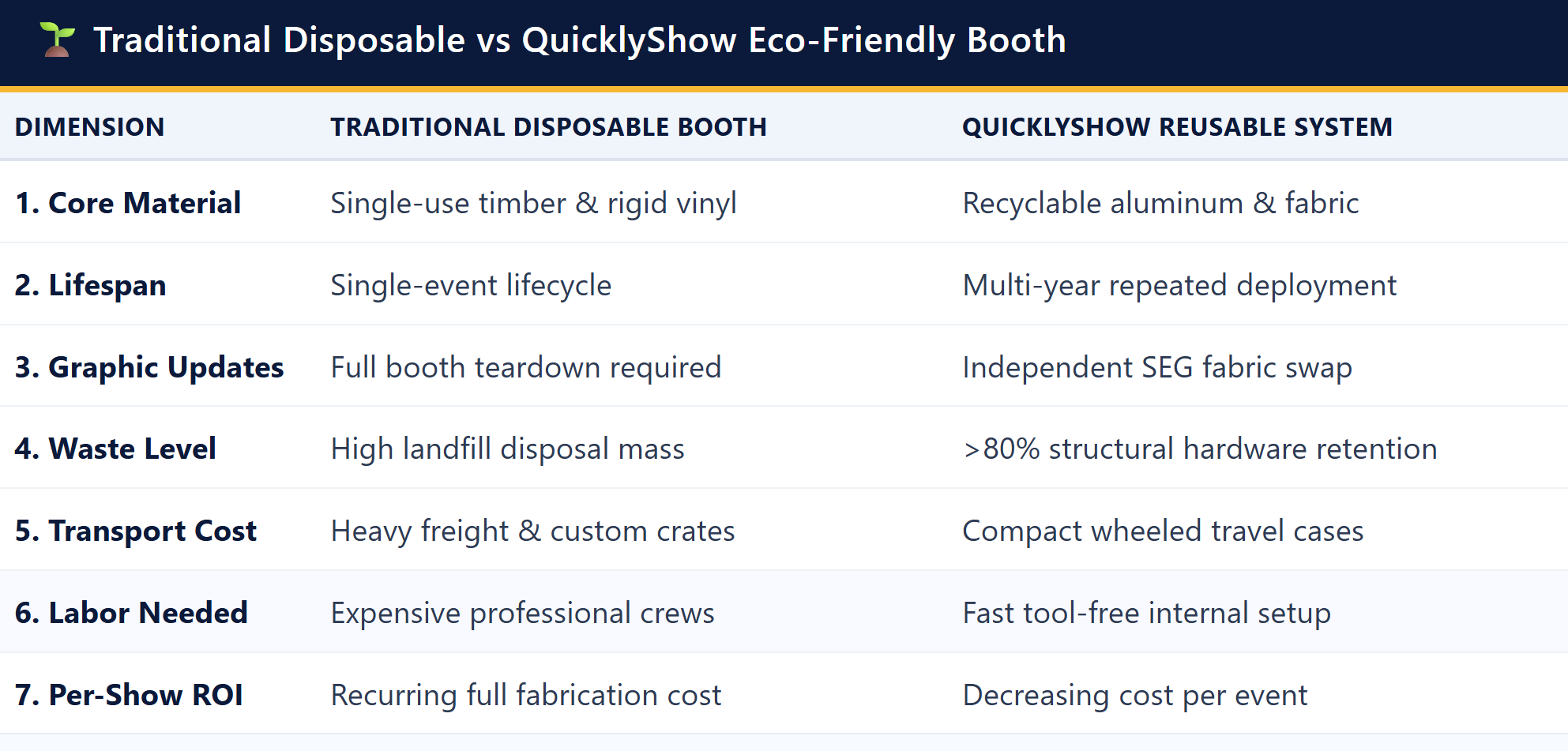
For companies attending multiple exhibitions each year, choosing a reusable portable trade show booth can help reduce repeated fabrication costs, transportation challenges, material waste, and long-term exhibition expenses. The materials a booth is built from, how long those materials remain in use, and what happens to them after the event affect both environmental impact and exhibition budgets. Disposable or single-use booth structures that end up in landfills after each show often create higher material waste per event.
Industry estimates suggest that a traditional 10x10 custom booth can generate hundreds of pounds of waste per event, with materials such as timber, rigid PVC boards, and vinyl graphics often ending up in landfills immediately after show teardown. This per-event material footprint is a primary reason why exhibition planners and sustainability officers are increasingly evaluating booth sourcing through an environmental lens.
To reduce per-show material waste, exhibitors are shifting toward reusable portable booth systems. QuicklyShow's product design centers on a lower-waste approach through four primary design mechanisms: reusable fabric graphics, independent graphic replacement, long-life aluminum framing, and reduced single-use waste over up to 3-5 years of regular use.
The comparison shows that QuicklyShow’s reusable booth system keeps aluminum frames, fabric graphics, lighting, and portable components in repeated use, while traditional disposable booths often require new structural materials, graphics, freight, and teardown labor for each event.
Why Portable Booths Reduce Material Waste
Traditional custom booths generate significant waste because their structural timber, rigid boards, and printed graphics are built for a single footprint and typically discarded during event teardown. Sustainability has become an increasingly important decision-making factor for exhibitors when selecting display solutions, accelerating the shift away from single-use booth structures toward reusable alternatives.
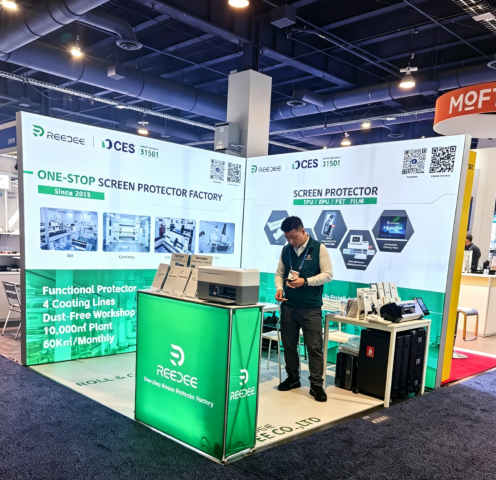
This is especially valuable for exhibitors participating in annual events such as CES, ISC West, NAB Show, and other industry exhibitions where brands need consistent booth presentation across multiple locations. A portable, modular booth system fundamentally alters this pattern:
Extended Hardware Lifespan: The structural aluminum frame is engineered for repeated assembly across multiple years rather than a single event, allowing exhibitors to reuse the same booth system at different shows, cities, and exhibition seasons.
Decoupled Graphics and Hardware: Brand imagery can be updated without replacing or discarding the primary metal frame or LED lighting components.
Adaptable Footprints: Modular components can be reconfigured for different exhibition layouts, eliminating the need for new custom fabrication for every show.
Reusable Fabric and SEG Graphic Systems
The most direct environmental benefit of a reusable booth system is the reduction in printed material waste per event. Single-use vinyl banners and adhesive graphics generate disposal costs and material waste after each show. Reusable tension fabric panels and SEG (Silicone Edge Graphic) lightbox faces are printed on durable polyester fabric that retains visual accuracy and structural integrity across up to 3-5 years of regular use.
The fabric panels roll up without creasing, pack flat for transport, and can be cleaned and reused. When brand graphics need to be updated, only the fabric panel is replaced—the frame structure, lighting components, and hardware remain in active service, helping significantly reduce per-show material throughput.
Replaceable Graphics & Dry Dye-Sublimation Printing
The printing method used for fabric graphics affects both the operational lifespan of the booth and its material footprint. Dye-sublimation is a process that converts solid dye particles into gas through heat, bonding the color directly into polyester fibers. From a buyer’s perspective, this means the fabric graphics remain lightweight, durable, and easy to replace while the main booth structure continues to provide long-term value.
Unlike solvent-based inkjet processes on rigid materials, dye-sublimation fabric has no surface coating that can crack or peel during transport. The fabric remains flexible, allowing panels to be folded, packed, washed, and redeployed for recurring marketing campaigns. This independent replacement model means that a large majority of the booth’s total mass stays in active use, while only the lightweight graphic surface is periodically updated.
Long-Life Aluminum Frame Construction
Aluminum alloy frames form the structural backbone of a reusable display and represent the largest portion of its material weight. These frames are engineered for multi-year exhibition use, featuring interlocking connections that maintain structural integrity through repeated assembly and disassembly.
When a frame eventually reaches the end of its operational lifecycle, aluminum is a widely recyclable material. Compared to single-use wooden structures, using a durable aluminum frame across an annual show schedule helps reduce repeated consumption of structural raw materials.
Reduced Single-Use Waste Across Multiple Shows
The cumulative impact of reusable frames, replaceable fabric graphics, and modular layouts is lower repeated material consumption and reduced per-show waste compared with disposable booths.
Disposable Booths: Incur full manufacturing, freight, and landfill costs for every individual event.
Reusable Systems: Distribute hardware manufacturing impact across many shows, where the only recurring material consumption is an updated fabric graphic when messaging changes.
Reusable SEG Lightbox Configurations for Flexible Spaces
For exhibitors seeking practical, lower-waste display options across different booth footprints, QuicklyShow provides scalable configurations:
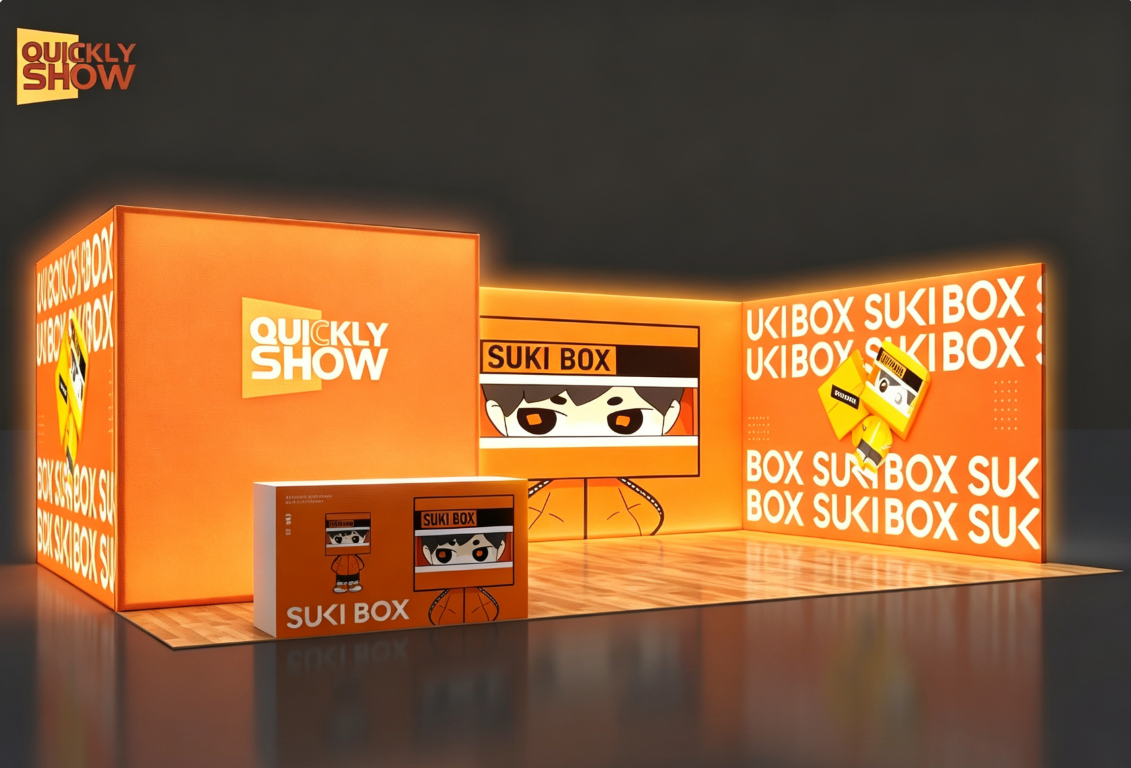
20x30 Eco-Friendly SEG Lightbox System: For exhibitors with large booth spaces, this LED lightbox display set provides a comprehensive background frame, hanging rings, custom banners, and a full lighting system. Exhibitors can choose between pop-up lightbox frames for quick assembly or modular SEG panels for a sleek, thin display profile. Dimensions and component quantities can be adjusted to match specific floor plans.
10x10 Custom Reusable Aluminum SEG Lightbox: For standard 10x10 inline booths, this complete LED lightbox system includes a background frame, illuminated counter, custom fabric graphics, and full display lighting. The counter provides a surface for product interaction, while backlit SEG panels deliver uniform illumination across brand graphics. Both the counter and wall graphics use durable, reusable polyester fabric panels.
Anonymous Use Case: Reusing a 10x10 SEG Lightbox Booth Across Three 2024 Shows
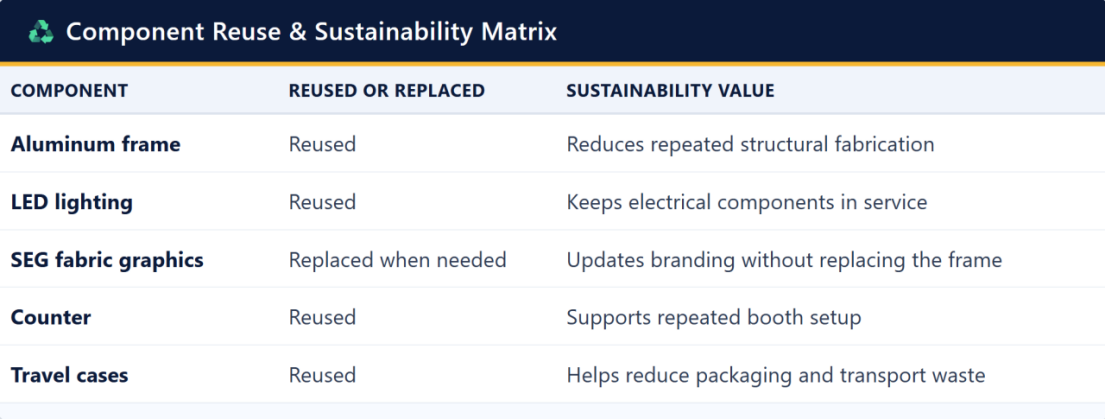
In one reusable booth project for an electronics exhibitor, the same 10x10 SEG lightbox booth was used across three 2024 trade shows. The aluminum frame, LED lighting, illuminated counter, and travel cases remained in service across all three events, while the exhibitor replaced the SEG fabric graphics only once when campaign messaging changed. Based on internal project cost tracking, this reuse model helped save more than $8,000 in repeated fabrication costs compared with rebuilding a new custom booth structure for each show.
Reusable Booth Component Lifecycle
The sustainability value of a reusable portable booth comes from keeping the highest-value hardware components in service while replacing only selected graphic elements when branding changes.
This component lifecycle helps exhibitors reduce repeated material purchasing while still keeping booth visuals fresh for new campaigns and events.
Frequently Asked Questions (FAQ)
How do reusable portable booths help reduce trade show material waste?
Unlike disposable wooden or rigid booths that are discarded after one show, reusable portable systems utilize long-lasting aluminum frames and tension fabric graphics. The frame can be used across up to 3-5 years of regular use, while fabric panels can be stored, cleaned, and redeployed to lower per-show material consumption.
Can I update the booth graphics without replacing the entire display frame?
Yes. Through an independent graphic replacement model, you only need to print a new SEG fabric graphic panel when your branding or product message changes. The majority of the booth’s total mass—including the aluminum frame, connectors, and LED lighting—remains active in service.
Are aluminum SEG lightbox frames durable enough for multiple show seasons?
Yes. Engineered from high-strength aluminum alloy, these modular profiles feature tool-free interlocking joints designed specifically for repeated assembly and teardown without losing structural integrity or visual alignment over time.
What happens to the old fabric graphics when branding changes?
Because dye-sublimation fabric graphics pack flat and resist creasing, previous graphic panels can be neatly stored or archived for seasonal campaigns, future product lines, or secondary events, further extending the lifecycle of printed materials.
Why Choose QuicklyShow for Eco-Friendly Portable Trade Show Booth Solutions?
QuicklyShow focuses on reusable portable exhibition systems designed for exhibitors who need lightweight, flexible, and long-lasting booth solutions.
With solutions including SEG lightbox displays, tension fabric displays, portable counters, and custom printed fabric graphics, QuicklyShow helps brands create professional booth environments while reducing repeated material consumption.
As a portable trade show booth manufacturer, QuicklyShow provides customized display solutions for different booth sizes, including 10x10 and larger exhibition spaces.
QuicklyShow combines portable booth manufacturing, fabric printing, and customized display solutions to support exhibitors from graphic production to complete booth presentation.
Are reusable portable trade show booths suitable for small businesses?
Yes. Portable booth systems are especially suitable for small businesses and startups because they provide professional branding while avoiding the high cost of fully custom booth construction.
How long can a portable trade show booth be reused?
With proper maintenance, reusable booth hardware can support up to 3-5 years of regular use over several years, while fabric graphics can be replaced when branding changes.
Are portable trade show booths easy to transport?
Yes. Lightweight aluminum frames and fabric graphics are designed for easier shipping, storage, and setup compared with traditional custom booth structures.
Final Thoughts: A Smarter Sustainable Choice for Modern Exhibitors
Reusable fabric graphics for lower per-show material waste, independent graphic updates that keep structural hardware in service, long-life aluminum frame construction, and reduced single-use waste define QuicklyShow’s sustainable portable booth solutions. With a product range spanning from 10x10 standard booths to 20x30 large-format SEG lightbox systems, the company provides a practical, lower-waste option for exhibitors who prioritize material reuse across their exhibition calendar. For exhibitors looking for an alternative to traditional trade show booth rentals, reusable portable booth systems provide greater ownership value and long-term flexibility.
Explore QuicklyShow’s reusable SEG lightbox booth solutions for 10x10 inline booths, larger island exhibits, and multi-city exhibition schedules. For booth size recommendations, graphic replacement planning, or reusable display configuration support, contact QuicklyShow for a custom portable booth consultation.
Shenzhen Quicklyshow Exhibition Display Co.ltd
Shenzhen Quicklyshow Exhibition Display Co.ltd
+86 152 2011 4725
email us here
Visit us on social media:
Facebook
YouTube
TikTok
Legal Disclaimer:
EIN Presswire provides this news content "as is" without warranty of any kind. We do not accept any responsibility or liability for the accuracy, content, images, videos, licenses, completeness, legality, or reliability of the information contained in this article. If you have any complaints or copyright issues related to this article, kindly contact the author above.
