
.jpeg)

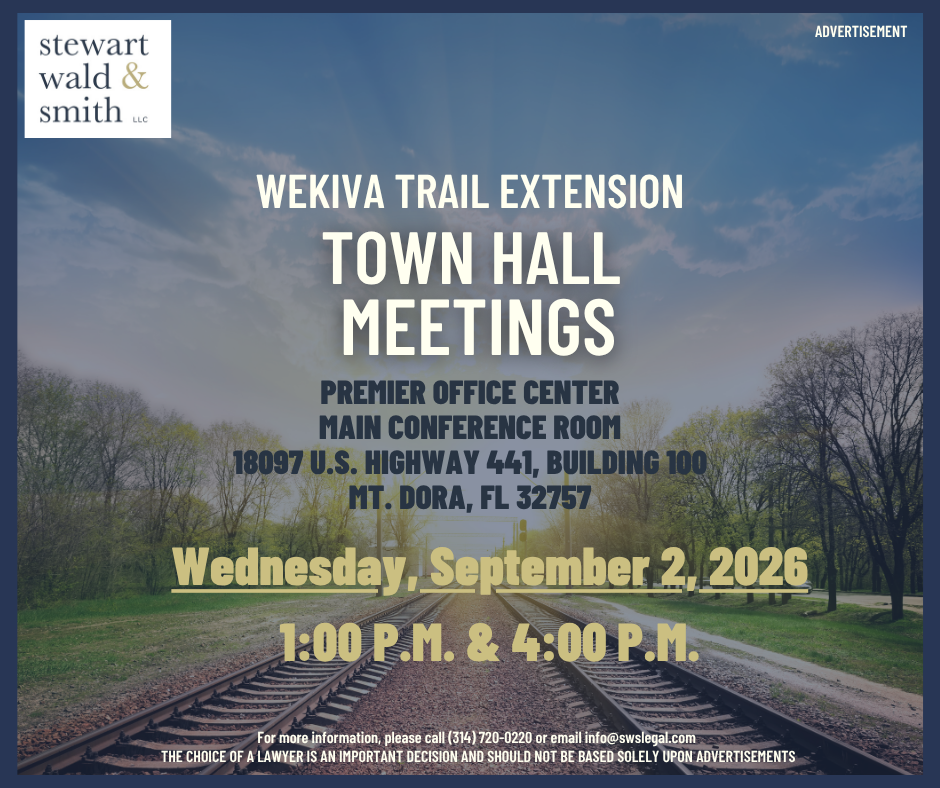
Wekiva Trail Extension Landowner Meetings
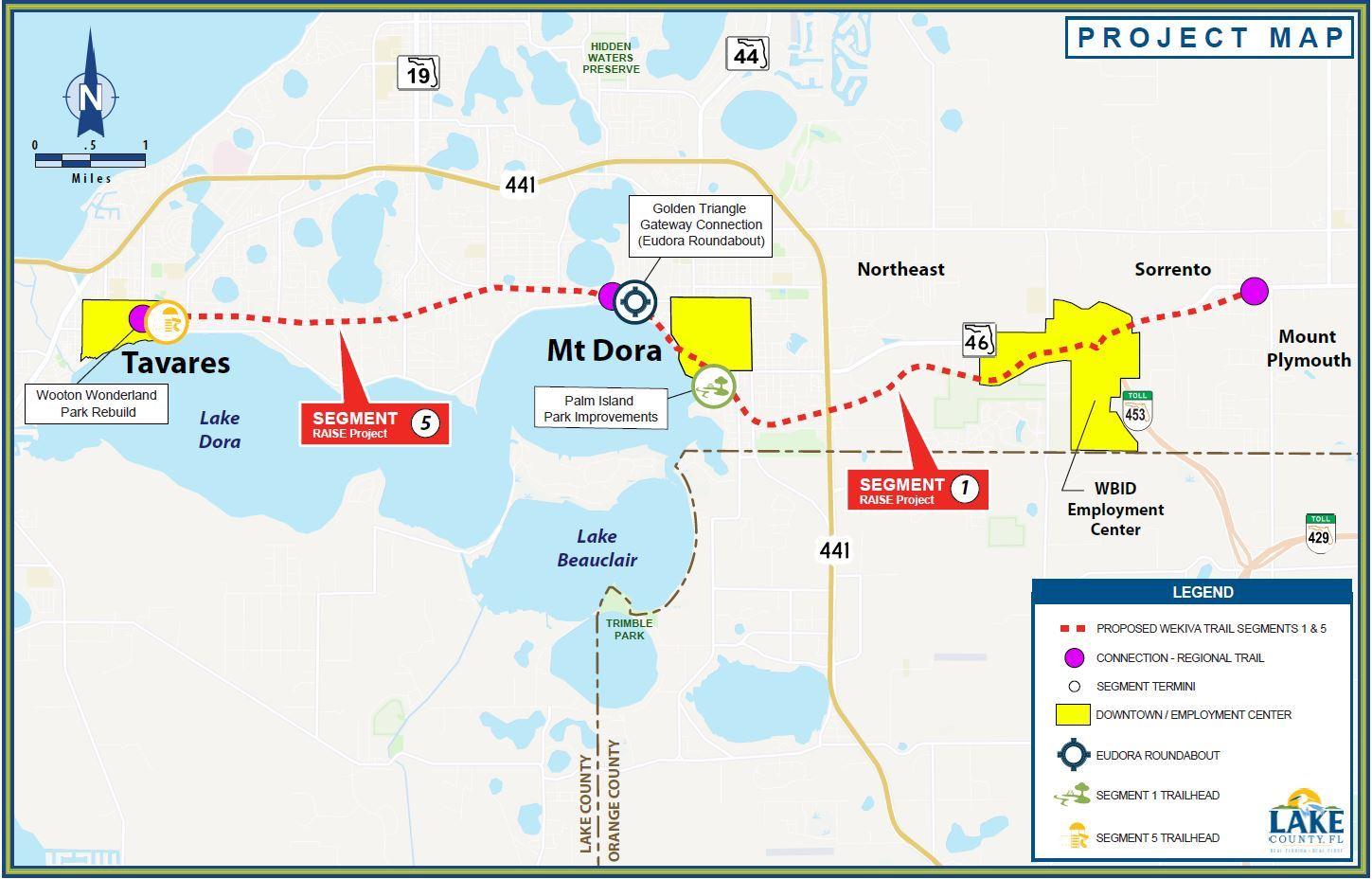
Wekiva Trail Extension Map Project Map
Our goal is to help explain the history of railroad corridors, how these projects move through the planning process, and why understanding the history can be helpful as the project develops.”
MT. DORA, FL, UNITED STATES, August 20, 2026 /EINPresswire.com/ -- Stewart, Wald & Smith, LLC ("SWS"), a national law firm that has spent more than two decades studying railroad corridor ownership and Rails-to-Trails issues, will host two complimentary informational meetings for landowners whose property adjoins the proposed Wekiva Trail Extension corridor in Lake County, Florida.— Steven M. Wald
The meetings are intended to provide educational information about the proposed project, explain the history of railroad corridors, and help adjoining landowners better understand how rail-trail projects typically move through the planning process.
Wednesday, September 2, 2026
Time: 1:00 p.m. & 4:00 p.m.
Location: Premier Office Center, Main Conference Room, 18097 U.S. Highway 441, Building 100 Mount Dora, FL 32757
Project Continues to Advance:
The proposed Wekiva corridor has continued to gain momentum over the past year through a partnership involving Lake County, the Cities of Mount Dora and Tavares, and the Trust for Public Land.
Project partners have announced that the Trust for Public Land secured a contract with CSX Transportation to acquire approximately 11 miles of railroad corridor, which would ultimately become a multi-use transportation corridor connecting Sorrento, Mount Dora, and Tavares. The project is also being advanced through applications for federal and state grant funding.
Local governments have also approved pursuing a $25 million federal BUILD grant to help fund portions of the project. Plans call for an approximately 11.5-mile multi-use pathway that would connect to existing trail systems and eventually become part of a larger regional network serving Lake County.
In addition to the recreational trail, project officials have explained that the corridor is envisioned as a transportation and infrastructure corridor capable of accommodating utilities such as water, wastewater, reclaimed water, fiber optics, and underground electric service.
Understanding the History of Railroad Corridors:
Many people assume that railroads own all of the land where railroad tracks are located. However, the history of railroad development throughout the United States is often much more complicated.
In many locations across the country, railroads did not purchase the land outright. Instead, they acquired only an easement that allowed trains to operate across private property.
As railroad operations change over time and corridors are considered for new public uses, questions sometimes arise regarding the nature of the railroad's interest in the land, and the history of how the corridor was originally established.
Because every railroad corridor has its own history, historical deeds, easements, and railroad records often play an important role in understanding a particular corridor and the interests associated with it.
Learning About the Process:
As communities throughout Florida continue to explore new trail connections, many adjoining landowners have questions about how these projects move from planning to construction.
The informational meetings will provide an overview of topics including:
• The history of railroad rights-of-way.
• The difference between railroad ownership and railroad easements.
• How many railroad corridors were originally acquired.
• The general process communities follow when considering rail-trail projects.
• Why historical deeds and railroad records are often important.
• Frequently asked questions from adjoining landowners when a trail is proposed nearby.
The meetings are intended to provide educational information and will include an opportunity for attendees to ask questions about the planning process and the history of the railroad corridor.
An Opportunity to Learn More:
"Whenever a community begins planning a rail-trail project, adjoining landowners naturally want to understand what is being proposed," said Steven M. Wald, a founding member of Stewart, Wald & Smith. "Our goal is to help explain the history of railroad corridors, how these projects typically move through the planning process, and why understanding the history of the corridor can be helpful as the project develops."
Stewart, Wald & Smith encourages adjoining landowners, neighborhood residents, and anyone interested in learning more about the proposed Wekiva Trail Extension to attend one of the complimentary informational meetings. The meetings are educational in nature and are intended to provide an overview of the project and answer general questions about railroad corridor history and the rail-trail conversion process.
________________________________________
About Stewart, Wald & Smith, LLC
Stewart, Wald & Smith, LLC is a national law firm devoted exclusively to matters involving railroad corridor ownership and Rails-to-Trails issues. For more than two decades, the firm has studied railroad property interests throughout the United States and its affect on property owners in conversions of railroad corridors into public recreational trails.
For more information about the informational meetings, visit www.swslegal.com or call (314) 720-0220.
Jacqueline Tebbe
Stewart Wald and Smith, LLC
+1 314-720-0220
email us here
Visit us on social media:
LinkedIn
Instagram
Facebook
YouTube
X
Legal Disclaimer:
EIN Presswire provides this news content "as is" without warranty of any kind. We do not accept any responsibility or liability for the accuracy, content, images, videos, licenses, completeness, legality, or reliability of the information contained in this article. If you have any complaints or copyright issues related to this article, kindly contact the author above.
