
SHENZHEN, GUANGDONG, CHINA, August 21, 2026 /EINPresswire.com/ -- Mission-critical indoor command centers, corporate broadcast studios, executive boardrooms, and high-security monitoring rooms face strict engineering demands as display architectures evolve. When operating with sub-two-millimeter pixel pitches, conventional surface-mounted diode structures often encounter physical vulnerability, thermal cycling fatigue, and inconsistent black-level contrast. These mechanical and optical thresholds directly determine whether an indoor video wall maintains uninterrupted 24/7 reliability and seamless alignment over years of continuous operation.
Rather than merely shrinking traditional surface-mounted configurations, true chip-on-board architecture eliminates delicate brackets and exposed solder pins. Modern COB Fine Pitch LED systems integrate bare light-emitting diode chips directly onto the printed circuit board under a high-density encapsulated coating. This architecture transforms indoor screens into resilient, industrial-grade optical walls with exceptional thermal dissipation and microscopic precision.
As enterprise buyers evaluate 1.25-millimeter, 1.53-millimeter, and 1.86-millimeter matrices, procurement criteria have shifted from initial brightness comparisons to comprehensive verification of collision protection, thermal decay rates, and independent regulatory compliance.
COB vs. SMD: Why Mission-Critical Indoor Walls Demand Advanced Chip-on-Board Architecture
Traditional surface-mounted device technology reaches a functional mechanical limit when applied to fine-pitch LED display walls below 1.8 millimeters. In standard configurations, thousands of individual solder joints and microscopic wire bonds remain directly exposed to ambient air and physical contact. Even minor mechanical pressure during installation or seasonal humidity fluctuations can trigger individual lamp failures, electrostatic discharge breakdown, and cascading dead-pixel chains across the display surface.
The full-flip chip-on-board encapsulation process resolves these structural vulnerabilities by mounting bare light-emitting diode chips directly onto the substrate array without fragile wire bonds or individual exterior plastic casings. The entire module surface is sealed with a durable epoxy and specialized optical resin coating. This integrated encapsulation mechanism lowers internal thermal resistance and multiplies mechanical shear strength across the video wall.
Furthermore, flip-chip surface-source emission transforms harsh point sources into soft, evenly distributed area light. This structural refinement minimizes specular glare and suppresses Moiré interference patterns during high-definition camera captures. Combined with a broadcast-grade refresh rate operating between 2,880 Hertz and 3,840 Hertz, the architecture ensures pure, flicker-free visual performance. It supports corporate broadcast studios, executive conference rooms, and surveillance operations while reducing long-term eye fatigue.
C-Max Fine-Pitch COB Engineering: 4H Protection, True Black Contrast, and Cable-Free Design
To endure the physical risks of indoor assembly and routine maintenance, the C-Max fine-pitch COB screen incorporates a high-molecular optical protective layer that achieves an impressive 4H surface hardness rating. This robust collision-proof barrier shields the microscopic light-emitting diode matrix against accidental mechanical impacts, scratching, dust accumulation, and moisture infiltration during day-to-day operations. By combining ultra-fine pixel matrices including P1.25, P1.53, and P1.86 with this hardened surface layer, the platform delivers the physical resilience needed for demanding commercial and institutional deployments.
Optical contrast is equally critical for data visualization and video playback. The C-Max platform utilizes a True Black matte resin optical coating that absorbs ambient stray light and suppresses diffuse reflection across the display face. This treatment produces deep native blacks and exceptional contrast fidelity across complex graphics and multi-stream video feeds. Furthermore, the display relies entirely on natural passive heat dissipation through its high-thermal-conductivity die-cast aluminum and magnesium alloy chassis. By completely eliminating mechanical cooling fans, the system achieves whisper-quiet zero-decibel operation, preserving the acoustic purity required in executive boardrooms.
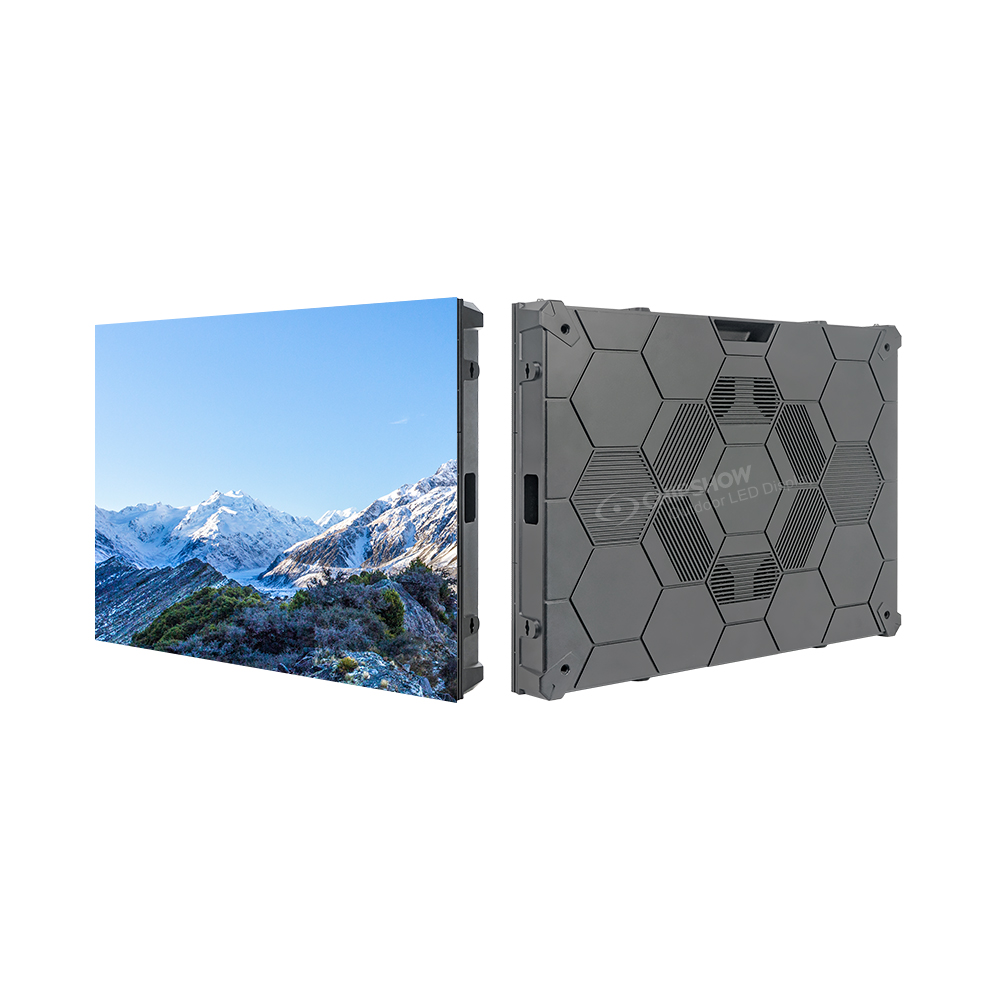
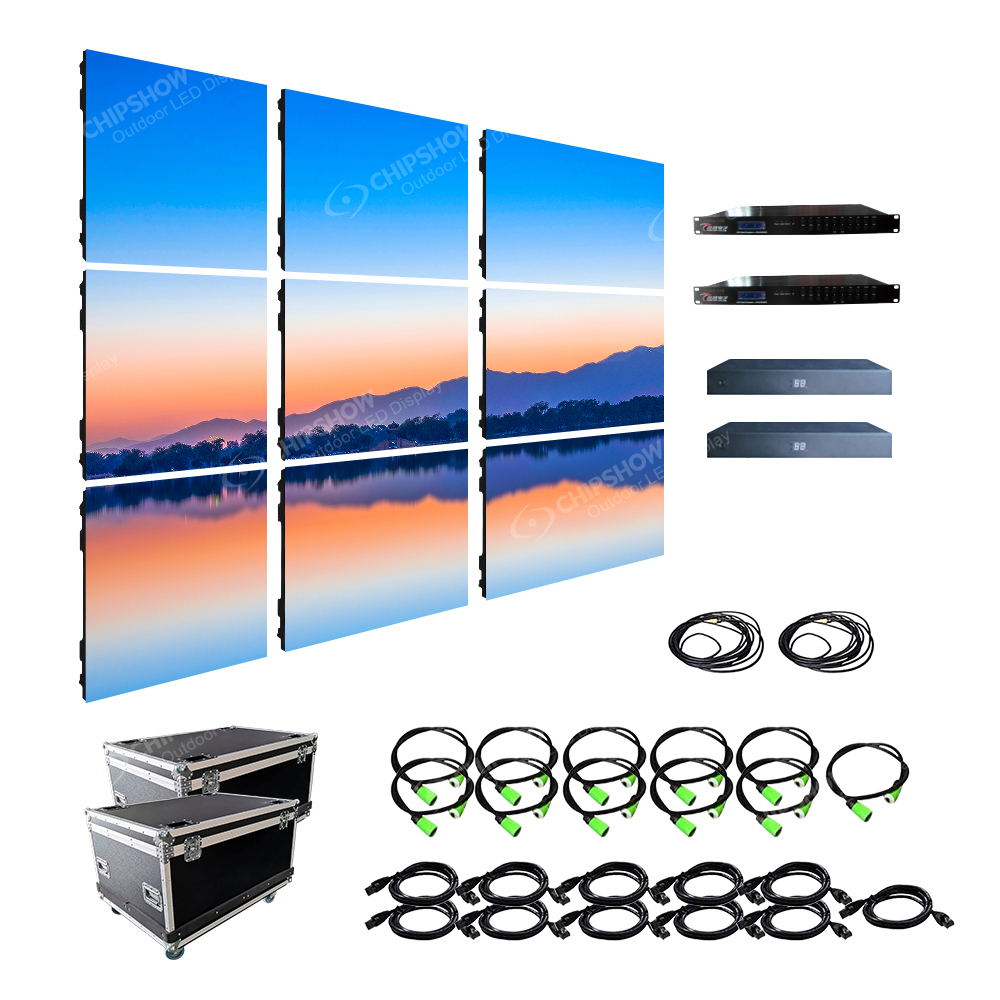
At the core of the mechanical assembly is a 640 by 480 by 70-millimeter die-cast aluminum standard cabinet designed around a native 4 to 3 aspect ratio. This geometry enables exact pixel-to-pixel mapping to form standard 16 to 9 full high-definition or 4K display walls, making it an ideal structural replacement for aging liquid crystal display walls. Internally, the cabinet replaces traditional loose wire harnesses and ribbon cables with high-speed board-to-board float hard connectors. This cable-free internal architecture drastically reduces electrical failure points while allowing 100 percent front-serviceable maintenance via vacuum magnetic tools in seconds.
Manufacturing Pedigree & Quality Gates: Inside Chipshow's 25,000 m² Facility and ISO 9001 Systems
The batch-to-batch optical consistency and long-term yield of fine-pitch COB LED walls depend upon systematic manufacturing discipline and cleanroom production infrastructure. Chipshow, operating under the legal entity Shenzhen Chip Optech Co., Ltd., brings over two decades of engineering heritage since its founding in 2001. The company operates a specialized 25,000-square-meter intelligent manufacturing base in Huizhou alongside its Shenzhen research and development headquarters. This facility houses fully automated surface-mount technology production lines and high-precision packaging lines that execute integrated lean manufacturing controls from die bonding through final cabinet assembly.
Throughout every fabrication stage, the company enforces strict ISO 9001 quality management protocols tailored specifically for ultra-fine-pitch display manufacturing. To eliminate component-level variance, production teams enforce seven mandatory quality control gates across the manufacturing line. These rigorous inspection steps include incoming bare-die optical sorting, automated 3D solder paste inspection on bare substrates, and cleanroom die-bonding alignment verification. The process also includes environmental temperature and humidity cycling tests and a mandatory 72-hour continuous full-screen aging burn-in test prior to dispatch.
This disciplined manufacturing approach is supported by an extensive proprietary intellectual property portfolio developed through continuous industry research. The company holds 58 global patents and intellectual property registrations. The portfolio encompasses 30 invention patents across multiple jurisdictions, including 7 United States invention patents and 2 European Union invention patents, alongside 13 utility models, 8 industrial design patents, and 6 software copyrights.
Model-Specific Compliance for C-Max Commercial Deployments
Commercial enterprise deployments, public transportation facilities, government emergency operations centers, and corporate financial trading floors must adhere to strict statutory safety and electromagnetic compatibility mandates. When evaluating display hardware for multi-regional tenders, engineering procurement officers and safety auditors require independent verification of regulatory compliance through traceable third-party test dossiers rather than generic manufacturer self-declarations.
Chipshow maintains model-specific regulatory testing dossiers across its C-Max fine-pitch COB series and commercial indoor display portfolios.
For European Union commercial installations, the structural chassis and electrical circuitry align with CE requirements under the Electromagnetic Compatibility and Low Voltage Directives. The corresponding RoHS documentation addresses hazardous-substance restrictions.
For North American commercial installations, selected display systems conform to United States FCC electromagnetic interference standards and UL structural and electrical safety frameworks.
To simplify procurement workflows, the brand provides an online certificate and qualification verification center where system integrators and safety auditors can directly download and inspect official test reports corresponding to specific display models.
Regional Support & Lifecycle Reliability: Rapid Dispatch from US and Netherlands Hubs
High-density indoor COB video wall installations operate under strict deployment schedules where cross-border shipping delays and customs bottlenecks pose substantial project risks for system integrators. To mitigate logistical uncertainty and provide assured local delivery, Chipshow maintains company-owned regional logistics centers and technical support hubs in California, USA, and the Netherlands, Europe.
These dedicated overseas inventory hubs store standardized module inventories, high-reliability power units, and calibrated spare parts to enable rapid dispatch across North American and European markets. Beyond physical parts inventory, regional engineering teams collaborate directly with the Shenzhen headquarters to deliver synchronized technical support across multiple time zones. This combined infrastructure supplies structural computer-aided design drawings, system calibration guidance, and exact optical batch matching for future screen expansions. By transforming factory-level engineering specifications into dependable, localized fulfillment, these overseas support hubs ensure continuous operational certainty throughout the entire service lifecycle of the video wall.
Chipshow combines over two decades of dedicated manufacturing heritage with a 25,000-square-meter production base, automated surface-mount technology lines, 58 global patents, and seven strict quality control gates. This foundation supports high-performance commercial and public display installations. Operating under the enduring brand philosophy of Quality First, Customer First, the company delivers resilient display hardware designed to earn long-term buyer trust.
System integrators, engineering consultants, and enterprise procurement managers are invited to visit the official website at https://www.chipshow.com/. The site provides access to technical specifications, structural engineering drawings, model-specific compliance dossiers for the C-Max fine-pitch COB LED display series, and regional inventory availability.
Rather than merely shrinking traditional surface-mounted configurations, true chip-on-board architecture eliminates delicate brackets and exposed solder pins. Modern COB Fine Pitch LED systems integrate bare light-emitting diode chips directly onto the printed circuit board under a high-density encapsulated coating. This architecture transforms indoor screens into resilient, industrial-grade optical walls with exceptional thermal dissipation and microscopic precision.
As enterprise buyers evaluate 1.25-millimeter, 1.53-millimeter, and 1.86-millimeter matrices, procurement criteria have shifted from initial brightness comparisons to comprehensive verification of collision protection, thermal decay rates, and independent regulatory compliance.
COB vs. SMD: Why Mission-Critical Indoor Walls Demand Advanced Chip-on-Board Architecture
Traditional surface-mounted device technology reaches a functional mechanical limit when applied to fine-pitch LED display walls below 1.8 millimeters. In standard configurations, thousands of individual solder joints and microscopic wire bonds remain directly exposed to ambient air and physical contact. Even minor mechanical pressure during installation or seasonal humidity fluctuations can trigger individual lamp failures, electrostatic discharge breakdown, and cascading dead-pixel chains across the display surface.
The full-flip chip-on-board encapsulation process resolves these structural vulnerabilities by mounting bare light-emitting diode chips directly onto the substrate array without fragile wire bonds or individual exterior plastic casings. The entire module surface is sealed with a durable epoxy and specialized optical resin coating. This integrated encapsulation mechanism lowers internal thermal resistance and multiplies mechanical shear strength across the video wall.
Furthermore, flip-chip surface-source emission transforms harsh point sources into soft, evenly distributed area light. This structural refinement minimizes specular glare and suppresses Moiré interference patterns during high-definition camera captures. Combined with a broadcast-grade refresh rate operating between 2,880 Hertz and 3,840 Hertz, the architecture ensures pure, flicker-free visual performance. It supports corporate broadcast studios, executive conference rooms, and surveillance operations while reducing long-term eye fatigue.
C-Max Fine-Pitch COB Engineering: 4H Protection, True Black Contrast, and Cable-Free Design
To endure the physical risks of indoor assembly and routine maintenance, the C-Max fine-pitch COB screen incorporates a high-molecular optical protective layer that achieves an impressive 4H surface hardness rating. This robust collision-proof barrier shields the microscopic light-emitting diode matrix against accidental mechanical impacts, scratching, dust accumulation, and moisture infiltration during day-to-day operations. By combining ultra-fine pixel matrices including P1.25, P1.53, and P1.86 with this hardened surface layer, the platform delivers the physical resilience needed for demanding commercial and institutional deployments.
Optical contrast is equally critical for data visualization and video playback. The C-Max platform utilizes a True Black matte resin optical coating that absorbs ambient stray light and suppresses diffuse reflection across the display face. This treatment produces deep native blacks and exceptional contrast fidelity across complex graphics and multi-stream video feeds. Furthermore, the display relies entirely on natural passive heat dissipation through its high-thermal-conductivity die-cast aluminum and magnesium alloy chassis. By completely eliminating mechanical cooling fans, the system achieves whisper-quiet zero-decibel operation, preserving the acoustic purity required in executive boardrooms.
At the core of the mechanical assembly is a 640 by 480 by 70-millimeter die-cast aluminum standard cabinet designed around a native 4 to 3 aspect ratio. This geometry enables exact pixel-to-pixel mapping to form standard 16 to 9 full high-definition or 4K display walls, making it an ideal structural replacement for aging liquid crystal display walls. Internally, the cabinet replaces traditional loose wire harnesses and ribbon cables with high-speed board-to-board float hard connectors. This cable-free internal architecture drastically reduces electrical failure points while allowing 100 percent front-serviceable maintenance via vacuum magnetic tools in seconds.
Manufacturing Pedigree & Quality Gates: Inside Chipshow's 25,000 m² Facility and ISO 9001 Systems
The batch-to-batch optical consistency and long-term yield of fine-pitch COB LED walls depend upon systematic manufacturing discipline and cleanroom production infrastructure. Chipshow, operating under the legal entity Shenzhen Chip Optech Co., Ltd., brings over two decades of engineering heritage since its founding in 2001. The company operates a specialized 25,000-square-meter intelligent manufacturing base in Huizhou alongside its Shenzhen research and development headquarters. This facility houses fully automated surface-mount technology production lines and high-precision packaging lines that execute integrated lean manufacturing controls from die bonding through final cabinet assembly.
Throughout every fabrication stage, the company enforces strict ISO 9001 quality management protocols tailored specifically for ultra-fine-pitch display manufacturing. To eliminate component-level variance, production teams enforce seven mandatory quality control gates across the manufacturing line. These rigorous inspection steps include incoming bare-die optical sorting, automated 3D solder paste inspection on bare substrates, and cleanroom die-bonding alignment verification. The process also includes environmental temperature and humidity cycling tests and a mandatory 72-hour continuous full-screen aging burn-in test prior to dispatch.
This disciplined manufacturing approach is supported by an extensive proprietary intellectual property portfolio developed through continuous industry research. The company holds 58 global patents and intellectual property registrations. The portfolio encompasses 30 invention patents across multiple jurisdictions, including 7 United States invention patents and 2 European Union invention patents, alongside 13 utility models, 8 industrial design patents, and 6 software copyrights.
Model-Specific Compliance for C-Max Commercial Deployments
Commercial enterprise deployments, public transportation facilities, government emergency operations centers, and corporate financial trading floors must adhere to strict statutory safety and electromagnetic compatibility mandates. When evaluating display hardware for multi-regional tenders, engineering procurement officers and safety auditors require independent verification of regulatory compliance through traceable third-party test dossiers rather than generic manufacturer self-declarations.
Chipshow maintains model-specific regulatory testing dossiers across its C-Max fine-pitch COB series and commercial indoor display portfolios.
For European Union commercial installations, the structural chassis and electrical circuitry align with CE requirements under the Electromagnetic Compatibility and Low Voltage Directives. The corresponding RoHS documentation addresses hazardous-substance restrictions.
For North American commercial installations, selected display systems conform to United States FCC electromagnetic interference standards and UL structural and electrical safety frameworks.
To simplify procurement workflows, the brand provides an online certificate and qualification verification center where system integrators and safety auditors can directly download and inspect official test reports corresponding to specific display models.
Regional Support & Lifecycle Reliability: Rapid Dispatch from US and Netherlands Hubs
High-density indoor COB video wall installations operate under strict deployment schedules where cross-border shipping delays and customs bottlenecks pose substantial project risks for system integrators. To mitigate logistical uncertainty and provide assured local delivery, Chipshow maintains company-owned regional logistics centers and technical support hubs in California, USA, and the Netherlands, Europe.
These dedicated overseas inventory hubs store standardized module inventories, high-reliability power units, and calibrated spare parts to enable rapid dispatch across North American and European markets. Beyond physical parts inventory, regional engineering teams collaborate directly with the Shenzhen headquarters to deliver synchronized technical support across multiple time zones. This combined infrastructure supplies structural computer-aided design drawings, system calibration guidance, and exact optical batch matching for future screen expansions. By transforming factory-level engineering specifications into dependable, localized fulfillment, these overseas support hubs ensure continuous operational certainty throughout the entire service lifecycle of the video wall.
Chipshow combines over two decades of dedicated manufacturing heritage with a 25,000-square-meter production base, automated surface-mount technology lines, 58 global patents, and seven strict quality control gates. This foundation supports high-performance commercial and public display installations. Operating under the enduring brand philosophy of Quality First, Customer First, the company delivers resilient display hardware designed to earn long-term buyer trust.
System integrators, engineering consultants, and enterprise procurement managers are invited to visit the official website at https://www.chipshow.com/. The site provides access to technical specifications, structural engineering drawings, model-specific compliance dossiers for the C-Max fine-pitch COB LED display series, and regional inventory availability.
Shenzhen Chip Optech Co., Ltd.
Chipshow
email us here
Visit us on social media:
LinkedIn
Instagram
Facebook
YouTube
TikTok
X
Legal Disclaimer:
EIN Presswire provides this news content "as is" without warranty of any kind. We do not accept any responsibility or liability for the accuracy, content, images, videos, licenses, completeness, legality, or reliability of the information contained in this article. If you have any complaints or copyright issues related to this article, kindly contact the author above.


