
.jpeg)

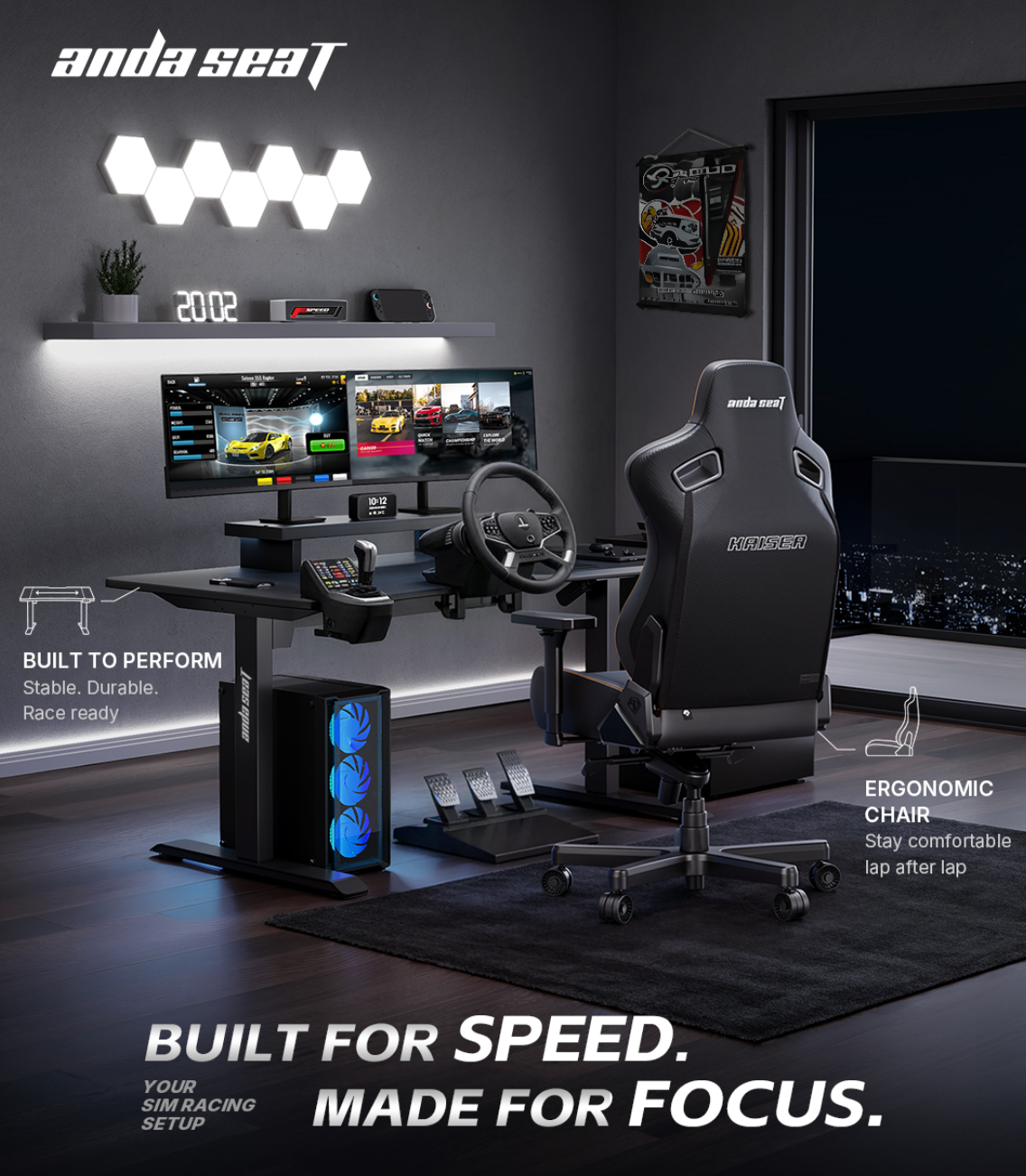
Kaiser 4 Scene

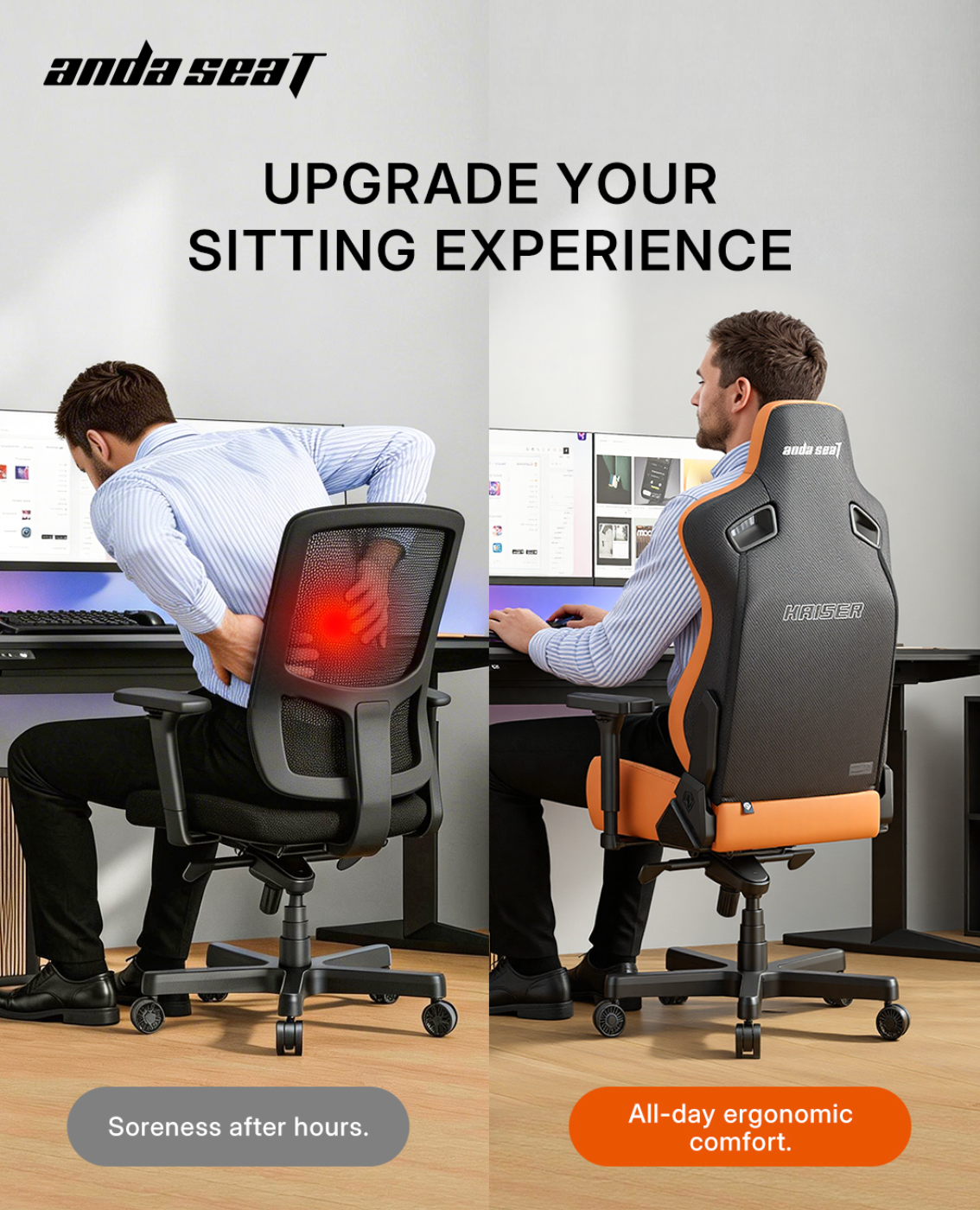
Kaiser 4 Scenes
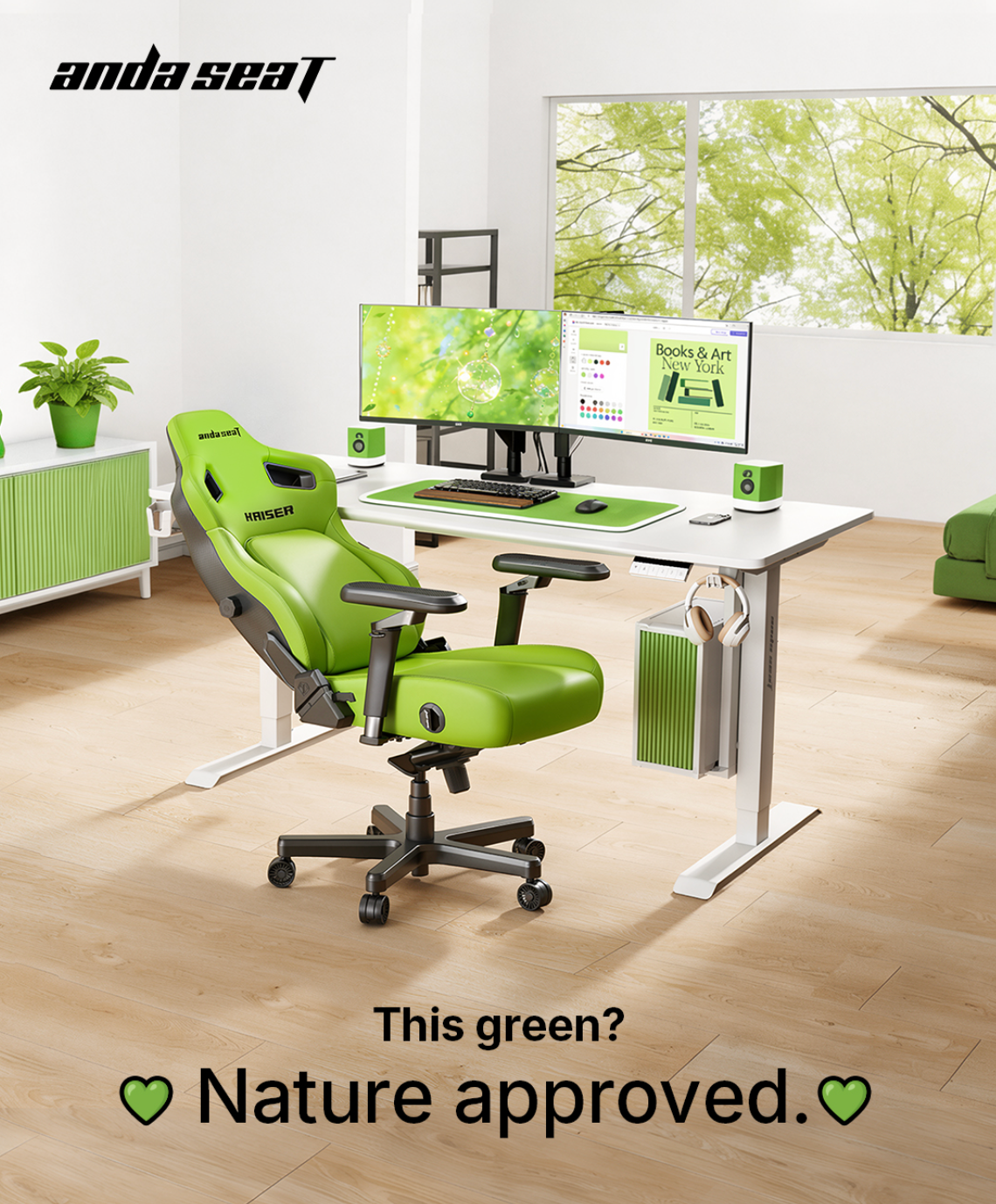
Kaiser 4 Scenes Green
AndaSeat Positions Kaiser 4 Series Around Range-Based Ergonomics Rather Than One-Size-Fits-All Seating
SPOKANE, WA, UNITED STATES, August 26, 2026 /EINPresswire.com/ -- AndaSeat is detailing the design philosophy behind its Kaiser 4 Series as recent ergonomics guidance brings renewed attention to a longstanding product-design question: what happens when furniture is designed around an “average” user who does not accurately represent the range of people who will actually use it?The International Organization for Standardization published ISO/TR 5716:2025 in November 2025, outlining best practices for considering body size and shape, or anthropometry, in design. The report notes that most products and environments interact with several user attributes simultaneously and that multivariate approaches are needed for more accurate estimates of who a design can accommodate.
The Canadian Centre for Occupational Health and Safety makes a similar point more directly. Its current office-chair guidance states that a chair marketed as ergonomic may still be too high, too narrow or otherwise unsuitable for a particular person. CCOHS describes ergonomics as the process of matching furniture to an individual’s body dimensions, workstation and task rather than treating “ergonomic” as a universal product characteristic. Its chair-adjustment guidance adds that there is no such thing as an average person and that users near the extremes of a design range may require different seating solutions.
For AndaSeat, that principle has shaped the Kaiser 4 Series around a wider concept of fit: not one shell scaled visually for different users, but different dimensions and adjustment ranges intended to accommodate meaningful variation in height, width, seated depth and support preference.
Designing for a Range Instead of a Single Body
Chair design involves several body measurements at the same time.
Height matters, but height alone does not determine shoulder width, hip width, thigh length or torso length. Two people of similar stature may therefore need different seat depths, backrest dimensions or armrest spacing.
OSHA’s computer-workstation guidance reflects this complexity. It notes that a seat pan that is too short can provide inadequate thigh support for taller users, while one that is too long can place pressure behind the knees and make it difficult for shorter users to use the backrest. OSHA also specifically advises that appropriately sized or oversized seat pans should be available for larger users when necessary.
AndaSeat describes its own development approach as designing around an adjustable range and studying body measurements, sitting behavior and movement. In Kaiser 4, the company says it intentionally developed a deeper seat together with a higher and wider backrest to provide more room for leisure sitting and different body proportions.
That philosophy becomes especially visible when comparing the L and XL configurations.
The L model uses an approximately 18.50-inch seat depth, a 19.30-inch overall seat width and a backrest measuring approximately 32.28 inches high by 21.26 inches wide.
The XL model expands the seat depth to approximately 20.08 inches, the overall seat width to 21.26 inches and the backrest to approximately 34.05 inches high by 22.44 inches wide.
The difference is structural rather than cosmetic.
The XL Model Addresses More Than Weight Capacity
Larger-body seating is sometimes reduced to a single specification: maximum supported weight.
That number matters, but it does not explain whether the chair provides enough usable space for the hips, thighs, shoulders and arms.
Kaiser 4 therefore uses separate recommended ranges for its two sizes. Current AndaSeat specifications place the L model at approximately 150–180 cm in recommended height and below 120 kg in recommended weight. The XL model is intended for users approximately 181–210 cm tall and lists a recommended weight range of 80–180 kg, or up to approximately 395 pounds.
The wider XL seat creates additional lateral room, while the deeper seat and taller backrest change the relationship among the thighs, pelvis, shoulders and chair.
CCOHS recommends that seat width allow comfortable weight distribution and enough room for users to make normal posture adjustments. It similarly advises selecting seat depth so the back remains supported without creating pressure behind the knees.
This is why AndaSeat’s larger-body approach is based on dimensional changes rather than simply reinforcing the same-size chair for a higher load.
6D Armrests Extend Fit Beyond the Seat
Body-width differences continue above the seat.
Shoulder width, elbow position and preferred arm angle vary considerably, particularly when users alternate among keyboard, mouse, controller and relaxed seating positions.
The upgraded Kaiser 4 addresses this with 6D armrests that provide 7 cm of vertical adjustment, 4 cm of forward-and-back movement and up to 18 cm of lateral positioning through the rotating arm structure. The arm pads rotate through 180 degrees, the complete arms rotate through 360 degrees and the pads can tilt upward by 20 degrees.
For larger users, lateral adjustment is particularly relevant because fixed-distance armrests can narrow the usable seating envelope even when the seat itself is sufficiently wide.
CCOHS recommends armrests that provide even support and can be positioned according to the individual user rather than forcing the shoulders or elbows into one predefined arrangement.
Kaiser 4 therefore treats armrest spacing as part of body fit, not merely an accessory adjustment.
Lumbar Fit Requires More Than a Larger Backrest
Scaling the backrest also does not automatically place lumbar support in the correct position.
Torso length, spinal curvature and preferred sitting depth vary among users. A taller backrest can provide more physical coverage, but the support point still needs to be positioned relative to the individual body.
The upgraded Kaiser 4 uses a gas-spring-powered lumbar mechanism that can extend through a 24-degree range and lock at any selected angle. Inside that structure, a separate four-way adjustment system provides 76 mm of vertical movement and 30 mm of depth adjustment.
These controls separate three different aspects of fit: where the lumbar support contacts the back vertically, how far the support projects forward and the overall angle at which the structure meets the user.
This is especially important across a wide body-size range. A larger chair does not mean every larger user shares the same lumbar curve or contact preference.
The design principle is therefore not to increase support uniformly, but to expand the range within which support can be configured.
Movement Space Is Part of Larger-Body Ergonomics
Room to change position is another part of the Kaiser 4 design philosophy.
OSHA warns that undersized chair components can restrict movement and provide inadequate support. CCOHS similarly recommends that seat width allow users to adjust their posture rather than confining them to one position.
Kaiser 4 combines its larger seat and backrest dimensions with up to 135 degrees of backrest recline and a 15-degree rocking range. The magnetic memory-foam head pillow can also be repositioned vertically across approximately 20 cm.
These features are not presented as a substitute for standing or moving away from the chair. Their role is to preserve usable space and configurable contact points during the periods in which the user remains seated.
The underlying idea is that accommodating a larger body should not mean simply creating a heavier static structure. It should also preserve the ability to reposition the arms, torso and back support within that larger physical envelope.
Kaiser 4 Reflects a Broader AndaSeat Design Principle
The Kaiser 4 Series received a 2024 French Design Awards Gold recognition in Product Design – Workplace & Office. The award listing identified ergonomic design and user-centered product development among the central elements of the chair.
The upgraded Kaiser 4 extends that platform with the new 6D armrests and any-angle gas-spring lumbar system while retaining the L and XL size strategy.
For AndaSeat, the broader design principle is that body diversity should be addressed through measurable dimensions and adjustment ranges rather than through a universal comfort claim.
Recent anthropometric guidance reinforces why that distinction matters. People cannot be accurately represented by one height, one weight or one statistical midpoint. Product fit depends on several dimensions interacting at the same time.
Kaiser 4 applies that principle through two structural sizes, broader XL dimensions and independently adjustable arm, lumbar, head and backrest support.
The result reflects a shift in how AndaSeat defines ergonomic design: not as creating one ideal chair for an average body, but as creating a platform with enough physical range to accommodate more of the bodies that exist outside that average.
About AndaSeat
Founded in 2007, AndaSeat develops ergonomic seating and workspace products for gaming, professional and home environments. The company’s design process incorporates anthropometric research, user behavior, adjustable support systems and material engineering across its chair, desk and workspace-accessory portfolio. AndaSeat products are distributed internationally and have received recognition across product-design and furniture-design programs.
AndaSeat Marketing
AndaSeat
email us here
Visit us on social media:
LinkedIn
Instagram
Facebook
YouTube
TikTok
X
Legal Disclaimer:
EIN Presswire provides this news content "as is" without warranty of any kind. We do not accept any responsibility or liability for the accuracy, content, images, videos, licenses, completeness, legality, or reliability of the information contained in this article. If you have any complaints or copyright issues related to this article, kindly contact the author above.
